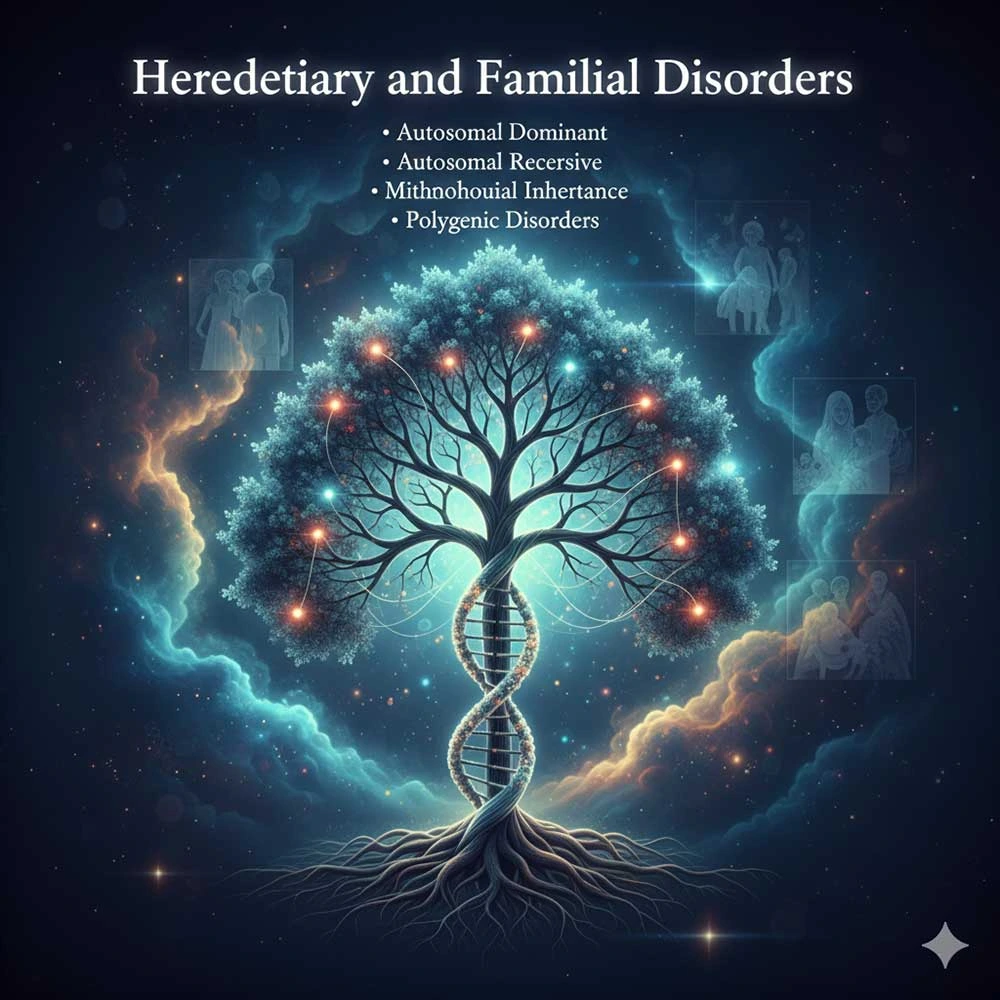
Hereditary and Familial Disorders
Introduction
Hereditary and Familial Disorders refer to medical conditions that are either inherited through genes from one or both parents or occur more frequently within certain families. These disorders can range from single-gene diseases, such as cystic fibrosis or haemophilia, to complex conditions influenced by both genetics and environment, like diabetes or heart disease.
Studying Hereditary and Familial Disorders is of great importance in medicine and genetics. It allows healthcare professionals to understand the underlying causes of diseases, predict the likelihood of occurrence in future generations, and develop strategies for prevention, early diagnosis, and effective management.
The aim of this article is to provide a comprehensive overview of Hereditary and Familial Disorders, including their genetic basis, familial patterns, examples of common conditions, diagnostic methods, and approaches to prevention and management. By doing so, the article seeks to raise awareness among medical practitioners, patients, and families about the significance of these disorders and the role of genetics in health.
Genetic Basis of Hereditary and Familial Disorders
Understanding the genetic foundation of Hereditary and Familial Disorders is essential for identifying how these conditions are passed down through generations. Genes and chromosomes are central to this process.
Genes are segments of DNA that carry instructions for development, functioning, and maintenance of the body. Chromosomes are thread-like structures in the cell nucleus composed of DNA and proteins. Humans have 23 pairs of chromosomes, inheriting one set from each parent.
Hereditary and Familial Disorders follow several inheritance patterns. Autosomal dominant disorders require only one mutated gene copy (e.g., Huntington’s disease), autosomal recessive conditions need both gene copies altered (e.g., cystic fibrosis), and X-linked disorders often affect males more severely (e.g., haemophilia). Mitochondrial inheritance and complex patterns involve multiple genes and environmental influences.
Understanding these genetic mechanisms allows healthcare professionals to predict, diagnose, and manage hereditary disorders effectively. It also provides valuable guidance for families regarding risks, preventive strategies, and personalised care.
Genetic insights for informed care. Knowledge of gene function, chromosomal structure, and inheritance patterns empowers early diagnosis, targeted management, and better outcomes for individuals affected by hereditary and familial disorders.
Familial Disorders
Familial disorders are conditions that appear more frequently within certain families than in the general population. While some of these disorders overlap with Hereditary and Familial Disorders in terms of genetic influence, not all familial conditions are strictly inherited. This distinction is crucial: hereditary disorders are directly caused by gene mutations, whereas familial disorders may arise from a combination of genetic predisposition, shared environment, and lifestyle factors.
Environmental and lifestyle factors play a significant role in familial disorders. For example, dietary habits, physical activity, exposure to toxins, and stress levels within a family can contribute to the development of conditions that appear to “run in the family,” even if they are not caused by a specific genetic mutation.
Some common examples of familial disorders that are not purely genetic include:
Type 2 diabetes, influenced by both genetics and lifestyle, such as diet and exercise.
Hypertension (high blood pressure), often associated with dietary salt intake, stress, and obesity.
Heart disease, where family history increases risk, but lifestyle choices significantly affect its development.
Understanding the distinction between hereditary and familial components in these conditions is essential for prevention and management. By recognising the influence of both genetics and environment, healthcare providers can offer more personalised guidance to families affected by these disorders.
Common Examples of Hereditary and Familial Disorders
Hereditary and Familial Disorders encompass a wide range of medical conditions, from strictly genetic diseases to those influenced by both genes and environmental factors. Understanding common examples helps illustrate the diversity and complexity of these disorders.
Clearly Genetic Disorders
Some disorders are primarily caused by specific gene mutations and follow predictable patterns of inheritance:
Haemophilia – An X-linked disorder that affects blood clotting, commonly passed from carrier mothers to sons.
Thalassaemia – An autosomal recessive blood disorder causing abnormal haemoglobin production.
Cystic fibrosis – A recessive genetic disorder affecting the lungs and digestive system, caused by mutations in the CFTR gene.
Familial Disorders Influenced by Genetics and Environment
Other conditions tend to cluster in families but are affected by lifestyle and environmental factors alongside genetics:
Type 2 diabetes – Risk is higher in individuals with a family history, yet diet, exercise, and body weight are significant contributors.
Hypertension (high blood pressure) – Family history increases susceptibility, but factors such as salt intake, stress, and obesity are critical.
Heart disease – While genetic predisposition exists, lifestyle choices including diet, exercise, and smoking habits strongly influence its development.
By examining these examples, it becomes evident that Hereditary and Familial Disorders range from purely genetic conditions to complex diseases shaped by both heredity and environment. This understanding is vital for developing effective prevention and management strategies for affected individuals and their families.
Diagnosis and Screening of Hereditary and Familial Disorders
Early and accurate detection of Hereditary and Familial Disorders is crucial for effective management, prevention, and informed decision-making for families and clinicians.
Timely diagnosis matters. Integrating genetic testing, counselling, and early screening ensures effective management, informed decision-making, and improved quality of life for individuals and families affected by hereditary disorders.

Prevention and Management
Effective prevention and management strategies are essential for addressing Hereditary and Familial Disorders. These strategies aim to reduce the incidence, mitigate complications, and improve quality of life for affected individuals and their families.
Pre-marital and Pre-conception Counselling
Counselling before marriage or conception is a key preventive measure. Families with a history of Hereditary and Familial Disorders can benefit from genetic testing and professional guidance to assess risks, discuss reproductive options, and make informed decisions. Such proactive measures can help prevent the transmission of serious genetic conditions to future generations.
Lifestyle and Environmental Modifications
Many familial disorders are influenced by lifestyle and environment. Encouraging healthy dietary habits, regular physical activity, stress management, and reducing exposure to harmful substances can significantly lower the risk or severity of these conditions. Creating a supportive family environment is equally important in promoting long-term health.
Available Treatments and Modern Genetic Approaches
Treatment options for Hereditary and Familial Disorders vary depending on the specific condition. Some disorders require lifelong medical management, such as enzyme replacement or medication, while others may benefit from surgical interventions. Modern genetic therapies, including gene editing and gene therapy, are emerging as promising approaches for correcting underlying genetic defects, offering hope for more effective long-term solutions.
By combining counselling, lifestyle adjustments, and innovative treatments, healthcare providers can offer comprehensive care and management for individuals affected by Hereditary and Familial Disorders.
Conclusion: The Future of Hereditary and Familial Disorders Management
Hereditary and Familial Disorders illustrate the complex interaction between genetic and environmental factors in human health. Some conditions are purely inherited through gene mutations, while others result from a combination of familial predisposition and lifestyle influences. Understanding these differences is crucial for effective prevention, diagnosis, and management.
Raising awareness among families and communities is essential. Knowledge about these disorders empowers individuals to make informed decisions regarding health, reproduction, and lifestyle, reducing the burden of hereditary conditions across generations.
Looking forward, advances in genetic research and biotechnology — including gene therapy, personalised medicine, and improved screening methods — offer promising opportunities to transform the prevention and treatment of Hereditary and Familial Disorders, improving outcomes and quality of life for affected individuals and their families.
Take action today – consult with genomic medicine specialists to explore personalised strategies for early detection, prevention, and management of Hereditary and Familial Disorders.
Book a ConsultationIn this section you can check frequently asked questions.
What is the difference between hereditary and familial disorders?
Hereditary disorders are directly caused by specific genetic mutations passed from parent to child, such as cystic fibrosis or haemophilia. Familial disorders, on the other hand, are conditions that appear more often in certain families but are influenced by both genetic and environmental factors, such as heart disease or type 2 diabetes.
Can all hereditary disorders be detected with genetic testing?
Many hereditary disorders can be identified through genetic testing, but not all. Some conditions involve complex genetic factors that are still being researched. Genetic counselling can help families decide whether testing is appropriate and what the results may mean.
If a condition runs in my family, does that mean I will definitely get it?
Not necessarily. Having a family history increases your risk, but lifestyle choices, environmental factors, and chance all play a role. Regular check-ups and preventive care can help reduce risks significantly.
What role does lifestyle play in familial disorders?
Lifestyle factors such as diet, exercise, and smoking habits can strongly influence the development of familial conditions. Even with a genetic predisposition, healthy choices may lower the likelihood of developing certain disorders.
When should I see a genetic counsellor?
It is advisable to see a genetic counsellor if you have a strong family history of conditions like certain cancers, inherited blood disorders, or neurological diseases. Counsellors provide information, emotional support, and guidance about testing and family planning.
Can hereditary disorders be treated or cured?
While many hereditary disorders cannot be cured, treatments are available to manage symptoms and improve quality of life. Advances in medical research, including gene therapy, are offering new possibilities for the future.
How can families prepare if they have a history of hereditary or familial disorders?
Families can benefit from regular medical check-ups, lifestyle adjustments, and open communication with healthcare professionals. Early diagnosis and preventive care are key to managing risks effectively.