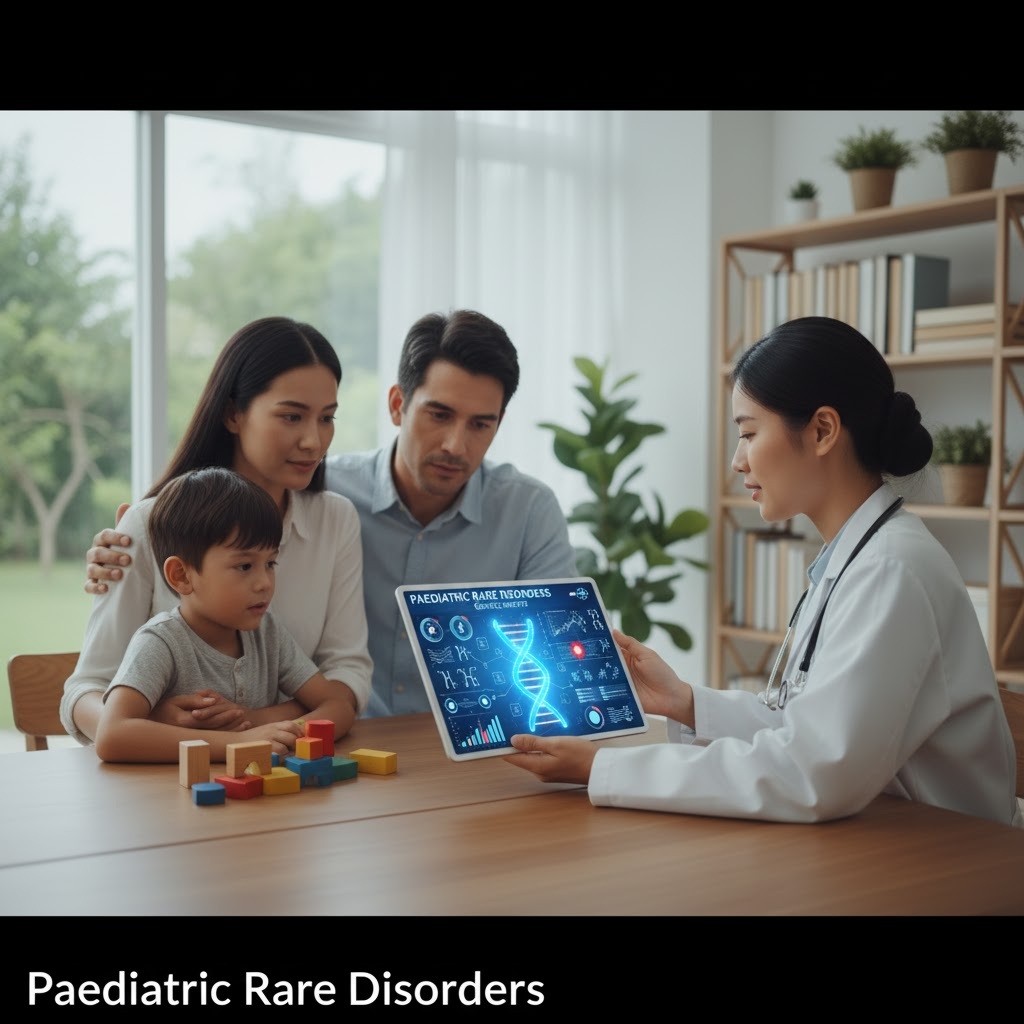
Paediatric Rare Disorders

Paediatric Rare Disorders
Titles of the article

Book Your Appointment

Consult with Dr. Ehsan Karimiani
Specialist in Clinical Geneticist

Book Now
DNA Icon

Introduction

Rare diseases are defined as conditions that affect a small proportion of the population, typically fewer than one in 2,000 individuals. When these disorders occur in children, they often present complex clinical features and can significantly impact growth, development, and quality of life. Although each rare disorder may affect only a few individuals, collectively they represent a major public health concern.

Genomic medicine plays a vital role in identifying and managing paediatric rare disorders. Through advanced genomic technologies, such as whole-exome and whole-genome sequencing, clinicians can uncover the underlying genetic causes of many conditions that were previously undiagnosed. This approach enables earlier diagnosis, more accurate treatment, and improved family counselling.

However, the diagnosis of paediatric rare disorders remains challenging. Many conditions exhibit overlapping symptoms, limited clinical awareness, and variable genetic presentations. These diagnostic difficulties can lead to long delays, emotional strain on families, and increased healthcare costs. The integration of genomic medicine into routine paediatric care is therefore essential to improve outcomes and deliver more personalised healthcare for affected children and their families.

Genetic Basis of Paediatric Rare Disorders

Paediatric rare disorders are predominantly driven by genetic factors, including gene mutations, chromosomal abnormalities, and epigenetic modifications. These underlying genetic alterations can disrupt normal development and physiological processes, leading to a wide spectrum of clinical manifestations. Understanding the genetic basis of these conditions is crucial for accurate diagnosis, prognosis, and personalised management.

Gene Mutations & Chromosomal Abnormalities

Alterations in single genes or entire chromosomes can cause rare paediatric disorders. Early identification of these mutations through genomic analysis allows clinicians to provide precise diagnoses and guide management strategies.

Inheritance Patterns

Understanding whether a disorder is inherited in an autosomal recessive, autosomal dominant, X-linked, or multifactorial pattern helps predict recurrence risk and supports genetic counselling for affected families.

Next-Generation Sequencing (NGS)

Advanced genome-wide analyses, including whole-exome and whole-genome sequencing, have dramatically improved the ability to detect causative variants. Integrating NGS into clinical practice enhances diagnostic yield and informs personalised care for children with rare disorders.

Precision in paediatric genomic medicine. By understanding the genetic underpinnings of rare disorders, clinicians can deliver tailored interventions, improve outcomes, and provide families with the knowledge they need for informed decision-making.

Common Categories of Paediatric Rare Disorders

Paediatric rare disorders encompass a wide range of conditions, often classified according to the affected biological system or clinical presentation. Understanding these categories helps clinicians target diagnostic testing and develop appropriate management strategies.

1. Metabolic Disorders

Metabolic disorders are caused by defects in enzymes or biochemical pathways, leading to the accumulation of toxic substances or deficiencies in essential metabolites. Examples include Phenylketonuria (PKU), which affects amino acid metabolism, and various mitochondrial diseases, which disrupt cellular energy production. Early diagnosis through newborn screening and genetic testing is critical to prevent long-term complications.

2. Neurological Disorders

Neurological rare disorders affect the development and function of the nervous system. Conditions such as Rett syndrome and Fragile X syndrome can lead to intellectual disability, developmental delay, and behavioural challenges. Genomic testing has significantly improved the detection and understanding of these disorders, enabling more personalised care plans.

3. Immunological and Haematological Disorders

These disorders involve the immune system or blood cells, resulting in increased susceptibility to infections, autoimmune complications, or blood disorders. Examples include primary immunodeficiencies and rare haemoglobinopathies. Early recognition and targeted therapies can substantially improve quality of life and long-term outcomes.

4. Congenital Malformations and Developmental Syndromes

Some rare disorders manifest as structural anomalies or syndromic features present at birth. These include a range of congenital malformations and developmental syndromes that may affect multiple organ systems. Comprehensive genomic analysis helps uncover the underlying causes and guides multidisciplinary management.

Diagnosis and Genomic Testing

Early diagnosis of paediatric rare disorders is essential to improve clinical outcomes, guide treatment decisions, and provide families with accurate prognostic information. Newborn screening programmes play a pivotal role in the timely detection of certain metabolic and genetic conditions, allowing interventions to begin before irreversible damage occurs.

Advances in genomic technologies have transformed the diagnostic landscape. Genomic panels, whole-exome sequencing (WES), and whole-genome sequencing (WGS) enable comprehensive analysis of the genome to identify causative variants that were previously undetectable. These tools allow clinicians to uncover the precise genetic basis of complex disorders, often shortening the diagnostic odyssey that families experience.

Despite these advances, challenges remain. Variant interpretation can be complex, as some genetic changes have uncertain clinical significance. Additionally, incidental findings—genetic alterations unrelated to the presenting condition—can pose ethical and counselling challenges for both clinicians and families. Careful analysis, expert interpretation, and multidisciplinary collaboration are therefore critical components of effective genomic testing in paediatric rare disorders.

Clinical Management and Treatment Approaches

Effective management of paediatric rare disorders requires a comprehensive, personalised approach that addresses both the underlying genetic cause and the broader healthcare needs of the child and family.

💡 Hover over each box for more detailed information!
🧬
Genetic Counselling
Families receive guidance on inheritance, recurrence risk, and implications for future pregnancies.
Counselling helps families understand complex genomic test results and make informed decisions regarding care and family planning.
💊
Precision Medicine & Targeted Therapies
Tailored treatments based on the child’s genetic profile.
Interventions such as enzyme replacement, gene-specific drugs, and emerging gene therapies improve efficacy and minimise side effects.
👩‍⚕️
Multidisciplinary Team Support
Comprehensive care from multiple specialists ensures holistic support.
Teams may include paediatricians, geneticists, neurologists, dietitians, physiotherapists, and psychologists to cover all aspects of development and wellbeing.
📈
Long-Term Follow-Up
Continuous monitoring and care adjustments over time.
Regular follow-ups track disease progression, adjust treatments, and provide ongoing support for both child and family.

Comprehensive, personalised care. Integrating genetic insights with multidisciplinary support ensures optimal outcomes for children with rare paediatric disorders.

Ethical and Psychosocial Considerations

The use of genomic testing in paediatric rare disorders raises a number of important ethical and psychosocial issues. Ethical implications include decisions about when and how to perform genetic testing in children, particularly when results may have long-term consequences or reveal risks for conditions that may only manifest in adulthood. Clinicians must balance the potential benefits of early diagnosis with respect for the child’s autonomy and best interests.

Genetic testing can also have a significant impact on family dynamics and mental health. Receiving a diagnosis of a rare disorder may provoke emotional stress, anxiety, or feelings of guilt among parents and siblings. Access to psychological support and family counselling is therefore essential to help families cope with the emotional and practical challenges of managing a rare condition.

Additionally, data privacy and consent are critical considerations in paediatric genomics. Ensuring that families understand how genomic data will be stored, shared, and used is vital to maintaining trust and protecting the child’s personal information. Obtaining informed consent—ideally involving both parents or legal guardians—and following stringent data protection protocols are fundamental ethical responsibilities for healthcare providers in this field.

Conclusion

Paediatric rare disorders present significant clinical challenges due to their complexity, variability, and often limited prevalence. Advances in genomic medicine have transformed the understanding, diagnosis, and management of these conditions, enabling earlier and more accurate detection, personalised treatment approaches, and improved long-term outcomes for affected children.

The integration of genomic technologies into paediatric care demonstrates the transformative potential of genomic medicine, offering families not only diagnostic clarity but also access to targeted therapies and informed reproductive planning. Early detection, supported by comprehensive newborn screening and cutting-edge sequencing techniques, remains crucial to maximising these benefits.

Furthermore, continued global research collaboration and the establishment of international rare disease registries are essential to expand scientific knowledge, identify novel genetic causes, and develop innovative therapies. By combining clinical expertise, genomic technology, and international cooperation, the healthcare community can significantly improve the lives of children with rare disorders and their families.

Take the next step today – book your consultation with London Genetics and explore how advanced genomic medicine can provide accurate diagnosis, personalised treatment, and comprehensive support for children with rare disorders.

Book Your Consultation
Frequently asked questions

In this section you can check frequently asked questions.

What are paediatric rare disorders?

Paediatric rare disorders are genetic or congenital conditions that affect a small proportion of children. Although each disorder is uncommon, collectively they impact millions of children worldwide and often require specialised care.

Genomic medicine uses advanced technologies such as whole-exome sequencing (WES) and whole-genome sequencing (WGS) to identify underlying genetic causes. This enables earlier diagnosis, more personalised treatment, and informed genetic counselling for families.

Common patterns include autosomal recessive, autosomal dominant, X-linked, and de novo mutations. Understanding inheritance helps assess recurrence risks and guide family planning.

Most rare disorders currently have no universal cure. However, early diagnosis and precision medicine approaches can significantly improve quality of life, slow disease progression, and manage symptoms effectively. Some conditions also benefit from targeted therapies or experimental treatments.

Support can include genetic counselling, psychological support, patient advocacy groups, and multidisciplinary clinical teams. Access to these resources helps families navigate the challenges of caring for a child with a rare disorder.

Dr. Ehsan Karimiani
Book Your Genetic Consultation

At London Genetics, booking your consultation couldn’t be simpler. Dr Ehsan Karimiani will take the time to listen, understand your background, and guide you through the right genetic testing or counselling options for you.

Whether you’re curious about how your DNA affects your health, medication response, or family risks, we’ll help you make informed choices with clarity and care.

Choose a time that suits your schedule — and start your journey towards truly personalised healthcare.