

What Is Down Syndrome?
Down syndrome is a genetic condition caused by the presence of extra genetic material from chromosome 21. It affects how a person’s body and brain develop and is also known as Trisomy 21.
What Does Trisomy 21 Mean?
Most people have 46 chromosomes arranged in 23 pairs in each cell. Chromosomes carry genetic information that helps guide the body’s growth and development.
In the most common form of Down syndrome, a person has three copies of chromosome 21 instead of the usual two, resulting in 47 chromosomes in most or all cells. This additional genetic material influences development and can affect learning, physical characteristics and certain aspects of health.
How Can Down Syndrome Affect Development?
People with Down syndrome have some degree of learning disability, but their abilities and developmental progress vary considerably. Some may take longer to develop speech, movement and everyday skills, while others may need additional support with learning, communication or independent living.
Certain health conditions, including congenital heart conditions, hearing difficulties and vision problems, are also more common among people with Down syndrome. However, these conditions do not affect everyone, and many can be managed with appropriate healthcare.
Individual Differences and Support Needs
Down syndrome affects each person differently. Individuals have their own personalities, strengths, interests and abilities, as well as different health and support needs. With appropriate healthcare, education and individualised support, many people with Down syndrome lead fulfilling lives and participate actively in their communities.
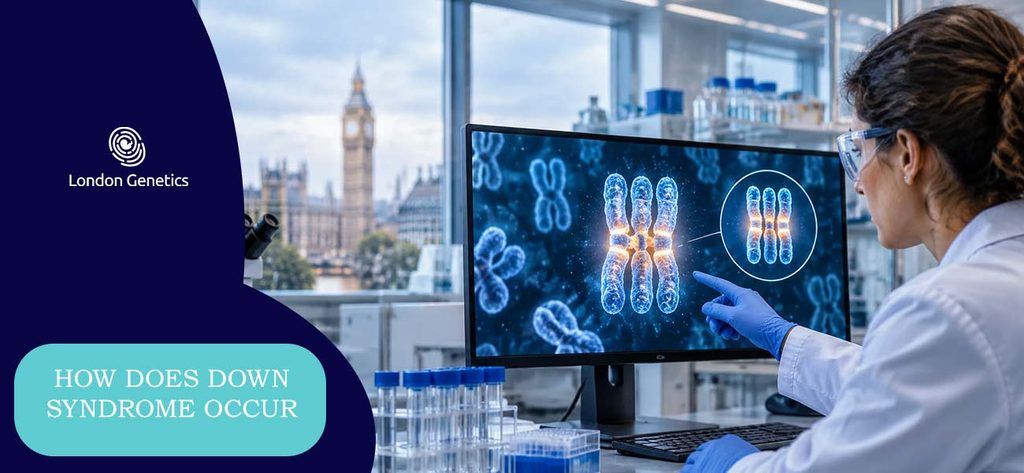
How Does Down Syndrome Occur?
Down syndrome usually occurs because of a random error in cell division that results in an extra copy of chromosome 21. This error is known as nondisjunction and most commonly happens during the formation of an egg or sperm cell.
What Is Nondisjunction?
During normal cell division, chromosomes separate so that each reproductive cell receives the correct number of chromosomes. In nondisjunction, chromosome 21 does not separate properly. As a result, an egg or sperm cell may receive an extra copy of this chromosome.
If this cell contributes to fertilisation, the resulting embryo has additional genetic material from chromosome 21. In the most common form of Down syndrome, this leads to three copies of chromosome 21 instead of the usual two.
Does Maternal Age Affect the Chance of Down Syndrome?
The likelihood of having a pregnancy affected by Down syndrome increases with maternal age. This is partly associated with a higher chance of chromosome separation errors during the development of egg cells.
However, Down syndrome can occur at any maternal age. Although the chance is higher in pregnancies at older ages, many babies with Down syndrome are born to younger mothers because there are more pregnancies in this age group.
Do Parents Cause Down Syndrome?
Most cases of Down syndrome result from random chromosomal events and are not inherited. They are not caused by anything either parent did or did not do before or during pregnancy.
A smaller proportion of cases involve a chromosome rearrangement called a translocation, which can sometimes be inherited from a parent who carries a balanced translocation. Understanding these changes can also help explain other types of chromosomal abnormalities and why their genetic causes and inheritance patterns differ. This is why identifying the specific chromosomal cause can be important when assessing the chance of recurrence in future pregnancies.
What Are the Main Types of Down Syndrome?
Down syndrome is classified into three main types according to how the additional genetic material from chromosome 21 is present in the body’s cells. These types differ in their chromosomal mechanisms and inheritance considerations.
| Type | Chromosomal Mechanism | Approximate Frequency | Inheritance Considerations |
|---|---|---|---|
| Full Trisomy 21 | An extra, separate chromosome 21 is present in all or almost all cells, usually resulting in 47 chromosomes per cell. | Approximately 95% | Usually occurs randomly and is not inherited. The chance of recurrence may be slightly increased after an affected pregnancy. |
| Translocation Down Syndrome | Extra chromosome 21 material is attached to another chromosome. The total chromosome count may remain 46. | Approximately 3–4% | Can occur randomly or be inherited from a parent carrying a balanced chromosomal translocation. |
| Mosaic Down Syndrome | A mixture of cell populations is present: some cells have the usual two copies of chromosome 21, while others have three. | Approximately 1–2% | Usually results from a random cell-division event after fertilisation and is not inherited. |
Why does identifying the type matter? Chromosome analysis, usually through karyotyping, can identify the specific chromosomal pattern. This is particularly important in translocation Down syndrome, as parental chromosome testing may help clarify whether the rearrangement was inherited and assess the chance of recurrence in future pregnancies.
Is Down Syndrome Inherited?
Most cases of Down syndrome are not inherited. They usually result from a random chromosomal event during the formation of an egg or sperm cell, or during early embryonic development. This means that having a child with Down syndrome does not usually indicate that either parent carries or passes on the condition.
When Can Down Syndrome Be Inherited?
In some cases, Down syndrome is associated with a chromosomal rearrangement called a balanced translocation. A parent carrying this rearrangement usually has the typical amount of genetic material and may have no signs of a health condition. However, the rearranged chromosome can be passed on in an unbalanced form, resulting in extra chromosome 21 material in the child.
Not all cases of translocation Down syndrome are inherited. Some arise as new chromosomal changes, known as de novo translocations, that are not present in either parent.
Can Down Syndrome Occur Again in a Future Pregnancy?
The chance of having another child with Down syndrome depends on the chromosomal cause identified in the affected pregnancy and, in some cases, the mother’s age.
- Full Trisomy 21: The chance of recurrence is generally low, although it may be slightly higher than the age-related background risk.
- Mosaic Down Syndrome: Usually results from a random event during early embryonic development and is not typically inherited.
- Translocation Down Syndrome: The chance of recurrence depends on the specific chromosome rearrangement and whether either parent carries a balanced translocation.
When Is Parental Chromosome Testing Recommended?
If chromosome analysis identifies translocation Down syndrome in a child or pregnancy, chromosome testing (karyotyping) may be recommended for both parents. This can establish whether the rearrangement was inherited or occurred spontaneously and help assess the likelihood of recurrence.
The results should be interpreted in the context of the specific chromosome findings and family history. Genetic counselling can help families understand their individual circumstances, discuss reproductive options and make informed decisions about future pregnancies.
How Is Down Syndrome Screened During Pregnancy?
Prenatal screening estimates the chance of a baby having Down syndrome. In England, the screening pathway may involve an initial combined or quadruple test, followed by NIPT or prenatal diagnostic testing, depending on the result and the individual’s choices.
1. Combined Screening
If the pregnancy is too advanced for the combined test, a quadruple blood test may be offered between 14 and 20 weeks.
2. Higher-Chance Result
3. Non-Invasive Prenatal Testing (NIPT)
To understand the process, accuracy and interpretation of results in more detail, read our guide to NIPT testing during pregnancy.
4. Discussion of Further Options
5. Prenatal Diagnostic Testing
Screening is a choice, not a diagnosis. Not everyone with a higher-chance screening result will choose further testing, and NIPT is not a compulsory step before diagnostic testing. The appropriate pathway depends on the screening result, pregnancy circumstances and the individual’s informed preferences.
What Happens After a Higher-Chance Down Syndrome Screening Result?
Receiving a higher-chance result from prenatal screening can be concerning, but it does not mean that the baby definitely has Down syndrome. It indicates that the screening test has identified an increased likelihood of the condition and that further options may be discussed.
What Does a Higher-Chance Result Mean?
A higher-chance result from the combined or quadruple test means that the estimated chance of Down syndrome is above the screening programme’s threshold. However, screening cannot determine whether the baby has the condition.
Some pregnancies with a higher-chance result will not be affected by Down syndrome. The result should therefore be understood as an indication of probability rather than a diagnosis.
What If Further Screening Also Shows a Higher Chance?
If NIPT is chosen and also indicates a higher chance of Down syndrome, the result still does not confirm the condition. It may, however, provide further information to help individuals consider whether they want a diagnostic procedure.
The decision to proceed with further testing should take into account the screening findings, stage of pregnancy and individual preferences.
What Options Are Available After a Higher-Chance Result?
Following a higher-chance screening result, individuals can discuss the available options with their healthcare professional. Depending on their circumstances, these may include:
- Further screening: Choosing NIPT to obtain a more accurate estimate of the chance of Down syndrome.
- Diagnostic testing: Considering chorionic villus sampling (CVS) or amniocentesis if a definitive chromosome-based diagnosis is wanted.
- No further testing: Deciding not to undergo additional screening or diagnostic procedures.
Each option has different benefits, limitations and considerations. The appropriate choice depends on the information individuals wish to obtain and their personal circumstances.
Making an Informed Decision
There is no obligation to proceed with further testing after a higher-chance screening result. Individuals have the right to receive balanced information, ask questions and decide whether additional testing is appropriate for them.
Genetic counselling can help explain the implications of screening results, clarify the available options and support personal decision-making. The aim is to provide clear information and guidance without pressure to choose a particular course of action.
Which Prenatal Diagnostic Tests Can Confirm Down Syndrome?
Two main prenatal diagnostic procedures can be used to investigate whether a baby has Down syndrome: chorionic villus sampling (CVS) and amniocentesis. Both involve collecting a pregnancy-related sample for laboratory chromosome analysis.
| Diagnostic Test | Sample Collected | Typical Timing | Main Purpose |
|---|---|---|---|
| Chorionic Villus Sampling (CVS) | A small sample of placental tissue containing cells with genetic material from the pregnancy. | Usually between 11 and 14 weeks of pregnancy. | To examine the chromosomes and identify whether an extra copy or additional material from chromosome 21 is present. |
| Amniocentesis | A small sample of amniotic fluid containing cells from the pregnancy. | Usually from 15 weeks of pregnancy onwards. | To analyse the baby’s chromosomes and determine whether Down syndrome is present. |
Both procedures are diagnostic tests. They can provide a definitive chromosome-based assessment for Down syndrome, unlike screening tests such as NIPT, which estimate the likelihood of the condition.
In some cases, particularly when placental mosaicism is suspected, further assessment or follow-up testing may be recommended to clarify the result.
What Should Parents Consider Before Prenatal Diagnostic Testing?
Before deciding whether to have prenatal diagnostic testing, parents should understand what the procedures involve, what information the results may provide and what potential risks they carry. The decision to proceed with testing is personal and should be based on individual circumstances, medical advice and informed preferences.
Benefits and Limitations of Diagnostic Testing
Chorionic villus sampling (CVS) and amniocentesis can provide diagnostic information about the baby’s chromosomes, including whether Down syndrome is present. Unlike screening tests such as NIPT, these procedures can help establish a definitive chromosome-based diagnosis.
However, diagnostic testing also has limitations. The findings may sometimes require further laboratory investigation or specialist interpretation, particularly when results are uncertain or indicate chromosomal mosaicism. Testing for Down syndrome also does not predict every aspect of a child’s future development, health or support needs.
Understanding the Risks of CVS and Amniocentesis
Both CVS and amniocentesis are invasive procedures because they involve collecting a sample from the pregnancy using a needle. Although they are generally considered safe when performed by experienced specialists, they carry a small risk of complications, including pregnancy loss.
Other possible complications may include infection, bleeding or leakage of amniotic fluid, although these are uncommon. The specific risks can vary depending on the procedure and individual pregnancy circumstances. A specialist should explain the relevant risks before testing takes place.
The Role of Genetic Counselling
Genetic counselling can help parents understand why diagnostic testing may be offered, what the results could mean and how the findings may affect decisions during pregnancy or in future family planning.
A genetic counsellor or specialist healthcare professional can also explain the differences between screening and diagnostic tests, discuss possible uncertainties and answer questions about the implications of a confirmed diagnosis. Access to specialist prenatal genetic counselling can help parents explore these questions and understand the information relevant to their individual circumstances.
Making an Informed and Personal Choice
Parents have the right to decide whether to proceed with prenatal diagnostic testing. Some may choose to seek a definitive diagnosis, while others may prefer not to undergo an invasive procedure after considering its potential benefits and risks.
There should be no pressure to accept testing. Individuals should have access to clear, balanced information and sufficient time to consider their options, ask questions and make a decision that reflects their own values and circumstances.
Can PGT-A Help Identify Embryos with Trisomy 21?
Preimplantation Genetic Testing for Aneuploidy (PGT-A) is used during IVF to assess embryos for changes in chromosome number before embryo transfer. It can identify findings such as an additional copy of chromosome 21, but it cannot guarantee a pregnancy or a child without a chromosomal condition.
-
1
Embryo Development During IVF: Following fertilisation, embryos develop in the laboratory. PGT-A is usually performed at the blastocyst stage, before an embryo is considered for transfer.
-
2
Cell Sampling and Chromosome Analysis: A small number of cells are usually collected from the trophectoderm, the outer layer of the blastocyst. Their genetic material is analysed to assess chromosome number.
-
3
Identifying Trisomy 21: PGT-A can detect findings consistent with an additional copy of chromosome 21, alongside other whole-chromosome gains or losses. This may help fertility specialists assess embryos before transfer.
-
4
Understanding the Result: PGT-A is performed before pregnancy, unlike prenatal screening tests such as NIPT or diagnostic procedures such as CVS and amniocentesis, which are used during pregnancy for different purposes.
-
5
Considering the Limitations: The sampled cells may not represent every cell in the embryo. Mosaicism, sampling limitations and test errors can affect results, so PGT-A cannot guarantee that an embryo is free from chromosomal or other genetic conditions.
PGT-A is a screening assessment of embryo cells, not a guarantee. A result suggesting the expected chromosome number does not rule out every genetic or chromosomal condition. Prenatal screening and, where appropriate, diagnostic testing should still be discussed after pregnancy is established.
Frequently Asked Questions About Down Syndrome
1. What Causes Down Syndrome?
Down syndrome is caused by the presence of extra genetic material from chromosome 21. In most cases, this results from a random error in cell division that leads to an additional copy of the chromosome.
2. Is Down Syndrome Always Inherited?
No. Most cases are not inherited and occur randomly during the formation of an egg or sperm cell, or during early embryonic development. A smaller proportion involve a chromosome translocation, which can sometimes be inherited from a parent.
3. Can Down Syndrome Be Detected During Pregnancy?
Yes. Prenatal screening tests, including the combined test and NIPT, can estimate the chance of Down syndrome. Diagnostic procedures such as chorionic villus sampling (CVS) and amniocentesis can establish whether the condition is present.
4. Does NIPT Confirm Down Syndrome?
No. NIPT is a screening test that analyses cell-free DNA in a maternal blood sample to estimate the chance of certain chromosomal conditions, including Down syndrome. A higher-chance result requires further discussion and, if confirmation is wanted, diagnostic testing.
5. What Is the Difference Between CVS and Amniocentesis?
CVS involves collecting a small sample of placental tissue, usually between 11 and 14 weeks of pregnancy. Amniocentesis involves collecting a sample of amniotic fluid and is usually performed from 15 weeks onwards. Both can be used for diagnostic chromosome analysis.
6. Can PGT-A Prevent Down Syndrome?
No. PGT-A does not prevent Down syndrome. It assesses a sample of embryo cells for chromosome-number abnormalities, including findings associated with Trisomy 21, before embryo transfer during IVF. However, it has limitations and cannot guarantee that an embryo is free from chromosomal conditions.
7. Does Maternal Age Affect the Chance of Down Syndrome?
Yes. The chance of having a pregnancy affected by Down syndrome generally increases with maternal age, particularly as egg cells age. However, Down syndrome can occur at any maternal age, and it is not exclusive to pregnancies in older women.
How Can London Genetics Support You?
Understanding genetic information can be an important part of making personal and family decisions. Having access to clear, reliable guidance can help you approach these decisions with greater confidence and a better understanding of your individual circumstances.
Guidance That Focuses on Your Individual Needs
Individual Considerations: Every family has different questions, priorities and circumstances. Understanding these factors helps ensure that discussions are relevant to your situation.
Clear Communication: Genetic information can raise complex questions. Clear explanations can help you understand the information available and recognise where further professional advice may be useful.
Informed Decision-Making: Having the opportunity to discuss your concerns and priorities can help you consider the options available without feeling pressured to make a particular decision.
Speak with London Genetics
At London Genetics, we recognise that questions about genetic conditions can be personal and sometimes difficult to navigate. Our approach focuses on understanding your concerns, providing relevant information and helping you consider appropriate next steps based on your circumstances.
Whether you are seeking clarity about genetic information or considering your family’s future needs, a consultation can provide an opportunity to discuss your questions with a specialist.
If you would like professional guidance regarding Down syndrome and its genetic implications, contact London Genetics to arrange a consultation.
Book a Consultation