Introduction
Recurrent Pregnancy Loss (RPL) is defined as the occurrence of two or more consecutive pregnancy losses before 20 weeks of gestation. It is a distressing condition that affects not only the physical health of women but also carries significant psychological and emotional consequences for both partners. Understanding the underlying causes of RPL is therefore crucial for effective clinical management and patient support.
The prevalence of RPL varies globally, affecting approximately 1–2% of couples attempting to conceive. Despite advances in reproductive medicine, the precise aetiology often remains unidentified, posing challenges for both diagnosis and counselling. Among the numerous contributing factors, genetic abnormalities are increasingly recognised as a major determinant of recurrent pregnancy failure.
This article aims to explore the role of Genetic Factors in Recurrent Pregnancy Loss, providing insight into the chromosomal and molecular mechanisms involved, the influence of parental genetics, and the clinical implications for diagnosis, management, and genetic counselling. By analysing current research and evidence-based practices, the article seeks to improve understanding and highlight strategies to support affected couples effectively.
Overview of Pregnancy Loss
Pregnancy loss is a common reproductive complication, varying by gestational age and number of losses.
Clinically, it is categorized into primary and secondary types. Understanding these distinctions helps
identify underlying causes and plan appropriate interventions.
- Primary: occurs in women who have never carried a pregnancy beyond 20 weeks
- Secondary: occurs in women with a previous successful pregnancy
Differentiating these types is important for tailoring investigations and treatment plans.
- Sporadic: single miscarriage, often due to random chromosomal abnormalities
- Recurrent (RPL): two or more consecutive losses, requiring comprehensive evaluation
RPL evaluation includes genetic, anatomical, hormonal, and immunological assessments to determine causes.
- Hormonal imbalances (e.g., luteal phase defects, thyroid disorders)
- Immunological issues (e.g., antiphospholipid syndrome)
- Anatomical abnormalities (e.g., uterine malformations, fibroids)
These factors interact with genetic predispositions, highlighting the need for a holistic approach in evaluating recurrent pregnancy loss.
Understanding both genetic and non-genetic factors is essential in pregnancy loss management.
Comprehensive assessment and intervention can improve outcomes and help couples achieve successful pregnancies.
Genetic Factors in Recurrent Pregnancy Loss
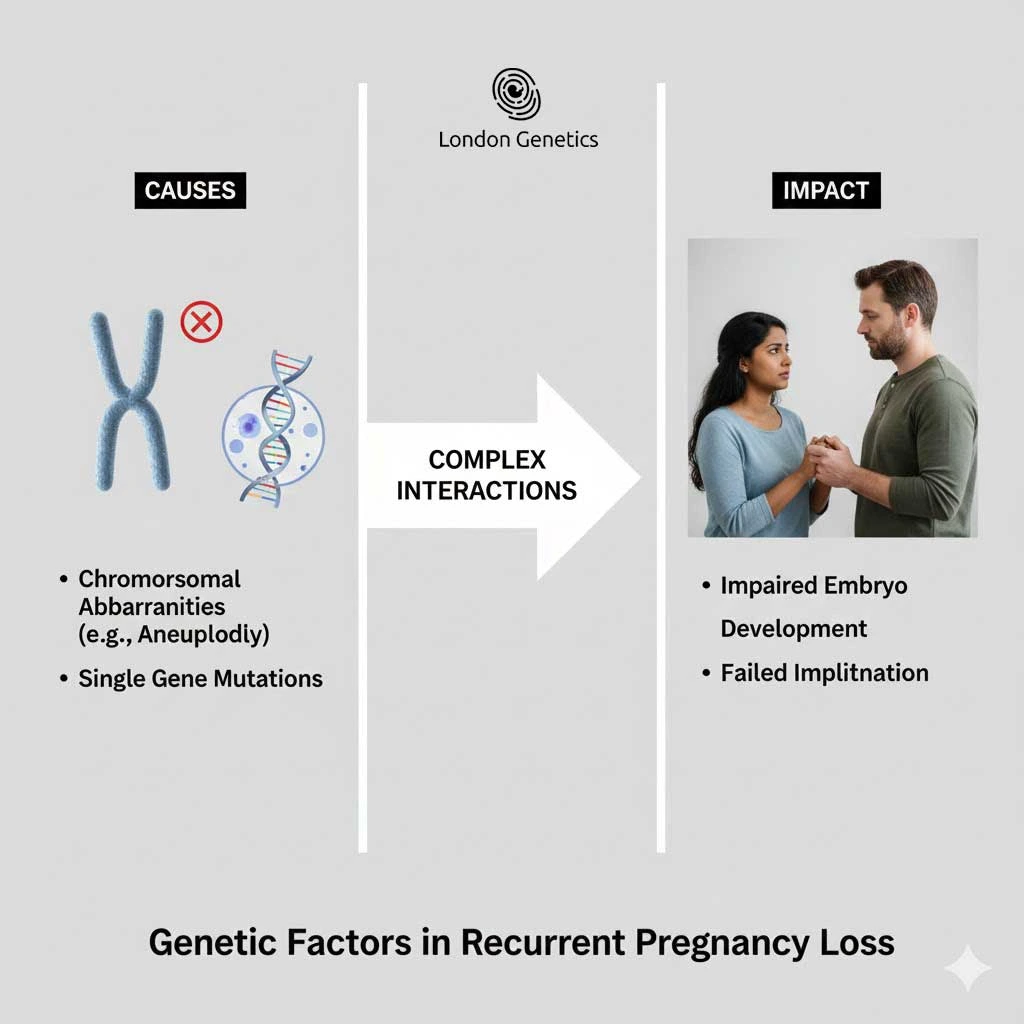
Genetic abnormalities are a major contributor to recurrent pregnancy failure, making the study of Genetic Factors in Recurrent Pregnancy Loss essential for both diagnosis and management. These abnormalities can arise from the embryo itself or from parental genetic variants, each influencing the risk of miscarriage in distinct ways.
Embryonic Chromosomal Abnormalities
A significant proportion of early pregnancy losses are caused by aneuploidy, where the embryo carries an abnormal number of chromosomes. Structural chromosomal rearrangements, such as translocations, inversions, or deletions, can also disrupt embryonic development, leading to miscarriage. These abnormalities are often sporadic but can recur in some families, emphasising the importance of genetic evaluation in RPL cases.
Parental Genetics
Parental genetic factors, including chromosomal translocations or single-gene mutations, may predispose couples to recurrent miscarriage. Karyotype analysis of both partners is commonly used to detect balanced translocations, while advances in molecular genetics allow for the identification of specific mutations that affect embryo viability.
Role of Known Genes
Recent research has identified several genes associated with pregnancy maintenance, placental development, and embryogenesis. Variants in these genes can compromise reproductive success, providing mechanistic insight into how genetic predispositions contribute to RPL. Understanding these gene-level influences is central to interpreting Genetic Factors in Recurrent Pregnancy Loss and guiding clinical decision-making.
Epidemiological Evidence
Population and family studies consistently demonstrate that couples with recurrent pregnancy losses are more likely to carry detectable genetic abnormalities compared to the general population. This epidemiological data underlines the importance of integrating genetic testing and counselling into routine care for affected couples, helping to clarify the contribution of inherited and de novo genetic factors to recurrent miscarriage.
Molecular and Cytogenetic Testing in RPL
Accurate identification of genetic abnormalities is fundamental to understanding Genetic Factors in Recurrent Pregnancy Loss.
Molecular and cytogenetic testing provides critical insights into both embryonic and parental contributions,
guiding diagnosis and clinical management.
Embryonic karyotyping distinguishes sporadic anomalies from inherited conditions, informing reproductive planning.
genome-wide. NGS analyzes single-gene mutations and polygenic contributions, offering comprehensive molecular insights.
Using multiple methods provides the most robust approach for identifying genetic contributors and guiding clinical decisions.
Molecular and cytogenetic testing is key in RPL management. These techniques, used in combination, enhance understanding
of genetic factors and support effective reproductive planning.
Interaction Between Genetic and Non-Genetic Factors
While genetic abnormalities are central to understanding Genetic Factors in Recurrent Pregnancy Loss, non-genetic influences also play a significant role in determining pregnancy outcomes. The interaction between these factors is complex, highlighting the multifactorial nature of RPL.
Role of Environment and Lifestyle
Environmental and lifestyle factors, such as maternal age, nutrition, stress, and exposure to toxins, can affect reproductive health and modulate the impact of underlying genetic predispositions. Healthy lifestyle practices, including balanced diet, regular exercise, and avoidance of smoking or alcohol, support overall reproductive wellness and may mitigate some of the risks associated with genetic susceptibility.
Impact of Medical Conditions
Certain medical conditions can exacerbate the risk of RPL, even in the presence of genetic abnormalities. Thyroid dysfunction, diabetes mellitus, and coagulation disorders are particularly relevant, as they can impair implantation, placental development, or early embryonic growth. Managing these conditions effectively is critical for optimising pregnancy outcomes and complements genetic evaluation.
Genetic Interactions with Immunological and Hormonal Factors
Genetic predispositions may interact with immunological or hormonal factors, influencing the likelihood of miscarriage. For instance, variations in genes regulating immune tolerance, inflammation, or hormone metabolism can affect maternal-fetal compatibility. Understanding these interactions is essential for interpreting Genetic Factors in Recurrent Pregnancy Loss within the broader physiological context, enabling personalised clinical management and counselling.

Management and Genetic Counselling
Effective management of recurrent pregnancy loss requires a combination of clinical intervention, personalised care, and comprehensive genetic counselling. Understanding Genetic Factors in Recurrent Pregnancy Loss is essential for providing couples with accurate information, realistic expectations, and appropriate reproductive options.
Importance of Genetic Counselling
Genetic counselling plays a pivotal role in supporting couples who experience RPL. Counsellors help interpret test results, explain the implications of chromosomal or molecular findings, and guide decision-making regarding future pregnancies. Counselling also addresses the psychological and emotional impact of recurrent miscarriage, providing reassurance and informed guidance.
Preventive and Therapeutic Techniques: IVF and PGD
Assisted reproductive technologies (ART), such as in vitro fertilisation (IVF), combined with preimplantation genetic diagnosis (PGD), allow couples with known genetic abnormalities to reduce the risk of miscarriage. By selecting embryos free of specific chromosomal or single-gene defects, these techniques increase the likelihood of a successful pregnancy, demonstrating how clinical interventions can complement genetic understanding.
Risk Reduction Strategies for Future Pregnancies
Beyond ART, couples may benefit from lifestyle optimisation, management of underlying medical conditions, and careful monitoring of early pregnancies. Tailored strategies based on individual genetic findings help minimise recurrence risk and support safer, healthier pregnancies. Integrating these approaches with knowledge of Genetic Factors in Recurrent Pregnancy Loss ensures that management is both evidence-based and personalised.

Ethical and Psychological Considerations
Recurrent pregnancy loss (RPL) can exert profound psychological stress on couples, and addressing these aspects is as important as understanding the biological causes. Awareness of Genetic Factors in Recurrent Pregnancy Loss must be integrated with ethical and emotional support to provide comprehensive care.
Psychological Impact on Parents
Experiencing multiple pregnancy losses often leads to anxiety, depression, and feelings of guilt or inadequacy. Acknowledging these emotional consequences is essential for clinicians, as unresolved psychological distress may affect future attempts at conception and overall family well-being.
Decision-Making Regarding Genetic Testing and Treatment
Genetic testing and interventions, including IVF with preimplantation genetic diagnosis (PGD), present ethical considerations. Couples must be fully informed about the potential benefits, limitations, and implications of testing, ensuring that decisions are made voluntarily and reflect their values and preferences. Ethical counselling is particularly important when interpreting complex genetic results or considering high-risk procedures.
Emotional Support and Counselling
Ongoing emotional support and counselling are vital components of care. Professional guidance can help couples cope with grief, make informed reproductive decisions, and manage expectations. Integrating psychological support with knowledge of Genetic Factors in Recurrent Pregnancy Loss enhances overall reproductive care and promotes resilience during the challenging journey of managing RPL.