Introduction to Copy Number Variations and Structural Genetic Changes
The human genome is composed of approximately three billion DNA base pairs organised into genes and regulatory elements that govern growth, development, and physiological function. While early genetic research focused mainly on small‑scale mutations involving single base changes, modern genomics has revealed that structural genetic changes—alterations affecting larger segments of DNA—play an equally important role in human biology. Among these structural variations, Copy Number Variations (CNVs) have emerged as a major area of scientific and clinical interest.
Copy Number Variations refer to differences in the number of copies of particular DNA segments between individuals. Typically, a person inherits two copies of most genes, one from each parent. However, in certain genomic regions, segments may be duplicated, resulting in extra copies, or deleted, leading to fewer copies than expected. These variations can range from relatively small sections of DNA to large chromosomal segments containing multiple genes.
CNVs contribute significantly to normal human genetic diversity. In many cases, they have no harmful effects and simply reflect natural genomic variation. However, when duplications or deletions involve genes that are critical for development or neurological function, they may influence disease susceptibility. For example, research into the Genetics of Autism has identified several recurrent CNVs that are associated with altered neurodevelopmental pathways, highlighting the importance of structural genomic variation in complex conditions.
The clinical relevance of CNVs is particularly evident in Genomic Medicine in Paediatrics, where early genetic testing can assist in diagnosing developmental delays, congenital anomalies, and inherited disorders. Detecting clinically significant duplications or deletions enables more accurate diagnoses, informed counselling for families, and better‑targeted medical management.
Technological advances such as array comparative genomic hybridisation (aCGH) and next‑generation sequencing have greatly improved the detection of CNVs, allowing clinicians to identify structural changes with high precision. As our understanding of these variations continues to expand, Copy Number Variations are increasingly recognised as a fundamental component of both genetic diversity and modern genomic medicine.
What Are Copy Number Variations? Genetic Duplications and Deletions Explained
Copy Number Variations (CNVs) are a type of structural genetic variation in which sections of DNA differ in the number of copies present in the genome. Unlike small mutations that involve a single DNA base, CNVs affect larger segments of DNA and may include one or multiple genes. These variations occur when regions of the genome are duplicated or deleted, altering the normal gene copy number.
Copy Number Variations represent important structural changes within the genome. While many are benign, some duplications and deletions can significantly influence health. Improved detection technologies are helping integrate CNV analysis into modern genomic research and clinical genetics.
How Copy Number Variations Occur in the Human Genome
Copy Number Variations (CNVs) arise as a result of structural changes in DNA that occur during cell division or DNA replication. The human genome is not static; it is constantly being copied and repaired. During these processes, errors can occasionally occur, leading to duplications or deletions of specific DNA segments.
One of the primary mechanisms responsible for CNVs is unequal crossing‑over during meiosis. Meiosis is the specialised type of cell division that produces sperm and egg cells. During this process, paired chromosomes exchange genetic material in a process known as recombination. If chromosomes do not align perfectly, sections of DNA may be exchanged unevenly. This can result in one chromosome gaining extra genetic material (a duplication) and the other losing a segment (a deletion).
Another mechanism involves non‑homologous end joining (NHEJ), a DNA repair process. When double‑strand breaks occur in DNA—due to environmental stress, radiation, or natural cellular processes—the cell attempts to repair the damage. If the repair process is imperfect, segments of DNA may be incorrectly reattached, leading to the loss or gain of genetic material.
Replication errors can also contribute to the formation of CNVs. During DNA replication, the molecular machinery responsible for copying genetic material may slip or stall, particularly in regions containing repetitive sequences. This can cause certain segments to be duplicated or omitted.
In addition, regions of the genome that contain low‑copy repeats or highly similar sequences are more prone to structural rearrangements. These areas can misalign during recombination, increasing the likelihood of duplications or deletions.
It is important to note that CNVs can occur either de novo (newly arising in an individual) or be inherited from a parent. De novo CNVs may contribute to certain developmental or genetic conditions, whereas inherited CNVs may be harmless or associated with inherited traits.
Overall, Copy Number Variations are the result of natural biological processes that occasionally introduce structural changes into the genome. While many of these changes are neutral and contribute to genetic diversity, others may influence gene expression and, in some cases, disease susceptibility.
Methods for Detecting Copy Number Variations in Genomic Testing
Detecting Copy Number Variations (CNVs) is a key part of modern genomic testing in clinical genetics, paediatrics, cancer diagnostics, and neurodevelopmental research. Because CNVs involve gains or losses of relatively large DNA segments, specialised laboratory and sequencing technologies are required to accurately measure changes in DNA dosage across the genome.

Multiple complementary technologies are used in genomic medicine to detect duplications and deletions with varying resolution, scope, and clinical application.


Key Takeaway:
A range of complementary technologies—including cytogenetic, microarray, sequencing, and targeted molecular methods—are used to detect Copy Number Variations. Together, these approaches have transformed clinical genetics, improving diagnosis and supporting personalised genomic medicine.
The Role of Copy Number Variations in Human Genetic Diversity
How CNVs Contribute to Genetic Variation Among Individuals
Copy Number Variations (CNVs) are an important source of structural genetic variation in the human genome. They involve segments of DNA that are duplicated or deleted, resulting in individuals having different numbers of copies of certain genes or genomic regions. These variations contribute significantly to the genetic differences observed between individuals and populations.
- CNVs can range from a few thousand to several million DNA base pairs.
- They may include entire genes or regulatory regions that control gene activity.
- Differences in copy number can influence how genes function and how strongly they are expressed.
- Many CNVs are inherited, while others arise spontaneously during DNA replication or cell division.
Gene Dosage and Its Biological Impact
One of the key mechanisms through which CNVs influence human diversity is gene dosage, which refers to the number of copies of a gene present in the genome.
- Gene duplications may increase the level of gene expression and protein production.
- Gene deletions may reduce gene function or remove it completely.
- Changes in gene dosage can influence biological processes such as metabolism, immunity, and brain development.
- Some CNVs provide beneficial effects, while others may increase susceptibility to disease.
CNVs and Adaptation to Environmental Pressures
Certain Copy Number Variations are associated with human adaptation to environmental conditions. Over evolutionary time, some CNVs became more common in specific populations because they provided survival advantages.
- Duplications of genes involved in immune responses may improve resistance to infectious diseases.
- Variations in genes related to metabolism and digestion can reflect dietary adaptations in different populations.
- CNVs affecting sensory genes may influence perception such as smell or taste.
- Population‑specific CNVs provide insight into human evolutionary history and migration patterns.
CNVs and Variation in Human Traits
Copy Number Variations also contribute to differences in physical and biological traits among individuals.
- They can influence traits such as height, neurological development, and metabolic activity.
- CNVs may affect brain‑related genes involved in cognition and behaviour.
- Some structural variations are associated with neurodevelopmental conditions, including aspects studied in the Genetics of Autism.
- Differences in CNVs may partly explain variability in disease susceptibility among individuals.
CNVs and Pharmacogenetics
Structural variations in genes can influence how individuals respond to medications, linking CNVs to the field of pharmacogenetics.
- Variations in the copy number of drug‑metabolising enzymes can alter drug breakdown in the body.
- Increased gene copies may lead to faster drug metabolism.
- Deletions may reduce enzyme activity and increase the risk of drug toxicity.
- Understanding CNVs helps support more personalised approaches in precision medicine.
The Balance Between Normal Variation and Disease Risk
Although many CNVs are harmless and represent natural genetic diversity, some may disrupt important genes and lead to medical conditions.
- The impact of a CNV depends on its size, location, and the genes involved.
- Large deletions or duplications affecting critical developmental genes may contribute to genetic disorders.
- Many CNVs detected in genomic testing are classified as variants of uncertain significance until further research clarifies their effects.
Summary
Copy Number Variations are a major contributor to human genetic diversity. By altering the number of gene copies within the genome, CNVs influence gene expression, biological traits, evolutionary adaptation, and responses to disease and medication. Their study is an essential component of modern genomic medicine, helping researchers and clinicians better understand both normal human variation and the genetic basis of disease.
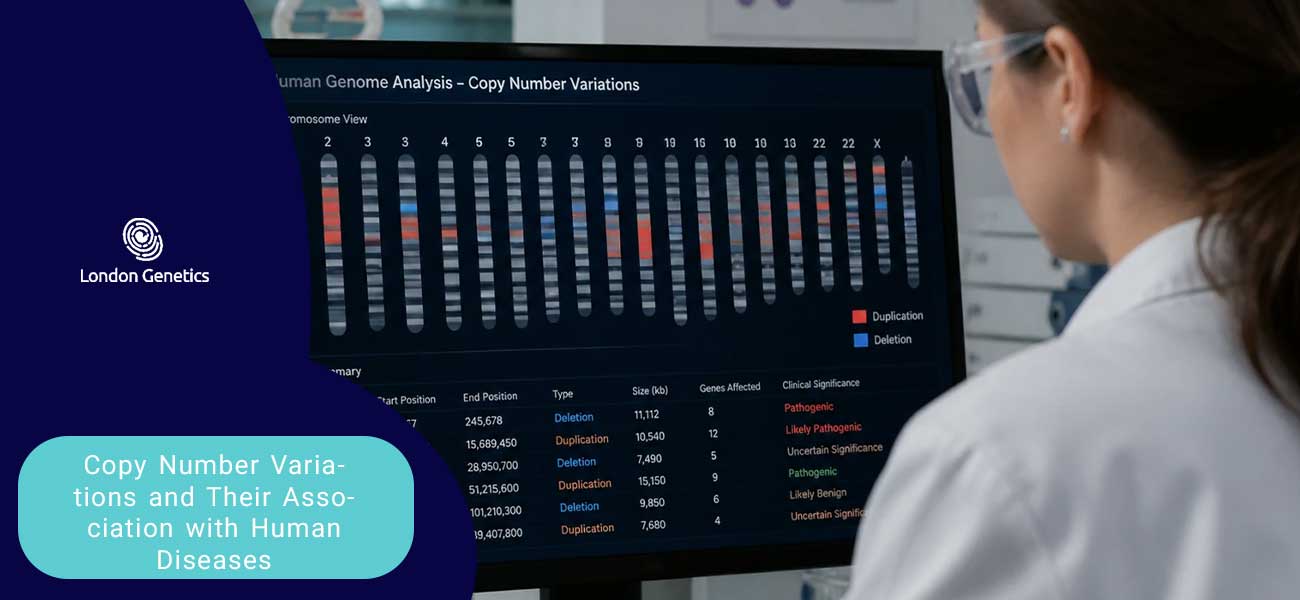
Copy Number Variations and Their Association with Human Diseases
How CNVs Can Contribute to Disease Development
Copy Number Variations (CNVs) can play a significant role in the development of various human diseases. While many CNVs are harmless and represent natural genetic diversity, others can disrupt important genes or regulatory regions. When this occurs, the altered number of gene copies may affect gene expression and biological pathways, increasing the risk of certain medical conditions.
- CNVs may delete essential genes or duplicate genes that regulate critical biological functions.
- Changes in gene dosage can disturb normal cellular processes.
- Large CNVs or those affecting multiple genes are more likely to have clinical consequences.
- Some disease‑associated CNVs are inherited, while others arise de novo (new mutations not present in the parents).
Neurodevelopmental Disorders and CNVs
One of the strongest associations between CNVs and disease is seen in neurodevelopmental disorders.
- Certain deletions or duplications have been linked to autism spectrum disorder (ASD).
- CNVs may also contribute to intellectual disability and developmental delay.
- Structural variations affecting genes involved in brain development and synaptic function can alter neurological pathways.
- Some well‑known syndromes, such as 22q11.2 deletion syndrome and Williams syndrome, are caused by specific CNVs.
Research in the Genetics of Autism has shown that rare CNVs can significantly increase the risk of autism in some individuals.
CNVs in Cancer Genomics
Copy Number Variations are also highly relevant in cancer genetics. Tumour cells often accumulate multiple genomic alterations, including amplifications and deletions of important genes.
- Gene amplifications may increase the activity of oncogenes that promote uncontrolled cell growth.
- Gene deletions may remove tumour suppressor genes that normally regulate cell division.
- CNVs in cancer can influence tumour progression and aggressiveness.
- Detecting these variations can help guide targeted cancer therapies.
For example, amplification of certain growth‑related genes can drive tumour development and affect treatment strategies.
CNVs and Cardiovascular or Metabolic Disorders
Structural genomic variations may also contribute to cardiovascular and metabolic diseases.
- Some CNVs influence genes involved in lipid metabolism and cardiovascular risk.
- Deletions or duplications affecting metabolic pathways may alter susceptibility to conditions such as obesity or diabetes.
- Research continues to explore how structural genomic variation contributes to complex diseases with both genetic and environmental influences.
CNVs in Immune and Infectious Disease Susceptibility
The immune system is another area where CNVs can influence disease susceptibility.
- Copy number differences in immune‑related genes can affect the body’s response to pathogens.
- Increased copies of certain genes may enhance immune defence.
- Conversely, deletions may weaken immune responses or increase vulnerability to infections.
- Some CNVs are also associated with autoimmune conditions.
These findings highlight how structural genomic variation can shape immune function.
Clinical Importance in Genomic Medicine
Because of their potential clinical impact, CNVs are routinely analysed in modern genomic medicine, especially in paediatric and developmental diagnostics.
- CNV analysis is commonly used when investigating unexplained developmental delay or congenital anomalies.
- Techniques such as aCGH, SNP arrays, and Next‑Generation Sequencing help detect disease‑associated CNVs.
- Identifying a pathogenic CNV can provide a definitive diagnosis, guide medical management, and inform genetic counselling for families.
Clinical Applications of Copy Number Variations in Modern Genomic Medicine
Copy Number Variations (CNVs) have become an essential component of modern genomic medicine. These structural changes in DNA—where segments are duplicated or deleted—can influence gene dosage and biological function. Today, CNV analysis is widely used in clinical genetics, paediatrics, cancer diagnostics, pharmacogenetics, and reproductive medicine. Detecting clinically significant CNVs can provide a clear molecular diagnosis, guide treatment decisions, and improve risk assessment for patients and families.
CNV testing is particularly valuable in paediatric genomic medicine, where it is frequently used to investigate developmental delay, autism spectrum conditions, and congenital anomalies. In oncology, CNV profiling can reveal important tumour‑related changes such as oncogene amplifications or tumour‑suppressor deletions, helping clinicians select targeted therapies. Structural variations in certain genes can also affect drug metabolism, making CNV analysis relevant for pharmacogenetics and personalised prescribing. In addition, prenatal testing and reproductive genetic screening increasingly rely on CNV detection to identify clinically significant chromosomal imbalances.
Paediatric Genomic Diagnosis:
CNV analysis is often used as a first‑line test for developmental delay, congenital anomalies, and autism spectrum conditions, helping identify microdeletion and microduplication syndromes.
Cancer Genomics:
Copy number changes in tumours—such as oncogene amplification or tumour suppressor loss—can guide targeted cancer therapies and improve prognostic assessment.
Pharmacogenetics:
Duplications or deletions in drug‑metabolising genes can influence how patients process medications, supporting safer and more personalised prescribing.
Prenatal & Reproductive Genetics:
Modern genomic testing can detect clinically significant chromosomal imbalances in prenatal samples or embryos during assisted reproduction.
Supporting Genetic Counselling:
Understanding whether a CNV is inherited or newly arisen helps clarify recurrence risk and supports informed decision‑making for families.