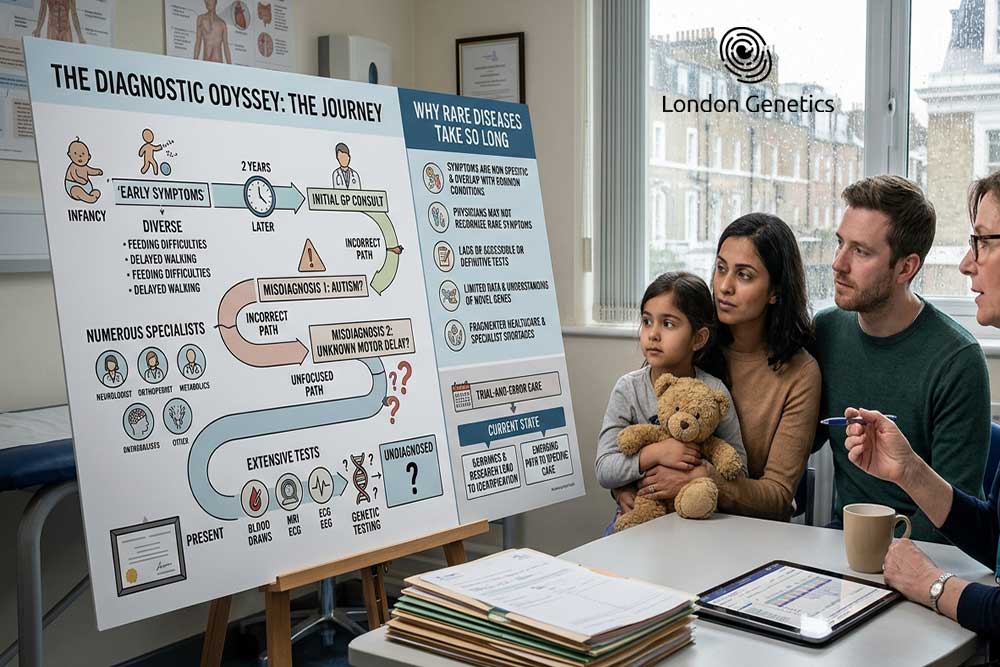
What Is the Diagnostic Odyssey?
The Diagnostic Odyssey describes the often long and challenging journey a patient and their family may experience before receiving an accurate diagnosis for a rare disease. Rather than finding answers after one or two appointments, patients may spend months or even years visiting different doctors, seeing multiple specialists, undergoing repeated tests, and trying different treatments.
For families, this journey can be particularly difficult because rare diseases often present with complex, unusual, or overlapping symptoms. In some cases, early symptoms may appear unrelated, making it harder for healthcare professionals to identify the underlying condition. A patient may also receive an initial diagnosis that explains some symptoms but does not provide a complete picture.
The Diagnostic Odyssey is therefore not simply a delay in diagnosis. It can involve uncertainty, frustration, emotional stress, financial pressure, and the challenge of navigating different parts of the healthcare system. Families may continue searching for answers while worrying about their loved one’s health and future.
Fortunately, advances in medical research, particularly in genetic testing, are helping to shorten the Diagnostic Odyssey for many patients. As doctors gain a better understanding of rare diseases and access to more advanced diagnostic tools, some families are now able to receive clearer answers and more appropriate care sooner.
Why Does Diagnosis Take So Long for Rare Diseases?
Diagnosing a rare disease can take years because many rare conditions are difficult to recognise. Their symptoms may be similar to those of more common illnesses, or a patient may have several symptoms that do not immediately appear to be connected.
Many doctors may have limited experience with individual rare diseases. With thousands of rare conditions affecting relatively small numbers of people, a patient’s symptoms may not immediately match a familiar diagnosis, and they may be referred to several specialists before the right combination of symptoms is recognised.
The diagnostic process can also involve repeated blood tests, scans, biopsies, and other investigations. When these tests do not provide a clear answer, further appointments and referrals may be needed. In some cases, patients may even receive an incorrect or incomplete diagnosis before the underlying rare disease is identified.
For families, these delays can make the Diagnostic Odyssey particularly stressful. They may spend years searching for an explanation while symptoms continue or change.
There is reason for hope. Improvements in genetic testing, clinical research, and awareness of rare diseases are helping healthcare professionals investigate complex cases more effectively and, in some cases, reach a diagnosis much sooner.
The Emotional Toll on Patients and Families
The Diagnostic Odyssey is not only a medical journey; it can also have a significant emotional impact on patients and their families. When answers remain out of reach for months or years, uncertainty can become a constant part of everyday life.
Living With Uncertainty
Not knowing what is causing symptoms can be extremely difficult. Patients and families may worry about what the future holds, particularly when symptoms continue without a clear explanation.
Common emotional challenges may include:
- Frustration: Repeated appointments, referrals, and tests can become exhausting.
- Anxiety: Families may worry that symptoms are getting worse without knowing why.
- Isolation: Patients may feel that others do not understand what they are experiencing.
- Loss of confidence: Receiving different or incorrect diagnoses can make it difficult to know which advice to trust.
- Emotional exhaustion: Years of searching for answers can affect both patients and those caring for them.
The Impact on Everyday Life
The Diagnostic Odyssey can affect much more than medical care. Frequent appointments and investigations may interfere with school, work, family life, and social activities. Parents and carers may also experience stress as they try to support their loved one while managing their own concerns.
Finding Hope Through Answers
Although the Diagnostic Odyssey can be overwhelming, reaching an accurate diagnosis can provide an important sense of clarity. Understanding the underlying condition may help patients and families make informed decisions about treatment, care, and future planning.
Advances in genetic testing and greater awareness of rare diseases are helping shorten the Diagnostic Odyssey for some families. Even when a diagnosis takes time, each step towards understanding the condition can bring patients closer to the answers and support they need.
Common Stops Along the Way: Misdiagnosis and Repeated Testing
During a Diagnostic Odyssey, patients with rare diseases may encounter several challenges before receiving an accurate diagnosis. Two of the most common are misdiagnosis and repeated testing, which can make an already difficult journey even longer.
As awareness of rare diseases and access to advanced genetic testing continue to improve, there is growing potential to reduce unnecessary delays and help patients reach an accurate diagnosis sooner.
How Genetic Testing Is Shortening the Diagnostic Odyssey
Advances in genetic testing are helping to shorten the Diagnostic Odyssey for patients with suspected rare diseases. Traditional tests may not always identify the underlying cause, particularly when symptoms are complex or affect several parts of the body. Genetic testing can provide another way to investigate the condition by looking directly at a patient’s DNA.
How Advanced Genetic Testing Can Help
Modern genomic technologies, including Next-Generation Sequencing (NGS), Whole Exome Sequencing (WES), and Whole Genome Sequencing (WGS), can identify genetic changes that may be difficult to detect through conventional testing. These approaches can be particularly useful when a patient has unexplained symptoms or has already undergone multiple investigations without receiving a clear diagnosis.
Genetic testing may help to:
- Identify the genetic cause of unexplained symptoms
- Confirm or clarify a suspected rare disease
- Reduce unnecessary or repeated investigations
- Provide information that can guide appropriate care
- Help families better understand a condition and its potential inheritance pattern
From Uncertainty to Answers
For families who have spent years searching for answers, genetic testing can provide an important new direction. However, genetic results can sometimes be complex or uncertain and require careful interpretation alongside the patient’s medical history and symptoms.
If you would like to learn more about rare conditions and the role of genomic testing, explore our guide to Rare Genetic Diseases.
By combining clinical assessment with advanced genomic testing, healthcare professionals may be able to make the Diagnostic Odyssey shorter and help patients reach a clearer diagnosis sooner.
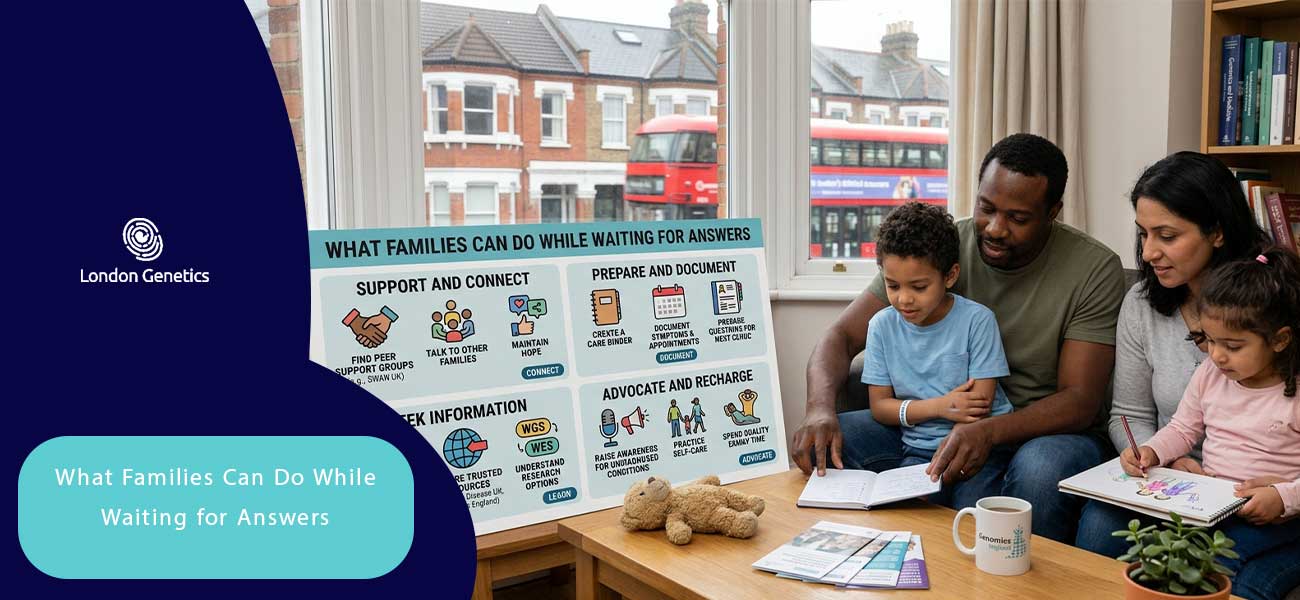
What Families Can Do While Waiting for Answers
The Diagnostic Odyssey can be a long and uncertain process, but there are practical steps families can take while waiting for answers. Staying organised and keeping clear records can make it easier for healthcare professionals to understand the patient’s medical history and identify patterns in their symptoms.
Keep a Detailed Medical Record
Keep copies of important medical information in one place, including:
- Previous diagnoses and medical reports
- Blood test and scan results
- Genetic testing results
- Current and previous medications
- A timeline of symptoms and when they first appeared
- Family history of similar or unexplained health conditions
A clear medical history can help specialists see the bigger picture, particularly when a patient has seen several healthcare professionals during their Diagnostic Odyssey.
Track Symptoms and Changes
Keeping a simple symptom diary can also be useful. Record when symptoms appear, how long they last, what makes them better or worse, and whether new symptoms develop. Over time, these details may reveal patterns that are difficult to remember during a short medical appointment.
Ask Questions and Seek Specialist Advice
Families should feel comfortable asking their healthcare team questions about possible diagnoses, further investigations, and whether a referral to a specialist may be appropriate. If a rare genetic condition is suspected, discussing genetic testing with a qualified healthcare professional may also be helpful.
Look After Emotional Wellbeing
The Diagnostic Odyssey can be emotionally exhausting. Taking time to rest, staying connected with supportive friends and family, and seeking professional emotional support when needed can help families manage the uncertainty.
Most importantly, families should remember that a lengthy diagnostic journey does not mean that answers are impossible. With careful documentation, specialist input, and advances in genomic medicine, each step can bring patients closer to understanding their condition.
Summary: Bringing the Diagnostic Odyssey to an End
The Diagnostic Odyssey can be a long and challenging experience for patients and families living with unexplained symptoms or suspected rare diseases. Years of appointments, repeated testing, misdiagnoses, and uncertainty can take a significant emotional and practical toll.
The goal is not simply to end the Diagnostic Odyssey, but to help patients reach the right diagnosis sooner and access the appropriate care and support they need.
Book Your Consultation with Dr Karimiani