How is Bowel Cancer Passed Down Through Generations?
To understand how inherited risks manifest, it is essential to recognise that hereditary bowel cancer is not transmitted as an active disease, but rather as an underlying genetic vulnerability. What passes from parent to child is a specific alteration in our genetic code—known as a germline mutation—that substantially impairs the body’s natural defences against cellular damage.
The Mechanism of Inherited Predisposition
Every human cell carries two copies of each gene, one inherited from each biological parent. In families affected by hereditary forms of the disease, an individual inherits a faulty copy of a protective gene—often a tumour suppressor gene or a DNA mismatch repair gene—within their germline (the reproductive cells). Because this initial alteration is present in every cell from conception, it is referred to as the “first hit”.
For bowel cancer to subsequently develop in these individuals, only the remaining healthy copy of the gene needs to become damaged or inactivated over the course of their lifetime. This biological mechanism explains why hereditary bowel cancer tends to develop at a significantly earlier age compared to non-inherited cases, where both copies of a protective gene must undergo random, cumulative damage over several decades.
Autosomal Dominant Inheritance: The 50% Probability
The vast majority of recognised hereditary bowel cancer conditions follow an autosomal dominant pattern of inheritance. This clinical classification carries two fundamental implications for families:
- Equal Gender Distribution: The altered gene is located on one of the non-sex chromosomes (autosomes), meaning that both men and women have an equal likelihood of inheriting and passing on the mutation.
- A 1-in-2 Transmission Risk: An affected parent carrying a single mutated allele has a 50% chance of passing that specific variant to each biological child during pregnancy. Conversely, there is also a 50% chance that the child inherits the normal, functional gene copy.
If an individual does not inherit the familial variant, their risk of developing bowel cancer returns to that of the general population, and they cannot pass the hereditary mutation onto their own future children.
Variable Penetrance and Familial Expression
Inheriting a high-risk genetic mutation does not guarantee that an individual will inevitably develop malignancy. Geneticists refer to this biological variance as incomplete penetrance. While the lifetime probability of developing bowel cancer is markedly elevated in mutation carriers, some individuals may live their entire lives without presenting with a tumour.
Furthermore, these conditions can display variable expression within the same lineage. For instance, one carrier might develop multiple benign adenomatous polyps in their thirties, while a sibling with the exact same genetic alteration may present with an early-stage colon tumour in their fifties. This variation is influenced by a complex interplay of secondary modifier genes, environmental factors, gut microbiome health, and lifestyle exposures such as diet, smoking, and physical activity.
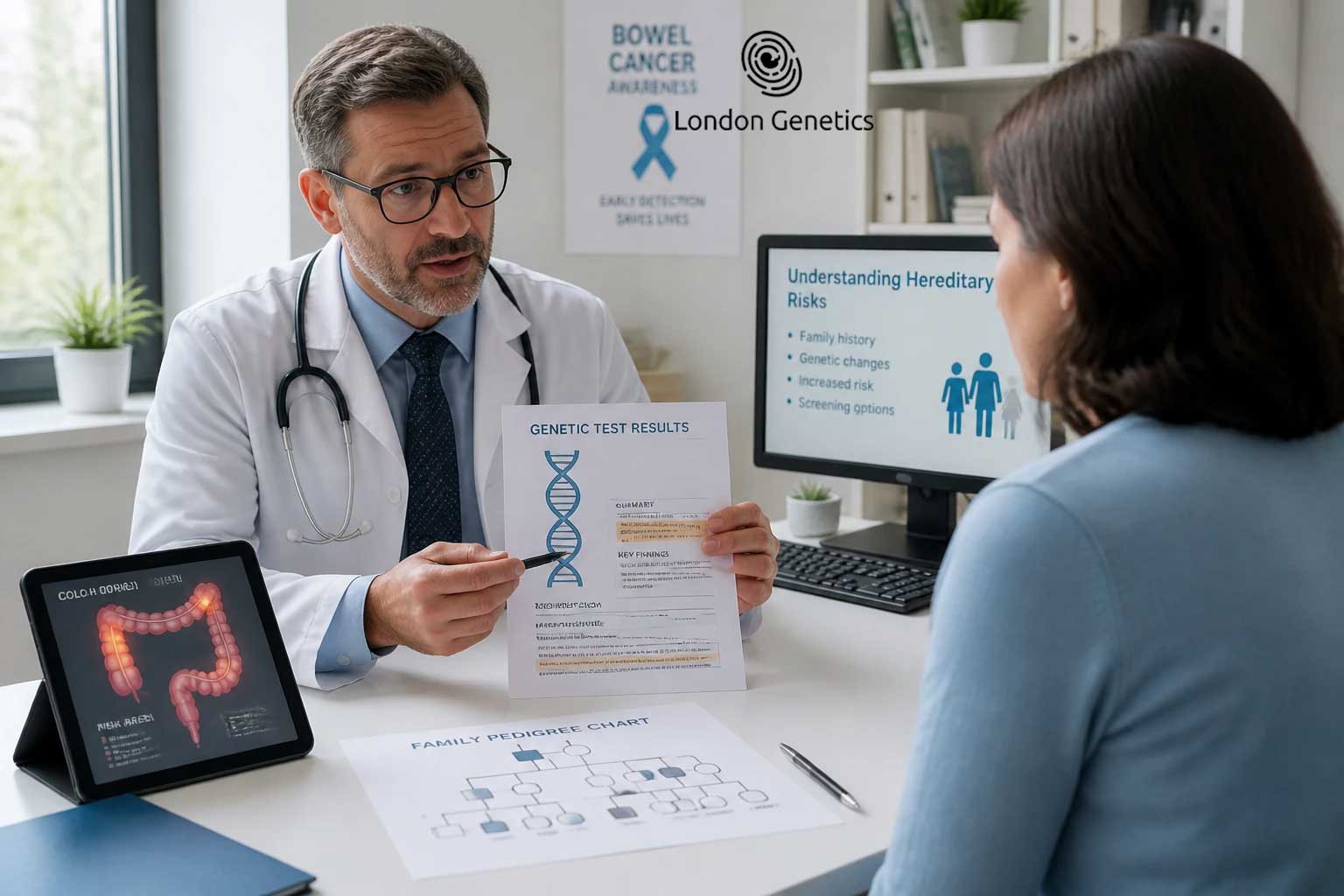
Unravelling how these complex hereditary patterns apply to your own family tree is the cornerstone of proactive preventative healthcare. Undergoing specialised cancer genetic counselling allows individuals to construct an accurate multi-generational pedigree chart, quantify personal hereditary risk, and determine whether targeted predictive testing is warranted for relatives across generations.
Common Genetic Risk Factors and Mutations in Colorectal Cancer
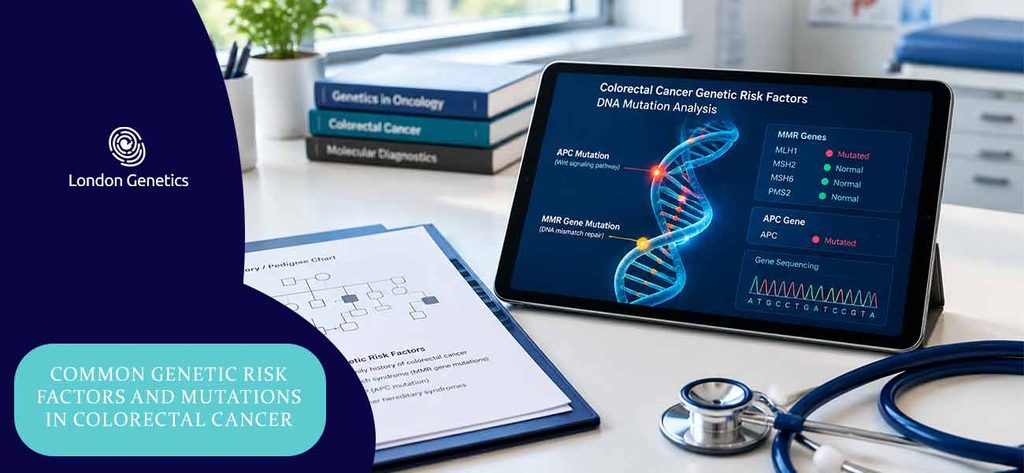
Colorectal and bowel cancer development is driven by specific genetic alterations that disrupt normal cell division and DNA repair. While most cases occur sporadically due to acquired damage over time, inherited forms stem from identifiable germline mutations that significantly raise disease risk across multiple organs.
Understanding these underlying mutations is central to precision medicine, placing inherited colorectal conditions within the broader framework of genetics related cancers. Pinpointing the exact gene variant allows clinicians to anticipate tumour behaviour and build tailored surveillance pathways.
Key Inherited Syndromes and High-Risk Genes
- Lynch Syndrome (MMR Genes): Accounting for 3% to 5% of all bowel malignancies, this is the most common inherited cause. It is driven by mutations in mismatch repair genes (MLH1, MSH2, MSH6, PMS2) or EPCAM deletions. Defective DNA repair accelerates the transformation of benign polyps into invasive carcinomas within just 1 to 3 years. For an exhaustive clinical guide on penetration rates and screening intervals, read our dedicated article on Lynch Syndrome: Inherited Cancer Risks, MMR Genes, and Clinical Implications.
- Familial Adenomatous Polyposis (FAP – APC Gene): A classic condition causing hundreds to thousands of precancerous polyps throughout the bowel, often emerging in adolescence. Without preventative intervention, the lifetime risk of bowel cancer approaches 100%.
- MUTYH-Associated Polyposis (MAP): An autosomal recessive disorder caused by faulty base excision repair (MUTYH), leading to multiple polyps and elevated colorectal risk similar to attenuated FAP.
- Rare Hamartomatous Syndromes: Less common inherited conditions such as Peutz-Jeghers syndrome (STK11) and Juvenile Polyposis syndrome (SMAD4, BMPR1A) that predispose individuals to distinct gastrointestinal polyps and related tumours.
Identifying which specific gene mutation runs in a family enables precise clinical stratification, ensuring that high-risk individuals receive targeted colonoscopic surveillance long before symptoms develop.
The Difference Between Sporadic and Hereditary Bowel Cancer
Distinguishing between sporadic and hereditary bowel cancer is essential for establishing clinical management, risk stratification, and family screening pathways. While sporadic colorectal cancers arise spontaneously from cumulative somatic mutations over a lifetime, hereditary forms originate from specific inherited germline variants present from birth.
| Key Distinguishing Feature | Sporadic Bowel Cancer | Hereditary Bowel Cancer |
|---|---|---|
| Prevalence & Proportion | Accounts for the vast majority (70% – 75%) of all diagnosed colorectal cancer cases. | Represents approximately 5% – 10% of cases with confirmed high-risk germline mutations (plus 15–20% familial clustering). |
| Primary Underlying Cause | Acquired somatic DNA mutations driven primarily by ageing, diet, sedentary lifestyle, smoking, and environmental exposures. | Inherited pathogenic germline variants (e.g., DNA mismatch repair genes in Lynch syndrome or the APC gene in FAP). |
| Typical Age at Onset | Typically diagnosed in older adults, predominantly presenting after age 60 or 70. | Frequently diagnosed at a significantly younger age, often under age 50 (and earlier in conditions like classic FAP). |
| Family History & Pedigree | Typically absent or non-specific; no clear multi-generational pattern of colorectal or related malignancies. | Pronounced multi-generational history; multiple first- and second-degree relatives affected by bowel or extracolonic tumours (e.g. endometrial, ovarian). |
| Tumour Characteristics & Location | Usually solitary tumours; most commonly situated in the left colon or rectum; typical slow adenoma-to-carcinoma progression (10–15 years). | High predisposition to right-sided (proximal) colon tumours, synchronous/metachronous multiple primary lesions, and accelerated adenoma progression (1–3 years in Lynch syndrome). |
| Screening & Surveillance Strategy | Standard national population screening programmes (such as biennial FIT kits starting from ages 50–60). | Intensive, personalised surveillance protocols (e.g., biennial high-definition colonoscopies initiating between ages 20–35) and risk-reducing interventions. |
Clinical Distinction: While sporadic bowel cancer is managed primarily on a case-by-case basis using standard pathways, identifying an inherited predisposition transforms care from reactive treatment into proactive, family-wide risk mitigation and early preventative colonoscopy.
Identifying Red Flags: When Should You Suspect a Hereditary Link?
Recognising the clinical warning signs of an inherited predisposition is vital for shifting bowel cancer care from late intervention to early prevention. While sporadic cases typically emerge late in life with no family pattern, specific clinical “red flags” strongly indicate an underlying germline mutation:
- Early-Onset Diagnosis: A primary bowel cancer diagnosis before the age of 50 in yourself or a close relative.
- First-Degree Relatives & Clustering: Two or more direct family members (parents, siblings, or children) diagnosed with colorectal or gastrointestinal tumours across multiple generations.
- Multiple Primary Tumours: Developing more than one distinct bowel tumour over time (synchronous or metachronous cancers) rather than a simple recurrence.
- Extracolonic Spectrum Cancers: A family pattern that combines bowel cancer with related malignancies—especially endometrial (uterine), ovarian, stomach, or urinary tract cancers.
- Significant Polyposis: The discovery of 10 or more adenomatous polyps, or unusual polyp types (such as hamartomas), during colonoscopy.
When these clinical indicators appear across a family tree, initiating formal hereditary cancer risk assessment is the recommended clinical step to evaluate eligibility for multi-gene panel sequencing and targeted preventative screening.

The Role of Genetic Testing in Assessing Bowel Cancer Risk
Genetic testing has transformed bowel cancer prevention from generalised guesswork into precise, proactive clinical management. By analysing germline DNA through advanced next-generation sequencing (NGS), diagnostic testing identifies the exact inherited mutations responsible for colorectal vulnerability long before abnormal cellular changes occur.
Clinical Value of Multi-Gene Panel Testing
Modern genomic screening evaluates comprehensive multi-gene panels simultaneously—covering primary conditions such as Lynch syndrome (MMR genes), Familial Adenomatous Polyposis (APC), and MUTYH-associated polyposis (MAP), alongside emerging moderate-risk genes.
Identifying a specific pathogenic variant provides critical clinical advantages:
- Personalised Screening Intervals: Transitioning from routine population checks to intensive, high-definition biennial colonoscopies starting as early as age 20 to 25.
- Proactive Interventions: Implementing evidence-based risk-reducing strategies, including chemoprevention (such as targeted daily aspirin) or prophylactic surgical pathways when appropriate.
- Extracolonic Organ Surveillance: Establishing specialised monitoring protocols for associated gynaecological, gastric, and urinary tract risks.
- Family Cascade Testing: Enabling direct, predictive testing for first-degree relatives, distinguishing those who need heightened surveillance from non-carriers who can avoid unnecessary invasive procedures.
Accessing a comprehensive colorectal cancer genetic panel test provides individuals and families with a clear molecular diagnosis, turning genetic knowledge into a lifelong, actionable cancer prevention plan.

Frequently Asked Questions About Inherited Bowel Cancer
1. Can bowel cancer be inherited from either parent?
Yes, inherited bowel cancer can be passed down from either your mother or your father. Most hereditary colorectal cancer conditions, including Lynch syndrome and Familial Adenomatous Polyposis (FAP), follow an autosomal dominant inheritance pattern. This means carrying just one mutated copy of the gene from either parent confers a 50% chance of passing the genetic variant on to each child, regardless of gender.
2. If my parent had bowel cancer, does that mean I will definitely get it?
No, having a parent with bowel cancer does not guarantee you will develop the disease. Inheriting a pathogenic genetic mutation increases your lifetime risk, but cancer development requires secondary acquired mutations over time (incomplete penetrance). Furthermore, undergoing regular preventative colonoscopies allows polyps to be detected and removed long before they can become malignant.
3. What percentage of bowel cancer cases are hereditary?
Approximately 5% to 10% of all bowel cancer diagnoses are directly linked to high-risk inherited genetic mutations, such as Lynch syndrome or FAP. An additional 15% to 20% of cases exhibit familial clustering, where a combination of shared moderate-risk genes and common environmental lifestyle factors increases overall vulnerability across relatives.
4. At what age should I start screening if I have a family history of bowel cancer?
Clinical guidelines recommend initiating colonoscopy screening 10 years earlier than the youngest affected first-degree relative, or between ages 20 and 35 if a specific high-risk genetic syndrome is diagnosed. For individuals with confirmed Lynch syndrome or FAP, specialised biennial colonoscopic surveillance begins significantly earlier than the standard national screening age (which typically starts at 50 to 60).
5. What is the difference between a polyp and hereditary bowel cancer?
A polyp is a benign, non-cancerous growth on the inner lining of the bowel, whereas hereditary bowel cancer occurs when polyps acquire genetic damage and become invasive over time. In hereditary syndromes like Lynch syndrome, the transformation from a benign adenoma to invasive cancer is significantly accelerated (taking 1 to 3 years compared to 10 to 15 years in sporadic cases), making regular polyp removal life-saving.
6. How is genetic testing for bowel cancer performed?
Genetic testing for hereditary bowel cancer is performed using a simple blood sample or saliva swab to extract germline DNA. The DNA is analysed using Next-Generation Sequencing (NGS) multigene panels to identify specific pathogenic mutations across key colorectal cancer genes (MLH1, MSH2, MSH6, PMS2, EPCAM, APC, MUTYH, and others).
7. Can lifestyle changes lower my risk if I have an inherited bowel cancer gene?
Yes, maintaining a healthy lifestyle helps modulate overall bowel cancer risk even in individuals with an inherited predisposition. Evidence-based measures include maintaining a healthy body weight, engaging in regular physical exercise, limiting red and processed meat intake, stopping smoking, minimising alcohol consumption, and discussing clinical chemoprevention (such as daily aspirin under medical guidance) with your specialist.