What Is Egg Retrieval in IVF?
Egg Retrieval is a key step in the in vitro fertilisation (IVF) process in which mature eggs are collected directly from a woman’s ovaries for fertilisation in the laboratory. This procedure usually takes place after ovarian stimulation, a phase during which fertility medications encourage the ovaries to produce several mature eggs instead of the single egg that normally develops in a natural cycle. Once the follicles reach the appropriate size, the eggs are ready to be collected through the Egg Retrieval procedure.
During Egg Retrieval, a fertility specialist uses a thin needle guided by transvaginal ultrasound to carefully access the ovarian follicles and retrieve the eggs. The procedure is typically performed under light sedation or anaesthesia to ensure comfort and usually takes about 20 to 30 minutes. After the eggs are collected, they are immediately transferred to an embryology laboratory where they are prepared for fertilisation with sperm.
Egg Retrieval plays a crucial role in IVF because it provides the eggs that will be fertilised to create embryos. The number and quality of eggs retrieved can significantly influence the chances of successful fertilisation and embryo development. Specialists in IVF & Genetics carefully monitor follicle development before scheduling Egg Retrieval to ensure that the eggs are collected at the optimal stage of maturity.
Once fertilisation occurs, the resulting embryos are monitored for several days before one or more are transferred into the uterus. In some cases, embryos may also undergo genetic screening or testing to evaluate their chromosomal health. This is where the field of Reproductive Genetics becomes particularly important, as it helps identify embryos with the best potential for healthy implantation and pregnancy.
Overall, Egg Retrieval is considered a safe and well‑established medical procedure that forms the foundation of the IVF process. By allowing doctors to collect multiple eggs in a single cycle, Egg Retrieval increases the chances of producing viable embryos and improves the overall success rate of assisted reproductive treatments.
Why Egg Retrieval Is an Important Step in IVF Treatment
Egg Retrieval is a critical stage in IVF treatment because it provides the eggs needed to create embryos in the laboratory.
The number and quality of eggs collected during this procedure can significantly influence fertilisation, embryo development,
and the overall chances of achieving a successful pregnancy.
This increases the likelihood of retrieving multiple viable eggs during Egg Retrieval.
ultrasound‑guided techniques, ensuring they are ready for fertilisation.
allowing fertilisation to occur and embryos to begin developing.
freezing, or genetic testing when clinically appropriate.
improving the chances of successful embryo transfer and pregnancy.
for successful fertilisation and embryo development during IVF treatment.
Egg Retrieval forms the foundation of IVF treatment by providing the eggs needed for fertilisation,
embryo development, and ultimately increasing the chances of a successful pregnancy.
How to Prepare for the Egg Retrieval Procedure
Preparing properly for the Egg Retrieval procedure is an important part of the IVF process. Good preparation helps ensure that the eggs are collected at the optimal stage of maturity and that the procedure is performed safely and comfortably. Fertility specialists usually provide detailed instructions in the days leading up to Egg Retrieval, including medication schedules, dietary advice, and guidance about the day of the procedure.
Follow Your Fertility Medication Schedule
During IVF treatment, patients take hormonal medications to stimulate the ovaries and encourage multiple follicles to develop. These medications must be taken exactly as prescribed because they directly affect how many mature eggs will be available during Egg Retrieval. Your fertility team will also schedule regular ultrasound scans and blood tests to monitor follicle growth and hormone levels.
It is especially important not to miss the final trigger injection, which is given shortly before Egg Retrieval. This injection helps the eggs reach the correct stage of maturity so they can be successfully collected.
Attend Monitoring Appointments
Frequent monitoring appointments are a normal part of IVF preparation. These visits allow the fertility specialist to assess how the ovaries are responding to stimulation. Ultrasound imaging measures the size of the ovarian follicles, while blood tests check hormone levels such as oestradiol.
The timing of Egg Retrieval is carefully planned based on these results. When the follicles reach the ideal size, the clinic schedules the Egg Retrieval procedure approximately 34 to 36 hours after the trigger injection.
Prepare for the Day of Egg Retrieval
Patients are usually asked to avoid eating or drinking for several hours before Egg Retrieval because the procedure is typically performed under sedation or light anaesthesia. Wearing comfortable clothing and arranging transportation home are also recommended, as most patients should not drive immediately after the procedure.
It is also helpful to plan a quiet day of rest following Egg Retrieval, as mild cramping or fatigue can occur.
Follow Pre‑Procedure Health Guidelines
Fertility clinics often provide specific health recommendations before Egg Retrieval to reduce risks and improve outcomes. These may include avoiding alcohol, limiting strenuous exercise, and refraining from certain medications unless approved by your doctor.
Helpful preparation tips may include:
- Following all medication instructions provided by your fertility specialist
- Attending all scheduled monitoring appointments
- Arranging transport to and from the clinic on the day of Egg Retrieval
- Avoiding food and drinks for the recommended period before the procedure
- Planning time to rest and recover after Egg Retrieval
Proper preparation helps ensure that the Egg Retrieval procedure runs smoothly and maximises the chances of collecting healthy, mature eggs for fertilisation during IVF treatment.
Step‑by‑Step: How Egg Retrieval Is Performed
Egg Retrieval is a carefully planned medical procedure performed during IVF treatment to collect mature eggs from the ovaries. The process is minimally invasive, typically takes about 20–30 minutes, and is performed under ultrasound guidance to ensure accuracy and patient safety.

A simplified overview of the main stages involved in the Egg Retrieval procedure during IVF treatment.

Before the procedure starts, medical staff review the treatment plan and confirm that the ovaries are ready for egg collection.
Vital signs are checked and an intravenous (IV) line is placed to provide sedation or light anaesthesia, ensuring patient comfort throughout the Egg Retrieval process.

Egg Retrieval is usually performed under conscious sedation or mild anaesthesia.
The patient is positioned similarly to a routine gynaecological examination, allowing the fertility specialist to safely access the ovaries during the procedure.

A transvaginal ultrasound probe is gently inserted to visualise the ovaries and the follicles that contain the eggs.
This imaging guidance allows the specialist to accurately locate each follicle and guide the retrieval needle safely.

A thin needle guided by ultrasound is used to access each follicle through the vaginal wall.
The follicular fluid is gently aspirated and collected in sterile laboratory tubes, which contain the eggs retrieved from the ovaries.

After Egg Retrieval, the collected follicular fluid is immediately transferred to embryologists in the laboratory.
Specialists examine the samples under a microscope to locate and isolate the eggs before preparing them for fertilisation.
After the procedure, patients rest in a recovery area while medical staff monitor vital signs.
Mild cramping or bloating may occur, but most patients return home the same day and continue with the next steps of IVF treatment.
Key Takeaway:
Egg Retrieval is a safe and carefully controlled procedure that allows fertility specialists to collect mature eggs for fertilisation. This step forms the essential bridge between ovarian stimulation and embryo development in IVF treatment.
Is Egg Retrieval Painful? Anaesthesia and Comfort During the Procedure
Many patients preparing for IVF treatment wonder whether Egg Retrieval is painful. In most cases, the Egg Retrieval procedure is not considered painful because it is performed under sedation or light anaesthesia. This allows patients to remain relaxed and comfortable while the fertility specialist collects the eggs from the ovaries.
Egg Retrieval is a minimally invasive procedure that usually takes about 20 to 30 minutes. Because the ovaries are accessed through the vaginal wall using an ultrasound‑guided needle, anaesthesia is used to minimise discomfort and ensure that the patient does not feel pain during the procedure.
Types of Anaesthesia Used During Egg Retrieval
Different fertility clinics may use slightly different anaesthesia methods depending on the patient’s health and clinical preferences. The most common options include:
- Conscious sedation: This is the most commonly used option during Egg Retrieval. Medication is given through an IV to help the patient relax and feel drowsy, while still breathing independently.
- Light intravenous anaesthesia: In some clinics, deeper sedation may be used so the patient sleeps lightly during the Egg Retrieval procedure.
- Local anaesthesia: Occasionally, local anaesthetic medication may be applied to reduce discomfort around the vaginal wall, although sedation is still typically used.
These anaesthesia techniques allow the Egg Retrieval procedure to be completed safely while keeping the patient comfortable throughout the process.
What Patients Usually Feel During the Procedure
Because of sedation, most patients do not remember the Egg Retrieval procedure or feel significant discomfort while it is being performed. Some people may feel mild pressure in the pelvic area, but this sensation is usually brief and well controlled with medication.
After Egg Retrieval, mild symptoms may appear as the anaesthesia wears off. These can include light cramping, pelvic tenderness, or a feeling of bloating caused by the ovarian stimulation process. These effects are generally temporary and improve within a short period of time.
Comfort and Recovery After Egg Retrieval
Following Egg Retrieval, patients are usually monitored in a recovery area for a short time before being discharged. Because sedative medications are used, most clinics recommend resting for the remainder of the day and avoiding driving or strenuous activity.
Common temporary symptoms after Egg Retrieval may include:
- Mild abdominal cramping
- Pelvic pressure or tenderness
- Light vaginal spotting
- Temporary fatigue from sedation
These symptoms typically resolve within one to two days. Fertility specialists provide clear post‑procedure instructions to help patients recover comfortably after Egg Retrieval and continue with the next stages of IVF treatment.
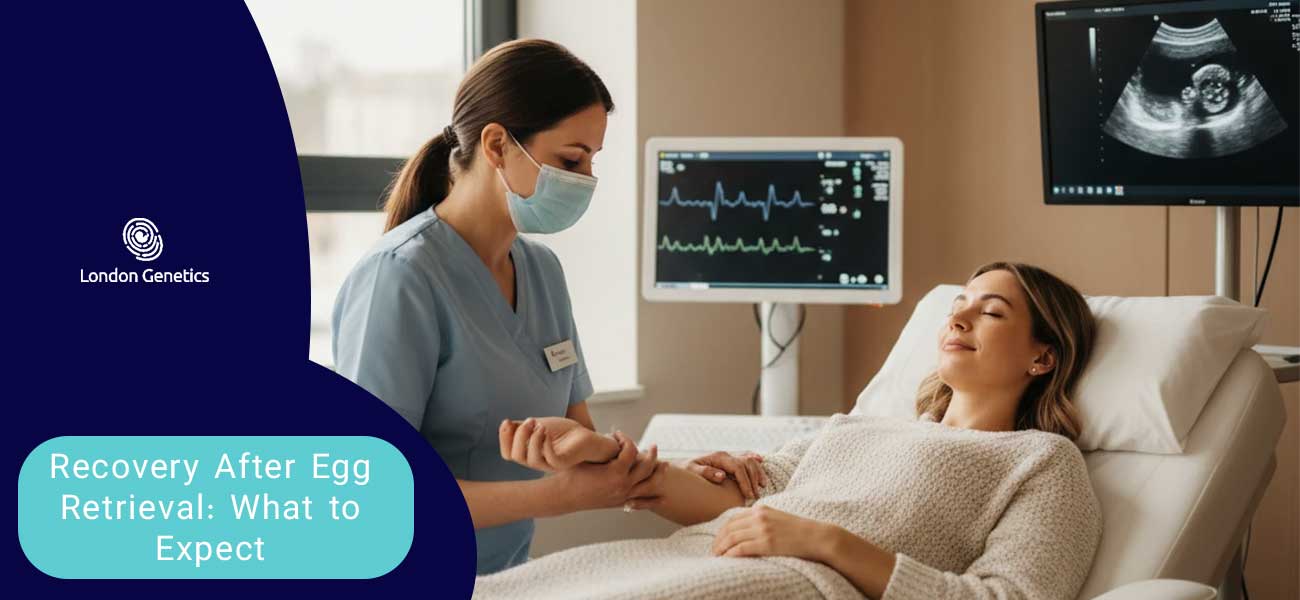
Recovery After Egg Retrieval: What to Expect
Recovery after Egg Retrieval is usually quick, and most patients can return to normal daily activities within a short period of time. Although Egg Retrieval is a minimally invasive procedure, the ovaries may remain slightly enlarged for several days because of the hormonal stimulation used during IVF treatment. Understanding what to expect during recovery can help patients feel more prepared and comfortable after the procedure.
Immediate Recovery After the Procedure
After Egg Retrieval, patients are typically moved to a recovery area where medical staff monitor them as the sedation or anaesthesia wears off. This observation period usually lasts between 30 minutes and an hour. Once the patient is fully awake and stable, they can usually return home the same day.
Because sedative medications are used during Egg Retrieval, patients are advised not to drive or operate machinery for the rest of the day. Having a companion available to provide transportation and support is recommended.
Common Symptoms After Egg Retrieval
It is normal to experience mild physical symptoms following Egg Retrieval. These symptoms are generally temporary and improve within a few days as the body begins to recover.
Common post‑procedure symptoms may include:
- Mild abdominal cramping
- Pelvic tenderness or pressure
- Bloating due to enlarged ovaries
- Light vaginal spotting
- Temporary fatigue
These effects are typically mild and can often be managed with rest, hydration, and over‑the‑counter pain relief if recommended by the fertility specialist.
Activity and Self‑Care During Recovery
Most patients are able to resume light daily activities the day after Egg Retrieval. However, fertility specialists usually recommend avoiding intense physical exercise, heavy lifting, or high‑impact activities for several days to protect the ovaries while they return to their normal size.
Helpful recovery tips after Egg Retrieval include:
- Resting on the day of the procedure
- Drinking plenty of fluids
- Eating light and balanced meals
- Avoiding strenuous activity for several days
- Following all post‑procedure instructions from the fertility clinic
When to Contact Your Fertility Clinic
Although complications after Egg Retrieval are uncommon, patients should contact their fertility clinic if they experience unusual symptoms. These may include severe abdominal pain, heavy bleeding, fever, persistent nausea, or rapid abdominal swelling.
Most patients recover smoothly after Egg Retrieval and move on to the next stage of IVF treatment, which involves fertilisation of the collected eggs and monitoring embryo development in the laboratory.
Possible Risks and Factors Affecting Egg Retrieval Success
Egg Retrieval is generally a safe and routine step in IVF treatment, but like any medical procedure it may involve certain risks. Understanding the possible complications and the factors that influence Egg Retrieval outcomes can help patients feel more informed and prepared during the IVF process.
Although complications are uncommon, Egg Retrieval involves collecting eggs from the ovaries using an ultrasound‑guided needle. Fertility specialists perform the procedure with great care and closely monitor patients to ensure safety and minimise potential risks.
Possible Risks:
Minor vaginal spotting, temporary discomfort, infection risk, or ovarian hyperstimulation syndrome (OHSS) may occur after Egg Retrieval, although serious complications are rare.
Factors Affecting Success:
The number and quality of eggs retrieved can be influenced by age, ovarian reserve, response to fertility medications, and the correct timing of the trigger injection before Egg Retrieval.
Why Careful Monitoring Matters:
With personalised treatment plans and careful monitoring during IVF, fertility specialists can optimise Egg Retrieval timing and improve the chances of collecting mature, healthy eggs.