
Introduction: Assessing the Necessity of Care
For decades, a breast cancer diagnosis has been followed by a predictable and often daunting clinical roadmap. Once primary surgery is completed, patients are routinely propelled into a world of intensive, highly toxic post-operative treatments. Understanding the true role and necessity of chemotherapy in breast cancer has always been one of the most critical challenges in oncology. However, a landmark international study led by University College London (UCL) is fundamentally challenging these traditional protocols. Published just days ago, this practice-changing clinical trial has ignited a crucial conversation across the global medical community, forcing oncologists and vulnerable patients alike to confront a deeply vital question: is aggressive systemic treatment genuinely required for every single patient?
                    ┌────────────────────────────────────────┐
                    │       Traditional Oncology Model       │
                    │   "One-size-fits-all" aggressive care   │
                    └───────────────────┬────────────────────┘
                                        │
                                        ▼
                    ┌────────────────────────────────────────┐
                    │      The Modern Genomic Paradigm       │
                    │   Treatments tailored to tumour DNA    │
                    └────────────────────────────────────────┘
The brutal side effects of conventional cytotoxic treatments—ranging from persistent fatigue and severe nausea to critical immune suppression and long-term fertility issues—have long been accepted as an inevitable, painful price for survival. Yet, the latest clinical data officially proves that for millions of women worldwide, this immense physical and psychological toll provides absolutely no therapeutic benefit. Because historical oncology lacked precise diagnostic mapping, the standard application of chemotherapy in breast cancer was often heavily over-prescribed to prevent disease recurrence, a sweeping clinical assumption that we now know leads to massive, systemic overtreatment.
We are living in a revolutionary era where advanced Cancer Genetic Testing is transforming oncology from a defensive, reactive game of guesswork into a discipline of absolute molecular precision. When a clinical team is trying to evaluate the clinical value of chemotherapy in breast cancer, looking at the outward size or stage of a tumour is no longer enough. By decoding the intricate genetic signals and gene expression pathways hidden within cancer cells, modern specialists can now accurately distinguish between highly aggressive tumours that require maximum chemical intervention and low-risk variations that can be safely managed with targeted hormone therapies alone.
Ultimately, this means that determining the absolute necessity of chemotherapy in breast cancer has shifted from a subjective clinical opinion to an objective genetic fact. As London continues to establish itself as a global hub for genomic innovation and personalized medicine, this latest trial breakthrough underscores a profound, permanent shift in modern healthcare. True medical authority is no longer about how aggressively we can treat an illness, nor is it about insisting that all patients universally require the same heavy drug regimens. Instead, the future of oncology lies in our ability to read an individual’s unique biological blueprint, allowing us to deliver life-saving treatments precisely while shielding patients from completely unnecessary systemic harm.
The UCL Trial 2026: Sparing Thousands from Brutal Side Effects
The scale of the landmark international study led by University College London (UCL) marks a historic turning point for breast cancer prognosis and patient welfare. Driven by data from over 4,000 newly diagnosed patients, this 2026 trial provides the definitive evidence needed to reshape global oncology guidelines and eliminate systemic overtreatment.
Recognising the massive shift toward data-driven precision oncology transforms breast cancer management from a terrifying blanket prescription into a personalised framework. By proving that thousands can safely bypass cytotoxic therapy without compromising survival, the 2026 UCL trial replaces treatment anxiety with scientific certainty and an uncompromised quality of life.
Understanding the Prosigna Test: How Counting 50 Genes Calculates Risk
To understand how clinicians can confidently predict which patients can safely bypass aggressive treatments, one must look at the advanced genomic technology driving this paradigm shift. The absolute necessity of chemotherapy in breast cancer is no longer determined by standard clinical guesswork. The cornerstone of modern precision oncology is a specialized diagnostic tool known as the Prosigna genomic assay. Unlike traditional diagnostic methods that merely look at the size of a breast tumour under a microscope, this next-generation gene expression test interrogates the absolute molecular architecture of the cancer tissue itself, providing a precise biological forecast of how the disease is likely to behave over time.
This sophisticated method of Cancer Genetic Testing functions by extracting RNA from the patient’s primary breast tumour tissue and measuring the activity—or expression levels—of 50 specific genes known to drive breast cancer growth, cellular proliferation, and metastasis. By analyzing this complex genetic signature, the laboratory runs a advanced algorithm to calculate an objective genomic risk score.
┌──────────────────────────┐     ┌──────────────────────────┐     ┌──────────────────────────┐
│   Tumour Tissue Biopsy   │ ──> │ Prosigna Genomic Assay   │ ──> │   Molecular Risk Score   │
│  (RNA Extraction Phase)  │     │ (Profile 50 Growth Genes)│     │  (0 to 100 Calibration)  │
└──────────────────────────┘     └──────────────────────────┘     └──────────────────────────┘
This molecular data directly guides the oncological team’s treatment strategy by providing two crucial clinical indicators:
-
Intrinsic Subtype Classification: The test accurately determines the precise biological classification of the breast cancer (such as Luminal A, Luminal B, or HER2-enriched), allowing for hyper-targeted therapeutic matching.
-
Risk of Recurrence (ROR) Score: The assay generates a definitive numeric score on a scale from 0 to 100. This score reflects the exact probability of the cancer returning within a ten-year window, assuming the patient undergoes standard hormone therapy alone.
In the international trial, patients who received a low ROR genomic score were categorized as possessing highly indolent, slow-growing tumours. It is this specific molecular clarity that allows a specialist to determine whether there is any genuine clinical value in prescribing chemotherapy in breast cancer. Instead of treating a statistical average, physicians are now able to read the unique genetic instructions of the tumour, proving that when the 50-gene signature indicates a minimal risk of recurrence, exposing a patient to toxic systemic drugs is medically redundant. Ultimately, advanced screening tools ensure that the application of chemotherapy in breast cancer is strictly reserved for cases where it is biologically required.
The Data Behind the Survival Rates: Chemo vs. Hormone Therapy Alone
When a patient is told they have an option to bypass conventional post-operative treatments, the immediate emotional response is a mixture of relief and intense anxiety. The hard clinical data extracted from the UCL-led international trial provides definitive, empirical reassurance that for the right patient group, omitting cytotoxic drugs carries no significant statistical risk.

Choosing hormone therapy alone is not an omission of care; it is an act of precision oncology that safely secures your health using the absolute sharpest insights modern science has to offer.


Key Takeaway:
Analysing the hard science behind the numbers proves that you are not losing your chance at survival by protecting your body from toxicity. For a patient classified as low-risk by modern genomic screening, choosing hormone therapy alone replaces calculated gambles with empirical certainty, guaranteeing an uncompromised quality of life.
Moving Beyond the ‘One-Size-Fits-All’ Model in Modern Oncology
The landscape of modern medicine is undergoing a profound paradigm shift, moving rapidly away from historical protocols that treated entire populations based on broad clinical averages. For decades, the standard consensus operated under a highly defensive framework: if a treatment could save a small percentage of lives, it was administered to almost everyone presenting with a similar stage of disease. This historic, indiscriminate approach meant that the standard application of chemotherapy in breast cancer was mandated for an overwhelming majority of patients, regardless of whether their specific tumour biology required such aggressive intervention. Today, this blunt, un-targeted methodology is being recognized as clinically outdated and unnecessarily harsh.
The absolute inefficiency of the old paradigm was perfectly encapsulated by Professor David Miles, a leading UK cancer specialist involved in the groundbreaking UCL trial. Reflecting on historical oncology practices, Professor Miles noted a sobering reality regarding the traditional use of chemotherapy in breast cancer:
“We used to give chemotherapy to 100 women to benefit 10, knowing that 90 didn’t need it.”
This striking statistic highlights a long-standing clinical dilemma. For every 100 individuals enduring the brutal physical and psychological toll of cytotoxic drugs, 90 of them went through the experience for absolutely no added therapeutic reward. They were forced to face severe systemic toxicity simply because doctors lacked the precise molecular tools to identify the 90% who did not actually derive any clinical benefit from the treatment.
  Traditional Model (Treat 100 to Benefit 10)
  [██████████] -> 10% Benefit
  [██████████████████████████████████████████████████████████████████████████████████████] -> 90% Unnecessary Toxicity

  Modern Genomic Model (Targeted Precision Care)
  [██████████] -> 10% High Genomic Risk (Chemotherapy Administered)
  [██████████████████████████████████████████████████████████████████████████████████████] -> 90% Low Genomic Risk (Chemotherapy Safely Omitted)
By transitioning into the era of personalized medicine, we are finally dismantling this sweeping approach and redefining how we utilize chemotherapy in breast cancer. Advanced genomic diagnostics allow clinical teams to filter patient cohorts with absolute precision. Instead of making a blanket assumption that all newly diagnosed women universally require aggressive systemic intervention, oncology teams can now separate the minority who will genuinely derive life-saving benefit from the vast majority who do not. Moving beyond the “one-size-fits-all” model ensures that chemotherapy in breast cancer is deployed only where it is biologically and logically justified, guaranteeing that no patient is forced to compromise their bodily wellness for a treatment that offers them no clinical return.
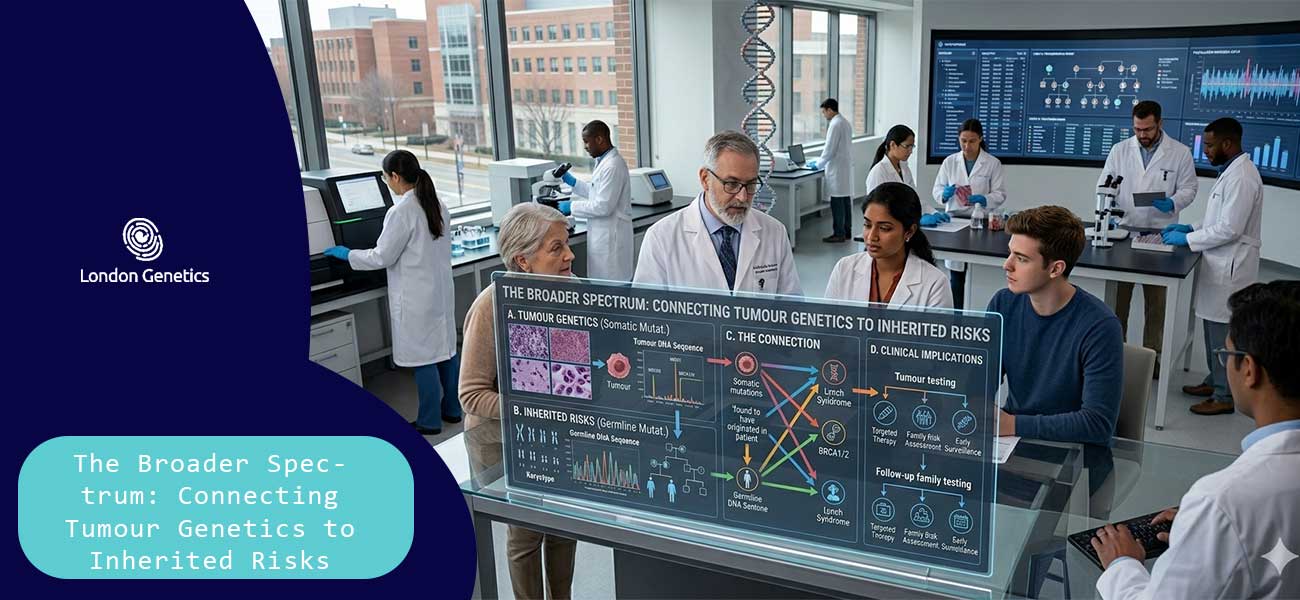
The Broader Spectrum: Connecting Tumour Genetics to Inherited Risks
While the recent UCL trial has rightfully captivated the medical world by proving how genomic tests can determine the necessity of treatment, it also opens a vital window into a much broader biological reality. Analyzing the genetic expression of an active tumour tells us how that specific cancer behaves. However, evaluating the role of chemotherapy in breast cancer through somatic profiling represents just one side of the genomic coin. To achieve absolute, lifelong protection against oncological diseases, we must look beyond the localized cells of an existing tumour and evaluate the deeper, inherited instructions written into an individual’s constitutional DNA.
This is where the overarching discipline of Cancer Genetic Testing becomes an indispensable shield for families. While assays like Prosigna evaluate the somatic mutations within a tumour to optimize active treatment and determine the exact value of chemotherapy in breast cancer, germline genetic screenings analyze the DNA you were born with. This cross-comparison is vital because a significant percentage of breast, ovarian, bowel, and pancreatic malignancies are directly driven by inherited genetic syndromes passed down through generations.
┌────────────────────────────────────────────────────────────────────────┐
│                        THE GENOMIC SHIELD MODEL                        │
├────────────────────────────────────────┬───────────────────────────────┤
│          SOMATIC TESTING               │       GERMLINE TESTING        │
│          (Tumour Analysis)             │     (Inherited Screenings)    │
├────────────────────────────────────────┼───────────────────────────────┤
│ • Focuses solely on cancer cells       │ • Focuses on constitutional   │
│ • Guides active treatment paths        │   DNA via blood/saliva        │
│ • Validates necessity of chemotherapy  │ • Identifies hereditary risks │
│ • Evaluates current disease velocity   │ • Protects the whole family   │
└────────────────────────────────────────┴───────────────────────────────┘
Understanding this connection alters how families approach long-term health. For instance, discovering an inherited alteration in the BRCA1 or BRCA2 genes, or identifying markers for Lynch Syndrome, completely reframes a family’s medical timeline. Rather than waiting for a late-stage diagnosis to occur and then scrambling to find out if there is a clinical requirement for chemotherapy in breast cancer, proactive screening allows individuals to construct a highly coordinated, clinical defense system years—or even decades—before a malignancy has the chance to develop.
By connecting these two genomic fields, modern healthcare is moving toward a future of complete diagnostic certainty. Somatic tumour testing tells clinicians how and when to deploy chemotherapy in breast cancer with absolute precision, while inherited genetic screening empowers families to intercept the disease entirely. For anyone navigating a complex family history of illness, embracing this broader spectrum of genomic insight is the most powerful, logical step toward replacing clinical vulnerability with absolute control over your biological future.
Conclusion: Navigating Your Treatment Journey with London Genetics
The groundbreaking clinical trial led by University College London marks a definitive end to the archaic, rigid protocols that have dominated oncology for decades. The clinical realisation that more than two-thirds of individuals can safely bypass aggressive, toxic treatments offers an immense sense of relief, ensuring your treatment roadmap is dictated exclusively by your unique biological markers.
The journey through advanced genomic science can often feel like navigating an unfamiliar, complex landscape. At London Genetics, we are dedicated to bridging the gap between cutting-edge clinical research and everyday patient care, replacing clinical guesswork with absolute biological certainty to ensure you avoid unnecessary medical harm.
Clinical Precision:
Utilising advanced sequencing technologies and clear genetic biomarkers to evaluate whether your specific profile demonstrates a definitive clinical requirement for chemotherapy.
Emotional Reassurance:
Replacing terrifying blanket prescriptions and trial-and-error treatment anxiety with definitive, evidence-based data hidden inside your DNA.
Cancer Genetic Testing:
Leveraging sophisticated somatic analysis alongside your oncology consultants to decipher complex data patterns for highly targetable medical strategies.
Inherited Mutation Screening:
Proactively evaluating your deep family history to screen for hereditary genetic risks, ensuring the next generation is comprehensively mapped and protected.
Definitive Health Control:
Stepping out of medical uncertainty to take absolute control of your long-term wellness blueprint equipped with elite clinical precision.