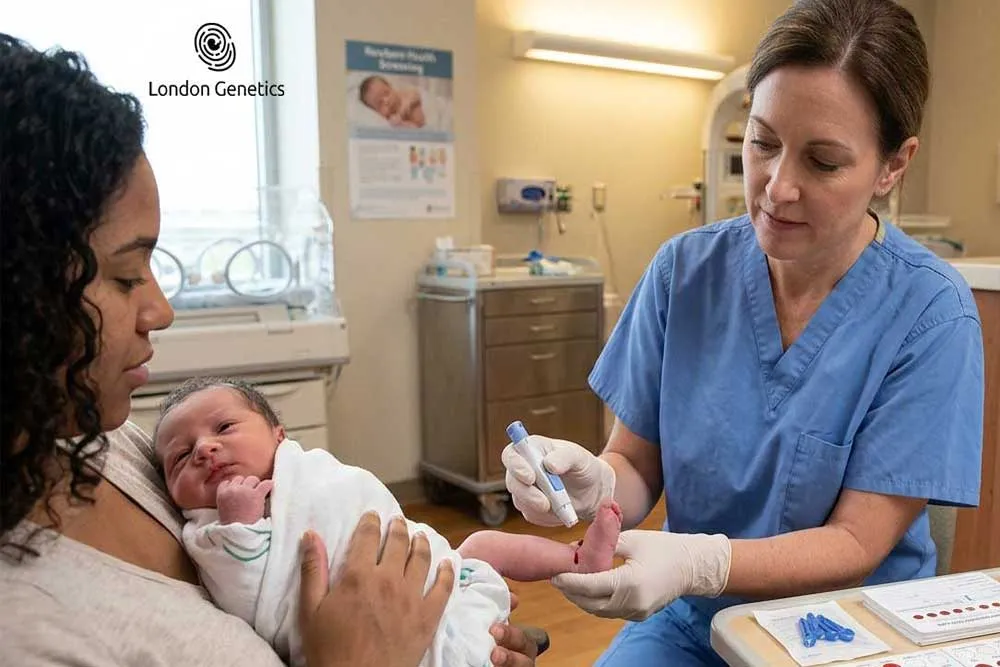
Introduction: Understanding the Vital Role of the Newborn Heel Prick Test
Welcoming a new baby into the world is an incomparable milestone, accompanied by a profound sense of joy and an instinctual desire to protect your child’s future. Amidst the flurry of early paediatric check-ups and midwife visits during those first few days at home, parents are introduced to an essential safeguard in neonatal care: the newborn heel prick test. Officially referred to within the UK healthcare system as the newborn blood spot screening, this routine procedure is typically scheduled around the fifth day of life. While the anticipation of any clinical procedure involving a newborn can naturally induce a touch of parental anxiety, understanding the profound, life-protecting significance of this quick test is the first step toward absolute peace of mind.
It is entirely natural for parents to feel protective and worry about whether the heel prick test will cause their infant discomfort. Healthcare professionals and midwives are exceptionally well-trained to perform this quick scratch on the heel with utmost gentleness, ensuring it is over in a matter of moments. Comforting measures, such as feeding your baby or holding them close for skin-to-skin contact during the collection, have been clinically proven to dramatically minimise any transient fussiness. This fleeting moment of mild discomfort is a remarkably small trade-off for the immense wealth of health insights it yields, acting as a vital safety net that screens for conditions that are completely invisible at birth.
┌────────────────────────────────────────────────────────────────────────┐
│                    THE EARLY DAYS HEALTH SAFEGUARD                     │
├────────────────────────────────────────────────────────────────────────┤
│  [Day 1-4: Observation] ───> Visual checks leave hidden flaws hidden   │
│                                                   │                    │
│                                                   ▼                    │
│  [Day 5: The Crucial Turning Point] ───────────────┼───────────────────┤
│  🌟 Routine Newborn Heel Prick Test Taken          │                    │
│                                                   │                    │
│                                                   ▼                    │
│  [The Laboratory Analysis] ───────────────────────┼───────────────────┤
│  • Biochemical Markers Analyzed                    │                    │
│  • Comprehensive Newborn Genetic Screening Core    │                    │
│                                                   │                    │
│                                                   ▼                    │
│  [Result] ──> Proactive Prevention / Definitive Lifelong Peace of Mind │
└────────────────────────────────────────────────────────────────────────┘
The underlying philosophy of this initial screening is rooted in early, decisive intervention. Many serious metabolic and inherited disorders do not manifest any outward physical signs during the first weeks of life, yet they silently begin to affect the body’s internal chemistry. By utilizing the small blood sample obtained via the heel prick test, modern laboratories can identify these hidden anomalies before a single symptom ever appears. Integrating this foundational baseline with modern advancements in newborn genetic screening ensures that if a vulnerable biochemical pathway is detected, a highly tailored, preemptive medical strategy can be implemented immediately, transforming a potential medical crisis into a manageable, perfectly guided blueprint for lifelong health.
Introduction: Understanding the Vital Role of the Newborn Heel Prick Test
Welcoming a new baby into the world is an incomparable milestone, accompanied by a profound sense of joy and an instinctual desire to protect your child’s future. Amidst the flurry of early paediatric check-ups and midwife visits during those first few days at home, parents are introduced to an essential safeguard in neonatal care: the newborn heel prick test. Officially referred to within the UK healthcare system as the newborn blood spot screening, this routine procedure is typically scheduled around the fifth day of life.
The underlying philosophy of this initial screening is rooted in early, decisive intervention. A fleeting moment of mild discomfort is a remarkably small trade-off for the immense wealth of health insights it yields. By pairing advanced bioinformatic analysis with active early tracking, healthcare providers can transform an unsolved or invisible medical risk into a clear, guided blueprint for lifelong health and peace of mind.
The Standard NHS Screening Protocol: The 9 Conditions Explained
The clinical power of the newborn heel prick test lies in its ability to detect rare but highly impactful inherited conditions early enough to alter the course of a child’s life. Within the UK, the National Health Service (NHS) provides a comprehensive, state-funded blood spot program designed to screen every infant for a specific panel of disorders. While these conditions are individually rare, failing to diagnose them early can lead to irreversible developmental delays, severe organ damage, or lifelong physical complications.
Through the heel prick test, biochemical specialists can look past outward clinical appearances and spot the chemical markers of these conditions before any metabolic damage occurs.
To provide parents and healthcare referrers with absolute transparency, the standard NHS screening framework focuses rigorously on nine key conditions, which can be categorised into three primary medical domains:
1. Inherited Blood Disorders
-
Sickle Cell Disease (SCD): A serious genetic blood disorder where red blood cells develop into an atypical, crescent shape instead of remaining flexible and round. This causes the cells to block blood vessels, leading to severe episodes of pain, frequent infections, and an elevated risk of anaemia. Early detection via the blood spot allows clinicians to initiate protective antibiotics and specialised care within the first weeks of life.
2. Endocrine Disorders
-
Congenital Hypothyroidism (CHT): A condition where a newborn baby is born without a fully functioning thyroid gland, meaning they cannot produce enough thyroxine. Thyroxine is vital for healthy brain development and physical growth. If left undetected, CHT causes severe mental retardation. However, when caught early by the heel prick test, it can be treated simply and perfectly with a daily thyroxine tablet.
3. Inherited Metabolic Diseases (IMDs)
-
Cystic Fibrosis (CF): A complex genetic condition that causes a thick, sticky mucus to accumulate in the lungs and the digestive system, leading to chronic respiratory infections and severe difficulties digesting food.
-
Phenylketonuria (PKU): An inherited inability to break down an amino acid called phenylalanine, which is found in protein-rich foods and milk. Without early dietary restriction, phenylalanine builds up to toxic levels in the brain, causing irreversible neurological damage.
-
Medium-Chain Acyl-CoA Dehydrogenase Deficiency (MCADD): A life-threatening metabolic disorder where the body cannot break down fats to use as an energy source. If a baby with MCADD goes too long without food, their blood sugar drops dangerously low, causing sudden, severe illness.
-
Maple Syrup Urine Disease (MSUD), Homocystinuria (HCU), Glutaric Aciduria Type 1 (GA1), and Isovaleric Acidemia (IVA): Four rare but highly critical metabolic conditions where the body lacks the specific enzymes needed to process certain amino acids or organic acids, leading to a toxic buildup of metabolic waste.
┌────────────────────────────────────────────────────────────────────────┐
│                    NHS HEEL PRICK PANEL AT A GLANCE                    │
├───────────────────────┬────────────────────────┬───────────────────────┤
│    BLOOD PANEL        │    ENDOCRINE PANEL     │    METABOLIC PANEL    │
├───────────────────────┼────────────────────────┼───────────────────────┤
│                       │                        │ • Cystic Fibrosis     │
│  • Sickle Cell        │  • Congenital          │ • Phenylketonuria     │
│    Disease            │    Hypothyroidism      │ • MCADD               │
│                       │    (CHT)               │ • MSUD, HCU, GA1, IVA │
└───────────────────────┴────────────────────────┴───────────────────────┘
By ensuring that every infant undergoes this routine screening, the UK healthcare system successfully intercepts these hidden anomalies during the critical window of early infancy. Understanding the specific nature of these nine conditions underscores why the blood spot collection is a non-negotiable step in neonatal safety. However, as medical science continues to evolve, understanding what this standard panel covers also opens the door to evaluating what lies beyond its conventional boundaries.
Decoding the Timeline: When Do You Get Heel Prick Test Results?
For most new parents, the period following the blood spot collection is filled with quiet anticipation. Waiting for medical reports can naturally bring about a degree of worry, making the notification timeline one of the most frequently queried aspects of early neonatal care. In the UK, this processing is highly systematic, balancing rigorous laboratory accuracy with clinical urgency.

The entire reporting framework is engineered to fast-track abnormal discoveries for immediate clinical action, while normal baselines are systematically archived within standard windows.


Key Takeaway:
Analysing the hard logistics behind the blood spot reporting window reveals that the clinical timeline is explicitly engineered to protect vulnerable infants. By organising results based on medical urgency and tracking metabolic signals immediately, the healthcare infrastructure ensures that high-risk cases receive definitive management pathways without a single day of unnecessary delay.
The Limitations of Standard Screening: What Does the NHS Protocol Miss?
While the standard NHS blood spot framework is undoubtedly a triumph of public health, it is vital for parents to recognise that it is designed as a basic safety net, not a comprehensive genomic analysis. The UK public system is tightly bound by strict cost-benefit analyses and resource allocations, meaning it can only screen for conditions that meet rigid epidemiological criteria. Because of these structural constraints, the routine heel prick test is limited to just nine specific disorders. However, modern genetic science has identified over 7,000 distinct rare inherited conditions, leaving an immense diagnostic gap that standard protocols simply cannot address.
The primary limitation of the conventional heel prick test lies in its underlying technology. The standard procedure relies almost entirely on biochemical assays—measuring the levels of specific enzymes or proteins in the blood. While this is highly effective for identifying immediate metabolic crises like Phenylketonuria (PKU), it is a fundamentally reactive approach that only flags a disorder if the biochemical imbalance is already present in the blood sample.
This methodology completely misses hundreds of severe neurodevelopmental disorders, childhood-onset cancers, and structural genetic variations that do not alter blood protein levels in the first days of life, but will manifest devastating symptoms months or years down the line.
┌────────────────────────────────────────────────────────────────────────┐
│                    THE DIAGNOSTIC GAP IN INFANT SCREENING              │
├────────────────────────────────────────────────────────────────────────┤
│  STANDARD NHS HANOVER PANEL:                                           │
│  [■ 9 Conditions Covered] ──> Limited to immediate biochemical crises  │
│                                                                        │
│  THE UNCHECKED LANDSCAPE:                                              │
│  [■■■■■■■■■■■■■■■■■■■■■■■■■■■■■■■■■■■■■ 7,000+ Rare Conditions Missed]  │
│  • Early-onset spinal muscular atrophy (SMA)                           │
│  • Hundreds of severe primary immunodeficiencies                       │
│  • Treatable childhood metabolic blockages                             │
└────────────────────────────────────────────────────────────────────────┘
Furthermore, by limiting the scope of the investigation, the standard NHS protocol leaves families vulnerable to the “diagnostic odyssey”—a heartbreaking reality where a child develops unexplained symptoms as they grow, leading to years of inconclusive doctor appointments and repetitive testing.
Because the initial heel prick test returned a normal result, parents often experience a false sense of absolute security, assuming their child has been fully screened for genetic anomalies. Understanding these technological boundaries is not about creating unnecessary fear; rather, it empowers modern parents to take proactive control of their family’s health. Acknowledging what the standard blood spot protocol misses is the exact turning point where advanced medical technology steps in, transforming infant screening from a rigid public checklist into a highly personalised, future-proof medical shield.
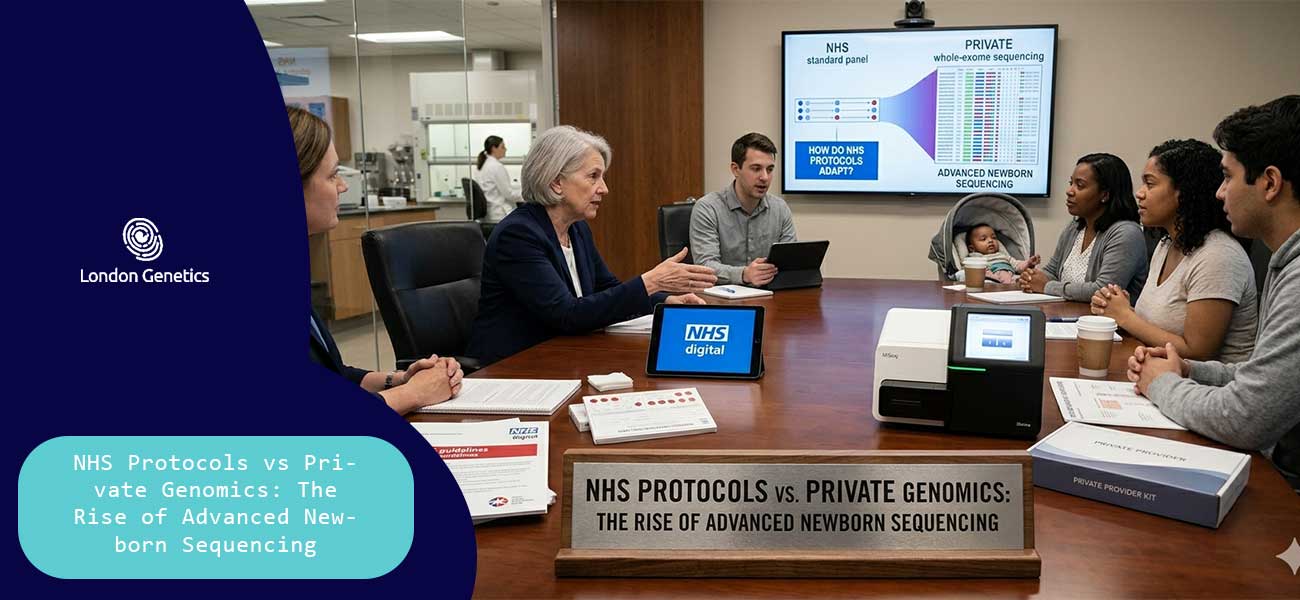
NHS Protocols vs Private Genomics: The Rise of Advanced Newborn Sequencing
The fundamental difference between public health screening and private molecular diagnostics comes down to the technological depth of the investigation. While the standard NHS framework relies on traditional biochemical markers to spot active metabolic stress, private clinical genomics leverages the immense power of Next-Generation Sequencing (NGS). This revolutionary technology does not merely look at the chemical products floating in a baby’s blood; instead, it directly decodes the underlying digital blueprint of life. Transitioning from the routine heel prick test to an expanded, DNA-based screening allows medical teams to read through hundreds of actionable genes, identifying structural flaws long before they manifest as chemical anomalies or physical symptoms.
This technological evolution has fueled the global rise of advanced newborn sequencing as the gold standard for proactive pediatric care. When a family chooses to complement the standard public protocol with a private genomic screening, the diagnostic scope expands exponentially.
Instead of being confined to a rigid panel of nine disorders, an NGS-driven analysis screens for hundreds of treatable, early-onset conditions. This includes critical conditions like Spinal Muscular Atrophy (SMA), severe combined immunodeficiencies, and rare vitamin-responsive metabolic blockages—disorders where initiating treatment in the first few weeks of life, prior to symptom onset, completely rewires the child’s long-term health trajectory.
┌────────────────────────────────────────────────────────────────────────┐
│               BIOCHEMICAL ASSAY VS NEXT-GENERATION SEQUENCING          │
├───────────────────────────────────┬────────────────────────────────────┤
│  STANDARD NHS HEEL PRICK TEST     │  PRIVATE ADVANCED NGS SCREENING    │
├───────────────────────────────────┼────────────────────────────────────┤
│ • Technology: Biochemical Assay   │ • Technology: Whole Exome/Genome   │
│ • Scope: 9 Specific Conditions    │ • Scope: Hundreds of Genetic Flaws │
│ • Nature: Reactive (Flags Stress) │ • Nature: Predictive (Reads DNA)   │
│ • Approach: Basic Public Safety   │ • Approach: Personalised Security  │
└───────────────────────────────────┴────────────────────────────────────┘
The clinical implementation of this modern strategy is incredibly elegant and completely non-invasive. Parents do not need to subject their newborn to additional painful blood draws; advanced laboratories can perform a comprehensive advanced newborn sequencing panel using a simple, painless cheek swab or a few extra drops collected during the initial heel prick test window.
By replacing old-fashioned biochemical guesswork with high-fidelity genetic data, private genomics eliminates the terrifying ambiguity of hidden risks. Choosing to layer the traditional heel prick test with the unparalleled precision of Next-Generation Sequencing ensures that you are not just hoping for your child’s health—you are actively mapping, verifying, and safeguarding it with the most advanced medical tools available in 2026.
Conclusion: Transforming Early Screening into a Lifelong Healthcare Blueprint
The fundamental journey of safeguarding your child’s health does not conclude when the midwife packs away the collection card on day five. While the standard newborn heel prick test provides a vital, foundational line of defence during the first weeks of life, it represents only the opening chapter of what is now possible in modern preventive medicine. Embracing the full spectrum of advanced genomics allows families to lift the strict boundaries of conventional public health and transform a simple, routine blood spot check into a proactive, lifelong roadmap for personalised clinical care.
Relying solely on basic biochemical parameters means leaving precious, actionable health insights completely on the table. Our specialist team is dedicated to helping parents transition from reactive symptom management to absolute scientific foresight, replacing conventional public safety nets with a clear, confident, and life-changing blueprint tailored entirely to your baby’s true biological reality.
Advanced Genomic Layering:
Utilising high-precision Next-Generation Sequencing (NGS) swab panels to layer the initial biochemical insights of the day 5 heel prick test with deep-dive molecular analysis.
Biochemical Marker Expansion:
Mapping your baby’s unique DNA configuration early to identify specific metabolic pathways, latent medication sensitivities, and hidden genetic predispositions long before they impact development.
Bespoke Proactive Architecture:
Translating complex, raw digital sequencing files into an actionable, future-proof care manual that protects your child from infancy all the way through to adulthood.
Eliminating Clinical Blind Spots:
Bypassing generic public health assumptions by isolating active genetic risk factors, allowing medical teams to anticipate potential health variations and intervene with absolute precision.
Definitive Health Infrastructure:
Escaping traditional screening limitations and transforming a fleeting neonatal blood spot check into an unshakeable, lifelong blueprint for your child’s health and vitality.