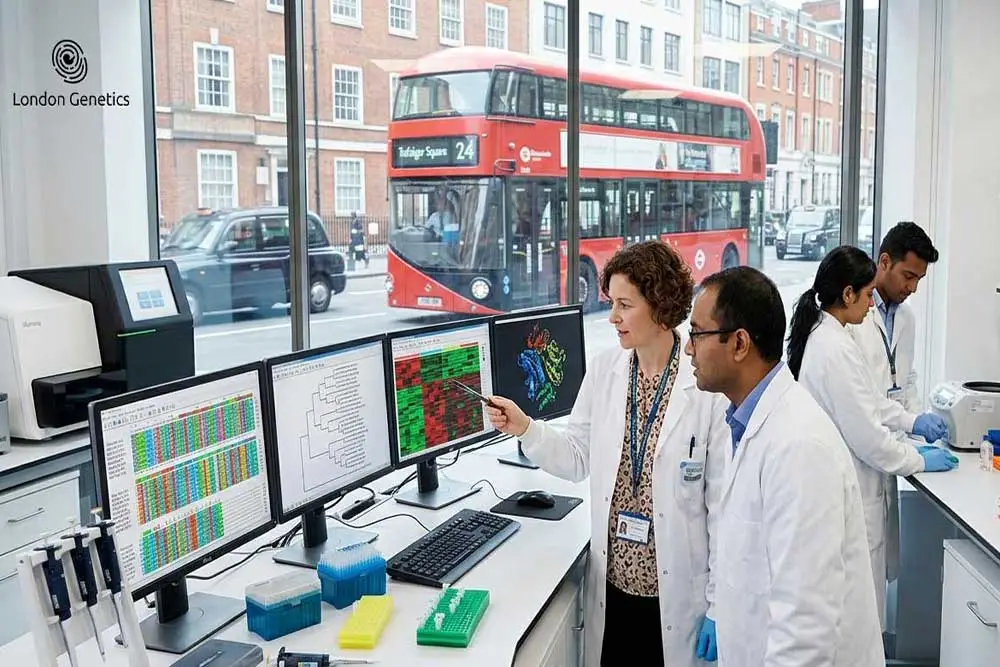
Introduction to Bioinformatics: Understanding the Basics
In the rapidly evolving landscape of modern science, Bioinformatics stands as a vital bridge between biology, computer science, and information technology. At its core, this interdisciplinary field equips scientists with the computational tools required to capture, store, and analyse vast and complex biological datasets. Understanding the basics of this discipline is absolutely essential for anyone looking to navigate the forefront of contemporary biology.
Today, groundbreaking advancements in Genomic Research rely heavily on these computational frameworks. Without them, deciphering the sheer volume of data generated by modern DNA sequencing would be a virtually insurmountable task. Furthermore, as the clinical and commercial applications of these discoveries continue to expand, there is a rapidly growing demand for expert Genomics Consulting. Such specialised guidance ensures that healthcare organisations, academic institutions, and laboratories can effectively interpret genetic data and translate it into actionable medical solutions. Ultimately, bioinformatics provides the essential lexicon needed to read and comprehend the incredibly complex book of life.
The Origins of Bioinformatics and Its Role in Modern Biology
Bioinformatics emerged from the need to understand biological data through computational tools. What began as early efforts to catalogue protein sequences has evolved into a core scientific discipline that powers modern genetics, genomics, and molecular biology. Today, bioinformatics bridges biology and computer science, enabling researchers to analyse vast biological datasets and uncover patterns that would otherwise remain hidden.
Bioinformatics has evolved from early sequence catalogues into a foundational pillar of modern biological research. By combining computational power with biological knowledge, it enables scientists to interpret complex genetic information and drive discoveries across medicine, evolution, and molecular biology.
How Bioinformatics Analyses DNA and Genetic Data
The sheer volume of data generated by modern sequencing technologies is staggering, and making sense of this digital blueprint is where the true power of Bioinformatics lies. This section delves into the specific mechanisms and methodologies employed to translate raw genetic sequences into actionable biological knowledge.
The Journey from Raw Sequences to Meaningful Insights
When a DNA sample is sequenced, the output is not a neatly organised book of life, but rather millions of tiny, fragmented pieces of code known as ‘reads’. Bioinformatics provides the essential computational framework required to piece this immense jigsaw puzzle back together. Through a rigorous pipeline of quality control, alignment, and interpretation, bioinformaticians can identify exactly where a specific DNA fragment belongs within the broader genome, allowing researchers to spot crucial variations and mutations.
Key Computational Techniques in Genetic Analysis
To process and analyse these vast datasets efficiently, Bioinformatics relies upon several sophisticated computational techniques:
- Sequence Alignment: This is the process of comparing a newly sequenced fragment of DNA against a known ‘reference genome’. Advanced bioinformatic algorithms calculate the best possible match, enabling scientists to determine the precise origin of the sequence.
- Genome Assembly: In cases where no reference genome exists (such as when studying a newly discovered organism), Bioinformatics tools are used for de novo assembly. This involves overlapping millions of short genetic reads to reconstruct the entire genome from scratch.
- Variant Calling and Annotation: Once the DNA is aligned, software is used to pinpoint minute differences—such as Single Nucleotide Polymorphisms (SNPs) or structural variations—between the sample and the reference. Furthermore, annotation tools categorise these variants to predict whether they might cause a genetic disorder or alter a protein’s function.
- Transcriptomics and Gene Expression: Beyond just looking at static DNA, Bioinformatics analyses RNA sequencing data to measure which genes are actively being ‘turned on’ or ‘turned off’ within a cell under specific biological conditions.
By employing these sophisticated methodologies, Bioinformatics ensures that the raw data extracted from a sequencer is transformed into a comprehensive and interpretable format, paving the way for groundbreaking discoveries in genetics.
Key Tools and Technologies Used in Bioinformatics
Modern bioinformatics relies on specialised computational tools to analyse and interpret complex biological data. From comparing genetic sequences to modelling protein structures, these technologies allow scientists to process vast datasets, uncover biological patterns, and advance research in genetics, medicine, and biotechnology.

Core technologies that enable scientists to analyse genomic data and drive discoveries in bioinformatics.


Key Takeaway:
Bioinformatics combines powerful computational tools with biological data to accelerate scientific discovery. From sequence analysis and genome mapping to AI‑driven predictions, these technologies form the foundation of modern genomic research and precision medicine.
Real‑World Applications of Bioinformatics in Medicine and Research
Bioinformatics is no longer confined to the realm of academic research. It now plays a vital role in real‑world medicine, biotechnology, and pharmaceutical innovation. By combining computational power with biological insight, bioinformatics enables scientists and clinicians to uncover patterns in genetic data that improve diagnosis, treatment, and our overall understanding of disease.
Personalised Medicine
One of the most transformative applications of bioinformatics is in personalised or precision medicine. By analysing a patient’s genetic profile, clinicians can predict how that individual is likely to respond to specific drugs. This information helps select the most effective treatment with fewer side effects — a crucial step towards truly tailored healthcare.
Genomic Research and Disease Gene Identification
Bioinformatics tools allow researchers to study entire genomes and identify genes associated with particular diseases. For example, by comparing genetic sequences from healthy and affected individuals, scientists can pinpoint mutations responsible for conditions such as cancer, cystic fibrosis, or Alzheimer’s disease.
Drug Discovery and Development
In modern drug discovery, bioinformatics is indispensable. Advanced algorithms help researchers identify potential drug targets, model molecular interactions, and screen thousands of compounds in silico before any laboratory testing begins. This dramatically shortens development time and reduces cost.
Epidemiology and Infectious Disease Tracking
Bioinformatics also supports global public health efforts. During outbreaks such as COVID‑19, bioinformatics tools were used to sequence viral genomes, monitor mutations, and trace transmission pathways. This information guided vaccine development and global response strategies.
Agricultural and Environmental Applications
Beyond medicine, bioinformatics contributes to improving crop genetics, monitoring biodiversity, and studying environmental microbiomes. It helps scientists develop more resilient plant species, track ecosystem changes, and design sustainable agricultural practices.
Proteomics and Structural Biology
In proteomics — the large‑scale study of proteins — bioinformatics tools identify protein structures and interactions, offering new insights into how biological systems function at a molecular level. These findings often reveal new therapeutic approaches for complex diseases.
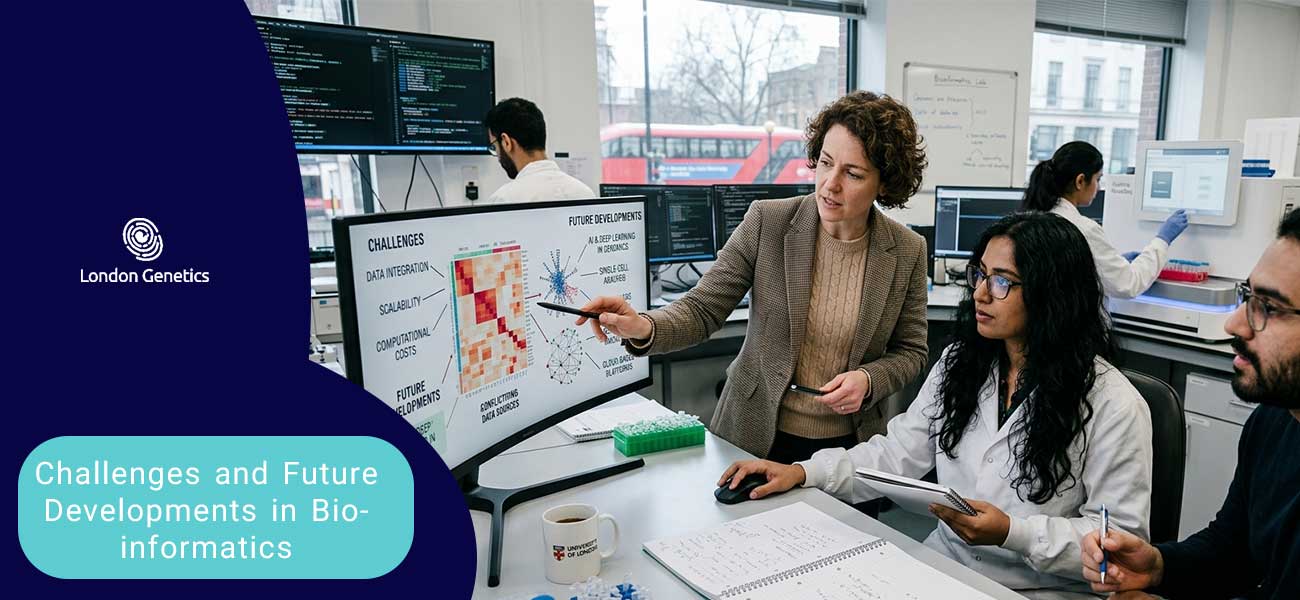
Challenges and Future Developments in Bioinformatics
Although bioinformatics has revolutionised modern science, it still faces a series of challenges that shape the way researchers and institutions handle biological data. From managing vast datasets to ensuring ethical responsibility, the field continues to evolve rapidly — and its future looks both promising and complex.
Data Overload and Storage
The sheer amount of biological information being produced through genome sequencing and proteomics is staggering. One of the greatest challenges in bioinformatics is not only storing but also efficiently organising and retrieving this data. Advanced cloud technologies and distributed computing systems are helping, yet data management remains a demanding task.
Standardisation and Interoperability
Different laboratories often use distinct formats, tools, and analytical pipelines, making it difficult to integrate results globally. The future of bioinformatics depends on universal standards that allow seamless data sharing and reproducibility — ensuring collaborative research is both accurate and transparent.
Data Accuracy and Quality Control
Inaccurate, incomplete, or poorly annotated data can lead to flawed interpretations. Improving data quality through stricter validation procedures and better metadata annotation remains a priority for every aspect of bioinformatics research.
Ethical and Privacy Concerns
Genetic data contains deeply personal information. Handling and sharing such sensitive data raises pressing ethical questions about privacy and consent. Ensuring robust legal frameworks to protect individual rights will be central to maintaining public trust in bioinformatics‑driven healthcare.
Computational Limitations and Algorithmic Complexity
Despite remarkable progress, not all biological problems can be solved instantly. Many bioinformatics algorithms still require enormous computing power and sophisticated mathematical approaches. The future will likely bring faster, more efficient algorithms and integration with quantum computing and AI.
6. Education and Skills Gap
There is a growing demand for scientists who understand both biology and computer science. The shortage of skilled professionals in bioinformatics presents a challenge for research institutions and universities, pushing towards new interdisciplinary training programmes.
Looking Ahead: The Future of Bioinformatics
The next decade will see incredible innovation in bioinformatics — powered by artificial intelligence, big data analytics, and machine learning. These technologies will enable deeper insights into gene function, accelerate drug discovery, and enhance personalised medicine.
As computing capabilities expand and data standards improve, bioinformatics will remain the cornerstone of biological research — guiding humanity toward a more data‑driven, precise, and ethically conscious understanding of life itself.
Conclusion: Why Bioinformatics Matters in the Age of Genomics
In today’s genomic era—powered by rapid DNA sequencing, personalised medicine, and data-driven biology—bioinformatics has become essential. It bridges raw genetic data with meaningful insights that advance human health, biotechnology, and our understanding of life.
By integrating biology and computing, bioinformatics enables researchers to analyse genomes, pinpoint disease mutations, develop targeted therapies, and predict individual treatment responses. Without these sophisticated computational tools, managing the vast complexity of genetic data would be impossible.
Transforming Data Into Knowledge:
Bioinformatics converts massive genetic datasets into actionable scientific understanding, crucial for modern genomics and personalised medicine.
Driving Innovation Across Fields:
From infectious disease tracking to crop improvement, bioinformatics tackles global challenges with cutting-edge technology.
Empowered by AI and Sequencing:
Advances in artificial intelligence, machine learning, and next-generation sequencing continue to propel bioinformatics forward.
Enabling Precision Biology:
The power to read, interpret, and use the language of life means more precise diagnosis, discovery, and personalised biological research.
Shaping the Future of Science and Medicine:
Bioinformatics underpins a future where biology is predictive, personalised, and profoundly impactful.