
Introduction: A New Era of Workplace Health
Across the UK, and particularly in London’s major business hubs, there is a noticeable shift in how employee wellbeing is being handled. For a long time, “wellness at work” meant little more than a discounted gym pass or a bowl of fruit in the office kitchen. However, by 2026, it has become clear that these general perks don’t address the root of long-term health.
We are moving into an era of “Precision Proactive Medicine.” Instead of waiting for someone to become unwell and then reacting, the focus is shifting toward looking at the biological blueprint—the DNA. This allows for health strategies that are actually tailored to the individual, rather than a “one-size-fits-all” approach.
Why London is Leading the Way in Genomic Wellness
The UK has become a global leader in genomics, thanks to its extensive research networks and the growing availability of advanced bioinformatics. This has made it much easier for organisations to incorporate high-level science into their standard healthcare benefits.
The rise in demand for Corporate Genetic Screening stems from a need for more certainty. While a standard health check-up gives a snapshot of a person’s health at one moment, genetic insights provide a long-term view of potential risks. This helps people make informed decisions about their lifestyle and preventive care long before symptoms ever appear.
By integrating these advanced methods into comprehensive genetic screening programmes, the goal is to create a more resilient and health-conscious workforce. It is no longer about just “feeling well” today, but about using genomic data to stay healthy for the decades to come.
What is Corporate Genetic Screening? (The Basics)
Corporate Genetic Screening is a preventive tool designed for the professional environment.
It analyses an individual’s DNA to identify genetic variations that could affect long-term health, wellbeing, or response to stress and medications, enabling a personalised approach to health management.
Diagnostic Screening: Reactive testing performed when symptoms are present, confirming a specific disease or condition.
Corporate/Preventive Screening: Proactive testing for healthy individuals, identifying predispositions to conditions like heart disease, certain cancers, or metabolic disorders before symptoms appear.
Corporate Genetic Screening provides a roadmap of potential future health risks.
By understanding genetic predispositions, individuals and organisations can implement personalised wellness strategies, mitigate risk, and promote long-term health in a professional setting.
Key Takeaway:
Corporate Genetic Screening is a proactive, preventive approach that moves beyond traditional health checks.
It empowers individuals with insight into their genetic health, allowing for informed decisions, personalised wellness planning, and early intervention to reduce future health risks.
Why UK Employers are Investing in Genomics
The decision for a business to offer genetic insights to its staff isn’t just about being “high-tech”; it’s a strategic move toward building a more resilient workforce. By moving beyond general health advice, employers can provide tools that have a meaningful impact on both individual lives and collective productivity.
Reducing Absenteeism through Prevention
One of the most significant challenges for UK businesses is “absenteeism”—the loss of productivity when staff are away on long-term sick leave. Many chronic conditions, such as Type 2 diabetes, cardiovascular issues, and certain hereditary cancers, develop silently over years.
Through preventive genetic risk screening, individuals can identify these predispositions early. When an employee knows they have a higher genetic risk for a specific condition, they can work with healthcare professionals to implement screening and lifestyle changes immediately. Preventing a health crisis before it happens is far more effective than managing one after it starts.
Enhancing Mental Health Support
Mental wellbeing is at the forefront of modern workplace strategy. Burnout and chronic stress are not just “feelings”; they often have biological underpinnings. Genetics can reveal how an individual’s body metabolises stress hormones or how their brain responds to certain neurotransmitters.
By understanding these genetic factors, employees can better manage their mental health through tailored lifestyle adjustments, such as specific sleep patterns or nutritional support. This biological insight helps remove the guesswork from mental wellness, allowing for more effective support systems within the office environment.
Attracting and Retaining Top Talent
In a competitive job market like London or Manchester, high-calibre professionals look for more than just a salary. They look for employers who truly invest in their long-term future. Offering advanced genetic testing as a core “employee benefit” sends a powerful message. It positions a company as a forward-thinking organisation that prioritises the cutting edge of population health genetics programmes. This level of care fosters deep loyalty and helps attract talent who value health, innovation, and personal development.
Key Areas Covered in Corporate Genetic Screening
Modern corporate genetic screening programmes are designed to provide a comprehensive view of an individual’s health predispositions.
These initiatives help employees and organisations make proactive, personalised wellness and risk management decisions.
 Hover over each box to explore the key areas addressed in corporate screening!

Screening detects mutations in genes like BRCA1, BRCA2, and Lynch Syndrome (HNPCC).
This enables early monitoring, preventive strategies, and peace of mind for employees, allowing proactive management of cancer risk within a corporate wellness context.

Genetic markers help predict how employees respond to common medications for blood pressure, cholesterol, or mental health.
This ensures treatments are effective “first time,” reducing side effects and minimizing time off work due to complications or ineffective prescriptions.

Genetic screening informs employees about their unique wellness markers, including:
- Nutrigenomics: Tailoring diet based on how the body processes fats, carbohydrates, and vitamins.
- Sleep Patterns: Understanding circadian rhythms (chronotype) to optimise energy and productivity.
- Stress Response: Insights into the body’s genetic “fight or flight” wiring, helping prevent burnout in high-pressure roles.
These insights empower employees to proactively manage their physical and mental health, improving overall wellbeing and workplace performance.
Key Takeaway:
Corporate genetic screening covers cancer risk, pharmacogenomics, and lifestyle insights, providing employees and organisations with actionable information to enhance health, performance, and preventative care.
Addressing the Elephant in the Room: Ethics and Privacy
While the benefits of genomic insights are clear, it is perfectly natural for both employers and employees to have questions about how such sensitive information is handled. In the UK, the ethical framework surrounding genetic data is among the most robust in the world, ensuring that privacy and autonomy are never compromised.
Data Protection and GDPR Standards
Genetic information is classified as “special category data” under the UK General Data Protection Regulation (GDPR). This means it is subject to the highest level of legal protection. When a workplace offers screening, the results are handled with clinical-grade security. Data is encrypted, and strict access controls ensure that personal genetic markers are never shared with unauthorised parties. The goal is to ensure that while the insights are life-changing, the data remains strictly confidential and secure.
The Principle of Voluntary Participation
Trust is the foundation of any successful workplace health initiative. A key pillar of ethical genetic screening is that it must always be entirely voluntary. Employees should never feel pressured to participate; instead, they should be provided with clear, transparent information to help them make an informed choice. This is where detailed genetic counselling plays a vital role. By speaking with experts first, individuals can understand exactly what the test involves and what the results might mean for them and their families before they ever provide a sample.
Non-Discrimination and Protection of Results
Perhaps the most common concern is whether a genetic “risk” could affect one’s career or insurance. In the UK, there is a long-standing Code on Genetic Testing and Insurance, and strict employment laws prevent any form of genetic discrimination.
Employers do not receive the specific genetic reports of their staff; rather, the individual receives their own data to use for their personal health journey. These programmes are designed to support and protect the workforce, ensuring that identifying a predisposition leads to better care and support, never to professional disadvantage. By adhering to these ethical considerations and patient consent protocols, organisations can offer these advanced tools with total peace of mind.
The Financial Impact: ROI of Genomic Wellness
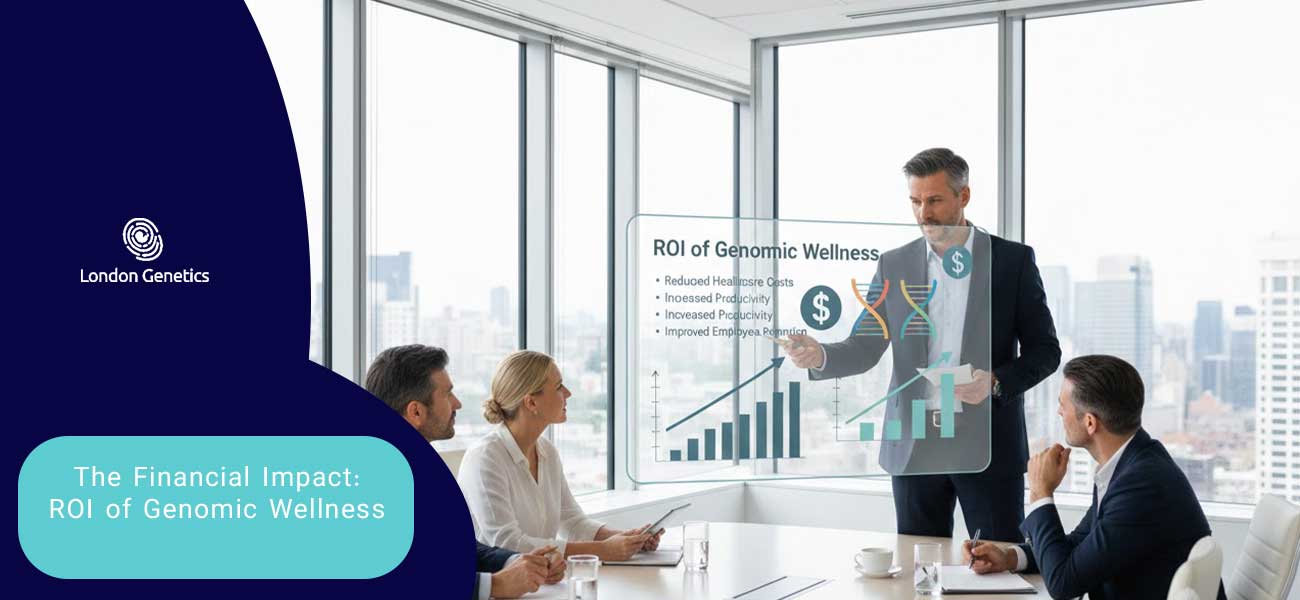
In the corporate world, every investment must be justified by its Return on Investment (ROI). While the primary goal of health initiatives is the wellbeing of staff, the financial benefits of Corporate Genetic Screening are substantial. For UK businesses, the cost of reactive healthcare and lost productivity far outweighs the investment in precision prevention.
The True Cost of a Health Crisis
The sudden illness of a key executive or a highly skilled team member can be a major financial blow to an organisation. Beyond the immediate loss of their expertise, there are the “hidden” costs of:
-
Recruitment and Retraining: Replacing a senior leader in London can cost up to double their annual salary.
-
Prolonged Absenteeism: Sick pay and the cost of temporary cover (locums or contractors) drain resources.
-
Loss of Momentum: Critical projects often stall when a key decision-maker is absent for a long period.
By identifying a genetic predisposition to a serious condition—such as early-stage heart disease or a hereditary cancer risk—and managing it proactively, these crises can often be avoided entirely. Preventing a six-month absence through early intervention is an immense financial win for any business.
The “Value of Investment” (VOI)
Modern HR directors are moving from ROI to VOI (Value of Investment). This looks at the broader picture: a healthier workforce is more engaged, more productive, and less likely to leave the company. Genomic wellness is a long-term strategy that shifts the balance from “managing illness” to “cultivating performance.”
Investing in these population health genetics programmes allows companies to lower their long-term healthcare premiums and build a sustainable culture of health. When an organisation helps an employee discover a health insight that saves their life or significantly improves their vitality, the resulting loyalty and productivity are invaluable assets to the company’s bottom line.
How to Implement a Successful Corporate Genetic Programme
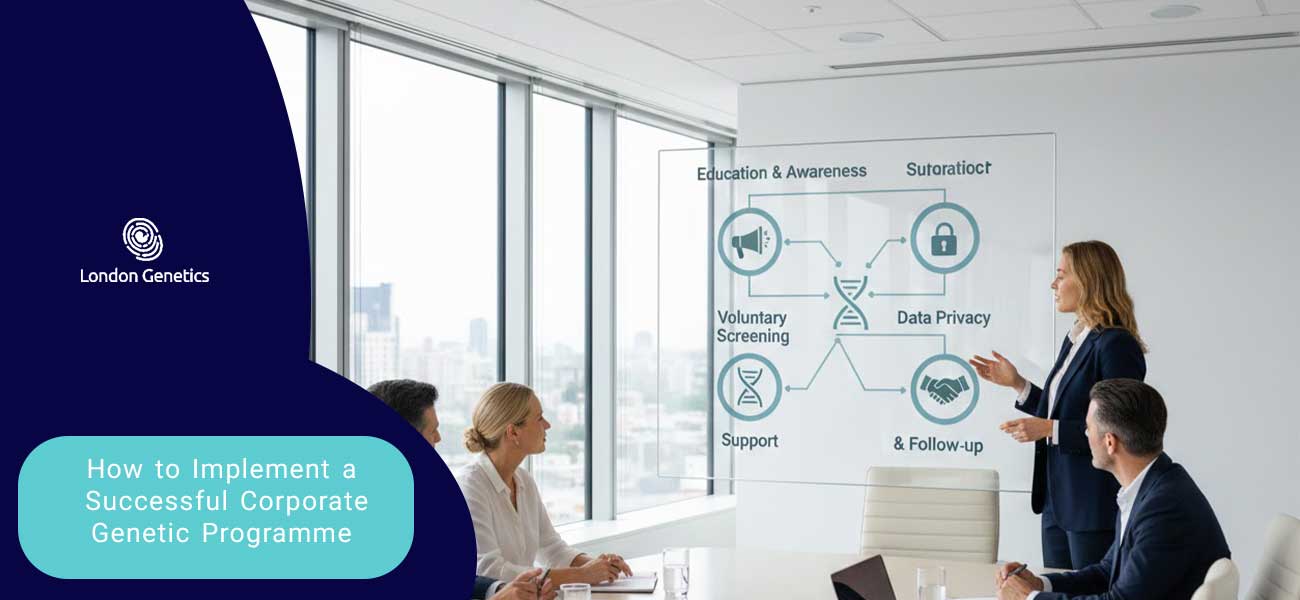
For an organisation looking to introduce genomic insights into their benefits package, the focus should always be on quality, clinical rigour, and professional guidance. A successful programme is not just about providing a test kit; it is about the support system that surrounds it.
The Multi-Disciplinary Approach
A robust genetic screening initiative requires more than just laboratory results. To be truly effective, it must involve a multi-disciplinary team. This includes:
-
Genetic Professionals: Experts who can perform pedigree analysis and interpret complex data.
-
Clinical Specialists: To provide a bridge between genetic findings and actionable medical advice.
-
Advanced Bioinformatics: Ensuring that the technology used to process DNA is cutting-edge and accurate.
By integrating cutting-edge laboratory technology with expert clinical oversight, companies can ensure that the data provided to their employees is both reliable and meaningful.
The Importance of Professional Guidance
One of the most critical steps in any screening process is the “Pre-test” and “Post-test” consultation. Genomic data can be life-changing, and it should never be delivered through a simple automated email.
A high-standard programme ensures that every participant has access to detailed genetic counselling. This ensures that employees understand their results in the context of their family history and ethnicity, helping them to turn raw data into a clear, actionable health plan. This professional layer is what transforms a simple “DNA test” into a high-value corporate health asset.
Conclusion: Building a Resilient Workforce
The era of reactive healthcare is giving way to proactive strategies that prioritise long-term employee health and vitality.
Integrating genomic insights into the workplace allows organisations to support preventative care, optimise wellness, and build a resilient, high-performing workforce.
By embracing corporate genetic screening and personalised wellness strategies, employers can:
- Identify hereditary health risks and implement early interventions
- Optimise medication effectiveness and minimise side effects through pharmacogenomics
- Provide personalised guidance on lifestyle, sleep, nutrition, and stress management
From Insight to Action:
– Use genomic data to guide preventative health strategies.
– Tailor wellness programmes to individual employee needs.
– Reduce absenteeism and enhance overall workforce vitality.
Why Corporate Genetic Screening Matters:
Investing in employee health through genomic insights not only protects individuals but also fosters a culture of trust, innovation, and long-term resilience, creating a healthier and more productive workforce.
Your Next Step:
Explore how corporate genetic screening and personalised wellness strategies can transform workplace health, reduce risks, and support sustainable employee wellbeing.