Introduction to DNA Damage and Genome Stability
DNA is the fundamental blueprint of life, carrying the genetic information that controls cell function, development, and inheritance. Every day, each cell in the human body is exposed to countless internal and external factors that can cause DNA Damage – from normal metabolic processes and oxidative stress to environmental agents such as ultraviolet (UV) light, radiation, and chemical toxins. If left unrepaired, this damage can disrupt normal cellular processes, lead to mutations, and compromise overall health.
Genome stability refers to the cell’s ability to maintain the integrity, structure, and correct sequence of its DNA over time. This stability is essential for healthy growth, accurate cell division, and prevention of diseases such as cancer and neurodegenerative disorders. To protect genome stability, cells have evolved complex surveillance systems and repair pathways that constantly monitor DNA, detect DNA Damage, and either repair it or remove severely damaged cells through controlled cell death (apoptosis).
Understanding how DNA Damage occurs and how the body responds to it is central to modern biology, cancer research, and the science of healthy ageing. Research in Longevity & Anti-Ageing Genetics increasingly shows that efficient DNA repair and robust genome maintenance are closely linked with longer lifespan, reduced age-related disease, and healthier ageing trajectories. Conversely, defects in DNA repair genes can accelerate ageing and increase the risk of malignancies and inherited disorders.
In parallel, the emerging field of Genetic Wellness & Lifestyle explores how individual genetic profiles, combined with environmental and lifestyle factors (such as diet, exercise, sleep, and exposure to toxins), influence the rate and extent of DNA Damage over a lifetime. This integrated view aims to translate molecular knowledge into practical strategies that help preserve genome stability, support long-term cellular health, and ultimately improve wellbeing across the lifespan.
Types and Sources of DNA Damage
DNA molecules are continuously exposed to chemical reactions, metabolic by‑products, and environmental influences that can alter their structure. In a single cell, thousands of DNA damage events may occur each day. Understanding the different forms of DNA lesions and their origins is essential for recognising how genomic instability develops and how cells preserve genetic integrity through repair mechanisms.
DNA damage arises from a complex interplay of internal metabolic processes and environmental exposures. Because such damage occurs continuously, cells depend on highly specialised detection and repair systems to maintain genome stability and protect against mutation‑driven diseases.
Molecular Mechanisms Underlying DNA Damage
DNA Damage arises through well‑defined molecular mechanisms that alter the chemical structure of DNA or disrupt its physical integrity. These mechanisms operate at the atomic and molecular level and are driven by both normal cellular processes and environmental exposures. Understanding these pathways is essential for explaining how mutations arise and why genome stability can fail.
1. Oxidative Stress and Reactive Oxygen Species (ROS)
One of the most common molecular causes of DNA Damage is oxidative stress.
• Reactive oxygen species are generated during normal cellular metabolism, particularly in the mitochondria
• ROS can oxidise DNA bases, leading to lesions such as 8‑oxoguanine
• Oxidative base damage increases the risk of mispairing during DNA replication and point mutations
2. Spontaneous Chemical Reactions in DNA
DNA is chemically unstable and can undergo spontaneous reactions without external triggers.
• Depurination – loss of purine bases (adenine or guanine) from the DNA backbone
• Deamination – conversion of cytosine to uracil or adenine to hypoxanthine
• These spontaneous changes can alter base‑pairing properties and introduce mutations if not repaired
3. Replication‑Associated DNA Damage
Errors during DNA replication are a significant source of genomic alterations.
• DNA polymerase may incorporate incorrect nucleotides
• Replication fork stalling can lead to single‑strand or double‑strand breaks
• Collisions between replication and transcription machinery increase structural stress on DNA
4. Radiation‑Induced Molecular Damage
Radiation interacts directly with DNA or indirectly through free radical formation.
• Ultraviolet (UV) radiation induces covalent bonds between adjacent bases, forming pyrimidine dimers
• Ionising radiation causes DNA strand breaks and complex clustered lesions
• These forms of DNA Damage distort the DNA helix and impair replication and transcription
5. Chemical and Toxin‑Mediated DNA Alterations
Certain chemicals react directly with DNA at the molecular level.
• Formation of DNA adducts that alter base structure
• Crosslinking between DNA strands or between DNA and proteins
• Interference with DNA polymerases and repair enzymes
6. Inflammatory and Enzymatic Sources of DNA Damage
Chronic inflammation and enzymatic activity can also promote DNA lesions.
• Inflammatory cells release reactive molecules that damage DNA
• Some enzymes involved in immune responses can intentionally modify DNA, occasionally causing off‑target damage
• Persistent inflammation increases cumulative DNA Damage over time
In summary, the molecular mechanisms underlying DNA Damage involve a complex network of chemical reactions, enzymatic processes, and physical insults. These mechanisms continuously challenge genome stability, highlighting the critical importance of cellular DNA repair systems in preserving genetic integrity and preventing disease.
Biological Consequences of DNA Damage and Genome Instability
DNA damage and the resulting genome instability can profoundly influence cellular function, tissue integrity, and overall organismal health. When repair mechanisms fail or become overwhelmed, the accumulation of mutations and disrupted gene regulation triggers a wide range of harmful biological effects that underlie ageing, cancer, and degenerative diseases.

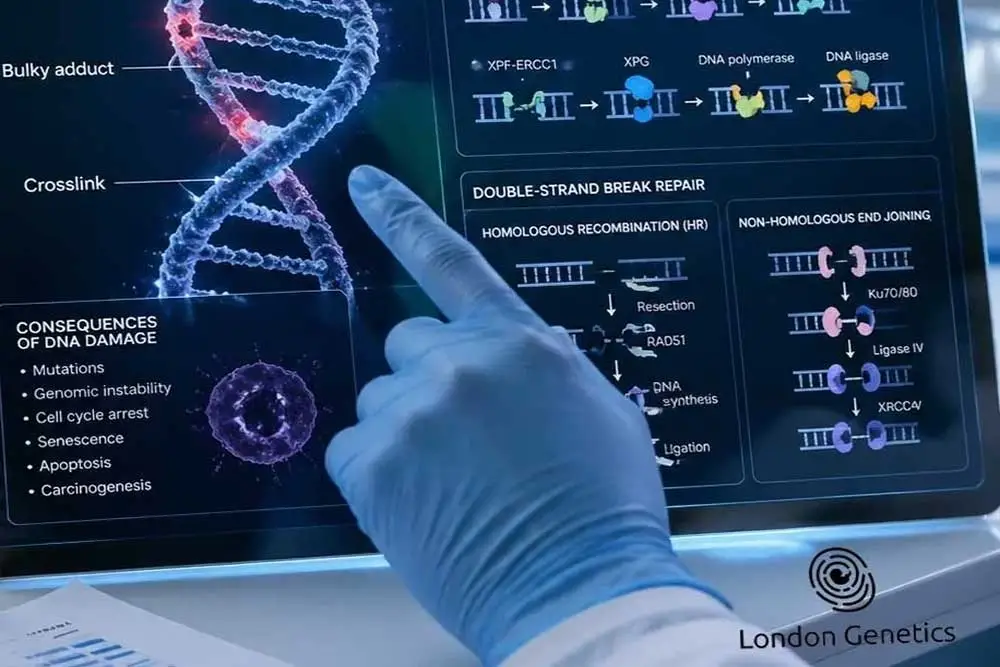
Key pathways affected by persistent DNA damage and genomic instability.


Key Takeaway:
Genome instability resulting from persistent DNA damage undermines cellular function and organismal vitality. Its consequences—from mutation accumulation and cancer progression to ageing and tissue degeneration—highlight the critical importance of maintaining DNA integrity for long‑term health and disease prevention.
Cellular DNA Damage Response (DDR) Pathways
Cells are equipped with sophisticated systems known as DNA Damage Response (DDR) pathways to detect, signal, and repair DNA Damage, thus preserving genome integrity and preventing disease. The DDR is a coordinated network of molecular mechanisms that becomes activated the moment cellular DNA is threatened.
Upon DNA Damage, sensor proteins rapidly recognise aberrant DNA structures. These sensors trigger signal cascades involving transducer and mediator proteins, which in turn activate key effector pathways. The DDR orchestrates several critical cellular outcomes:
- Cell Cycle Checkpoints:
The DDR can pause cell division, allowing time for repair before replication or mitosis continues. This prevents the propagation of damaged DNA.
- DNA Repair Initiation:
Specialised repair enzymes are recruited to the site of damage, employing different strategies depending on the nature of the lesion. For example, base excision repair addresses small base changes, while homologous recombination and non‑homologous end joining repair dangerous double‑strand breaks.
- Apoptosis or Senescence:
If DNA Damage is irreparable or too extensive, DDR pathways can induce programmed cell death (apoptosis) or permanent cessation of cell division (senescence) to prevent damaged cells from becoming cancerous.
- Transcriptional Regulation:
DDR mechanisms adjust gene expression patterns to promote repair, protect cellular resources, and limit the activity of damaged genes.
DDR pathways rely on a host of key proteins, including ATM, ATR, p53, BRCA1, and others. The integrity of these pathways is crucial; defective DDR, as seen in inherited disorders like Ataxia‑Telangiectasia or Lynch syndrome, leads to a markedly increased risk of cancer and other diseases.
Overall, the DNA Damage Response is a multipronged and dynamic system, essential for cellular health, tissue homeostasis, and the prevention of genome instability. Its efficiency largely determines the longevity and resilience of our cells.
Major DNA Repair Mechanisms and Their Regulation
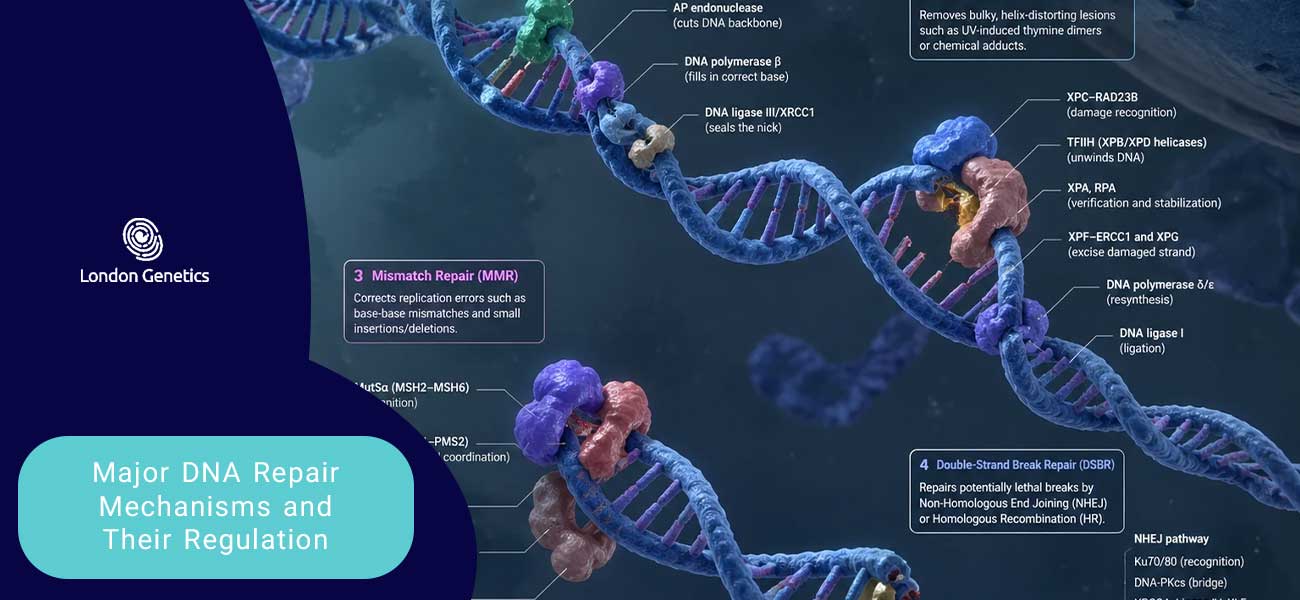
To counteract continuous DNA Damage, cells have evolved multiple highly specialised DNA repair mechanisms. These systems ensure the accurate correction of genetic errors, thus maintaining genome stability and preventing potentially harmful mutations. Each repair pathway is tailored to a specific type of lesion, using unique enzymatic processes that are tightly regulated within the cellular environment.
1. Base Excision Repair (BER)
This pathway primarily deals with small, non‑distorting lesions such as oxidised or alkylated bases. Specialised enzymes known as DNA glycosylases recognise and remove the damaged base, creating an abasic site. Subsequent steps involve endonucleases, DNA polymerase β, and ligase, which fill and seal the gap.
BER is essential for correcting oxidative stress–induced DNA Damage and preventing mutagenic base substitutions.
2. Nucleotide Excision Repair (NER)
NER addresses bulky, helix‑distorting lesions such as thymine dimers induced by ultraviolet (UV) radiation or chemical adducts. The process involves damage recognition, local DNA unwinding, dual incision around the lesion, removal of the oligonucleotide segment, and accurate replacement using the undamaged strand as a template.
Defects in NER genes cause disorders like xeroderma pigmentosum, characterised by extreme UV sensitivity and high cancer risk.
3. Mismatch Repair (MMR)
During DNA replication, base mismatches and small insertions or deletions can occur. The mismatch repair system identifies these replication errors, excises the incorrect segment, and replaces it with the correct nucleotides.
Loss of MMR function leads to microsatellite instability and predisposes to cancers such as colorectal carcinoma in Lynch syndrome.
4. Double‑Strand Break Repair Mechanisms
Double‑strand breaks (DSBs) are among the most hazardous forms of DNA Damage and are repaired mainly by two key pathways:
- Homologous Recombination (HR): Uses the undamaged sister chromatid as a template to achieve precise repair during the S and G2 phases of the cell cycle.
- Non‑Homologous End Joining (NHEJ): Directly joins the broken DNA ends with minimal sequence homology, functioning throughout the cell cycle but being more error‑prone than HR.
Both pathways rely on essential proteins such as BRCA1, BRCA2, RAD51, and Ku70/80, which coordinate end processing, alignment, and ligation.
5. Regulation of DNA Repair Pathways
The activity of DNA repair is tightly controlled through intricate signalling networks. Proteins like ATM, ATR, p53, and CHK1/CHK2 act as central regulators, ensuring that repair occurs only at appropriate times, typically following activation of cell cycle checkpoints.
Post‑translational modifications such as phosphorylation, ubiquitination, and acetylation dynamically control the recruitment and activity of repair proteins at damage sites.
Additionally, chromatin remodelling allows repair enzymes to access tightly packed DNA regions, and gene expression of repair factors is modulated in response to stress or cellular conditions.
In summary, these DNA repair mechanisms form an interconnected and precisely regulated defence system that safeguards the genome. Failures in these pathways can lead to mutation accumulation, cancer susceptibility, premature ageing, and various degenerative diseases—highlighting their central role in maintaining genetic integrity and cellular longevity.
DNA Damage in Human Disease: Clinical & Therapeutic Implications
Persistent or improperly repaired DNA damage contributes to a wide range of human diseases. When genome stability is compromised, cells accumulate mutations and chromosomal abnormalities that disrupt normal biological functions. These defects underlie cancer, inherited repair‑deficiency syndromes, neurodegeneration, immune dysfunction, and aspects of premature ageing.
DNA repair pathways are central to maintaining health, and defects in these systems greatly increase disease susceptibility. Understanding these mechanisms has reshaped diagnostic strategies and enabled therapies that specifically exploit DNA repair weaknesses in diseased cells.
DNA Damage as a Driver of Cancer:
Unrepaired mutations in key genes—such as TP53, BRCA1/2, and mismatch‑repair genes—promote tumorigenesis. Repair‑deficiency syndromes like Lynch syndrome further illustrate this strong link.
Inherited DNA Repair Disorders:
Conditions such as xeroderma pigmentosum, Ataxia‑Telangiectasia, and Fanconi anaemia demonstrate how faulty repair leads to neurological decline, bone marrow failure, immune issues, and high cancer risk.
Ageing & Degenerative Diseases:
Accumulating somatic mutations and oxidative stress contribute to tissue degeneration and neurodegenerative disorders, including Alzheimer’s and Parkinson’s disease.
Therapeutic Opportunities:
Many cancer therapies intentionally induce DNA damage, while targeted agents such as PARP inhibitors exploit specific repair defects, selectively eliminating tumour cells.
Clinical Value of DNA Damage Biomarkers:
Genetic testing for DNA repair mutations supports personalised prevention, risk assessment, and treatment planning—key components of modern precision medicine.