What Is Eye Color Genetics?
Eye Color Genetics refers to the study of how genes influence the colour of a person’s eyes. Eye colour is determined primarily by the amount and distribution of melanin, a natural pigment found in the iris, which is the coloured part of the eye surrounding the pupil. Differences in melanin levels create the range of eye colours observed in humans, including brown, blue, green, hazel, and grey.
Although eye colour was once believed to be controlled by a single gene, modern research has shown that Eye Color Genetics is far more complex. Multiple genes interact to regulate how much melanin is produced and how it is distributed within the iris. These genetic interactions result in the wide variation of eye colours and shades seen across different individuals and populations.
Among the most influential genes involved in eye colour determination are OCA2 and HERC2, both located on chromosome 15. Variations in these genes affect melanin production in the iris. For instance, certain variants reduce melanin levels, which can lead to lighter eye colours such as blue or green, while higher melanin concentrations are typically associated with brown eyes.
Other genes may also contribute to subtle differences in pigmentation, which explains why eye colour can vary even among members of the same family. Because eye colour is influenced by several genetic factors rather than a single gene, predicting a child’s eye colour based solely on parental eye colour can sometimes be inaccurate.
Understanding Eye Color Genetics is also useful in medical and hereditary studies. In some cases, unusual eye pigmentation patterns may be linked to genetic conditions that affect melanin production or eye development. During Genetic Counselling, specialists may consider eye colour traits as part of a broader evaluation of inherited characteristics and family genetic history.
Overall, Eye Color Genetics demonstrates how multiple genes interact to shape one of the most recognisable human traits, highlighting the complex relationship between DNA, pigmentation biology, and inherited variation.
How Eye Colour Is Determined by DNA
Eye colour is determined by the way DNA regulates melanin production within the iris. Although the visible shade of the eyes may appear simple, the underlying genetic mechanisms are complex and involve interactions between multiple genes rather than a single dominant–recessive inheritance pattern.
Eye colour is not determined by a single gene but by a network of interacting pigmentation genes. This genetic complexity explains the wide diversity of eye colours and the unique patterns seen in each individual.
The Role of Melanin in Eye Color Formation
Melanin plays a central role in determining human eye color. This natural pigment is produced by specialised cells called melanocytes, which are located in the iris—the coloured ring surrounding the pupil. The amount, distribution, and density of melanin within the iris largely determine the final shade of a person’s eyes.
In the context of Eye Color Genetics, melanin production is regulated by several genes that control how much pigment the melanocytes produce and how it is deposited in the iris tissue. When a higher concentration of melanin is present, the iris absorbs more light and typically appears brown or dark brown. Brown eyes are the most common globally because genes promoting higher melanin production are widely distributed across human populations.
When the iris contains lower levels of melanin, light interacts differently with the eye’s internal structures. Instead of being absorbed, more light is scattered within the layers of the iris. This optical effect causes the iris to appear blue or grey, even though blue pigment itself is not present in the eye. The colour results from light scattering combined with reduced pigmentation.
Intermediate amounts of melanin can produce green or hazel eyes. In these cases, moderate melanin levels combine with structural light scattering and subtle variations in pigment distribution. Hazel eyes often display mixed shades of brown, green, or gold due to uneven melanin patterns within the iris.
Melanin also contributes to protecting the eye from ultraviolet (UV) radiation and excessive light exposure. Individuals with darker eyes generally have higher melanin levels, which can provide greater natural protection for sensitive ocular tissues. Lighter eyes, while still functional and healthy, contain less melanin and therefore may be more sensitive to bright light.
Within Eye Color Genetics, the regulation of melanin production is controlled by genes such as OCA2, HERC2, TYR, and SLC24A4, which influence pigment synthesis and distribution. Variations in these genes affect how much melanin is produced and how it is stored within the iris cells, ultimately shaping the wide diversity of human eye colors.
Overall, melanin acts as the key biological factor linking genetic instructions to the visible appearance of eye colour, making it an essential component in understanding how eye color develops and varies among individuals.
How Eye Colour Is Inherited from Parents
Eye colour is inherited through a complex combination of genes passed from both parents. Each parent contributes half of a child’s DNA, including the genes that regulate melanin production and iris pigmentation. The interaction of these inherited genes ultimately determines the eye colour that develops.

Key genetic principles behind eye colour inheritance.


Key Takeaway:
Eye colour inheritance reflects the interaction of multiple genes passed from both parents. These genetic combinations regulate melanin production in the iris, creating the diverse range of eye colours seen in individuals and families.
How Eye Colour Is Inherited from Parents
Eye colour inheritance is a fascinating example of how Eye Color Genetics works. A child receives half of their genetic material from each parent, and this includes the genes responsible for iris pigmentation. These genes regulate how much melanin is produced in the iris, which ultimately determines the visible eye colour.
Unlike simple traits controlled by a single gene, eye colour is influenced by multiple genes interacting together. This genetic complexity explains why eye colour can vary significantly within the same family.
The Role of Parental Genes
Both parents contribute genetic variants that influence eye pigmentation. These inherited genes work together to regulate melanin levels in the iris.
Key points about parental inheritance include:
- Each parent passes on one copy of relevant pigmentation genes to the child.
- The combination of these genetic variants influences melanin production.
- Higher melanin levels usually produce brown eyes, while lower levels often result in blue or green eyes.
- Intermediate melanin levels may lead to hazel or mixed eye colours.
Because these genes interact in complex ways, the final eye colour is the result of multiple genetic signals rather than a single dominant gene.
Important Genes Involved in Inheritance
Several genes play a key role in determining how eye colour is inherited. Among the most influential are:
- OCA2 – regulates the production of melanin in pigment cells.
- HERC2 – controls the activity of OCA2 and strongly influences blue versus brown eye colour.
- SLC24A4 and TYR – contribute to pigmentation processes and subtle colour variations.
The interaction of these genes helps determine how much pigment forms in the iris during development.
Why Children May Have Different Eye Colours from Their Parents
Because Eye Color Genetics involves multiple genes, predicting a child’s eye colour is not always straightforward. Even if both parents have the same eye colour, their child may inherit different combinations of genetic variants.
Possible outcomes include:
- Two brown‑eyed parents having a child with lighter eyes if they carry hidden variants for reduced pigmentation.
- Two blue‑eyed parents usually having a blue‑eyed child, but slight variations in shade can still occur.
- Families showing multiple eye colours due to different genetic combinations passed through generations.
Overall, eye colour inheritance reflects the complex interaction of several pigmentation genes. Through Eye Color Genetics, scientists continue to understand how these inherited genetic variations shape the diverse eye colours seen across human populations.
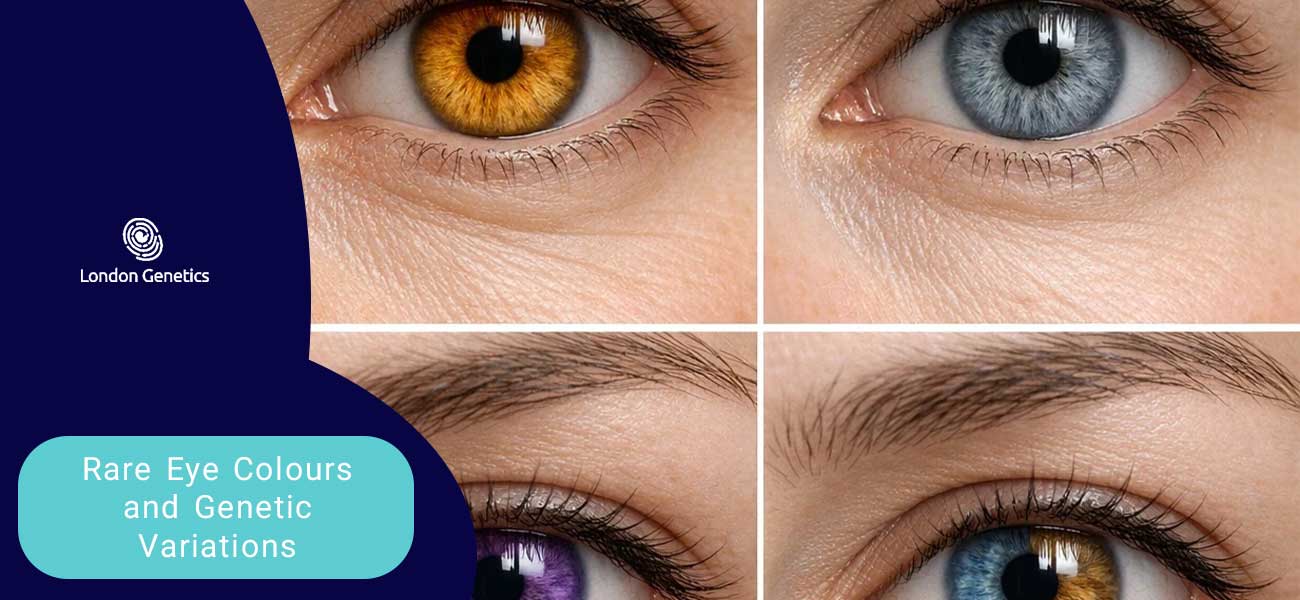
Rare Eye Colours and Genetic Variations
Eye colour is determined by a complex interaction of genes that regulate the production and distribution of melanin in the iris. Within the field of Eye Color Genetics, researchers study how different genetic combinations influence the wide range of human eye colours. In this context, Rare Eye Colours and Genetic Variations describe uncommon eye shades that arise from less frequent genetic patterns affecting pigmentation and iris structure.
What Counts as Rare Eye Colours?
In studies of Eye Color Genetics, certain eye colours are considered rare because they appear in a relatively small percentage of the global population. These colours often result from unusual genetic combinations that affect melanin levels and light scattering within the iris.
Examples of rare eye colours include:
- Amber or golden eyes, which have a warm copper or honey-like appearance
- Grey eyes, distinct from light blue due to differences in iris structure and pigment distribution
- Heterochromia, where the two eyes have different colours or a single iris contains multiple colours
- Unusual mixed shades, such as complex blends of green, brown, and gold
These variations illustrate how Rare Eye Colours and Genetic Variations can emerge through the mechanisms studied in Eye Color Genetics.
Genetic Factors Behind Rare Eye Colours
Research in Eye Color Genetics has identified several genes that play important roles in determining iris pigmentation. Variations in these genes can lead to the uncommon shades described in Rare Eye Colours and Genetic Variations.
Key genes involved include:
- OCA2 – regulates the amount of melanin produced in the iris
- HERC2 – controls the expression of OCA2 and strongly influences blue versus brown eye colour
- SLC24A4 – contributes to subtle variations in pigmentation intensity
- TYR – participates in the biochemical pathway responsible for melanin production
Different combinations of these genes may result in:
- Low melanin levels, producing grey or very pale blue eyes
- Intermediate melanin levels, which can create amber or golden tones
- Uneven pigment distribution, leading to mixed or unusual eye colour patterns
These outcomes demonstrate how Rare Eye Colours and Genetic Variations arise from the complex gene interactions examined in Eye Color Genetics.
Heterochromia: A Distinct Genetic Pattern
One of the most visually striking examples within Rare Eye Colours and Genetic Variations is heterochromia, a condition in which the eyes display different colours.
Types of heterochromia include:
- Complete heterochromia – each eye has a different colour
- Sectoral heterochromia – a portion of one iris has a different colour
- Central heterochromia – a ring of a different colour appears around the pupil
In Eye Color Genetics, heterochromia can occur due to mosaic patterns of pigment cell development or variations in how iris cells respond to pigmentation signals during growth.
Rare Eye Colours vs. Medical Conditions
Most cases described under Rare Eye Colours and Genetic Variations represent normal genetic diversity. However, in some situations unusual pigmentation patterns may be associated with certain genetic or developmental conditions that affect melanin pathways.
For this reason, professionals working in Eye Color Genetics and ophthalmology may recommend medical evaluation or genetic counselling if rare eye pigmentation appears alongside other clinical signs.
Why Rare Eye Colours Are Still Genetic
An important principle in Eye Color Genetics is that even the rarest eye colours are typically the result of inherited genetic variation rather than random changes. The diversity described in Rare Eye Colours and Genetic Variations arises from different combinations of pigmentation genes influencing:
- The amount of melanin produced in the iris
- The distribution of pigment cells within the iris
- The optical properties of iris tissue that affect how light scatters
Together, these genetic factors create the full spectrum of human eye colours, including the rare and distinctive variations seen in different populations around the world.
Genetic Counselling and Rare Eye Colours
In Eye Color Genetics, most cases described as rare eye colours or unusual pigmentation patterns represent normal genetic diversity and do not require medical treatment. However, in some situations, genetic counselling can help individuals and families better understand the biological factors that influence uncommon eye colour variations.
Genetic counselling provides clear information about how genes influence physical traits and how these traits may be inherited across generations. When Rare Eye Colours and Genetic Variations are observed, counselling can help determine whether a particular eye colour pattern is simply a natural variation or part of a broader genetic condition.
Understanding Rare Pigmentation Patterns:
Genetic counsellors help explain how different genes influence melanin production and iris pigmentation. This guidance can clarify why unusual eye colours or patterns appear and whether they represent normal genetic variation.
Evaluation of Family History:
Specialists may review family medical history and inherited traits to identify patterns of pigmentation across generations. This information helps determine how eye colour characteristics may be passed on within families.
Assessment of Unusual Eye Colour Changes:
In certain situations—such as heterochromia or sudden changes in eye colour—specialists may recommend further evaluation to rule out underlying ocular or genetic conditions.
Guidance for Future Family Planning:
Counselling can help individuals understand how eye colour traits may be inherited by future children and explain the complex genetic factors involved in Eye Color Genetics.
Recognising Natural Genetic Diversity:
In most cases, rare eye colours are harmless and simply reflect the remarkable diversity of human genetics. Genetic counselling primarily serves as an educational resource that helps people understand the biological mechanisms behind eye colour variation.