Understanding the Genetic Basis of Athletic Performance
Athletic ability is shaped by a complex interaction between inherited genetic traits and environmental influences such as training, nutrition, and lifestyle. To understand how Genetics Predict Athletic Performance, it is essential to explore the biological mechanisms that determine an individual’s physical potential long before any structured training begins.
The Role of Genetic Variation in Physical Traits
Genetic variation influences key physiological attributes that contribute to overall athletic capability. These include:
- Muscle‑fibre composition (slow‑twitch vs fast‑twitch)
- Aerobic capacity and oxygen utilisation
- Tendon elasticity and muscle structure
- Metabolic efficiency and energy production
- Recovery speed and inflammation response
These traits, shaped by inherited DNA, help explain why some individuals naturally excel in endurance activities while others show greater aptitude for power‑based sports.
Key Biological Systems Influenced by Genetics
Several biological systems underpin elite performance, and each is affected by specific gene clusters:
- Cardiovascular function: Genes regulating VO₂ max, heart size, and blood oxygen efficiency
- Neuromuscular function: Genes controlling muscle activation speed, contraction force, and coordination
- Hormonal pathways: Variants affecting testosterone levels, growth factors, and stress‑response systems
- Metabolic pathways: Genes tied to glucose utilisation, fat oxidation, and lactate clearance
The interplay between these systems provides a scientific foundation for understanding how Genetics Predict Athletic Performance at both amateur and elite levels.
The Influence of Genetic Testing in Sports Science
Modern genetic technologies have enhanced our ability to identify performance‑related markers. Approaches such as Genetics Testing allow researchers and sports scientists to examine DNA variations associated with strength, endurance, injury resilience, and overall performance potential.
While genetic traits do not guarantee athletic success, they offer valuable insights into predispositions that can inform long‑term training strategies.
Integration with Sports Genetics Testing
When these genetic insights are combined with Sports Genetics Testing, the analysis becomes even more powerful. This modern approach evaluates both inherited markers and sport‑specific traits such as recovery rate, muscle power tendencies, and susceptibility to overuse injuries. The result is a clearer picture of an athlete’s innate capabilities and how they might respond to training stimuli.
Key Genes Linked to Strength, Endurance, and Power
Athletic ability is shaped by genetic variants that influence muscle composition, energy production, oxygen delivery, and metabolic efficiency. These markers help clarify how Genetics Predict Athletic Performance across strength, endurance, and mixed‑intensity disciplines.
Genetic markers shape diverse athletic traits, and identifying these variants supports personalised training, optimised performance strategies, and clearer understanding of how Genetics Predict Athletic Performance.
Key Genes Linked to Strength, Endurance, and Power
Understanding the genes that influence physical performance is essential for explaining how Genetics Predict Athletic Performance. These genetic variants affect muscle composition, oxygen utilisation, energy production, and overall physiological capacity — all of which shape an athlete’s natural strengths in strength, endurance, and power.
Genes Linked to Strength and Power
Certain genes play a major role in muscle force, speed, and explosive output.
-
ACTN3:
Known as the “speed gene”, it supports fast‑twitch muscle fibre activity and is strongly associated with power‑based performance.
-
MSTN (Myostatin):
Regulates muscle growth. Lower myostatin activity allows greater muscle development and strength potential.
-
ACE (D allele):
The D variant enhances muscle activation and is commonly linked to strength and anaerobic performance.
Genes Linked to Endurance Capacity
Endurance performance depends on oxygen delivery, energy efficiency, and cardiovascular function.
-
ACE (I allele):
Supports higher aerobic capacity and long‑duration stamina.
-
PPARGC1A:
Influences mitochondrial efficiency and is essential for energy production during prolonged exercise.
-
VEGF:
Regulates blood vessel formation and improves oxygen transport during endurance activities.
Genes That Support Both Strength and Endurance
Some genes influence multiple performance areas, contributing to balanced athletic capability.
-
AMPD1:
Helps manage energy use and fatigue resistance.
-
CKM:
Supports energy turnover in muscle tissue during both intense and sustained activity.
-
HIF1A:
Enhances performance in low‑oxygen environments, benefiting mixed‑intensity sports.
Applying Genetic Insights to Athletic Performance
By studying these genes, athletes and coaches gain a clearer understanding of how Genetics Predict Athletic Performance at a biological level. These insights help reveal natural tendencies toward strength, endurance, or power, enabling more personalised and effective training strategies.
The Role of Environment, Training, and Epigenetics
Athletic performance is shaped not only by genetic predispositions but also by environment, training quality, and epigenetic adaptations. These factors interact dynamically, determining how effectively Genetics Predict Athletic Performance in real‑world conditions.

Key elements influencing the expression of athletic potential.


Key Takeaway:
Athletic performance emerges from the synergy of genetics, environment, training, and epigenetics—each shaping how potential is expressed, refined, and maximised.
Genetic Testing for Athletes: Methods and Reliability
As interest in performance optimisation grows, genetic analysis has become an important tool for athletes seeking deeper insight into their physical potential. These tests help clarify how Genetics Predict Athletic Performance by identifying variants linked to strength, endurance, recovery, and injury risk.
Common Methods Used in Athlete Genetic Testing
Modern sports genetics testing typically relies on non‑invasive sample collection and advanced laboratory techniques to analyse DNA. The most widely used methods include:
-
Saliva‑based DNA testing
A simple and reliable approach where DNA is extracted from epithelial cells found in saliva. Favoured for its convenience and accuracy.
-
Buccal (cheek) swab testing
Uses a cotton swab to collect cells from the inner cheek. Fast, painless, and suitable for large‑scale athletic programmes.
-
SNP genotyping
The core laboratory method in performance testing. It focuses on specific genetic variants (SNPs) linked to muscle function, oxygen use, metabolism, and recovery.
-
Whole‑genome or whole‑exome sequencing
More advanced and expensive. Offers deeper insight by analysing vast portions of the genome, providing broader context about how Genetics Predict Athletic Performance.
What These Tests Typically Analyse
Typical genetic panels for athletes examine markers related to:
- Strength and power potential (e.g., ACTN3, MSTN)
- Endurance capacity (e.g., ACE I‑allele, PPARGC1A)
- Injury susceptibility (e.g., collagen and tendon‑related genes)
- Recovery speed and inflammation response
- Nutrition‑linked genes affecting metabolism or energy use
These results offer a biological blueprint that can inform more personalised training and performance strategies.
How Reliable Are These Tests?
While genetic testing provides valuable insights, its reliability depends on several factors:
-
Scientific evidence level:
Some genes, like ACTN3, have strong evidence; others remain under investigation.
-
Test quality and lab standards:
Certified labs using validated SNP panels offer higher reliability.
-
Interpretation accuracy:
DNA results must be combined with training history, lifestyle, and environmental factors. Genetics alone cannot determine outcomes.
-
Complexity of performance traits:
Athletic performance is polygenic, meaning it involves hundreds of interacting genes — another reminder that Genetics Predict Athletic Performance, but do not fully determine it.
Practical Use in Athlete Development
When interpreted correctly, genetic testing can guide:
- Strength vs endurance‑biased training plans
- Injury‑prevention strategies
- Nutrition and supplementation choices
- Recovery optimisation
These insights help coaches and sports scientists personalise athlete programmes, improving both performance and long‑term development.
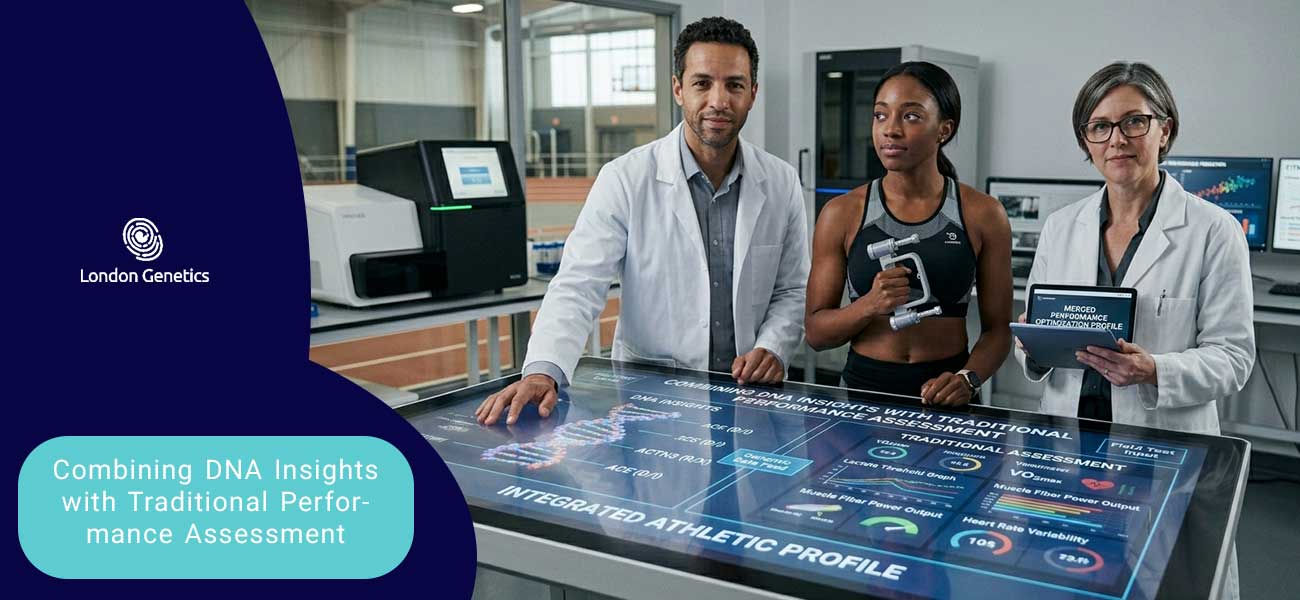
Combining DNA Insights with Traditional Performance Assessment
While genetic testing offers a powerful lens into an athlete’s innate potential, it is most effective when integrated with established performance assessment methods. This holistic approach ensures that insights from Genetics Predict Athletic Performance are complemented by real‑world performance data, leading to more comprehensive and actionable strategies.
Understanding the Limits of Genetic Data
Genetic predispositions, such as those related to strength or endurance, represent a blueprint rather than a destiny. Factors such as environment, training intensity, nutrition, psychological state, and even luck play significant roles. Therefore, relying solely on sports genetics testing would provide an incomplete picture.
Traditional Performance Assessment Methods
These methods provide objective, measurable data on an athlete’s current capabilities and progress:
-
Physical Testing:
-
Strength: One-repetition maximum (1RM) lifts (squat, bench press, deadlift), grip strength tests.
-
Power: Vertical jump height, broad jump distance, medicine ball throws, Wingate anaerobic test.
-
Endurance: VO2 max tests (e.g., treadmill or cycle ergometer protocols), timed runs (e.g., 12-minute run, 1.5-mile run), Cooper test.
-
Speed & Agility: Sprint times (e.g., 40-yard dash), shuttle run tests, T-test.
-
Flexibility & Mobility: Sit-and-reach test, range of motion assessments.
-
Skill-Based Assessments:
-
Sport-specific drills and performance metrics (e.g., shooting percentage in basketball, serve accuracy in tennis).
-
Technical analysis of movement patterns and biomechanics.
-
Physiological Monitoring:
-
Heart rate variability (HRV) for recovery status.
-
Blood lactate levels during high-intensity exercise.
-
Body composition analysis (e.g., DEXA scans, skinfolds).
-
Psychological Profiling:
-
Assessing mental toughness, focus, and stress management.
Synergising DNA Insights with Traditional Data
The true power emerges when genetic information is combined with traditional assessments:
- Personalised Training Prescription:
- Scenario: An athlete has a genetic profile indicating a predisposition for endurance (e.g., ACE I-allele), but traditional tests show a current weakness in anaerobic power.
- Combined Approach: The training plan can be adjusted to focus on developing anaerobic capacity while still maintaining endurance foundations, rather than exclusively pursuing endurance training. This ensures development across all key areas and helps mitigate potential weaknesses.
- Injury Risk Mitigation:
- Scenario: Genetic testing reveals a higher susceptibility to certain soft tissue injuries (e.g., COL1A1 gene variants).
- Combined Approach: This genetic information can be cross-referenced with physical assessments that identify current biomechanical issues or muscular imbalances. The training programme can then incorporate specific prehabilitation exercises, flexibility work, and modified load management to proactively address these combined risks.
- Optimising Recovery:
- Scenario: A genetic marker suggests slower recovery from intense exercise.
- Combined Approach: This insight can be paired with physiological monitoring (like HRV) and subjective athlete feedback on fatigue levels. It informs more aggressive recovery strategies, such as targeted nutrition, extended sleep, or active recovery sessions, to ensure the athlete is ready for the next training bout.
- Talent Identification and Development:
- Scenario: Identifying young athletes with potential for specific sports.
- Combined Approach: Genetic insights can offer early indicators of suitability for certain performance types (e.g., power vs. endurance). This can guide initial sport selection and early training focus, while traditional assessments track actual progress and confirm suitability as the athlete matures.
The Future of Integrated Performance Analysis
By blending the predictive power of Genetics Predict Athletic Performance with the measurable reality of traditional assessments, coaches and sports scientists can create highly individualised, dynamic, and effective athlete development programmes. This combined approach moves beyond one-size-fits-all solutions, unlocking each athlete’s unique potential more effectively.
Future Directions in Genetic‑Based Sports Performance Analysis
Sports genetics is rapidly advancing beyond single‑gene analysis toward integrated, data‑driven, and highly predictive models. As sequencing, multi‑omics, and AI evolve, future approaches will offer deeper, more personalised insights into how Genetics Predict Athletic Performance.
Emerging innovations—such as whole‑genome sequencing, multi‑omics profiling, AI‑driven modelling, and precision guidance—are reshaping how athletes optimise training, reduce injury risk, and understand their performance potential.
Advanced Sequencing Technologies:
Future whole‑genome sequencing will be more accessible, mapping complete genetic profiles and revealing complex polygenic traits that influence performance.
Multi‑Omics Integration:
Combining genomics with transcriptomics, proteomics, and metabolomics will provide a real‑time view of an athlete’s biological state, far beyond DNA alone.
AI‑Powered Predictive Models:
Machine‑learning systems will analyse vast datasets to forecast training responses, performance potential, and injury risks with unprecedented accuracy.
Precision Training & Nutrition:
Dynamic models will tailor training loads, recovery plans, and nutrition strategies based on individual genetic pathways and physiological feedback.
Ethical & Accessibility Considerations:
As capabilities grow, safeguarding data privacy, ensuring informed consent, and promoting equitable access to advanced genetic tools will be essential.
Expanding Professional Roles:
Genetic counsellors, bioinformaticians, and AI specialists will become integral to sports science teams, translating complex data into practical, performance‑enhancing strategies.