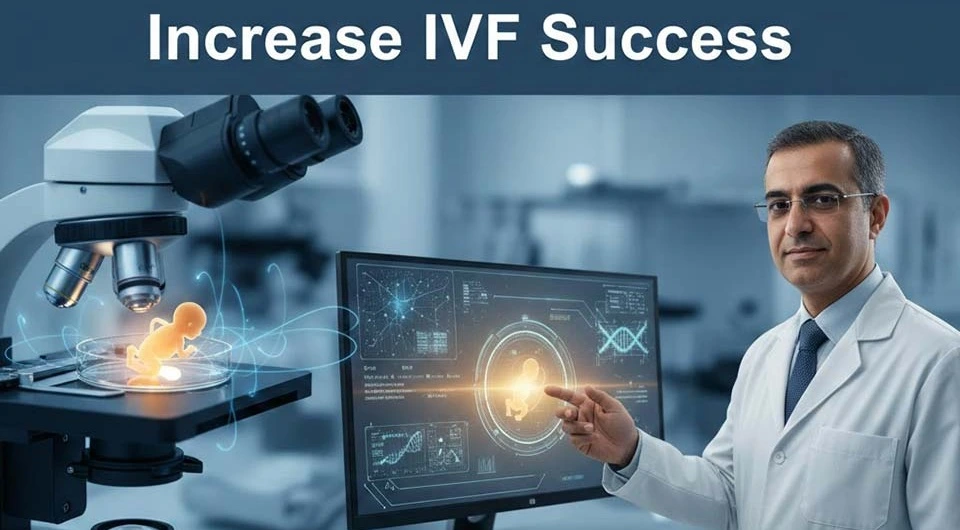
For many couples, the journey toward parenthood involves complex medical paths, with the primary goal always being to increase IVF success and ensure the birth of a healthy baby. While traditional IVF focuses on the physical process of fertilisation, the integration of advanced reproductive genetics has revolutionised our ability to predict and improve outcomes. In the heart of London, specialists like Dr Ehsan Karimiani are utilising cutting-edge genomic tools to look beyond the surface, identifying the healthiest embryos before they are even implanted. This scientific precision not only reduces the emotional toll of failed cycles but also provides a clear, evidence-based roadmap for those navigating the challenges of fertility.
Increase IVF Success: The Science of Embryo Selection in Reproductive Genetics
For many couples, the journey to parenthood is often paved with challenges, making the primary objective clear: to increase IVF success rates and ensure a healthy live birth. While traditional fertility treatments have focused on the physiological aspects of conception, the integration of advanced Reproductive Genetics has transformed the landscape of modern medicine. By shifting the focus from simple embryo morphology to a deep-seated genomic analysis, specialists are now able to provide answers where there was previously only uncertainty.
The Role of Genetic Viability in Successful Implantation
The most common reason for an unsuccessful IVF cycle is chromosomal abnormality within the embryo. Even an embryo that appears high-quality under a microscope may possess an incorrect number of chromosomes, a condition known as aneuploidy. To truly increase IVF success, it is essential to look beyond the surface. This is where PGT (Preimplantation Genetic Testing) becomes a vital tool. By screening embryos for chromosomal balance before they are transferred to the uterus, clinicians can significantly reduce the risk of implantation failure and miscarriage.
Recent clinical insights from London-based specialists highlight that the science of selection is the key to efficiency. For patients navigating these complex choices, understanding the nuances of testing is the first step. For a deeper dive into how clinical decisions are made, you can refer to our expert guide on How to Choose the Right Genetic Test, which outlines the criteria used to tailor testing to each patient’s unique genetic profile.
Overcoming Biological Hurdles with Precision Medicine
The impact of genetic factors on fertility is particularly evident in cases of unexplained loss. Many patients suffer through multiple cycles without knowing that the answer lies in their DNA. To effectively increase IVF success, we must address these underlying causes, ranging from balanced translocations to single-gene disorders.
By utilising the advanced technologies available at London Genetics, such as IVF & Genetics integration, we can identify embryos that are not only viable for pregnancy but also free from specific hereditary conditions. This level of precision is especially crucial for those of advanced maternal age, where the risk of genetic errors is naturally higher. By selecting only the most genetically robust embryos, we shorten the time to pregnancy and provide expectant parents with the peace of mind they deserve.

Preimplantation Genetic Testing (PGT): The Gold Standard
In the quest to increase IVF success, Preimplantation Genetic Testing (PGT) stands as the most transformative advancement in reproductive medicine. This sophisticated procedure allows for the genetic profiling of embryos before implantation, ensuring that only those with the highest potential for a healthy pregnancy are selected. For patients at our London clinic, PGT is not merely an add-on; it is a vital strategy to mitigate the risks associated with chromosomal abnormalities and inherited conditions.
The Mechanism of Precision Selection
The process of PGT involves a delicate biopsy of a few cells from the trophectoderm (the part of the embryo that becomes the placenta) at the blastocyst stage. These cells are then analysed using Next-Generation Sequencing (NGS) to detect genetic discrepancies. By identifying these issues early, we can significantly increase IVF success by avoiding the transfer of embryos that would likely lead to implantation failure or the heartbreak of miscarriage.
To understand the full scope of how these genetic factors influence your journey, it is essential to look at the specific types of PGT available:
-
PGT-A (Aneuploidy Screening): This is the most common method used to increase IVF success by ensuring the embryo has the correct number of chromosomes (46). It is particularly beneficial for women of advanced maternal age.
-
PGT-M (Monogenic Testing): Designed for couples who are known carriers of single-gene disorders. For more information on identifying these risks before you begin, explore our guide on Am I a Carrier of a Genetic Condition?.
-
PGT-SR (Structural Rearrangements): Essential for parents with balanced translocations, which are often the underlying Recurrent Pregnancy Loss & Genetic Factors that hinder a successful full-term pregnancy.
Why PGT is Essential for IVF Optimisation
The primary advantage of PGT is the reduction in “time to pregnancy.” Without genetic screening, many couples undergo multiple transfers of embryos that appear healthy but are genetically non-viable. By integrating PGT (Preimplantation Genetic Testing) into the IVF & Genetics protocol, we effectively filter out these risks.
Furthermore, PGT allows for confident Single Embryo Transfer (SET). This approach not only maintains high success rates but also eliminates the complications associated with multiple pregnancies, such as twin or triplet births, which can pose risks to both mother and baby. At London Genetics, Dr Ehsan Karimiani emphasises that this level of precision is the cornerstone of modern, ethical fertility care.
The Evolution of Assisted Reproduction and IVF Success Rates
The journey of In Vitro Fertilisation (IVF) has transformed from a pioneering medical experiment into a highly sophisticated field of Reproductive Genetics in London. To increase IVF success, the focus has shifted from basic embryology to advanced genomic precision. Under the clinical leadership of Dr Ehsan Karimiani, we trace this evolution to provide patients with the most effective, evidence-based pathways to parenthood.
- Visual Assessment: Historically, clinicians relied on the physical appearance of embryos under a microscope to predict viability.
- Limitations: Morphology alone cannot detect chromosomal issues, often leading to lower increase IVF success rates in older patients.
- Subjectivity: Traditional methods lacked the objective data provided by modern Reproductive Genetics.
Early IVF was a milestone, but it lacked the genomic certainty we possess today.
The introduction of Preimplantation Genetic Testing (PGT) marked a turning point in our ability to increase IVF success:
- Aneuploidy Screening: Identifying embryos with the correct number of chromosomes to prevent implantation failure.
- Precision Medicine: Moving toward “Single Embryo Transfer” (SET) to reduce the risks of multiple pregnancies while maintaining high success.
- Success Benchmarks: Modern clinics in London now achieve significantly higher live birth rates compared to the era of non-screened transfers.
- Holistic Insights: Combining embryo selection with Genomic Health Insights for the parents.
- Optimised Outcomes: Using DNA data to tailor stimulation protocols and timing for each unique biological profile.
- Global Standards: London continues to lead the world in rigorous medical standards and ethical genetic research.
This evolution ensures that every patient benefits from decades of scientific progress to increase IVF success.
From basic science to genomic certainty.
The evolution of assisted reproduction means we no longer rely on chance. By choosing advanced genetic screening, you increase IVF success and take a definitive step towards a healthy family.
Understanding Why Some IVF Cycles Fail
One of the most emotionally challenging experiences for any couple is an unexplained failed fertility cycle. However, modern science shows that many of these setbacks are not “unexplained” but are rooted in biological factors that we can now identify. To increase IVF success, we must first understand the genetic barriers that prevent a healthy pregnancy from taking root under the expert clinical guidance of Dr Ehsan Karimiani.
Chromosomal Aneuploidy: The Silent Barrier
The leading cause of implantation failure is an embryo having an incorrect number of chromosomes, a condition known as aneuploidy. Even if an embryo appears high-quality during a morphology assessment, it may possess genetic errors that prevent it from attaching to the uterine lining. The body naturally recognises these errors and often ends the pregnancy early to avoid severe developmental complications. Identifying these chromosomal issues through advanced screening is the primary way to increase IVF success in London, particularly as the risk of aneuploidy increases with Advanced Maternal Age Genetic Risks.
Inherited Genetic Mutations and Carrier Status
Sometimes, a cycle fails because of specific mutations that hinder normal embryonic development. These monogenic disorders may not affect the parents’ health but can prevent the embryo from reaching the vital blastocyst stage. Undetected carrier status in one or both parents is a frequent but hidden cause of non-viable embryos. At London Genetics, we emphasise that screening through Am I a Carrier of a Genetic Condition? ensures we identify these risks before the cycle begins, providing a clear path to increase IVF success.
Structural Rearrangements and Balanced Translocations
A parent may carry a chromosomal rearrangement that causes no health issues for them but leads to unbalanced, non-viable embryos during conception. These rearrangements are a frequent cause of Recurrent Pregnancy Loss & Genetic Factors. Without genetic intervention, couples often face a cycle of repeated failures. By using PGT-SR (Structural Rearrangement testing), we can select only the balanced embryos to bypass this biological hurdle, which is a vital step to increase IVF success and achieve a full-term pregnancy.
How Reproductive Genetics Can Increase IVF Success
Integrating Reproductive Genetics into your fertility journey is the most effective way to increase IVF success. By moving beyond traditional methods and Utilising high-resolution genomic data, we provide a scientific advantage that maximises the chances of a healthy pregnancy under the expert guidance of Dr Ehsan Karimiani.
By choosing a data-driven approach, you are not just hoping for a result—you are actively working to increase IVF success. The combination of British scientific excellence and personalised medicine in London ensures that your journey is supported by the highest global medical standards.
The Critical Role of Maternal Age in Genetic Screening
When planning a family, one of the most significant factors that influence both medical care and the chance of a healthy birth is maternal age. In the field of reproductive medicine, the term Advanced Maternal Age Genetic Risks is typically applied to women conceiving at age 35 or older. Understanding the biological changes that occur during this stage is essential for anyone looking to increase IVF success and minimise potential complications.
Biological Impact on Egg Quality and Chromosomes
As women age, the quantity and, more importantly, the genetic quality of their eggs naturally decline. This physiological shift increases the likelihood of “nondisjunction”—a process where chromosomes fail to separate correctly during cell division. This often results in embryos with an incorrect number of chromosomes (aneuploidy), which is the primary cause of implantation failure or conditions such as Down syndrome. At London Genetics, we utilise advanced screening to identify these issues early, providing a clear pathway to increase IVF success for women in their late 30s and 40s.
Strategic Screening to Optimise Outcomes
For patients of advanced maternal age, the “wait and see” approach can lead to emotional exhaustion and multiple failed cycles. To effectively increase IVF success, we recommend integrating PGT (Preimplantation Genetic Testing) into the IVF protocol. This allows Dr Ehsan Karimiani to identify genetically viable embryos before transfer, ensuring that the age of the eggs does not become a barrier to a successful pregnancy. By choosing a data-driven approach, expectant mothers can significantly reduce the time to a healthy birth and avoid the risks associated with non-viable pregnancies.
Personalised Guidance in London
Every woman’s biological clock is unique, and age-related risks must be managed with a bespoke clinical strategy. Through our Reproductive Genetics services in London, we provide comprehensive counselling to help families understand their specific risk profile. Whether you are considering using your own eggs or exploring donor options, our goal is to increase IVF success by providing the most accurate genetic insights available in modern medicine.

Carrier Screening: Ensuring a Healthy Start Before the Cycle Begins
One of the most proactive steps a couple can take to increase IVF success and ensure the long-term health of their future family is to undergo carrier screening before treatment starts. Many individuals are “silent carriers” of genetic mutations, meaning they do not show any symptoms of a disease themselves but carry a gene that could be passed on to their children. Identifying these risks early allows Dr Ehsan Karimiani to tailor your fertility plan with absolute genomic precision.
Identifying Hidden Genetic Risks
Genetic carrier screening looks for specific mutations responsible for conditions such as Cystic Fibrosis, Spinal Muscular Atrophy, or Sickle Cell Anaemia. If both partners carry a mutation for the same recessive condition, there is a 25% chance in every pregnancy that the child will be affected. By answering the fundamental question, Am I a Carrier of a Genetic Condition?, couples can avoid the trauma of discovering a serious health issue during pregnancy or after birth. This foresight is a cornerstone of modern Reproductive Genetics and a vital component in our strategy to increase IVF success.
Integrating Screening with IVF Protocols
When a genetic risk is identified through carrier screening, it does not mean the end of the road. Instead, it allows us to use targeted technology to protect your future child. By combining screening results with IVF & Genetics, we can employ PGT-M (Preimplantation Genetic Testing for Monogenic disorders) to select only the embryos that are unaffected by the condition. This targeted approach is one of the most effective ways to increase IVF success for families with a history of inherited disorders, ensuring a healthy start for the next generation.
Peace of Mind Through Expert Analysis
In our London clinic, we believe that information is empowering. Carrier screening provides a layer of certainty that traditional fertility tests cannot offer. By screening both parents—or even screening an egg or sperm donor through our Egg/Sperm Donor Genetic Screening programmes—we create a safety net for your reproductive journey. This comprehensive evaluation ensures that your path to parenthood is built on a foundation of scientific evidence, ultimately working to increase IVF success and provide lasting peace of mind.
Expert Genetic Counselling: A Personalised Approach by Dr Ehsan Karimiani
To increase IVF success, clinical data must be paired with expert interpretation. At London Genetics, we provide more than just test results; we offer a clinical roadmap. By combining advanced genomic technology with Dr Ehsan Ghayoor Karimiani’s world-class expertise, we ensure that your personalised medicine in London journey is both scientifically rigorous and deeply compassionate.
The Clinical Pathway to Increase IVF Success:
– Initial Consultation: A comprehensive review of your reproductive history, utilising Reproductive Genetics insights to identify potential barriers to conception.
– Tailored Testing: From carrier screening to PGT-A, we select the specific genomic tools required to optimise your unique IVF cycle.
– Strategic Interpretation: Dr Karimiani personally translates complex chromosomal and monogenic data into an actionable strategy designed to increase IVF success.
– Holistic Support: Navigating Recurrent Pregnancy Loss or age-related risks with expert guidance and emotional support.
Optimising Your Reproductive Outcomes:
Choosing personalised medicine in London through London Genetics means accessing a seamless transition from cutting-edge research to bedside clinical care. Our patient-centred approach ensures that your genetic findings are managed with the highest degree of medical accuracy and strict confidentiality, adhering to the most rigorous British healthcare standards.
The Next Step Toward Parenthood:
Knowledge is the foundation of a successful pregnancy. Whether you are at the beginning of your fertility journey or seeking answers after failed cycles, taking a proactive approach will increase IVF success and provide the clarity you deserve. Book a consultation today to start your journey with biological certainty.