What Are Longevity Genes? Understanding the Genetics of a Longer Life
Longevity Genes refer to specific genes within the human genome that influence how the body ages and how long an individual may remain healthy throughout life. While ageing is a natural biological process, scientific research has shown that certain genetic variations can affect how efficiently the body repairs cells, manages inflammation, and protects tissues from long‑term damage. These genetic factors do not guarantee a longer life on their own, but they can play a meaningful role in shaping overall health and resilience as we grow older.
Many of the Longevity Genes identified by researchers are involved in essential biological pathways such as DNA repair, metabolic regulation, cellular stress response, and the maintenance of healthy mitochondria—the structures responsible for producing energy within our cells. When these systems function efficiently, they help slow the accumulation of cellular damage that naturally occurs with ageing. In this way, Longevity Genes contribute to maintaining physical and cognitive function over time.
Research in Longevity & Anti-Ageing Genetics has revealed several gene families that appear to influence lifespan. For example, genes involved in insulin signalling, oxidative stress defence, and cellular maintenance have been associated with increased longevity in both humans and other organisms. Variants of genes such as FOXO3, SIRT1, and APOE have been studied extensively because of their potential link to healthier ageing and resistance to age‑related diseases.
However, genetics alone does not determine how long someone will live. Lifestyle choices, environmental exposures, nutrition, physical activity, and overall healthcare all interact with genetic predispositions. This is why the emerging field of Genetic Wellness & Lifestyle focuses on understanding how genetic information can guide personalised health strategies. By combining genetic insights with healthy daily habits, individuals may be able to support the biological systems that promote healthy ageing.
Ultimately, the study of Longevity Genes is helping scientists better understand the complex relationship between genetics, lifestyle, and the ageing process. While there is still much to learn, this growing field offers valuable insights into how our genetic blueprint may influence not only how long we live, but how well we live throughout the years.
How Longevity Genes Influence Ageing and Cellular Health
The influence of Longevity Genes on ageing and cellular health is profound, as these genes govern the
fundamental processes by which our bodies maintain themselves and cope with the stresses of time. Ageing
is essentially the progressive accumulation of cellular damage; longevity genes are those that enhance the
body’s inherent capacity to counteract this decline.
pollution and UV exposure. Longevity genes produce specialised proteins that monitor, repair and stabilise
genetic material. When these genes function optimally, cells maintain their structural integrity for longer,
reducing the risk of mutations and delaying cellular ageing.
process known as autophagy. Key longevity‑related genes, such as those in the Sirtuin family (including
SIRT1), help regulate stress responses and enhance cellular defence systems. When activated, these genes
promote the breakdown of faulty proteins and organelles, supporting long‑lasting cellular vitality.
Longevity genes support mitochondrial efficiency, reduce the production of harmful byproducts like reactive
oxygen species (ROS), and improve overall metabolic stability. Healthier mitochondria result in sustained
energy levels and reduced oxidative stress throughout the body.
cellular damage. They influence how tissues repair themselves, how cells communicate, and how the body
responds to long‑term physiological stress—all of which determine the pace and quality of the ageing
process.
Longevity Genes act as a biological blueprint for superior cellular maintenance. By enhancing DNA repair,
supporting stress‑response pathways and protecting mitochondrial health, these genes play a central role in
shaping how well—and how gracefully—the body ages.
The Science Behind Longevity Genes: Key Discoveries in Genetic Research
Introduction to the Genetic Foundations of Longevity
Research into Longevity Genes has expanded rapidly over the past two decades, revealing that the ageing process is not influenced solely by lifestyle and environmental factors but is also strongly shaped by genetic mechanisms. Scientists studying long‑lived populations and laboratory models have identified specific genes that appear to regulate lifespan by controlling cellular repair, metabolic efficiency, and resistance to biological stress.
Early Discoveries from Model Organisms
Some of the earliest breakthroughs in the study of Longevity Genes came from research on model organisms such as yeast, worms, and mice. Scientists discovered that altering or mutating certain genes in these organisms could significantly extend their lifespan. These findings led to the identification of several important genetic families associated with longevity, including the Sirtuin (SIRT) genes, FOXO transcription factors, and genes involved in the mTOR signalling pathway. Each of these systems helps regulate how cells respond to nutrients, stress, and molecular damage.
The Role of Sirtuin Genes in Cellular Protection
The Sirtuin gene family, particularly SIRT1 and SIRT6, has attracted considerable attention in longevity research. These genes regulate critical cellular processes such as energy metabolism, DNA repair, and inflammation control. When activated, sirtuins enhance the cell’s ability to maintain genomic stability and respond to metabolic stress. This protective function is considered one of the key biological mechanisms through which Longevity Genes contribute to healthier ageing.
FOXO Genes and Cellular Defence Mechanisms
Another major discovery in longevity science involves the FOXO genes, which act as regulators of cellular defence systems. FOXO proteins control several protective processes, including antioxidant production, DNA repair, and programmed cell death (apoptosis). Genetic studies have shown that certain variants of the FOXO3 gene are consistently associated with increased lifespan in multiple human populations, highlighting its importance among known Longevity Genes.
The mTOR Pathway and Metabolic Regulation
Researchers have also identified the mTOR signalling pathway as a central regulator of ageing. This pathway acts as a nutrient sensor that controls cellular growth, metabolism, and protein synthesis. When mTOR activity is reduced, cells shift their focus from growth toward repair and maintenance processes. This biological adjustment has been linked to increased lifespan in numerous experimental studies and is considered an important mechanism connected to Longevity Genes.
Insights from Human Genetic Studies
Large‑scale human genetic research, particularly genome‑wide association studies (GWAS), has significantly advanced the understanding of Longevity Genes. By analysing the genomes of thousands of individuals, scientists have identified genetic variants that appear more frequently in people who live exceptionally long lives. These studies continue to reveal new genetic markers that may contribute to healthy ageing and longevity.
Conclusion: Understanding the Genetic Network of Ageing
Together, these discoveries demonstrate that Longevity Genes operate within complex biological networks that regulate cellular maintenance, stress resistance, and metabolic balance. As research continues to evolve, a deeper understanding of these genetic pathways may lead to innovative strategies for promoting healthy ageing and reducing the risk of age‑related diseases.
Lifestyle, Environment and Longevity Genes: How They Work Together
Longevity is not determined by genetics alone. While Longevity Genes provide the biological
foundation that influences ageing, lifestyle habits and environmental conditions play a crucial role
in shaping how these genes function. Modern genetic research shows that genes, lifestyle behaviours
and environmental exposures constantly interact with one another, influencing cellular health,
ageing speed and long‑term wellbeing.

Explore how lifestyle choices and environmental factors interact with Longevity Genes to influence healthy ageing.

Healthy lifestyle behaviours
can support the biological pathways
regulated by Longevity Genes.
Balanced nutrition helps stabilise metabolism
and reduce chronic inflammation.
Regular physical activity
improves mitochondrial function
and stimulates cellular repair mechanisms.
Quality sleep and effective stress management
also strengthen the body’s natural
maintenance and recovery systems.
Together, these habits help Longevity Genes
work more efficiently in protecting
cells and supporting healthy ageing.

Environmental conditions
can strongly influence
how Longevity Genes are expressed.
Factors such as pollution,
toxic chemicals,
and excessive UV exposure
may increase cellular stress
and accelerate biological ageing.
On the other hand,
clean air, moderate sunlight,
healthy food availability,
and low‑toxin environments
can support protective genetic pathways.
This interaction between environment
and gene activity is often described
as epigenetic regulation.

Epigenetics refers to the process
through which lifestyle and environment
influence gene activity
without altering the DNA sequence.
Certain lifestyle patterns
may activate beneficial Longevity Genes
that support cellular repair
and stress resistance.
Conversely, unhealthy conditions
can reduce the effectiveness
of these protective genes.
Understanding epigenetic effects
helps explain why individuals
with similar genetics
may age very differently.

The most important insight
from modern ageing research
is that Longevity Genes,
lifestyle behaviours
and environmental factors
do not operate independently.
Healthy lifestyles
and supportive environments
can enhance the protective effects
of Longevity Genes.
Even individuals without strong
genetic advantages
may experience healthy ageing
when lifestyle and environmental
conditions are favourable.
The best outcomes occur
when genetics, lifestyle
and environment work together
to support cellular health.
Key Takeaway:
Longevity Genes provide the biological blueprint for ageing, but lifestyle choices and environmental
conditions determine how effectively these genes function. When healthy habits and supportive
environments align with beneficial genetic pathways, they can significantly improve cellular health,
reduce biological stress and promote longer, healthier lives.
Can Longevity Genes Be Activated? The Role of Diet, Exercise and Epigenetics
The question “Can Longevity Genes Be Activated?” has become a central theme in modern ageing research. While we cannot alter the DNA sequence we are born with, scientific evidence shows that specific lifestyle choices can influence how Longevity Genes behave. Through nutrition, physical activity and epigenetic regulation, these genes can be supported, stimulated and expressed more effectively.
Understanding The Role of Diet, Exercise and Epigenetics is essential in exploring how these genetic pathways can be optimised.
The Role of Diet in Activating Longevity Genes
Diet plays a significant part in answering the question “Can Longevity Genes Be Activated?” because nutritional patterns strongly influence cellular health.
- • Caloric restriction and intermittent fasting are known to activate pathways such as SIRT1 and AMPK, which support cellular repair and metabolic balance.
- • Diets rich in antioxidants and anti‑inflammatory compounds help reduce oxidative stress, enabling Longevity Genes to function more efficiently.
- • Nutrients found in whole foods, colourful vegetables, nuts and certain spices contribute to improved genetic signalling linked to healthspan.
A well‑structured diet can therefore encourage the natural activation of genes associated with resilience, energy regulation and slow ageing.
The Role of Exercise in Longevity Gene Expression
Physical activity also contributes to the broader question “Can Longevity Genes Be Activated? The Role of Diet, Exercise and Epigenetics” by influencing how genes responsible for vitality and cellular maintenance behave.
- • Aerobic exercise enhances mitochondrial biogenesis, improving energy production and reducing cellular decline.
- • Strength training stimulates muscle‑supporting pathways that interact directly with Longevity Genes.
- • Exercise promotes autophagy, the process by which damaged cellular components are removed, allowing gene‑regulated repair mechanisms to work more effectively.
Regular movement strengthens the body’s ability to activate and sustain beneficial genetic pathways throughout life.
Epigenetics as the Link Between Lifestyle and Longevity Genes
Epigenetics forms the scientific framework for understanding how Longevity Genes can be activated through behaviour rather than through genetic modification.
- • Epigenetic mechanisms such as DNA methylation and histone modification determine whether genes are switched on or off.
- • Positive lifestyle choices, including balanced nutrition and regular exercise, can lead to epigenetic patterns that enhance the expression of protective Longevity Genes like FOXO3 and SIRT1.
- • Conversely, chronic stress, toxin exposure and poor dietary habits may suppress these pathways, reducing the body’s capacity for cellular repair.
Epigenetics therefore explains why two individuals with similar genetic profiles may experience ageing differently depending on their lifestyle environments.
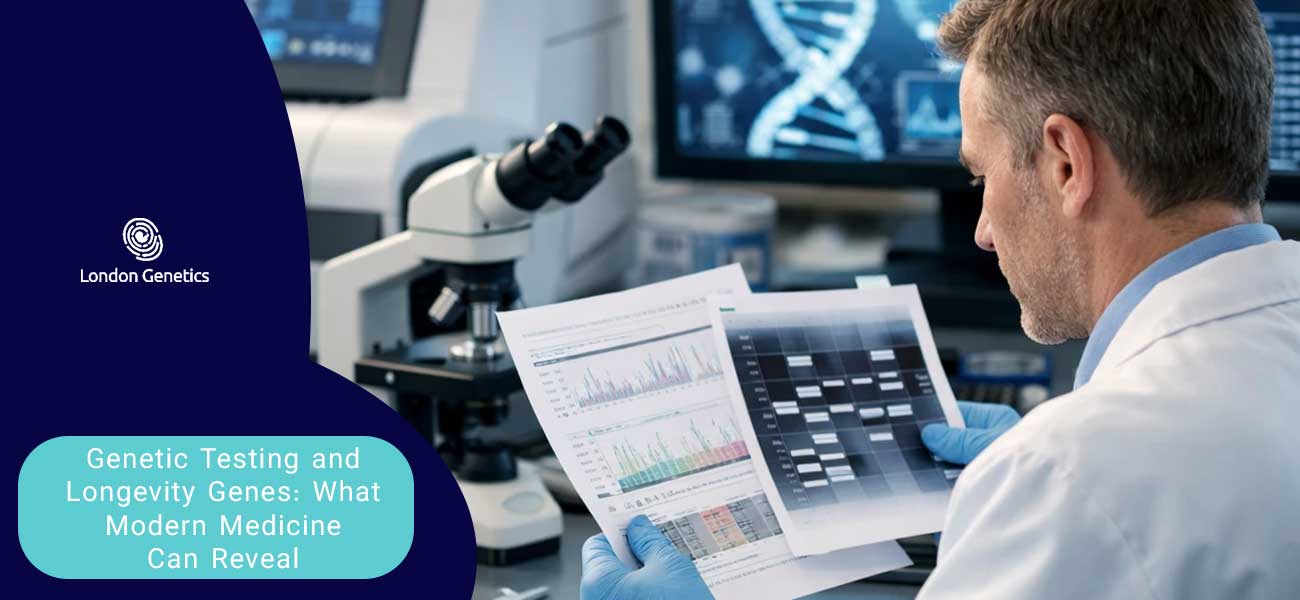
Genetic Testing and Longevity Genes: What Modern Medicine Can Reveal
Advances in genetic science have significantly improved our understanding of ageing and long‑term health. Through genetic testing, modern medicine can now analyse variations in specific genes associated with ageing, cellular repair and disease resistance. When examining Longevity Genes, genetic testing provides valuable insights into how an individual’s genetic profile may influence their healthspan and potential ageing trajectory.
Understanding Longevity Genes Through Genetic Testing
Longevity Genes are genetic variants linked to mechanisms that support healthy ageing. These genes influence processes such as DNA repair, inflammation control, metabolism, and resistance to cellular stress. With modern genetic testing technologies, researchers and clinicians can identify variations in genes such as FOXO3, SIRT1, APOE and AMPK‑related pathways.
By analysing these genetic markers, medical professionals can better understand how efficiently certain protective mechanisms may function in the body. For example, some variants of the FOXO3 gene have been associated with increased lifespan and improved cellular stress resistance.
What Genetic Testing Can Reveal About Ageing
Modern genetic testing can reveal several aspects related to longevity and health maintenance:
• Predisposition to age‑related conditions – Certain genetic variants may increase or decrease the risk of conditions such as cardiovascular disease, neurodegenerative disorders or metabolic diseases.
• Efficiency of cellular repair systems – Some individuals carry genetic variants that influence how effectively their cells repair DNA damage or manage oxidative stress.
• Metabolic and inflammatory responses – Genetic testing can identify genes that affect how the body regulates metabolism and inflammation, both of which play major roles in the ageing process.
• Potential response to lifestyle interventions – Genetic information may also provide clues about how strongly an individual might respond to dietary patterns, exercise programmes or other lifestyle strategies linked to healthy ageing.
The Role of Genetic Testing in Personalised Longevity Strategies
One of the most important contributions of genetic testing and Longevity Genes research is the development of personalised health strategies. Instead of applying a single general approach to ageing, clinicians can use genetic information to guide more tailored recommendations.
For example, individuals with certain genetic profiles may benefit more from specific nutritional patterns, targeted physical activity or early monitoring for particular health risks. This personalised perspective allows healthcare providers to support long‑term wellbeing more effectively.
Genetic Insights and Preventive Healthcare
The growing field of genomic medicine allows doctors to move beyond treating disease after it appears and instead focus on prevention. By identifying genetic predispositions early, healthcare professionals can recommend preventive measures, lifestyle adjustments and monitoring strategies that may reduce long‑term health risks.
In this way, genetic testing and Longevity Genes research provide a deeper understanding of the biological factors influencing ageing while helping individuals make informed decisions about their long‑term health.
Conclusion
In summary, Genetic Testing and Longevity Genes: What Modern Medicine Can Reveal is transforming how we understand ageing and long‑term health. By identifying genetic variations linked to cellular repair, resilience and disease risk, modern medicine allows individuals to gain clearer insight into their unique biological pathways. When combined with informed lifestyle choices and preventive healthcare, these insights empower people to take a more proactive, personalised approach to ageing—supporting healthier, stronger and potentially longer lives.
Genetic insights allow clinicians to better understand an individual’s predisposition to age‑related conditions, while providing more informed recommendations for lifestyle strategies that can support long‑term wellbeing. As research on Longevity Genes expands, modern medicine is increasingly able to offer personalised, preventive guidance for healthier ageing.
The integration of genetic testing into preventive health programmes helps individuals make earlier, more precise decisions that influence their long‑term health outcomes. This personalised approach supports improved resilience, better management of genetic risks and greater clarity about how one’s body ages over time.
As scientific tools evolve, the role of genetic testing in understanding Longevity Genes will continue to expand, offering individuals a clearer and more actionable view of their biological potential for healthy ageing.
- Clearer insight into individual ageing patterns and genetic predispositions
- Better guidance for personalised, preventive lifestyle strategies
- Earlier awareness of potential health risks linked to Longevity Genes
- Greater ability to plan long‑term health and wellbeing
- Empowerment through knowledge of one’s genetic strengths and vulnerabilities
Why This Matters:
Understanding the connection between Genetic Testing and Longevity Genes helps individuals take early, informed action to support healthier ageing and long‑term wellness.
The Value of Modern Medicine:
Scientific advancements now make it possible to interpret genetic information with greater accuracy, enabling more personalised and effective health strategies.
Your Next Step:
Consult a qualified specialist to explore how genetic testing can provide personalised insights into your long‑term health and ageing profile.