Introduction
Saliva DNA Testing has become a cornerstone of modern human genetics, offering a simple and non‑invasive way to collect genetic material without the need for clinical blood draws or specialised medical intervention. This technique has not only simplified the process of genetic sampling but has also fostered greater accessibility for both researchers and public participants in large‑scale studies.
Background and Significance
Over the past decade, advancements in DNA extraction technologies have transformed how scientists gather and analyse genetic data. Saliva‑based sampling provides a convenient and safe alternative to traditional blood samples, maintaining the integrity and yield of genetic material while eliminating discomfort and logistical challenges.
It has found widespread use in diverse contexts including clinical diagnostics, ancestry tracking, and population‑wide genomic research, where broad sampling and demographic coverage are essential.
Key points highlighting its significance include:
- Accessibility: Enables at‑home genetic sampling, expanding participation rates.
- Safety: Minimal biohazard risk compared to blood‑based methods.
- Stability: Properly preserved saliva DNA remains viable for extensive sequencing and long‑term storage.
- Cost‑efficiency: Reduces the need for laboratory personnel and medical facilities.
Technological Foundations
Modern Saliva DNA Testing relies on stabilising agents and optimised buffer solutions that prevent enzymatic degradation and bacterial contamination. The advances in processing equipment and automated extraction kits have markedly improved the accuracy and consistency of DNA results derived from saliva.
A well‑designed collection system ensures:
- High DNA yield comparable to blood samples.
- Reduced contamination risk through sealed collection devices.
- Transport readiness allowing samples to be shipped safely at ambient temperature.
These improvements have paved the way for broader integration of saliva‑derived DNA in precision‑oriented studies.
Connection to Personalised Genetics
As the field moves towards personalised genetics, saliva DNA has become crucial for empowering individuals to understand their own genetic profile. From inherited health risks to customised treatment plans, saliva‑based testing bridges the gap between laboratory research and everyday health awareness.
In consumer genetics, it provides an accessible tool for identifying variations that influence diet response, medication sensitivity, or lifestyle‑related predispositions.
Towards a Broader Vision
By eliminating conventional barriers to sample collection, Saliva DNA Testing supports the global shift towards inclusivity and data diversity in research.
Individuals participating from different geographic or socioeconomic backgrounds can contribute genetic data easily, enhancing the robustness of population‑level studies and improving the representativeness of human genomic databases.
Summary of the Introduction
In summary, Saliva DNA Testing stands at the intersection of convenience, innovation, and scientific reliability.
- It strengthens the foundation of large‑scale genomic research.
- It advances efforts in personalised genetics and precision medicine.
- It enables scientists and clinicians to connect complex genetic insights to practical human applications.
This chapter sets the tone for a detailed exploration of the methods, accuracy, and diverse applications that make saliva‑based DNA testing an indispensable component of today’s genetic science.
Principles of Saliva‑Based DNA Collection
Saliva‑based DNA collection has become a practical, non‑invasive alternative to blood sampling. Its reliability depends on proper sampling, stabilisation, and adherence to standardised protocols that preserve DNA integrity for clinical and research applications.
With reliable tools and standardised procedures, saliva provides high‑quality DNA comparable to blood, enabling accurate and scalable genetic testing.
DNA Extraction and Processing Techniques
The extraction and processing of DNA from saliva samples form the foundation of accurate genetic analysis. In the context of Saliva DNA Testing, the efficiency of these procedures directly influences data quality, sequencing performance, and the reliability of downstream applications. The following sections outline the core stages and technical considerations that define modern saliva‑based DNA workflows.
Pre‑Processing of Saliva Samples
Before extraction begins, saliva samples undergo a series of preparatory steps designed to optimise DNA yield and purity. Essential actions include:
- Mixing with stabilisation buffer to ensure even distribution of cells and prevent enzymatic degradation.
- Initial incubation when required, allowing lysis agents to begin breaking down cellular membranes.
- Quality checking for volume, clarity, and correct labelling prior to laboratory processing.
These preparatory steps help maintain the integrity of human DNA and reduce the impact of bacterial contaminants that are naturally present in saliva.
Cell Lysis and Release of Genetic Material
Efficient lysis of epithelial and leukocyte cells is a critical step in retrieving usable DNA. Laboratories commonly use:
- Chemical lysis buffers containing detergents and salts to break down cellular membranes.
- Enzymatic digestion, such as proteinase K treatment, to dismantle proteins and release nucleic acids.
- Thermal incubation, often applied to accelerate cell breakdown and increase DNA accessibility.
This stage ensures that the maximum amount of intact DNA is released into the solution for downstream purification.
DNA Purification Methods
To isolate high‑quality DNA from the lysate, laboratories employ several purification strategies. The choice depends on sample volume, automation needs, and research goals.
Common purification methods include:
-
Silica column‑based purification
Efficiently binds DNA while removing impurities, widely used in manual and semi‑automated workflows.
-
Magnetic bead‑based extraction
Ideal for high‑throughput laboratories, providing consistent yields and compatibility with robotic platforms.
-
Organic extraction (phenol–chloroform)
Used for specialised applications requiring very high DNA purity, though less common due to toxicity and labour intensity.
Each method aims to eliminate proteins, salts, and microbial DNA while enriching for high‑molecular‑weight human DNA.
DNA Washing and Elution
Following purification, washing steps remove residual contaminants. Typical procedures include:
- Applying ethanol‑based wash buffers to strip away remaining salts and enzymes.
- Centrifugation or magnetic separation to collect purified DNA.
- Elution in a low‑salt buffer or nuclease‑free water, producing a clean DNA solution suitable for genotyping or sequencing.
The quality of this stage directly affects downstream success, including PCR amplification and whole‑genome sequencing.
Quantification and Quality Assessment
Once DNA has been extracted, laboratories perform quality assessments to ensure suitability for analytical use. Key evaluations include:
- Concentration measurement using spectrophotometry or fluorometric assays.
- Purity assessment, typically through absorbance ratios (A260/280 and A260/230).
- Integrity verification using gel electrophoresis or automated capillary systems.
- Contamination screening, particularly for bacterial DNA, which is common in saliva samples.
These assessments help determine whether a sample meets the requirements for high‑fidelity Saliva DNA Testing workflows.
Processing for Downstream Applications
Purified DNA must often be processed further depending on the intended analytical method. Typical downstream procedures include:
- PCR amplification for targeted genetic regions.
- Library preparation for sequencing, involving fragmentation, adapter ligation, and indexing.
- Normalisation of DNA concentrations for batch consistency in high‑throughput pipelines.
- Storage, usually at −20°C or −80°C, to preserve DNA for long‑term studies.
These processes ensure that extracted DNA is ready for advanced applications such as SNP genotyping, whole‑exome sequencing, or population‑scale analyses.
Accuracy and Reliability of Saliva‑Derived DNA
Saliva DNA Testing provides dependable genetic material when collected and stabilised correctly. Modern buffers, extraction methods, and transport systems ensure DNA quality suitable for high‑accuracy genotyping and sequencing.

Key factors shaping the accuracy and performance of saliva‑derived DNA.


Key Takeaway:
Saliva‑derived DNA is accurate, stable, and highly reliable—making it a preferred option for clinical genetics, research, and population‑level testing.
Applications of Saliva DNA Testing
The expanding use of Saliva DNA Testing has transformed multiple scientific, clinical, and consumer‑focused fields. Because saliva collection is non‑invasive, convenient, and suitable for a wide demographic range, it has become a preferred method for gathering genetic material across healthcare, human genetics, population studies, and personal ancestry services. The following sections explore the major application areas in depth, reflecting how saliva‑derived DNA supports both professional and public‑facing genetic initiatives.
Clinical and Medical Applications
Saliva‑based DNA has become increasingly important in modern healthcare, where genetic data supports diagnosis, risk prediction, and treatment planning. Key applications include:
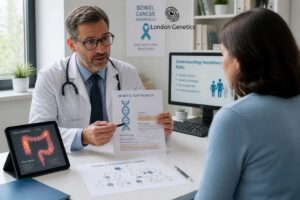
- Genetic screening for hereditary conditions, such as BRCA mutations, carrier status for recessive diseases, and cardiogenetic markers.
- Pharmacogenomics, enabling clinicians to identify how an individual may metabolise medications, improving drug selection and dosage accuracy.
- Diagnostic support for rare diseases, particularly where DNA quality from saliva is sufficient for sequencing‑based tests.
- Pre‑symptomatic testing, offering accessible pathways for individuals to evaluate potential health risks without clinical visits.
The ease of collection allows clinicians to reach patients remotely, broadening access to personalised healthcare services.
Human Genetics and Research Studies
Saliva samples have become a cornerstone for large‑scale human genetics projects, especially when broad participation and geographic diversity are required. Their advantages make them ideal for:
- Cohort studies involving thousands or millions of participants.
- Genetic epidemiology, where saliva samples support investigations into the relationship between genetic variants and disease prevalence.
- Population genetics, enabling researchers to build comprehensive genomic databases across multiple ethnicities and regions.
- Longitudinal studies, where repeated sampling is necessary and must be convenient for participants.
These applications are driven by the capacity of saliva‑derived DNA to provide reliable sequencing and genotyping data at scale.
Public Health and Preventive Medicine
Saliva DNA contributes significantly to preventive health frameworks by:
- Identifying susceptibility markers for common conditions such as diabetes, cardiovascular disorders, and certain cancers.
- Supporting risk‑stratified screening programmes, enabling early intervention strategies.
- Facilitating remote health monitoring, especially for populations without access to clinical facilities.
This approach aligns with global efforts to shift healthcare towards prevention rather than treatment.
Family, Ancestry, and Kinship Analysis
One of the most widely recognised uses of Saliva DNA Testing is in consumer genetics, where millions of individuals use saliva‑based kits to explore:
- Ancestry composition and migration patterns.
- Maternal and paternal lineage tracing (mtDNA and Y‑DNA analyses).
- Relative matching, connecting individuals with genetic relatives across global databases.
- Family reconstruction, supporting adoption cases, genealogy, and long‑lost kinship identification.
Saliva’s convenience makes it ideal for large consumer databases, where participant compliance is essential.
Forensic and Identification Purposes
In forensic science, saliva‑derived DNA is used in:
- Criminal investigations, particularly from trace saliva residues (cups, cigarettes, envelopes).
- Disaster victim identification, where non‑invasive collection is preferred.
- Paternity and legal identity testing, provided that chain‑of‑custody standards are followed.
While saliva may contain microbial DNA, modern extraction protocols allow forensic analysts to retrieve high‑quality human DNA when handled correctly.
Biotechnology, Product Development, and Commercial Innovation
Biotech companies use saliva‑based DNA for:
- Developing genetic testing platforms, including SNP chips and sequencing technologies.
- Researching population‑specific biomarkers, supporting drug development strategies.
- Designing personalised health and wellness products, such as diet‑gene interaction algorithms, fitness reports, and skincare genetics.
Because saliva collection scales easily, it supports both experimental development and market‑ready consumer products.
Education and Citizen Science
Saliva DNA kits are increasingly used in:
- Academic training programmes, helping students learn molecular techniques without invasive samples.
- Citizen science projects, enabling non‑experts to participate in genetic studies and contribute data.
- Public engagement initiatives, promoting genetic literacy at community and national levels.
This accessibility bridges the gap between professional science and public understanding.
Challenges and Limitations in Saliva DNA Testing
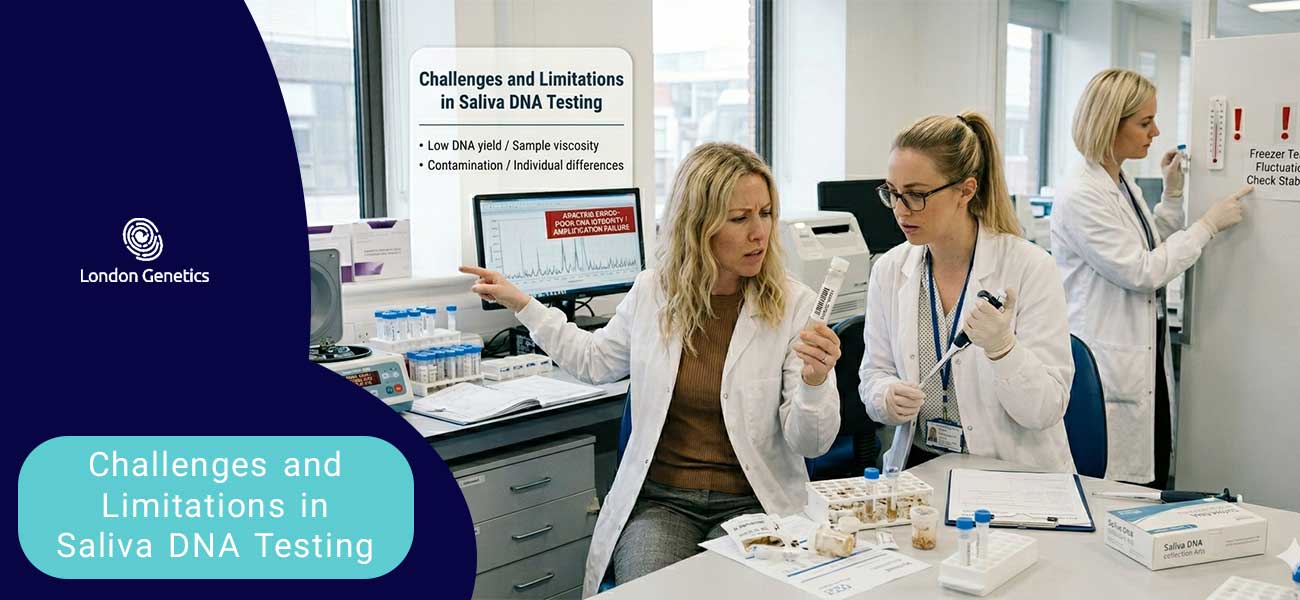
Despite the growing popularity and widespread adoption of Saliva DNA Testing, several technical, biological, and ethical challenges influence the reliability and general applicability of this method. Understanding these limitations is essential for accurately interpreting results and designing effective research or clinical protocols.
Biological Challenges
Saliva is a complex mixture of human epithelial cells, leukocytes, and diverse microbial communities. This natural composition introduces certain limitations:
- High microbial content, which can dilute human DNA and interfere with downstream applications.
- Variable cell concentration, influenced by hydration levels, oral hygiene, or time of day.
- Potential contamination, including food particles or beverages if participants ignore pre‑collection instructions.
- DNA degradation, which may occur if stabilisation buffers are insufficient or improperly mixed.
These biological factors may reduce the purity or yield of human DNA compared to blood‑derived samples.
Technical Limitations
Despite advances in extraction technologies, technical constraints still affect saliva‑based workflows:
- Lower consistency in DNA yield across individuals relative to blood samples.
- Sample viscosity, which can complicate automated processing and reduce extraction efficiency.
- Interference from preservatives, where certain stabilising chemicals may inhibit PCR or sequencing steps if not fully removed.
- Batch variability, particularly in large‑scale sequencing projects where minor inconsistencies become magnified.
These issues require well‑optimised, validated protocols to maintain accuracy across high‑throughput studies.
Logistical and Operational Challenges
While saliva samples offer high convenience, logistical obstacles occasionally arise:
- Shipping delays, which may affect DNA integrity if preservatives underperform.
- Temperature sensitivity, where excessive heat can destabilise samples despite buffer protection.
- User compliance, since incorrect collection is one of the most common causes of sample rejection.
- Insufficient sample volume, particularly among elderly participants or small children.
These challenges underscore the importance of clear instructions and robust transport systems.
Ethical and Privacy Considerations
Like all genetic sampling methods, Saliva DNA Testing must adhere to strict ethical guidelines:
- Informed consent, ensuring participants understand how their genetic data will be used, stored, and shared.
- Data privacy, as saliva contains both human and microbial information, raising multiple layers of privacy concern.
- Potential misuse, particularly in non‑regulated consumer markets where companies may share or monetise genetic data.
- Return of results, where misinterpretation of risk scores or ancestry data can lead to confusion or anxiety.
Ethical oversight and transparent data policies are essential to maintaining public trust.
Limitations Compared to Alternative Methods
Compared with other sampling techniques:
- Blood samples generally offer higher DNA purity, more consistent yields, and fewer microbial complications.
- Buccal swabs provide cleaner epithelial cell samples but often lower DNA quantity.
- Tissue or biopsy samples produce the highest‑quality DNA but are invasive and unsuitable for large studies.
Saliva offers a practical balance between quality, ease, and scalability, but not always the highest laboratory precision.
Advancing the Future of Saliva DNA Testing
Saliva DNA Testing has become a cornerstone of modern genetics, offering a practical and highly accessible method for obtaining reliable genetic material. Its non‑invasive collection and compatibility with large‑scale analysis make it invaluable across clinical, research, and consumer applications.
As technologies in sequencing, stabilisation, and high‑throughput analysis continue to evolve, saliva‑based DNA testing is becoming even more accurate, scalable, and widely applicable—supporting personalised medicine, population genomics, and innovative biotechnological solutions.
Convenience Meets Scientific Rigor:
Saliva collection offers ease of use while providing DNA quality comparable to traditional blood samples, enabling high‑fidelity genotyping and sequencing.
Supporting Clinical & Population‑Level Genetics:
From personalised healthcare to large epidemiological studies and ancestry analysis, saliva‑derived DNA supports diverse genetic applications with minimal logistical barriers.
The Path Ahead:
Advances in extraction chemistry, microfluidics, and automation are expected to further enhance accuracy, reduce processing time, and expand the role of saliva in next‑generation genomics.