Introduction: The Evolution of Combat Readiness
Historically, the strength of an elite fighting force was measured by the weight of its armour, the calibre of its ballistics, and the raw firepower of its assets. However, as we look towards the future of warfare, a profound paradigm shift is occurring. The strategic focus is rapidly transitioning from outward hardware to inward biological optimization. Today, maintaining operational supremacy is no longer just about engineering superior machinery; it is about fortifying the modern operator from the molecular level upwards.
In high-risk security environments, where personnel are routinely subjected to extreme physical and psychological duress, traditional blanket health protocols are proving insufficient. This has prompted defensive organisations to integrate sophisticated corporate genetic screening into their human resource and risk management frameworks. By moving away from reactive medical treatments and adopting proactive, data-driven approaches, forces can now identify underlying physiological traits before a boots-on-the-ground deployment.
Implementing structured genetic screening programmes allows command structures to assess an individual’s innate resilience to stress, injury, and environmental extremes. Ultimately, this evolution in combat readiness ensures that high-risk personnel are not merely equipped with the finest tactical gear, but are biologically tailored to withstand, adapt to, and prevail in the highly unpredictable theatres of modern conflict.
The Future of Warfare: Shifting from Reactive Medicine to Bio-Readiness
As we examine the future of warfare, tactical dominance relies on moving away from retrospective care and shifting towards an era of absolute ‘bio-readiness’—a state where physiological vulnerabilities are mitigated before they ever manifest on the battlefield.
Tactical dominance in modern warfare requires replacing uniform, reactive care with predictive bio-readiness. Mapping an operator’s genetic thresholds allows military commands to proactively mitigate physical risks and engineer peak resilience.
Genetic Screening: Mapping Vulnerabilities Before the Battlefield
In the high-pressure environment of active combat, a sudden physical failure can have catastrophic consequences, not just for the individual operator, but for the entire tactical unit. Whilst rigorous physical testing and endurance trials are standard practice during elite selection, they only reveal current athletic performance, leaving hidden genetic susceptibilities completely undetected. As we look at the future of warfare, integrating comprehensive biological mapping allows defensive organisations to uncover these internal risks long before a soldier enters the theatre of operations.
A primary focus of this predictive approach is the mitigation of severe musculoskeletal injuries. Prolonged deployment under heavy load—carrying body armour, weaponry, and essential kit—places immense structural strain on the human frame. Through targeted profiling, medical officers can identify specific genetic markers related to collagen production and bone density, pinpointing individuals who possess a higher predisposition to tendon ruptures, stress fractures, or chronic joint degeneration. This data allows for the customisation of physical conditioning regimes, drastically reducing non-combat attrition rates.
Furthermore, genetic mapping addresses the most critical hidden risk of all: sudden cardiovascular failure under extreme combat stress. Sub-clinical cardiac conditions, which often remain completely asymptomatic during routine medical examinations, can be triggered by acute physical exertion, hypoxia, or the sheer adrenaline surge of an ambush. By screening for inherited cardiomyopathies and channelopathies, command elements can safeguard high-risk personnel, ensuring that those operating in high-intensity environments possess the underlying cardiovascular resilience required to survive the harshest rigours of modern engagement.
Psychological Resilience: DNA and the Mitigation of PTSD
The psychological toll of combat is a highly complex casualty of modern conflict, leaving deep, invisible scars. In high-risk security sectors, leveraging genetic biomarkers allows command structures to predict and mitigate psychological trauma, expanding defensive strategies to include neurological shielding.

By identifying molecular sensitivities to trauma before deployment, military psychiatric teams can switch from reactive counseling to bespoke, preventative brain training.


Key Takeaway:
Bio-screening for psychological trauma shifts military mental health from reactive post-incident therapy to proactive neurological shielding. Analysing genetic pathways allows custom resilience conditioning to protect operators on modern, high-friction battlefields.
Tactical Pharmacogenomics: Tailoring Emergency Medicine for Wounded Soldiers
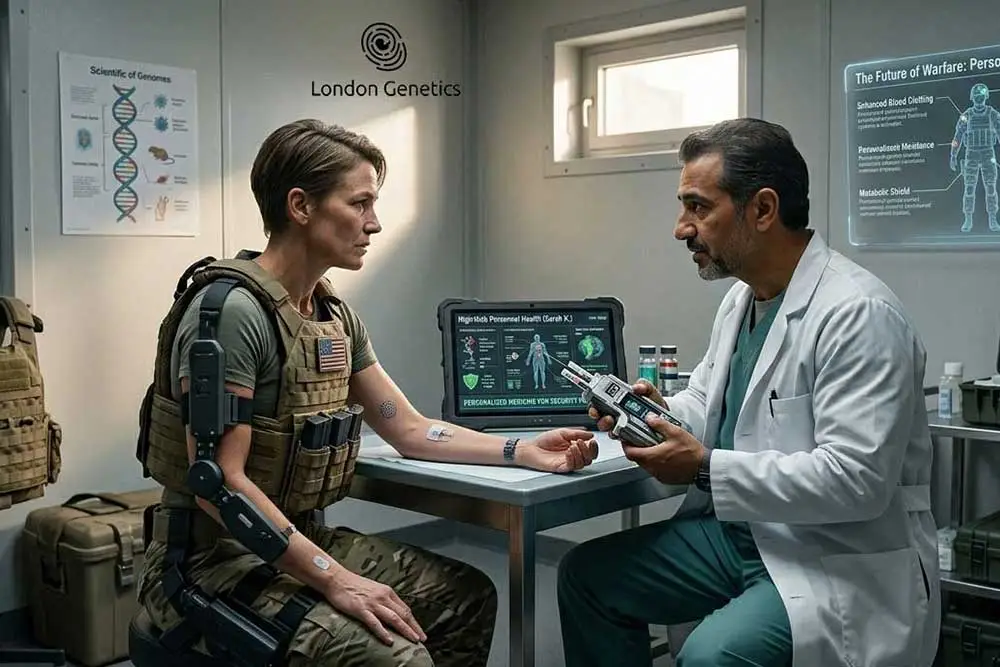
In the golden hour of battlefield trauma, the speed and efficacy of medical intervention dictate the line between survival and casualty. However, when administering emergency medicine in high-risk environments, field medics have traditionally relied on standard, rigid dosing protocols. As the future of warfare demands greater precision across all operational domains, tactical pharmacogenomics is emerging as a critical life-saving discipline. This science ensures that critical care is tailored directly to the wounded operator’s DNA, fundamentally changing how emergency medicine is delivered on the front line.
When a soldier is severely wounded, managing excruciating pain is paramount to preventing hemorrhagic shock and maintaining cognitive awareness. Yet, genetic variations mean that individual responses to potent tactical analgesics—such as fentanyl, morphine, or tramadol—vary drastically. For instance, an operator with a specific genetic mutation might be a ‘rapid metaboliser’ of opioids, causing standard doses to wear off dangerously fast, or conversely, a ‘poor metaboliser’, putting them at immediate risk of fatal respiratory depression. In the future of warfare, field medics will no longer guess these biological boundaries; instead, pre-deployment genetic insights will dictate the exact, safe dosage required for each specific individual.
Beyond pain management, tactical pharmacogenomics plays a decisive role in administering life-saving anti-coagulants, tranexamic acid (TXA), and emergency anaesthetics. Understanding an operator’s molecular profile allows for the immediate prediction of adverse drug reactions or resistance to standard clotting agents before these drugs are ever injected. As we look at the future of warfare, integrating pharmacogenomics into tactical combat casualty care (TCCC) ensures that medicine is as highly targeted as a precision-guided missile, drastically improving survival rates for high-risk personnel in the field.
Biohacking and Elite Performance: Optimizing the Modern Operator
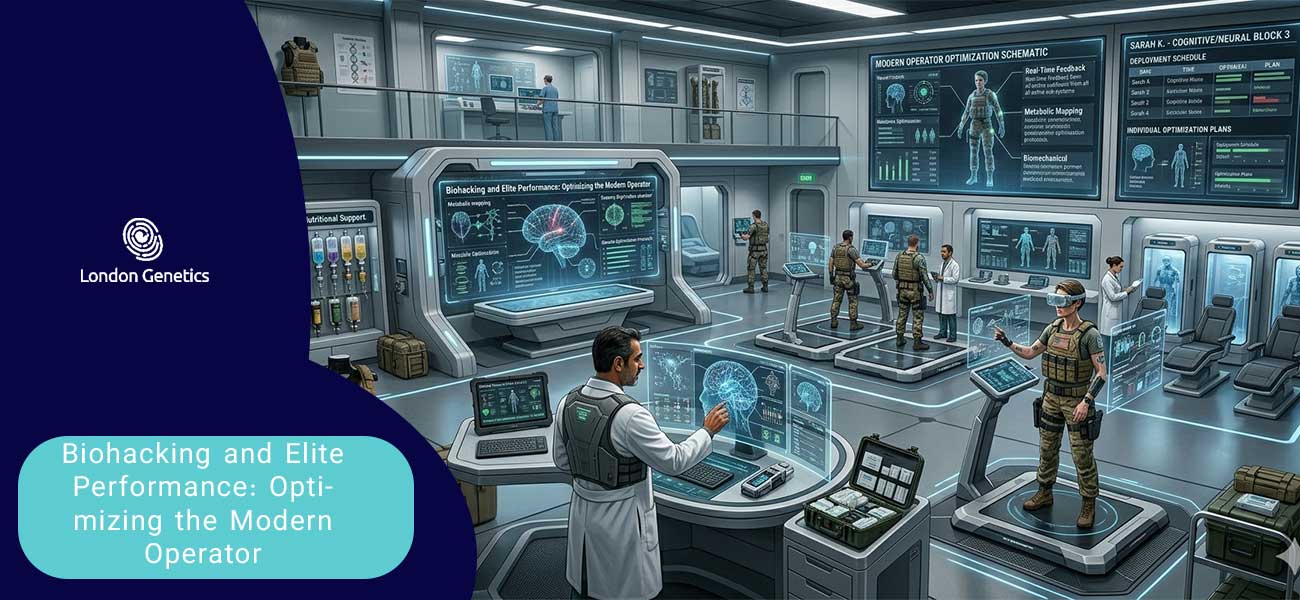
In the relentlessly demanding arena of modern conflict, the physical and mental limits of human endurance are constantly being tested. To maintain a decisive edge, elite units are moving beyond standard physical training and embracing advanced biological optimization. As we look at the future of warfare, the integration of biohacking—the strategic, data-driven manipulation of one’s own biology—is turning the modern operator into the ultimate high-performance asset, ensuring that high-risk personnel can sustain peak operational efficiency under the most grueling conditions.
At the core of this optimization is the use of comprehensive biometric and genetic data to revolutionise military nutrition. Instead of relying on standard-issue combat rations (MREs) that treat every metabolism identically, future deployment strategies utilise personalized nutrigenomics. By understanding how an individual operator metabolises micro- and macronutrients, defensive nutritionists can engineer bespoke dietary regimes. These tailored plans optimize cellular energy production, reduce systemic inflammation, and ensure sustained cognitive sharpness during extended, high-intensity operations.
Equally vital to the future of warfare is the precise management of sleep architecture and accelerated recovery cycles. Prolonged stealth missions and continuous combat operations routinely cause severe sleep deprivation, which rapidly degrades situational awareness and decision-making. Through continuous biometric tracking and genetic profiling of circadian rhythms, command elements can predict an operator’s vulnerability to fatigue. This data allows for personalized supplementation protocols and micro-dosing of recovery windows, enabling special forces to flush out metabolic waste products and repair muscle tissue at an accelerated rate, keeping them sharper and faster than any conventional adversary.
Conclusion: The New Dawn of Military Supremacy
The landscape of global defence is undergoing a profound metamorphism. The future of warfare is no longer defined solely by autonomous drones, stealth aircraft, or advanced cyber weaponry, but by the very biological makeup of the individuals who operate them. By transitioning from a reactive model of military medicine to a proactive framework of absolute bio-readiness, modern defensive forces are unlocking unprecedented levels of human performance, resilience, and survivability.
Through the strategic implementation of targeted genetic screening programmes, command structures can now map physical vulnerabilities before they manifest on the battlefield, shield operators from the devastating psychological toll of PTSD, and revolutionise tactical casualty care via pharmacogenomics.
Proactive Bio-Readiness:
Transitioning from traditional reactive medicine to an upfront framework that maps and mitigates tactical vulnerabilities before deployment.
Precision Performance Shield:
Utilising genetic screening to optimise physical endurance, fortify psychological resilience, and tailor battlefield casualty care.
Decisive Tactical Edge:
Leveraging strategic biological insights and advanced conditioning to maintain operational superiority during grueling, high-risk deployments.
Cyber-Biosecurity Safeguards:
Establishing meticulous defense protocols to protect the sensitive molecular blueprints of elite operators from adversarial exploitation.
Biological Integrity Focus:
Securing future combat readiness by ensuring tactical success relies on fortifying and protecting human asset biology from the inside out.