Introduction
Human height is one of the most visible physical characteristics and plays a significant role in both health outcomes and social interactions. From a medical perspective, height is closely associated with skeletal development, hormonal balance, and overall growth patterns during childhood and adolescence. Socially, stature has often been linked—rightly or wrongly—to perceptions of confidence, physical capability, and even socioeconomic opportunity, making it a trait of considerable interest across cultures.
A central question in growth science is whether height is primarily predetermined by genetic inheritance or whether environmental and lifestyle factors can substantially influence final adult stature. The Genetics of Height provides valuable insight into how inherited genetic variants interact with nutrition, physical activity, sleep, and general health conditions to shape human growth. Understanding these interactions is a cornerstone of Genetic Wellness, as it enables individuals to adopt informed lifestyle choices that maximise their growth potential and overall well-being.
The aim of this article is to examine the relative contribution of genetic and environmental influences on human height, with a particular focus on The Genetics of Height as a dynamic interplay rather than a fixed destiny. By reviewing biological mechanisms, genetic determinants, and modifiable lifestyle factors, this article seeks to clarify common misconceptions, define the realistic opportunities for achieving optimal height, and highlight practical strategies for promoting Genetic Wellness throughout growth and development.
Biological Basis of Human Height
Human height is shaped by a complex biological system involving skeletal growth, hormonal regulation,
and genetic control. Understanding these mechanisms clarifies how the Genetics of Height guides physical
development from early childhood to adulthood.
Longitudinal bone growth occurs at the epiphyseal (growth) plates located at the ends of long bones.
During childhood and adolescence, these plates remain open, allowing bones to lengthen as cartilage
cells proliferate and gradually ossify into bone tissue.
- Genetically programmed timing of plate closure
- Gradual replacement of cartilage with bone
- Loss of longitudinal growth potential after puberty
The closure of growth plates represents a biological limit to height increase and is largely
determined by genetic factors.
Growth hormone (GH), secreted by the pituitary gland, stimulates bone growth directly and through
insulin-like growth factor 1 (IGF-1). Thyroid hormones also play a critical role in skeletal maturation
and metabolic regulation. Imbalances in these hormones can significantly disrupt normal growth patterns.
Human height growth follows a predictable pattern: rapid growth during infancy, steady progression
throughout childhood, and a pronounced pubertal growth spurt during adolescence. Once growth plates
close at the end of puberty, further height increase becomes biologically constrained, marking the
attainment of adult stature.
Human height is the result of tightly regulated biological processes.
Genetic programming, hormonal balance, and skeletal development work together to define growth potential
and final adult height, highlighting the fundamental role of the Genetics of Height in human development.
Genetic Determinants of Height
Height is a highly heritable human trait, shaped by the combined influence of numerous genetic factors inherited across generations. The Genetics of Height explains how variations in DNA contribute to individual differences in stature while interacting with biological and environmental systems.
Inheritance and Transmission of Height-Related Genes
Human height does not depend on a single gene but is a polygenic trait influenced by hundreds of genetic variants. These variants are inherited from both parents and collectively determine a biological range within which an individual’s height can develop. Family studies and twin research have consistently demonstrated strong correlations between parental and offspring height, underscoring the central role of inheritance in The Genetics of Height.
Genetic Contribution to Height (Heritability)
Heritability estimates suggest that approximately 60 to 80 per cent of variation in adult height within a population can be attributed to genetic factors. This does not imply that height is fixed or immune to environmental influence, but rather that genes provide the dominant framework for growth potential. The Genetics of Height therefore represents a probabilistic influence, where genetic predisposition sets limits that may be approached or constrained by lifestyle and health conditions.
Known Genes Influencing Height Growth
Advances in genome-wide association studies (GWAS) have identified numerous genes associated with height regulation. Notable examples include genes involved in growth plate development, bone formation, and hormonal signalling pathways. Variations in genes such as FGFR3, HMGA2, and GHR have been linked to differences in stature, highlighting the molecular mechanisms through which The Genetics of Height operates at the cellular level.
Environmental and Lifestyle Factors Affecting Height
While genetics provide the foundational blueprint for human stature, environmental and lifestyle factors play a crucial role
in determining whether an individual reaches their full height potential. These factors interact dynamically with genetic
predispositions, demonstrating that growth is not solely predetermined.
and cellular function. Deficiencies during critical growth periods can limit genetic height potential.
and musculoskeletal development. Exercise complements genetics to help reach maximum height potential.
low stress, and balanced lifestyle further support optimal height development.
and treatment are key to ensuring genetics are fully expressed.
Height is shaped by both genetics and environment. Proper nutrition, exercise, sleep, and health management
optimize growth potential alongside genetic predispositions.
Interaction Between Genetics and Environment
Human height is shaped not only by inherited genetic factors but also by the environment in which an individual grows. The Genetics of Height emphasises that genes set a framework of potential, yet environmental conditions largely determine how much of this potential is realised.
How Environment Affects Genetic Potential
The concept of genetic potential refers to the maximum height an individual is likely to achieve based on their inherited genes. Environmental influences such as nutrition, physical activity, sleep quality, and general health can either enhance or limit the expression of this genetic potential. For instance, a child with genes predisposing them to above-average height may fail to reach that potential if they experience chronic malnutrition or prolonged illness during growth periods.
Examples of Height Variation Under Different Conditions
Epidemiological studies provide clear examples of how environment interacts with genetics. Populations with similar genetic backgrounds can exhibit markedly different average heights due to disparities in diet, healthcare access, and socioeconomic conditions. For example, historical data show that average adult height increased significantly in developed countries over the past century, largely as a result of improved nutrition and living standards, despite minimal changes in genetic composition.
These observations illustrate that The Genetics of Height is not deterministic; rather, height emerges from a continuous interplay between inherited traits and environmental factors. Recognising this interaction is essential for understanding both individual growth patterns and population-level variations.

Can Height Be Increased Beyond Genetic Limits?
The question of whether human height can exceed genetic limits is a common concern, particularly during adolescence. The Genetics of Height provides a framework to understand the interplay of biological constraints and modifiable factors, clarifying what is realistically achievable.
Scientific Realities of Height Increase
Once growth plates (epiphyseal plates) close at the end of puberty, longitudinal bone growth ceases. Scientific evidence indicates that, after this point, no natural interventions can substantially increase height. During childhood and adolescence, however, optimal nutrition, physical activity, and hormonal balance can allow individuals to reach the upper bounds of their genetic potential.
Role of Supplements, Exercise, and Hormone Therapy
While supplements such as calcium, vitamin D, and protein are essential for normal bone development, they cannot extend height beyond genetically determined limits. Similarly, targeted exercises, stretching, and sports can improve posture and musculoskeletal health, sometimes adding a marginal height increase of 1–2 centimetres due to spinal decompression. Growth hormone therapy may be prescribed for children with specific deficiencies, but its effectiveness is contingent on early intervention before growth plate closure.
Limitations After Growth Plate Closure
After epiphyseal plates have fused, surgical procedures such as limb-lengthening are the only methods capable of increasing height, though these are invasive and carry significant risk. This underscores the reality that The Genetics of Height sets biological boundaries that cannot be surpassed by lifestyle changes or supplements alone.
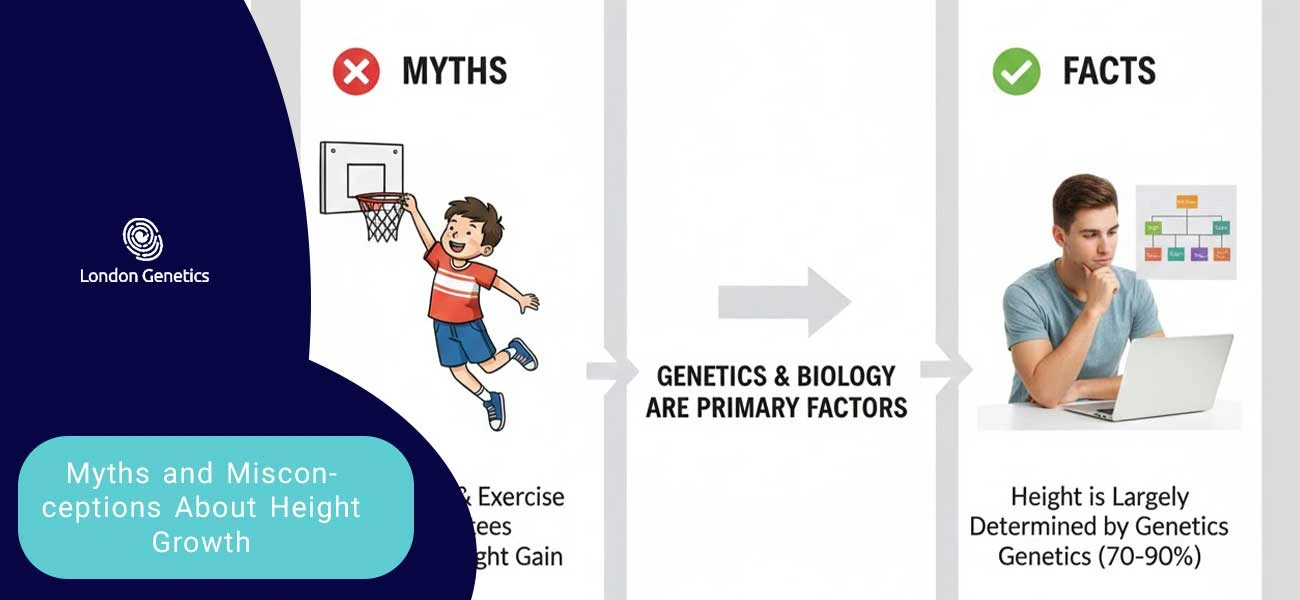
Myths and Misconceptions About Height Growth
Height is a topic surrounded by numerous myths and misconceptions, often perpetuated by media, commercial products, and anecdotal advice. Understanding the scientific basis of growth is essential for distinguishing evidence-based guidance from unfounded claims. The Genetics of Height provides clarity on which factors genuinely influence stature and which are largely illusory.
Common Misconceptions
A widespread belief is that certain supplements, exercises, or stretching routines can dramatically increase height in adulthood. While these interventions may improve posture or marginally affect spinal alignment, they cannot override the biological limitations set by growth plate closure and genetic predisposition.
Pseudoscientific Advertising
The market is filled with products claiming to “boost height naturally” or “unlock hidden growth potential.” Such claims are rarely supported by rigorous scientific evidence. Reliance on these methods can lead to disappointment and distract from practices that genuinely support healthy growth during childhood and adolescence.
Distinguishing Science from Pseudoscience
By examining both genetic and environmental contributions to height, The Genetics of Height enables a rational understanding of growth potential. Scientific approaches focus on nutrition, hormonal health, physical activity, and medical interventions when appropriate, while pseudoscientific approaches exaggerate or misrepresent outcomes. Recognising this distinction is crucial for informed decision-making and realistic expectations regarding stature.