What Counts as Normal Speech Development in Toddlers?
Before worrying about speech delay in toddlers, it helps to have a general idea of what typical speech development actually looks like, since children develop language skills at somewhat different rates.
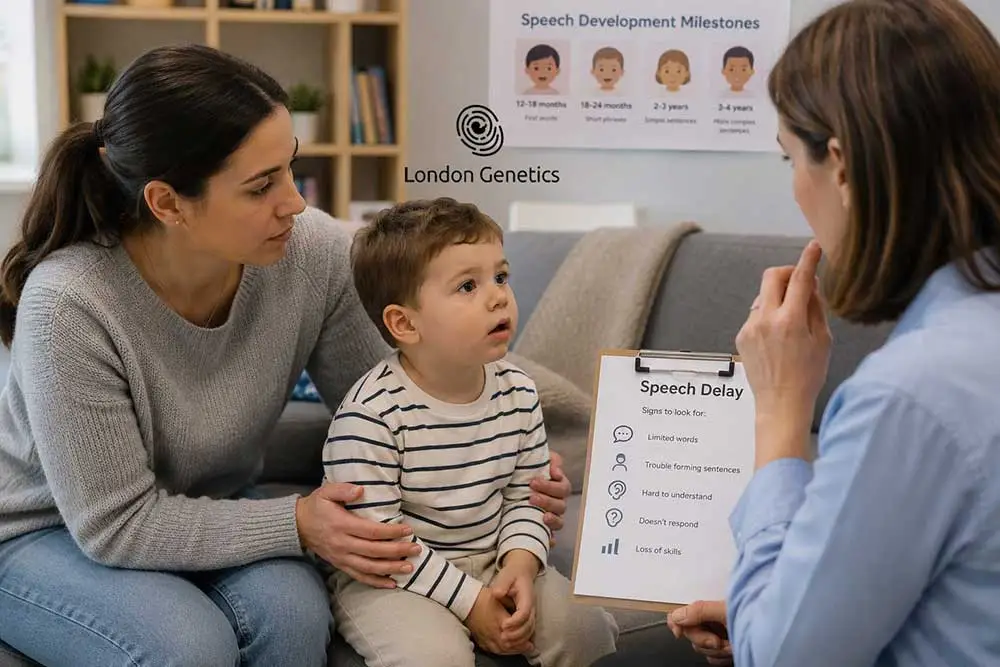
By around 12 months, most toddlers say their first simple words, such as “mama” or “dada”, and begin to understand basic instructions like “wave bye-bye”. By 18 months, many children have a vocabulary of around 10 to 20 words, alongside pointing to objects they want or recognise.
Between 18 and 24 months, vocabulary often expands quite rapidly, and toddlers typically begin combining two words together, such as “more juice” or “daddy go”. By age two, many children can put together simple two- to three-word phrases and follow basic two-step instructions.
By age three, most children are forming short sentences, asking simple questions, and can generally be understood by familiar adults, even if their pronunciation isn’t yet entirely clear.
It’s worth remembering that these are general guides rather than strict rules — some perfectly healthy toddlers reach these stages a little earlier or later than others, and a certain amount of variation is entirely normal. However, when a child falls noticeably behind several of these markers, particularly across more than one area of development, speech delay in toddlers becomes worth paying closer attention to, which we’ll explore in more detail throughout this article.
What Usually Causes Speech Delay?
What to Do If You’re Concerned: Practical Next Steps
If you are worried about speech delay in toddlers, the most important step is to act early rather than waiting to see if the problem resolves on its own. Many children benefit significantly from early assessment and intervention, and identifying the cause as soon as possible can improve communication and developmental outcomes.
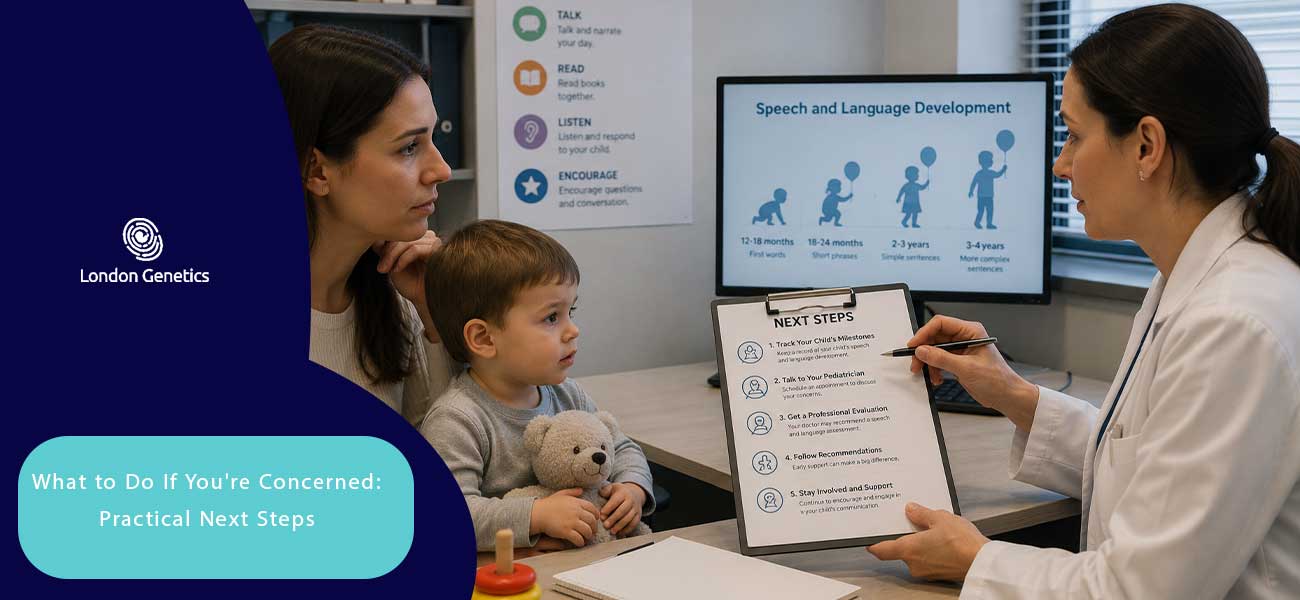
1. Monitor Your Child’s Communication Skills
Start by observing your child’s speech and language development over several weeks. Consider questions such as:
- Are they learning new words regularly?
- Do they understand simple instructions?
- Do they use gestures, pointing, or eye contact to communicate?
- Are they attempting to imitate sounds or words?
- Has their progress slowed or stopped?
Keeping a record of new words and communication milestones can be helpful during medical appointments.
2. Arrange a Medical Assessment
If you suspect speech delay in toddlers, book an appointment with your GP or paediatrician. They can assess your child’s overall development and determine whether further investigations or specialist referrals are needed.
During the assessment, the doctor may review:
- Pregnancy and birth history.
- Developmental milestones.
- Family history of speech or developmental disorders.
- General health and neurological development.
- Social and behavioural development.
3. Check Your Child’s Hearing
Even mild hearing problems can affect speech and language development. A formal hearing assessment is often recommended because some children with hearing loss appear to hear normally in everyday situations while still missing important speech sounds.
Identifying and treating hearing problems early can make a significant difference.
4. Seek Speech and Language Therapy
A speech and language therapist can assess your child’s communication skills and develop an individualised therapy programme if needed.
Therapy may focus on:
- Building vocabulary.
- Improving speech clarity.
- Encouraging language comprehension.
- Developing social communication skills.
- Teaching parents practical techniques to use at home.
Early therapy is often more effective because young children’s brains are highly adaptable during the first few years of life.
5. Create a Language-Rich Home Environment
Parents play a vital role in supporting children with speech delay in toddlers. Simple daily activities can encourage language development, including:
- Talking to your child throughout everyday routines.
- Reading books together every day.
- Singing songs and nursery rhymes.
- Asking simple questions and allowing time for responses.
- Limiting passive screen time and encouraging face-to-face interaction.
Consistent communication opportunities help reinforce language learning.
6. Consider Further Investigations When Appropriate
If speech delay occurs alongside developmental delays, autism, intellectual disability, seizures, hearing loss, or a strong family history of developmental disorders, your healthcare professional may recommend additional investigations, including developmental assessments or genetic evaluation.
Finding the underlying cause allows treatment and support to be tailored to your child’s individual needs.
The Importance of Acting Early
Although not every child with speech delay in toddlers has a serious underlying condition, delaying assessment may postpone access to valuable support services. Seeking professional advice early provides reassurance when development is within the normal range and enables timely intervention when additional help is needed. Early action gives children the best opportunity to develop strong communication skills and reach their full potential.
Summary: Key Takeaways on Speech Delay in Toddlers
Speech delay in toddlers is common, and every child develops at their own pace. While some children are simply late talkers, others may have hearing, developmental, neurological, or genetic conditions that require further assessment. Early recognition and intervention can make a significant difference to long-term communication outcomes.
Understanding the possible causes and recognising when professional assessment is needed allows families to access the right support at the right time. Early diagnosis provides reassurance, identifies treatable conditions, and helps children receive the therapies they need to reach their full communication potential.
Book Your Consultation with Dr Karimiani