Speech Delay in Toddlers: When Should Parents Worry?

Speech Delay in Toddlers

Head of content

What Counts as Normal Speech Development in Toddlers?

Before worrying about speech delay in toddlers, it helps to have a general idea of what typical speech development actually looks like, since children develop language skills at somewhat different rates.

By around 12 months, most toddlers say their first simple words, such as “mama” or “dada”, and begin to understand basic instructions like “wave bye-bye”. By 18 months, many children have a vocabulary of around 10 to 20 words, alongside pointing to objects they want or recognise.

Between 18 and 24 months, vocabulary often expands quite rapidly, and toddlers typically begin combining two words together, such as “more juice” or “daddy go”. By age two, many children can put together simple two- to three-word phrases and follow basic two-step instructions.

By age three, most children are forming short sentences, asking simple questions, and can generally be understood by familiar adults, even if their pronunciation isn’t yet entirely clear.

It’s worth remembering that these are general guides rather than strict rules — some perfectly healthy toddlers reach these stages a little earlier or later than others, and a certain amount of variation is entirely normal. However, when a child falls noticeably behind several of these markers, particularly across more than one area of development, speech delay in toddlers becomes worth paying closer attention to, which we’ll explore in more detail throughout this article.

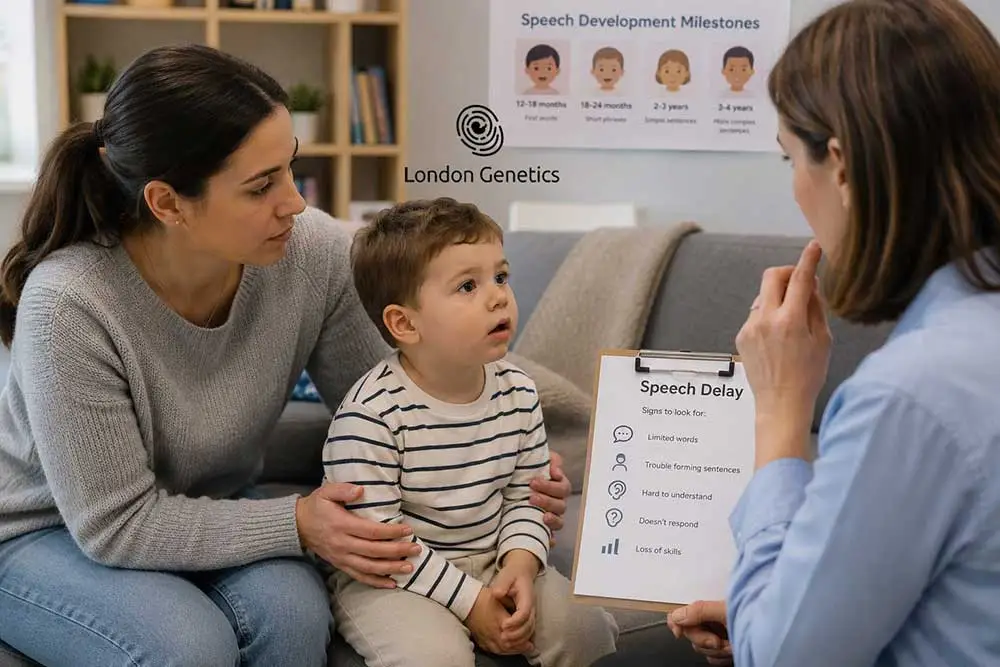
Common Signs of Speech Delay to Watch For

While every child develops at their own pace, certain signs of speech delay in toddlers are worth keeping an eye on, particularly if several appear together or persist beyond the age they’d typically be expected to resolve.

Limited Vocabulary for Their Age

A toddler who has noticeably fewer words than expected for their age, or whose vocabulary doesn’t seem to be growing over time, may be showing early signs of speech delay.

Difficulty Combining Words

If a child aged two or older still isn’t attempting to put two words together, such as “more milk” or “big dog”, this can be one of the more noticeable indicators worth mentioning to a health visitor or GP.

Trouble Being Understood by Others

While toddlers naturally have some unclear pronunciation, a child who’s consistently difficult to understand, even by close family, particularly beyond the age of three, may benefit from a proper assessment.

Limited Gestures & Difficulty Following Instructions

Before words even develop fully, toddlers typically use gestures such as pointing, waving, or reaching to communicate. A lack of these gestures, alongside consistently not understanding basic instructions like “come here” without accompanying gestures, can sometimes point towards a broader developmental concern, not just speech delay in toddlers specifically.

Regression in Previously Learnt Words

If a child appears to lose words or skills they’d previously mastered, this is generally considered more significant than a simple delay and is always worth discussing with a health visitor or GP promptly.

Recognising these signs early doesn’t necessarily mean something is seriously wrong, but it does mean it’s worth having a conversation with a professional, rather than simply waiting to see if things improve on their own.

What Usually Causes Speech Delay?

There is no single cause of speech delay in toddlers, and in many cases, several factors may contribute to slower language development. While some children are simply late talkers who eventually catch up with their peers, others may have an underlying condition that requires assessment and early intervention. Understanding the possible causes can help parents recognise when additional support may be beneficial.

One of the most common reasons for speech delay in toddlers is hearing difficulty. Even mild or temporary hearing loss caused by frequent ear infections can make it harder for a child to hear speech sounds clearly, affecting their ability to learn words and pronunciation. A hearing assessment is often one of the first investigations recommended when speech development appears delayed.

Developmental conditions can also play an important role. Children with autism spectrum disorder (ASD), developmental language disorder (DLD), intellectual disability, or global developmental delay may experience speech delays alongside difficulties with social interaction, learning, or other developmental milestones. In these cases, speech delay is often just one part of a broader developmental profile.

Environmental factors may also influence language development. Toddlers learn to communicate through frequent interaction with parents and caregivers. Limited opportunities for conversation, reduced verbal engagement, or excessive passive screen time may contribute to slower language acquisition. However, it is important to understand that these factors alone do not explain every case of speech delay in toddlers, particularly when there are underlying biological or neurological causes.

Neurological conditions affecting the brain or the muscles involved in speech can also delay language development. Disorders such as cerebral palsy, childhood apraxia of speech, or certain rare neurological conditions may interfere with a child’s ability to coordinate the movements needed for clear speech, even when they understand language well.

In some families, genetics also play a significant role. A family history of delayed speech, learning difficulties, or neurodevelopmental conditions can increase the likelihood of speech delay in toddlers. Certain genetic syndromes and inherited conditions may affect the development of speech, language, cognition, or hearing. When speech delay occurs alongside developmental differences, physical features, or a strong family history, healthcare professionals may recommend further evaluation to determine whether an underlying genetic condition is contributing to the child’s symptoms.

Because the causes of speech delay in toddlers vary widely, obtaining an accurate diagnosis is essential. Identifying the underlying reason allows healthcare professionals to recommend the most appropriate support, whether that involves speech and language therapy, hearing management, developmental assessment, or, in some cases, genetic evaluation. Early identification and intervention often provide the best opportunity to improve communication skills and support a child’s long-term development.

When Should Parents Worry? Key Red Flags

Although every child develops language skills at their own pace, certain warning signs should never be ignored. Identifying these red flags early allows children to receive timely assessment and the support they need during critical stages of speech and language development.

🚨 Recognising these warning signs early can lead to faster diagnosis and more effective intervention.
🗣️
Delayed Speech Milestones
Missing Expected Language Milestones.
Parents should seek medical advice if a child is not babbling by around 12 months, has no meaningful single words by 16 months, or is not combining two-word phrases by approximately 24 months.
💬
Limited Communication
Difficulty Expressing or Understanding.
Children who rarely attempt to communicate, struggle to understand simple instructions, or show very limited interaction should be assessed promptly for possible speech or language disorders.
🧩
Developmental Differences
More Than Speech Alone.
Speech delay together with limited eye contact, repetitive behaviours, delayed play, poor social interaction, or motor skill delays may indicate a broader neurodevelopmental condition.
👂
Possible Hearing Loss
Check Hearing Early.
Frequent ear infections, poor response to sounds, or suspected hearing impairment are common reasons for delayed speech and should always be investigated with a hearing assessment.
🔄
Speech Regression
Loss of Previously Learned Skills.
If a child suddenly stops using words they previously knew or loses communication skills, this is not a normal stage of development and requires urgent medical assessment.
🧬
Family History
Inherited Conditions May Contribute.
A family history of language disorders, developmental conditions, intellectual disability, hearing impairment, or genetic conditions may increase the likelihood of an inherited cause.
❤️
Trust Your Instincts
Parents Often Notice First.
If you feel your child’s communication is not progressing as expected, seek professional advice even if others recommend waiting. Early assessment provides reassurance and supports timely intervention.
Key Takeaway: 

Most speech delays are treatable, especially when recognised early. Prompt assessment can identify hearing, developmental, neurological, or genetic causes and help children receive the right support at the best possible time.

Could Genetics Be Behind the Delay?

While environmental factors and hearing problems are common causes of speech delay in toddlers, genetics can also play an important role. In some children, delayed speech is an isolated finding, but in others it may be one of the earliest signs of an underlying genetic or neurodevelopmental condition.

Understanding whether genetics may be contributing to a child’s speech delay can help families access the right diagnosis, treatment, and long-term support.

When Might Genetics Be a Factor?

A genetic cause becomes more likely when speech delay in toddlers occurs alongside one or more of the following:

  • A family history of speech or language delay.
  • Autism spectrum disorder (ASD) or other developmental disorders in close relatives.
  • Global developmental delay affecting multiple milestones.
  • Intellectual disability or learning difficulties.
  • Unexplained hearing loss.
  • Distinctive physical features or congenital abnormalities.
  • Seizures or neurological symptoms.

Having one of these factors does not necessarily mean a child has a genetic condition, but it may indicate that further assessment is appropriate.

Genetic Conditions Associated with Speech Delay

Several genetic conditions can affect speech and language development. Depending on the underlying condition, children may experience:

  • Delayed first words and slower vocabulary growth.
  • Difficulties understanding or using language.
  • Problems with speech coordination or pronunciation.
  • Delays in cognitive, social, or motor development.

Examples include certain chromosomal abnormalities, single-gene disorders, and rare neurodevelopmental syndromes. Identifying the underlying cause can provide valuable information about prognosis, treatment options, and recurrence risk for future pregnancies.

Why a Genetic Diagnosis Matters

When an underlying genetic condition is identified, it can help healthcare professionals:

  • Explain the reason for the child’s developmental difficulties.
  • Guide additional medical investigations if needed.
  • Develop a personalised management plan.
  • Connect families with appropriate specialists and support services.
  • Provide accurate genetic counselling for parents and relatives.

An early diagnosis may also prevent unnecessary investigations and reduce uncertainty for families.

When Should Genetic Testing Be Considered?

Genetic evaluation may be recommended if speech delay in toddlers is accompanied by:

  • Delays in multiple areas of development.
  • Autism or suspected neurodevelopmental disorders.
  • Unexplained intellectual disability.
  • Congenital anomalies or unusual physical characteristics.
  • A strong family history of developmental conditions.
  • No clear explanation after routine medical and hearing assessments.

The decision to pursue genetic testing should always be made with guidance from an experienced clinical genetics team.

Learn more: If there is concern that a genetic condition may be contributing to your child’s speech delay in toddlers, ourDevelopmental Disorders Genetic Diagnosisservice explains how genetic assessment and testing can help identify the underlying cause and support personalised care.

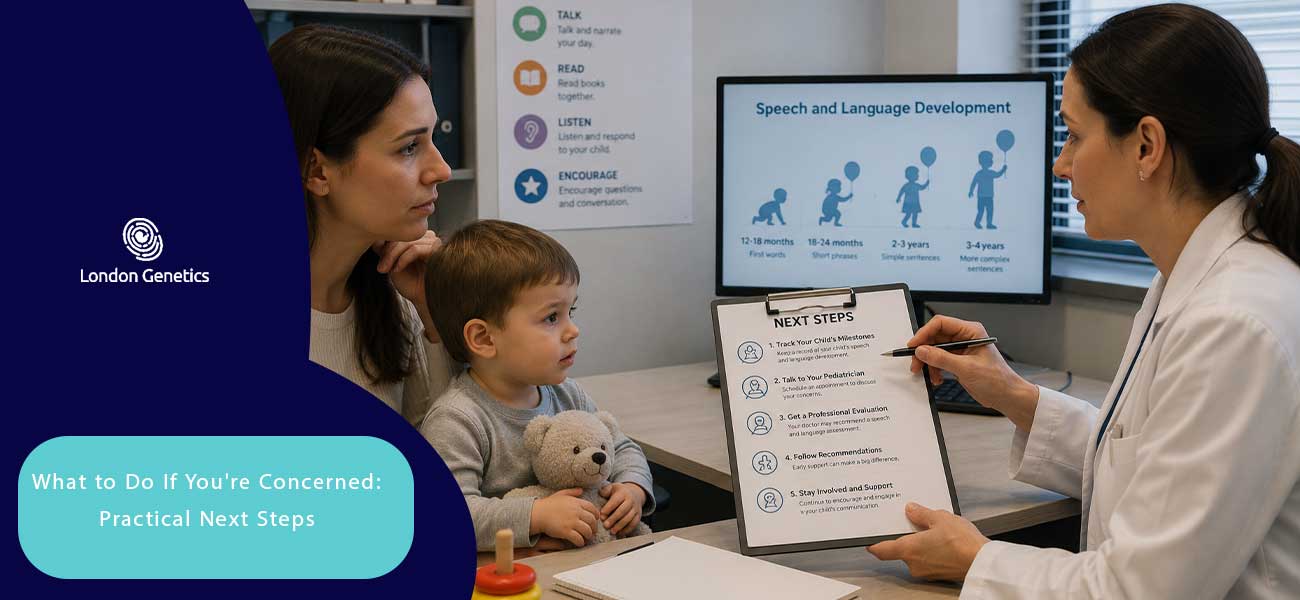
What to Do If You're Concerned: Practical Next Steps

What to Do If You’re Concerned: Practical Next Steps

If you are worried about speech delay in toddlers, the most important step is to act early rather than waiting to see if the problem resolves on its own. Many children benefit significantly from early assessment and intervention, and identifying the cause as soon as possible can improve communication and developmental outcomes.

1. Monitor Your Child’s Communication Skills

Start by observing your child’s speech and language development over several weeks. Consider questions such as:

  • Are they learning new words regularly?
  • Do they understand simple instructions?
  • Do they use gestures, pointing, or eye contact to communicate?
  • Are they attempting to imitate sounds or words?
  • Has their progress slowed or stopped?

Keeping a record of new words and communication milestones can be helpful during medical appointments.

2. Arrange a Medical Assessment

If you suspect speech delay in toddlers, book an appointment with your GP or paediatrician. They can assess your child’s overall development and determine whether further investigations or specialist referrals are needed.

During the assessment, the doctor may review:

  • Pregnancy and birth history.
  • Developmental milestones.
  • Family history of speech or developmental disorders.
  • General health and neurological development.
  • Social and behavioural development.

3. Check Your Child’s Hearing

Even mild hearing problems can affect speech and language development. A formal hearing assessment is often recommended because some children with hearing loss appear to hear normally in everyday situations while still missing important speech sounds.

Identifying and treating hearing problems early can make a significant difference.

4. Seek Speech and Language Therapy

A speech and language therapist can assess your child’s communication skills and develop an individualised therapy programme if needed.

Therapy may focus on:

  • Building vocabulary.
  • Improving speech clarity.
  • Encouraging language comprehension.
  • Developing social communication skills.
  • Teaching parents practical techniques to use at home.

Early therapy is often more effective because young children’s brains are highly adaptable during the first few years of life.

5. Create a Language-Rich Home Environment

Parents play a vital role in supporting children with speech delay in toddlers. Simple daily activities can encourage language development, including:

  • Talking to your child throughout everyday routines.
  • Reading books together every day.
  • Singing songs and nursery rhymes.
  • Asking simple questions and allowing time for responses.
  • Limiting passive screen time and encouraging face-to-face interaction.

Consistent communication opportunities help reinforce language learning.

6. Consider Further Investigations When Appropriate

If speech delay occurs alongside developmental delays, autism, intellectual disability, seizures, hearing loss, or a strong family history of developmental disorders, your healthcare professional may recommend additional investigations, including developmental assessments or genetic evaluation.

Finding the underlying cause allows treatment and support to be tailored to your child’s individual needs.

The Importance of Acting Early

Although not every child with speech delay in toddlers has a serious underlying condition, delaying assessment may postpone access to valuable support services. Seeking professional advice early provides reassurance when development is within the normal range and enables timely intervention when additional help is needed. Early action gives children the best opportunity to develop strong communication skills and reach their full potential.

Summary: Key Takeaways on Speech Delay in Toddlers

Speech delay in toddlers is common, and every child develops at their own pace. While some children are simply late talkers, others may have hearing, developmental, neurological, or genetic conditions that require further assessment. Early recognition and intervention can make a significant difference to long-term communication outcomes.

Understanding the possible causes and recognising when professional assessment is needed allows families to access the right support at the right time. Early diagnosis provides reassurance, identifies treatable conditions, and helps children receive the therapies they need to reach their full communication potential.

Speech Delay Has Many Causes: There is rarely a single explanation for delayed speech. Hearing problems, developmental differences, neurological conditions, and genetic factors can all contribute, making a comprehensive assessment essential. Don’t Ignore Persistent Delays: Speech delay that continues over time or occurs alongside other developmental concerns should always be evaluated by a healthcare professional rather than simply waiting for improvement. Early Intervention Improves Outcomes: Speech and language therapy, hearing management, and other early interventions can greatly improve communication skills, particularly when support begins during the early years. Genetics May Be Important: A genetic cause is more likely when speech delay occurs together with autism, intellectual disability, developmental delays, or a strong family history of similar conditions. Trust Your Instincts: Parents know their child best. If your child’s communication is not progressing as expected or previously learned words have been lost, seeking professional advice is the best next step.
Book Your Consultation with Dr Karimiani

Leave a Reply

Your email address will not be published. Required fields are marked *


Dr. Ehsan Karimiani
Book Your Genetic Consultation

At London Genetics, booking your consultation couldn’t be simpler. Dr Ehsan Karimiani will take the time to listen, understand your background, and guide you through the right genetic testing or counselling options for you.

Whether you’re curious about how your DNA affects your health, medication response, or family risks, we’ll help you make informed choices with clarity and care.

Choose a time that suits your schedule — and start your journey towards truly personalised healthcare.