Introduction: The Diagnostic Odyssey and the Search for Answers
For families navigating the shadow of a complex, unrevealed medical condition, time is measured not in days, but in appointments, specialist referrals, and inconclusive lab reports. This exhausting and emotional journey is known in the clinical community as the “diagnostic odyssey”—a prolonged period of uncertainty where patients with rare or complex disorders undergo extensive testing without ever receiving a definitive name for their suffering. Traditional diagnostics often reach a frustrating standstill; despite utilising advanced sequencing technologies to read a patient’s DNA, standard reports frequently come back negative or filled with ambiguous variants of uncertain significance. This leaves individuals trapped in a medical limbo, possessing vast amounts of genomic data but zero actionable answers.
The fundamental limitation of these conventional methods lies in their isolated approach. Historically, genetic screening treated DNA as a standalone text, independent of the living patient. However, the human genome is incredibly vast, and looking at sequencing data without a highly specific clinical roadmap is akin to searching for a typographical error in an encyclopaedia without knowing the chapter or theme. This is precisely where modern clinical genomics is changing direction. By shifting toward phenotype-driven diagnostics, specialists no longer look at genetic code in a vacuum. Instead, the patient’s unique physical traits, biochemical markers, and real-time clinical symptoms are positioned as the central compass guiding the entire investigative process.
┌────────────────────────────────────────────────────────────────────────┐
│                   THE PATHWAY OUT OF THE DIAGNOSTIC ODYSSEY            │
├────────────────────────────────────────────────────────────────────────┤
│  [Traditional DNA-First Testing] ──> Blind spots / Negative Results    │
│                                                   │                    │
│                                                   ▼                    │
│  [Clinical Symptom Mapping] ───────> Standardise Patient's Phenotype  │
│                                                   │                    │
│                                                   ▼                    │
│  [Advanced Bioinformatic Pipeline] ─> Phenotype-Driven Cross-Reference │
│                                                   │                    │
│                                                   ▼                    │
│  [Targeted Genetic Test Re-analysis] ─> Definitive Case Resolution     │
└────────────────────────────────────────────────────────────────────────┘
This strategic evolution brings a monumental wave of hope to those who feel they have hit a dead end with past medical investigations. A negative result from a previous exome or genome panel does not mean a condition is untraceable; it simply means the data has not yet been interpreted through the right lens. By implementing a meticulous genetic test re-analysis, clinicians can re-examine those existing, raw digital genetic files through a highly targeted, phenotype-driven filter. This sophisticated approach connects the patient’s real-world clinical reality directly with their digital genetic blueprint, effectively illuminating the hidden mutations that standard screening left in the dark and charting a clear, personalised path forward out of the diagnostic odyssey.
Decoding the Terminology: What Exactly is a Phenotype?
To understand what a phenotype is, one can define it simply as the composite of an organism’s observable characteristics, clinical symptoms, and physical traits. In clinical genetics, it represents the real-world, tangible manifestation of an underlying genetic code interacting continuously with environmental factors over time, serving as the practical expression of an internal DNA blueprint: Genotype + Environment = Phenotype.
Recognising that a detailed phenotypic profile is indispensable for modern diagnostic accuracy allows clinical teams to categorise every subtle clinical anomaly. By analysing how physical symptoms and genetic variations interact with lifestyle and environment, specialists can move past guesswork to achieve absolute clarity through phenotype-driven computational analysis.
hift from DNA-First to Phenotype-Driven Genetic Analysis
For years, the standard protocol for investigating rare or complex disorders followed a strict, “DNA-first” methodology. In this traditional model, a patient’s blood sample was sent to a laboratory, and sequencing machines mapped out the exome or genome in physical isolation from the clinic. The lab team would scan millions of genetic letters, looking for variants based almost entirely on statistical population data. However, trying to find a pathogenic variant using this blind approach is incredibly inefficient; it is the molecular equivalent of reading a massive textbook cover to cover, hoping a random error catches your eye, without having any idea what disease you are actually looking for.
To overcome these blind spots, modern precision medicine has introduced a revolutionary paradigm shift: the transition to a highly targeted phenotype-driven genetic analysis. This advanced technique changes the entire sequence of clinical discovery. Instead of evaluating the genetic code in a vacuum, a phenotype-driven genetic analysis begins by establishing a comprehensive digital map of the patient’s real-world symptoms, lab results, and clinical history. This phenotypic data is then fed directly into bioinformatic pipelines alongside the raw DNA files.
┌────────────────────────────────────────────────────────────────────────┐
│                    THE EVOLUTION OF GENOMIC FILTERING                  │
├────────────────────────────────────────────────────────────────────────┤
│  OLD "DNA-FIRST" METHOD:                                               │
│  [Raw DNA Data] ──> Scan ~20,000 Genes Blindly ──> Inconclusive Report │
│                                                                        │
│  MODERN PHENOTYPE-DRIVEN APPROACH:                                     │
│  [Clinical Symptoms] ──> Bioinformatic Radar ──> Targeted Gene Scan    │
│                                                                        │
│  Result: Instant Identification of the True Pathogenic Variant         │
└────────────────────────────────────────────────────────────────────────┘
The scientific impact of this transition is immense. The human genome contains approximately 20,000 protein-coding genes. When a bioinformatician performs a standard, unguided scan, they are routinely overwhelmed by thousands of benign variations that naturally occur in every human being. However, when utilizing a phenotype-driven genetic analysis, the clinical symptoms act like a highly focused radar system. If a patient presents with specific neurological anomalies and cardiac irregularities, the algorithm instantly filters out thousands of irrelevant variants in kidney or liver-associated genes. It illuminates only the precise biological pathways that could plausibly cause that specific clinical picture, turning an otherwise overwhelming sea of data into a streamlined, highly accurate diagnostic investigation.
The Power of Re-analysis: Why a Negative Genetic Test Isn’t the End
Receiving a negative genetic test result can be a deeply disheartening experience, often feeling like hitting a definitive brick wall after investing massive emotional energy into Whole Exome Sequencing (WES). However, in the rapidly advancing landscape of modern genomics, an inconclusive report is never a final verdict—it is merely a static snapshot of medical knowledge at one specific point in time.

The raw digital files generated from an initial sequence remain an incredibly valuable clinical asset, waiting to be unlocked by newly emerging bioinformatic tools and global discoveries.


Key Takeaway:
Analysing the hard science behind genomic data persistence reveals that an unsolved case is simply an unfinished journey. By updating the diagnostic model with real-world phenotypic developments and cross-referencing global database upgrades, clinical teams can move past static historical assumptions to design highly precise, refreshed assessment pathways.
Standardising Symptoms: How AI and HPO Codes Map Human Disease
One of the greatest historical hurdles in clinical genomics was the lack of a common vocabulary between frontline physicians and laboratory bioinformaticians. A doctor in a clinic might describe a patient’s condition as “drooping eyelids”, while a computer algorithm looking at a sequence requires a structured, machine-readable parameter. To bridge this communication gap, modern clinical genetics relies heavily on Human Phenotype Ontology (HPO)—a highly sophisticated, global database that provides a standardized, hierarchical vocabulary for human clinical symptoms. By translating real-world clinical observations into precise digital codes, HPO ensures that a patient’s physical reality can be flawlessly integrated into modern software pipelines.
In 2026, the process of clinical translation has been profoundly accelerated by the integration of artificial intelligence. Advanced AI-powered diagnostics no longer require clinicians to manually search through thousands of medical terms. Instead, natural language processing tools can instantly analyse a patient’s electronic health records, clinical letters, and imaging reports, extracting key symptoms and automatically mapping them to their exact Human Phenotype Ontology equivalents. Each complex clinical feature is given a unique digital identifier (such as HP:0000491 for ptosis), transforming a descriptive medical essay into a highly structured, mathematical dataset.
┌────────────────────────────────────────────────────────────────────────┐
│                        THE AI-TO-GENOMIC TRANSLATION FLOW              │
├────────────────────────────────────────────────────────────────────────┤
│  [Clinical Observation] ──> "Drooping Eyelids" & "Muscle Weakness"      │
│                                              │                         │
│                                              ▼ (AI Natural Language)   │
│  [HPO Digital Mapping] ───> Standardised Codes: HP:0000491 & HP:0001324│
│                                              │                         │
│                                              ▼ (Bioinformatic Core)    │
│  [Phenotype-Driven Scan] ─> Algorithm Focuses Solely on Aligned Pathways│
└────────────────────────────────────────────────────────────────────────┘
This precise digital translation is the fundamental engine that powers a successful phenotype-driven computational scan. Once the AI has compiled the patient’s structured HPO profile, the bioinformatic algorithm can overlay this clinical map directly onto the patient’s raw sequencing data.
Because the software understands the exact relationships between different symptoms—knowing, for instance, that certain eye and muscle anomalies often share a common molecular root—it performs a deeply calculated, phenotype-driven prioritize-search. By converting messy human symptoms into highly structured, standardized data, this phenotype-driven ecosystem allows advanced AI systems to spotlight the exact pathogenic variants causing the disease, achieving a level of diagnostic speed and accuracy that was scientifically impossible just a few years ago.
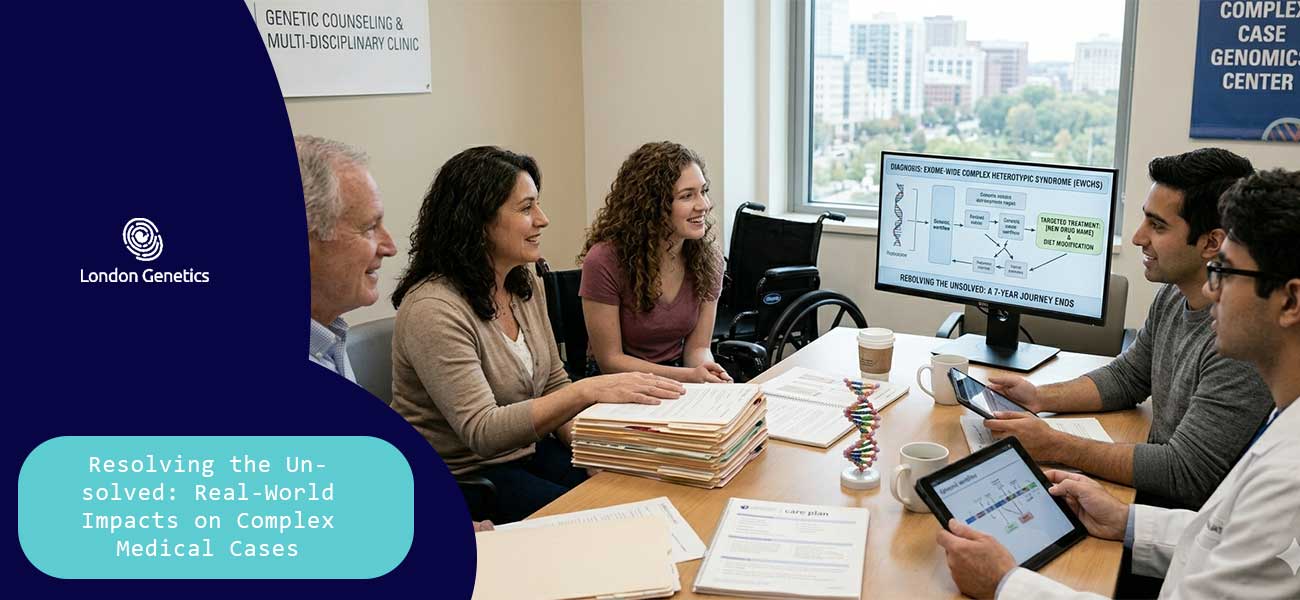
Resolving the Unsolved: Real-World Impacts on Complex Medical Cases
The true measure of any diagnostic advancement is its concrete success in resolving real-world clinical mysteries. For individuals with highly atypical clinical presentations, standard genomic reports often return completely empty. This occurs because conventional bioinformatic filters are designed to look only for obvious, textbook mutations in well-known, protein-coding regions. When a patient’s underlying cause deviates even slightly from these rigid criteria, their mutation remains hidden. Implementing a phenotype-driven investigation fundamentally transforms this process, enabling clinical teams to look past generic filtering boundaries and uncover rare genetic phenomena that traditional screenings routinely miss.
A prime example of this diagnostic power is the identification of tissue-specific mosaicism—a biological phenomenon where a pathogenic mutation is present in only a small percentage of the body’s cells rather than the entire organism. In a standard, unguided blood analysis, these low-frequency cellular signals are often dismissed as meaningless background noise or sequencing artefacts.
However, when a specialist launches a deeply focused phenotype-driven review, the patient’s specific, localized physical symptoms act as a critical warning flag. The bioinformatic algorithm is instructed to lower its detection thresholds specifically for the pathways related to those symptoms, allowing it to isolate and capture the faint genetic signal of mosaic cells that would otherwise have remained completely invisible.
┌────────────────────────────────────────────────────────────────────────┐
│                   UNCOVERING CONCEALED GENETIC VARIANCE                │
├───────────────────────────────────┬────────────────────────────────────┤
│  MISSED BY STANDARD FILTERING     │  CAUGHT BY PHENOTYPE-DRIVEN ALGOR. │
├───────────────────────────────────┼────────────────────────────────────┤
│ • Low-frequency Mosaicism         │ • Spotlights low-percentage reads  │
│ • Deep Non-coding Intronic Flaws  │ • Decodes cryptic splicing errors  │
│ • Dismissed as "Background Noise" │ • Maps flaws to matched symptoms   │
│ • Result: UNRESOLVED CASE         │ • Result: DEFINITIVE DIAGNOSIS     │
└───────────────────────────────────┴────────────────────────────────────┘
Furthermore, this targeted approach is exceptionally brilliant at identifying elusive non-coding variants located deep within intronic regions. These mutations do not alter the structure of a protein directly, but instead disrupt the complex regulatory mechanisms that control how a gene is turned on or off. Because scanning the entire non-coding genome creates an overwhelming ocean of raw data, standard tests ignore these regions completely.
By applying a precise phenotype-driven digital filter, bioinformaticians can bypass 99% of the genetic background and focus their analysis exclusively on the hidden regulatory switches linked to the patient’s active symptoms. This transforms an otherwise impossible computational search into a highly successful diagnostic rescue mission, finally bringing clarity to the most complex medical cases.
Conclusion: Transforming Raw Data into a Personalised Treatment Strategy
The ultimate value of a phenotype-driven approach extends far beyond the academic satisfaction of naming a rare condition; it provides the essential foundation for effective clinical management. In the modern era of precision medicine, a definitive molecular diagnosis is the key that unlocks targeted therapeutic options, clinical trial eligibility, and highly specific management protocols.
The journey through advanced genomic science should never be walked alone. At London Genetics, we are dedicated to bridging the gap between raw genomic data and an actionable care plan, replacing empirical trial-and-error treatments with a clear, confident, and life-changing blueprint tailored entirely to your body’s true biological reality.
Advanced Phenotypic Mapping:
Utilising advanced bioinformatic frameworks to continuously update and cross-reference your Human Phenotype Ontology (HPO) symptom profiles with legacy sequencing files.
Clinical Data Contextualisation:
Interpreting historical WES/WGS digital reports alongside your current clinical presentation during a highly specialised genomic consultation session.
Bespoke Management Architecture:
Translating newly resolved molecular variants into a proactive medical strategy, allowing clinical teams to anticipate potential disease progressions and complications.
Proactive Genetic Pathway:
Bypassing generic, broad-spectrum interventions by isolating active pathogenic mutations to select target-specific therapies that directly improve treatment efficacy.
Definitive Health Control:
Escaping the frustrating diagnostic odyssey and transforming dormant biological data into a precise, risk-minimised blueprint for your future wellness.