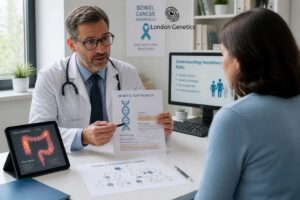
Why Having Cancer in the Family Raises Natural Concerns
Finding out that a parent, sibling, child or another close relative has had cancer can naturally lead to questions about your own health. You may wonder whether you are more likely to develop cancer, whether other relatives could also be affected, or whether your children may have inherited an increased risk.
These concerns are understandable. However, having cancer in the family does not automatically mean that the cancer is hereditary. Many cancers occur because of a combination of age, lifestyle, environmental factors and chance. In some families, however, a shared genetic change can increase the likelihood of developing particular types of cancer.
The significance of your family history depends on several factors, including:
- The types of cancer diagnosed in your biological relatives
- The age at which relatives developed cancer
- Whether the same or related cancers appear across generations
- Whether one person has had more than one primary cancer
- Whether a rare cancer is present in the family
- Whether a known genetic variant has already been identified
It is also important to remember that limited or incomplete family information does not necessarily rule out an inherited contribution. Some relatives may have been diagnosed in the past without detailed medical records, or may not feel comfortable discussing their diagnosis.
A clear understanding of cancer in the family can help you avoid both unnecessary anxiety and false reassurance. Rather than trying to interpret your personal and family history alone, it may be helpful to discuss your concerns with a specialist. Cancer genetic counselling provides a personalised assessment of the information available and helps you understand which next steps, if any, may be appropriate.
The purpose of this assessment is not to assume that cancer is inherited or that genetic testing is automatically necessary. It is to put your family history into context, answer your questions and support informed decisions about your health and your family.
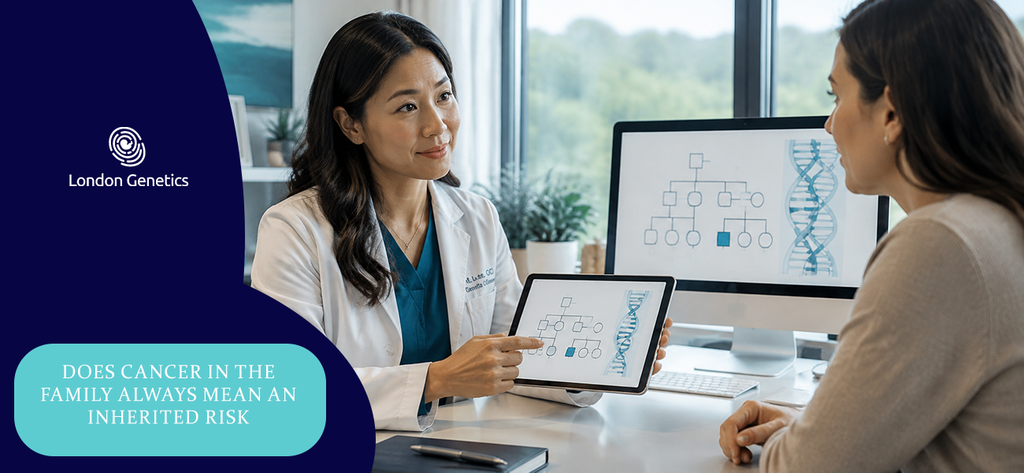
Does Cancer in the Family Always Mean an Inherited Risk?
When several relatives have been diagnosed with cancer, it is natural to assume that the disease runs in the family. However, having cancer in the family does not necessarily mean that there is an inherited genetic cause. In fact, the vast majority of cancers are not hereditary.
To understand what your family history means, it helps to distinguish between three main categories of cancer occurrence:
1. Sporadic Cancer (The Most Common)
Most cancers—roughly 70% to 80%—are considered sporadic. They happen by chance or develop gradually over a lifetime due to the natural ageing process, environmental exposures, and lifestyle factors. While having one or two relatives diagnosed with common cancers later in life is very common, it rarely points to a faulty gene passed down through generations.
2. Familial Cancer (Shared Factors)
In about 15% to 20% of cases, cancer appears more frequently in a family than expected by chance, but no single inherited genetic mutation can be identified. These “familial clusters” often result from a subtle combination of multiple minor genetic variations paired with shared environmental influences, lifestyle habits, or similar health backgrounds.
3. Hereditary Cancer (Inherited Gene Variants)
Only around 5% to 10% of all cancers are truly hereditary. In these families, an individual inherits a specific pathogenic variant (often called a gene mutation) from one of their parents. This inherited change significantly raises the lifetime likelihood of developing certain cancers, often at a younger age than usual.
Understanding the difference between these categories is essential. Discovering cancer in the family can understandably trigger worry, but having affected relatives is not a guarantee that you carry an inherited risk.
For those looking to explore how specific genes influence particular conditions—such as breast, bowel, or ovarian tumours—our detailed overview of genetics related cancers outlines the key syndromes and biological mechanisms involved.
Determining whether your personal background reflects sporadic patterns or suggests an underlying inherited condition requires looking closely at the specific features of your family tree, which guides whether further investigation or proactive screening is genuinely necessary.
Key Patterns to Look For When Cancer Runs in the Family
Identifying recurring patterns of cancer in the family is essential for understanding whether there is an underlying hereditary risk. While individual diagnoses can happen by chance, specific medical red flags often warrant further genetic assessment.
A primary indicator of hereditary risk is a diagnosis at a significantly younger age than is typical for that specific cancer type (e.g., breast cancer before 50 or colorectal cancer before 50). This suggests that a genetic factor may have accelerated the disease process.
When an individual is diagnosed with two or more separate primary cancers—such as both breast and ovarian cancer, or multiple colon tumours—it often points to a genetic predisposition. For more on these syndromes, you can explore our guide on genetics related cancers.
Observe if the same or related cancers are appearing in multiple close relatives across more than one generation (parents, siblings, and grandparents). This vertical transmission is a hallmark of hereditary cancer syndromes like Lynch syndrome or BRCA-related conditions.
The presence of rare cancer types, or cancers that are unusual for the patient’s gender (e.g., male breast cancer), can be a strong indicator of an inherited gene variant. These specific cases often justify a referral for specialist cancer genetic testing.
If a pathogenic genetic variant has already been identified in a close biological relative, it is highly likely that other family members share this risk. Knowing your family’s specific genetic status is the most effective way to manage future health risks.
Recognising these patterns helps you distinguish between common sporadic cases and potential hereditary risk.
If you identify these “red flags” when reviewing cancer in the family, it is an appropriate time to consult with a genetics expert to discuss whether clinical assessment is needed.
How to Gather Accurate Information About Cancer in the Family
If you have noticed patterns that suggest an inherited risk, the next most important step is to collect clear, detailed medical information. Having accurate data is not just about filling out a form; it is about providing a specialist with the “map” they need to assess your risk correctly.
When you observe cancer in the family, try to gather the following details for as many biological relatives as possible:
1. Type of Cancer
It is not enough to simply know that a relative “had cancer.” Try to identify the specific type. For example, there is a significant difference between a general diagnosis and specific types like ovarian, colorectal, or pancreatic cancer, which are often linked to hereditary syndromes.
2. Age at Diagnosis
This is one of the most critical pieces of information. A diagnosis in a relative at age 75 is often considered sporadic, whereas a diagnosis at age 35 or 40 is a significant “red flag” that may suggest a genetic component.
3. Relationship and Lineage
Clearly define the relationship (e.g., maternal grandmother, paternal aunt, sibling). It is helpful to note if the cancer appears on both sides of your family or is concentrated on one side, as this helps specialists identify patterns of inheritance.
4. Known Genetic Results
If any relative has previously undergone testing, find out if a specific genetic mutation was identified. Knowing a family’s existing genetic status can significantly streamline the process and make subsequent cancer genetic testing much more targeted and effective.
Practical Tips for Collecting Data:
- Speak with empathy: Discussing cancer in the family can be an emotional topic. Approach relatives with sensitivity and explain that you are gathering information to better understand your future health and prevention options.
- Use written records: Whenever possible, look for official medical documents, pathology reports, or discharge summaries. Relying on memory can sometimes lead to inaccuracies in age or cancer type.
- Keep a central log: Create a simple family tree or a digital document to store these details. This will be an invaluable tool when you eventually sit down for cancer genetic counselling to discuss your findings.
Having this information ready ensures that your consultation is as productive as possible, turning uncertainty into a structured plan for your health.
What Are Your Next Steps When Facing Cancer in the Family?
Once you have identified potential patterns of cancer in the family, the focus shifts from observation to proactive management. Knowing how to navigate the next steps is key to turning concern into a clear health plan.
Navigating cancer in the family can feel overwhelming, but you do not have to do it alone. Taking these steps allows you to replace anxiety with actionable knowledge and tailored medical guidance.
How Specialist Guidance Helps You Move Forward with Confidence
Living with the knowledge or suspicion of cancer in the family can create significant emotional strain and health-related anxiety. However, a family history is not a definitive diagnosis; it is simply a valuable roadmap that highlights where to focus your proactive healthcare efforts. Gaining access to specialist guidance bridges the gap between uncertainty and a structured, empowering medical plan.
When you seek professional support to address cancer in the family, the journey is tailored to your unique circumstances and typically encompasses three vital areas:
1. Comprehensive and Accurate Risk Assessment
Online tools and general assumptions often overestimate or underestimate individual risk. A specialist carefully evaluates the full spectrum of your family pedigree—factoring in tumor biology, age at onset, and patterns across maternal and paternal lines. This rigorous assessment clarifies whether the cases of cancer in the family represent a true hereditary predisposition or sporadic occurrences influenced by environmental or lifestyle factors.
2. Expert Consultation and Informed Decision-Making
Discussing hereditary risks requires more than just looking at medical charts; it involves understanding what these findings mean for your daily life and your loved ones. Specialist guidance helps you explore your options thoroughly—from deciding if targeted testing is clinically indicated to interpreting complex results. This ensures that every decision you make is grounded in clinical evidence and aligned with your personal values.
3. Personalised Preventative Care and Ongoing Management
The ultimate goal of addressing cancer in the family is prevention and early detection. If a significant risk is identified, specialists collaborate with multidisciplinary teams to design a personalized management strategy. This may include:
- Tailored Screening Schedules: Initiating high-resolution screenings (such as specialized MRIs or colonoscopies) earlier than standard national guidelines.
- Risk-Reduction Strategies: Implementing proven medical, surgical, or lifestyle interventions designed to substantially lower future risks.
- Family Support & Cascade Testing: Providing clear resources and guidance so your relatives can also benefit from accurate risk assessment and proactive care.
Taking the initiative to understand your family history transforms concern into control. With the right clinical expertise by your side, you can navigate your future health decisions with clarity, reassurance, and confidence.

Frequently Asked Questions About Cancer in the Family
Does having cancer in the family mean I will definitely develop cancer?
No, having cancer in the family does not mean you are guaranteed to develop the disease. Most cancers are sporadic, caused by natural aging and environmental factors. Even when an inherited genetic mutation is present, it only increases your overall predisposition or lifetime risk—it is not a certainty. Understanding your lineage simply allows you to put targeted prevention and earlier screening measures in place.
What is the difference between hereditary and sporadic cancer in the family?
Sporadic cancer occurs by chance or exposure to risk factors over a lifetime, usually diagnosed at an older age without a clear inherited pattern. In contrast, hereditary cancer occurs when an altered gene (mutation) is passed down from parent to child. Hereditary patterns often involve multiple relatives with the same or related cancers diagnosed at significantly younger ages (typically under 50).
At what age should I start screenings if there is a pattern of cancer in the family?
Recommended screening timelines depend on the specific cancer type and your family history. As a general clinical guideline, high-risk screenings often begin 10 years earlier than the youngest age of diagnosis in your immediate family, or as advised by a specialist based on hereditary criteria.
Should I consult a specialist if only one relative had cancer?
While a single relative diagnosed at an advanced age (e.g., in their 70s or 80s) is usually sporadic, speaking with a specialist is strongly advised if that relative was diagnosed at an unusually young age, had an uncommon cancer (such as ovarian, pancreatic, or male breast cancer), or was diagnosed with multiple primary tumors.
How can I prepare for a discussion about cancer in the family with a doctor?
To make your discussion as actionable as possible, collect medical records for both maternal and paternal relatives. Focus on three core details: the specific type of primary cancer, the precise age at diagnosis, and any known genetic test results from relatives who have previously undergone testing.