What Is Chorionic Villus Sampling (CVS)? Introduction and Uses
Chorionic Villus Sampling (CVS) is a prenatal diagnostic procedure used to examine the genetic health of a developing baby during the early stages of pregnancy. In this test, a small sample of placental tissue—called chorionic villi—is collected and analysed in a laboratory. Because these cells share the same genetic material as the fetus, doctors can study them to identify potential chromosomal or inherited conditions.
CVS is typically performed between the 10th and 13th week of pregnancy, which makes it one of the earliest forms of Prenatal Genetic Testing available. By obtaining genetic information at an early stage, healthcare professionals can provide parents with important insights about the baby’s development and possible genetic disorders.
The primary purpose of Chorionic Villus Sampling is to support accurate Genetic Testing for conditions such as Down syndrome, Tay‑Sachs disease, cystic fibrosis, and other inherited disorders. Because the results are available relatively early in pregnancy, CVS allows parents and medical teams more time to discuss medical care, further testing, or pregnancy management options if necessary.
In modern prenatal medicine, Chorionic Villus Sampling plays a significant role in early diagnosis and informed decision‑making. When recommended by healthcare providers—often for pregnancies with increased genetic risk—it can provide valuable information about fetal genetics while pregnancy is still in its early stages.
When Is Chorionic Villus Sampling (CVS) Performed?
Chorionic Villus Sampling (CVS) is typically performed during the early stages of pregnancy, most commonly between the 10th and 13th week of gestation. This timing allows specialists to safely collect placental tissue while providing early genetic information about the developing fetus.
Chorionic Villus Sampling is typically performed between weeks 10 and 13 of pregnancy, offering early and valuable genetic information that supports informed prenatal care and decision‑making.
Procedure and Methods of Chorionic Villus Sampling
Chorionic Villus Sampling (CVS) is a medical procedure used to collect a small sample of placental tissue for genetic analysis. The test is usually performed under ultrasound guidance to ensure accuracy and safety. During the procedure, a specialist carefully removes a tiny sample of chorionic villi from the placenta so the cells can be examined in a laboratory for chromosomal or inherited conditions.
There are two main techniques used to perform Chorionic Villus Sampling, and the choice of method depends on factors such as the position of the placenta, the stage of pregnancy, and the physician’s clinical judgement.
Transabdominal Chorionic Villus Sampling
In the transabdominal approach, the sample is taken through the mother’s abdomen.
- The doctor first uses ultrasound to locate the placenta and the fetus.
- The skin on the abdomen is cleaned and sometimes numbed with a local anaesthetic.
- A thin needle is gently inserted through the abdominal wall and into the placenta.
- A small sample of chorionic villi is withdrawn for laboratory testing.
This method is commonly used and is similar in technique to amniocentesis. Ultrasound guidance helps ensure the needle avoids the fetus and other sensitive structures.
Transcervical Chorionic Villus Sampling
The transcervical approach involves collecting the placental sample through the cervix.
- An ultrasound is performed to determine the exact location of the placenta.
- A thin catheter or specialised instrument is inserted through the vagina and cervix.
- The device gently reaches the placenta and removes a small tissue sample.
- The sample is then sent to a laboratory for detailed genetic analysis.
This method may be recommended when the placenta is positioned in a way that makes cervical access easier and safer.
Both techniques of Chorionic Villus Sampling (CVS) are typically completed within a short time and are performed by experienced specialists in a clinical setting. After the procedure, patients are usually advised to rest for a short period while doctors monitor for any immediate discomfort or complications.
What Conditions Can Be Detected Through Chorionic Villus Sampling?
Chorionic Villus Sampling (CVS) is an advanced prenatal diagnostic test that can detect a wide range of chromosomal and genetic disorders early in pregnancy. Because chorionic villi contain the same genetic material as the fetus, laboratory analysis of these cells allows specialists to identify abnormalities with high accuracy.

Key categories of genetic and chromosomal conditions detected by CVS.


Key Takeaway:
Chorionic Villus Sampling provides early and highly accurate detection of chromosomal abnormalities, inherited single‑gene disorders, and certain metabolic or genetic syndromes, helping guide prenatal care and informed decision‑making.
Who Should Consider Chorionic Villus Sampling?
Chorionic Villus Sampling (CVS) is not routinely recommended for every pregnancy. Instead, it is usually offered to individuals or couples who may have a higher risk of passing on genetic or chromosomal conditions to their baby. Because the procedure is a diagnostic test, healthcare providers typically suggest it when there is a medical reason to obtain more detailed genetic information during early pregnancy.
Several factors may make someone a suitable candidate for Chorionic Villus Sampling.
Advanced Maternal Age
One of the most common reasons for recommending Chorionic Villus Sampling (CVS) is advanced maternal age. Pregnant individuals aged 35 or older have a higher statistical risk of chromosomal abnormalities such as Down syndrome, which may lead doctors to suggest diagnostic testing.
Family History of Genetic Disorders
If there is a family history of inherited conditions, doctors may recommend Chorionic Villus Sampling to determine whether the fetus has inherited the same genetic disorder. This is especially relevant for conditions such as cystic fibrosis, sickle cell disease, or Tay‑Sachs disease.
Parents Who Are Known Genetic Carriers
When one or both parents are known carriers of a specific genetic mutation, Chorionic Villus Sampling can be used to determine whether the baby has inherited the condition. Carrier screening performed before or during pregnancy often helps identify these risks.
Abnormal Prenatal Screening Results
Sometimes routine prenatal screening tests or ultrasound findings suggest a higher probability of chromosomal abnormalities. In such situations, doctors may recommend Chorionic Villus Sampling (CVS) to confirm or rule out a diagnosis.
Previous Pregnancy with a Genetic Condition
Couples who previously had a pregnancy affected by a chromosomal or inherited disorder may also be advised to consider Chorionic Villus Sampling in future pregnancies to assess potential risks early.
In most cases, doctors recommend genetic counselling before performing Chorionic Villus Sampling. This helps parents understand the benefits, possible risks, and limitations of the test so they can make an informed decision about whether the procedure is appropriate for their pregnancy.
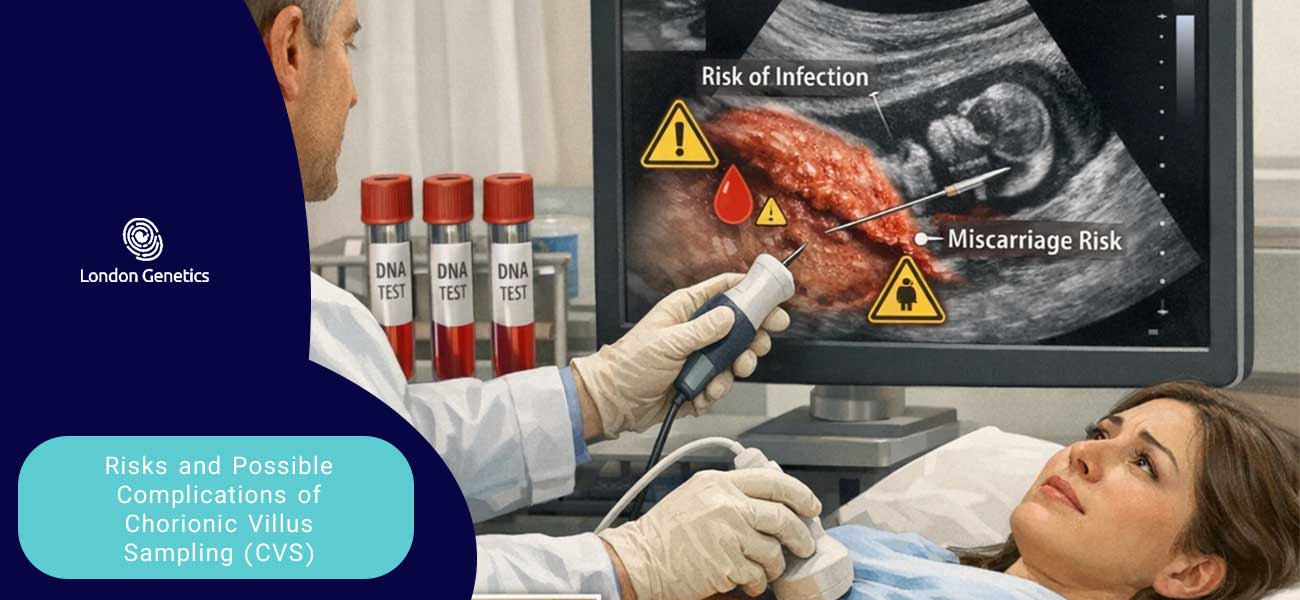
Risks and Possible Complications of Chorionic Villus Sampling (CVS)
While Chorionic Villus Sampling (CVS) is considered a reliable and widely used diagnostic procedure, it is still an invasive test and therefore carries certain risks. Understanding these risks helps parents make informed decisions and prepares them for possible post‑procedure precautions. The likelihood of complications is generally low when the procedure is performed by experienced specialists, but it is important to be aware of the potential issues.
Risk of Miscarriage
One of the most discussed risks of Chorionic Villus Sampling is miscarriage.
- The estimated risk is slightly higher than that of routine pregnancy loss, often cited as about 0.2% to 0.3% depending on the medical centre and technique used.
- The risk is influenced by factors such as maternal health, placental position, and whether the procedure is performed via the transabdominal or transcervical method.
Most miscarriages, if they occur, happen within a few days of the procedure.
Risk of Infection
Although rare, an infection can occur either inside the uterus or at the site of needle entry (for the transabdominal method).
- Fever, abdominal pain, unusual discharge, or chills after CVS should be reported to a healthcare provider immediately.
Strict sterile techniques significantly reduce this risk.
Leakage of Amniotic Fluid
In uncommon cases, leakage of amniotic fluid may occur after CVS, particularly with the transcervical approach.
- Mild, temporary leakage often resolves on its own.
- Persistent leakage requires medical evaluation, as it may increase the risk of complications later in pregnancy.
Bleeding or Spotting
Light spotting or mild bleeding can occur after the transcervical method.
- This usually resolves without intervention.
- However, heavy or prolonged bleeding should always be assessed by a doctor.
Rh Sensitisation
In pregnancies where the mother is Rh‑negative, CVS may expose fetal blood cells to the mother’s bloodstream.
- To prevent sensitisation, an anti‑D injection (RhoGAM) is typically given after the procedure.
This avoids complications in current and future pregnancies.
Discomfort or Cramping
Mild abdominal cramping or discomfort is common following the procedure.
- Resting for the remainder of the day is usually recommended.
- Severe or persistent pain should be reported to a healthcare provider.
Overall, while Chorionic Villus Sampling (CVS) carries some risks, they remain relatively low when the procedure is performed by trained specialists. Clear communication with healthcare providers, proper post‑procedure monitoring, and timely reporting of unusual symptoms help ensure the safest possible experience for both mother and baby.
Conclusion: Understanding the Role of Chorionic Villus Sampling (CVS)
Chorionic Villus Sampling (CVS) is one of the most reliable and informative prenatal diagnostic tools, offering early and accurate detection of genetic and chromosomal conditions. Performed between the 10th and 13th week of pregnancy, it provides families with essential insights into fetal health at a crucial stage of development.
CVS gives expectant parents the opportunity to make informed decisions, understand potential genetic risks, and receive personalised medical guidance. Despite the presence of some procedural risks, these remain low when the test is performed by trained specialists using modern imaging and sampling techniques.
Early Insights for Expectant Parents:
CVS provides early access to crucial information about the baby’s genetic and chromosomal health, helping families prepare emotionally and medically for any potential outcomes.
Expert‑Led and Safe Procedures:
When carried out by experienced healthcare professionals, the procedure is generally safe, benefiting from high‑precision sampling techniques and advanced ultrasound guidance.
Support Through Genetic Counselling:
Genetic counselling ensures families fully understand the purpose of CVS, the potential results, and the implications for pregnancy management. This guidance helps reduce anxiety and empowers parents with knowledge.
Recommended for High‑Risk Pregnancies:
CVS is especially valuable for those with increased genetic risks, such as advanced maternal age, abnormal screening results, or a family history of inherited disorders. It provides clarity when decisions matter most.
A Proactive Step Toward Fetal Health:
With expert support and careful evaluation, CVS becomes a powerful tool for safeguarding fetal wellbeing and guiding responsible, informed prenatal care.