Introduction: The Power of Genetics in Marriage Planning
Planning a wedding is one of the most exciting milestones in a couple’s life, filled with dreams of building a shared future. Amidst choosing venues and making life decisions, proactive couples are increasingly turning to science to safeguard their future family’s health. Incorporating chromosomal analysis into your pre-wedding checklist is a profoundly smart and responsible step. This specialized genetic test examines the structure and number of your chromosomes, offering a clear picture of your genetic compatibility before you take your vows.
Every individual carries unique genetic traits, some of which can be passed down to future generations without ever causing symptoms in the parents. This is where premarital genetic counselling becomes invaluable. By stepping guided into this process, couples can uncover potential hereditary risks early, transforming fear of the unknown into informed confidence. In this article, we will explore what this essential analysis entails, why it is crucial for your marital journey, and how a deeper look at your DNA can help you build a healthier tomorrow together.
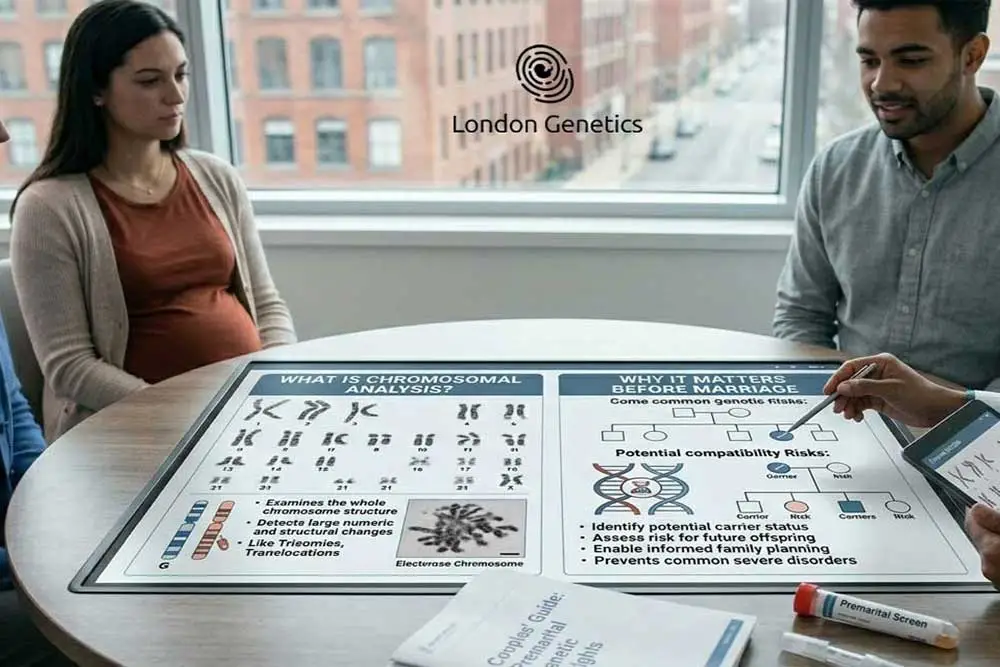
What Is Chromosomal Analysis? (An Overview)
Chromosomes carry our DNA, acting as the instruction manual for growth and health. In a healthy individual, cells contain 46 chromosomes organized into 23 pairs. A chromosomal analysis, or karyotype test, evaluates these structures to identify underlying genetic anomalies before marriage or during clinical investigations.
Chromosomal analysis transforms hidden genetic traits into clear, visible diagnostic maps. Identifying structural anomalies like balanced translocations allows couples to access informed genetic counselling, unlocking proactive pathways to safeguard the health of future generations.
Why Chromosomal Analysis Matters Before Marriage
Entering into a marriage contract is a beautiful commitment, and taking proactive steps to protect your future family’s health is a vital part of that journey. Many couples wonder why doctors emphasize genetic screening before tying the knot. The truth is, while we may look and feel completely healthy on the outside, our DNA can carry hidden variations.
Undergoing a chromosomal analysis before marriage provides a window into your biological compatibility. It answers critical questions about inherited risks, helping couples make informed family planning decisions long before a pregnancy even begins.
Identifying Carrier Status for Genetic Disorders
One of the most important reasons to prioritize a chromosomal analysis is to discover whether you or your partner are asymptomatic carriers of genetic variations:
-
The Silent Nature of Carriers: A person can carry a structural chromosomal rearrangement, such as a balanced translocation, without ever showing any physical symptoms or health issues.
-
The Risk to Future Offspring: If one or both partners carry these hidden traits, a chromosomal analysis can reveal the potential risk of passing down an unbalanced rearrangement to their children. This imbalance can lead to severe physical disabilities, developmental delays, or intellectual complications in the newborn.
-
Preventing Recurring Miscarriages: Structural abnormalities in chromosomes are a leading cause of early pregnancy loss. Identifying these factors beforehand allows couples to explore specialized reproductive options, such as Preimplantation Genetic Testing (PGT).
Evaluating Consanguineous Marriage Risks
In many cultures and families, marriages between relatives (such as first or second cousins) are common and deeply valued. However, from a biological standpoint, consanguineous marriages require extra care:
-
Shared Genetic Heritage: Because related couples share a recent common ancestor, they have a much higher percentage of identical genes compared to unrelated couples.
-
The Multiplication of Risk: If a specific chromosomal anomaly or recessive trait runs silently in the family line, the chances of both partners carrying the exact same variation increase dramatically.
-
The Role of Screening: Utilizing chromosomal analysis in a consanguineous engagement acts as a crucial safety net. It allows genetic experts to map out the exact risks of the couple’s shared genetic pool, significantly reducing the chances of inherited chromosomal disorders in their future children.
Common Genetic Conditions Detected by Chromosomal Analysis
Chromosomal analysis dives deep into sub-microscopic arrangements that quietly influence reproductive health. By identifying numerical and structural deviations early, pre-wedding screenings offer couples a clear understanding of potential developmental risks.

Uncovering hidden chromosomal structures allows couples to accurately evaluate future fetal risks and access advanced reproductive technologies in time.


Key Takeaway:
Premarital chromosomal analysis transforms hidden risks into actionable data. By identifying silent factors like balanced translocations or numerical aneuploidies, modern medicine empowers couples to safeguard future pregnancies and select precise, supportive fertility pathways.
Who Should Get a Chromosomal Analysis Before Marriage?
While maintaining a general awareness of health is important for every couple planning a life together, this specific genetic screening is not always a mandatory blanket requirement for everyone. However, for certain couples, undergoing a chromosomal analysis before marriage transitions from a recommended option to an absolute medical necessity.
Identifying whether you fall into a high-risk category allows you to take control of your reproductive future early. If you or your partner meet any of the following criteria, scheduling a chromosomal analysis is highly advised:
-
Couples in a Consanguineous Relationship (Family Marriages): Marrying a cousin or a relative naturally increases the likelihood of sharing identical hidden genetic traits. If a chromosomal abnormality runs silently in the family line, both partners are more likely to carry it, making a pre-wedding check crucial.
-
A Family History of Recurring Miscarriages or Stillbirths: If women in your immediate family (mothers, sisters, aunts) have experienced multiple unexplained pregnancy losses, it often points to a balanced chromosomal translocation hiding in the family’s DNA pool.
-
Known Inherited Genetic Disorders: If there is a documented history of physical disabilities, intellectual challenges, or conditions like Down syndrome, delayed development, or congenital birth defects within either family tree, a chromosomal analysis can determine the exact risk of these traits appearing in future offspring.
-
Exposure to Environmental Hazards: Individuals who have been exposed to high levels of radiation, heavy metals, or certain toxic chemical treatments (such as chemotherapy) due to their occupation or medical history should consider a chromosomal analysis to ensure their genetic structures remain undamaged.
-
History of Infertility or Delayed Conception: If either partner has faced reproductive challenges or severe fertility issues in the past, checking the sex chromosomes can rule out structural anomalies that directly impact reproductive health.
What to Expect During Premarital Genetic Counselling
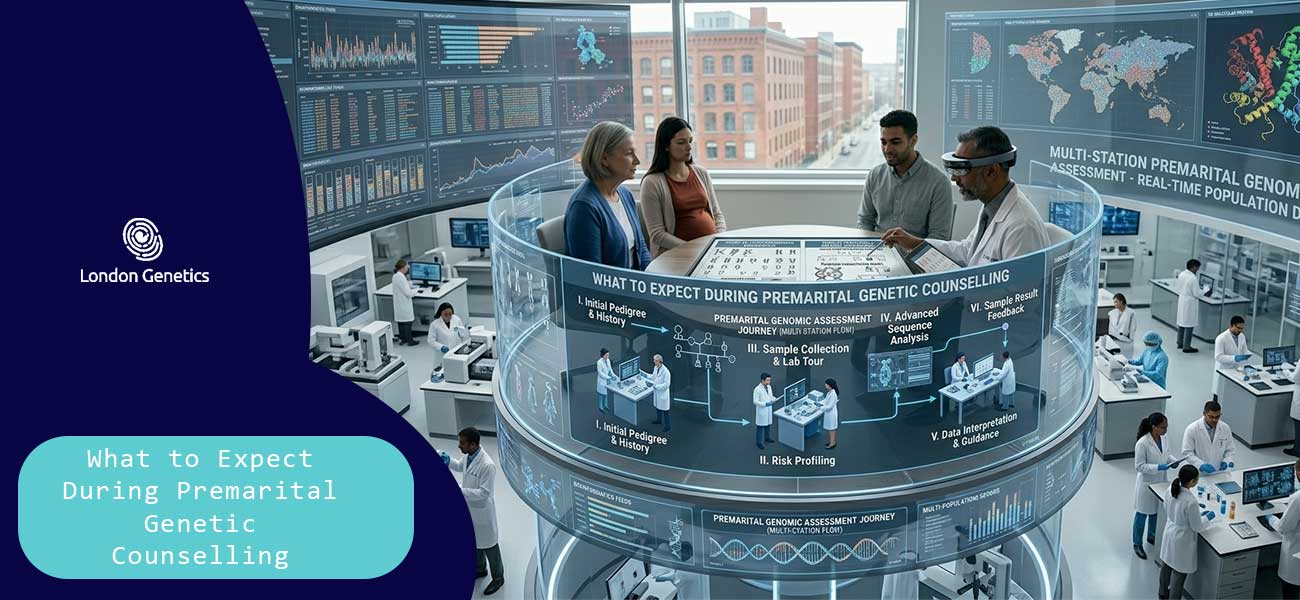
Taking the step to investigate your DNA can feel a bit intimidating, but the actual clinical process is remarkably straightforward, non-invasive, and designed to support you. Knowing what happens during your appointment can replace anxiety with absolute peace of mind.
When you sit down with a specialist to discuss a chromosomal analysis, the primary focus is not to find problems, but to provide you with a clear, scientific roadmap for a healthy future.
The Clinical Process: Simple and Smooth
Getting a chromosomal analysis does not require any intensive medical procedures or stressful preparation. The standard workflow is designed for maximum patient comfort:
-
A Standard Blood Draw: For both partners, the test simply requires a routine blood sample taken from a vein in the arm. There is no need to fast or alter your daily routine before the appointment.
-
The Laboratory Evaluation: The samples are sent to a specialized cytogenetics lab where cells are cultured, stained, and carefully photographed under a high-powered microscope to map out the individual karyotypes.
-
The Waiting Window: Because culturing living cells takes time, genetic results typically take a few weeks to finalize. This period is a standard part of the quality control required for high-accuracy genetic mapping.
How the Expert Decodes Your Results
Once the laboratory returns your final chromosomal analysis, a specialist will sit down with you to break down the technical data into practical, real-world terms.
-
Translating Complex Data: Lab reports are filled with complex genetic shorthand (such as numbers, letters, and coordinates indicating chromosome locations). The expert translates these codes into simple language, explaining exactly what your structural layout means for your health and your future children.
-
Providing Reassurance and Solutions: If your chromosomal analysis comes back completely normal—which is the case for the vast majority of couples—the specialist provides immediate validation and relief.
-
Navigating Alternatives if Risks Are Found: In the rare event that a balanced translocation or a numerical variant is detected, the expert’s role shifts to empowerment. They will objectively outline your modern reproductive options, such as using specialized IVF techniques or Preimplantation Genetic Testing (PGT). This specialized guidance ensures that a challenging result never means the end of your dream of having a healthy family.
Conclusion: Building a Healthy Future Together
Entering into marriage is a beautiful journey defined by mutual care, shared dreams, and a commitment to the future. While wedding planning often revolves around immediate celebrations, looking ahead to your family’s long-term biological health is the ultimate act of love and responsibility. Prioritizing a chromosomal analysis before tying the knot provides the invaluable gift of certainty.
By choosing to understand your genetic blueprint today, you eliminate guessing games and replace anxiety with informed confidence. Modern reproductive science ensures that even if hidden structural traits are discovered, couples are empowered with more proactive solutions and pathways than ever before.
Biological Foundation:
Prioritizing long-term family health before marriage as a fundamental, responsible act of love for your future partner and children.
Informed Confidence:
Replacing parental guesswork and unneeded anxiety with clear, data-driven scientific insights regarding your combined genomic blueprint.
Hidden Risk Discovery:
Identifying silent chromosomal traits, such as balanced translocations, that could quietly impact future gestational health or fertility.
Advanced Solutions:
Unlocking early access to modern reproductive technologies, specialized workflows, and clinical support networks if anomalies are flagged.
Proactive Preparedness:
Taking a conscious, calculated step during premarital planning to protect future generations and build a tomorrow based on peace of mind.