Introduction to the CYP2D6 Gene
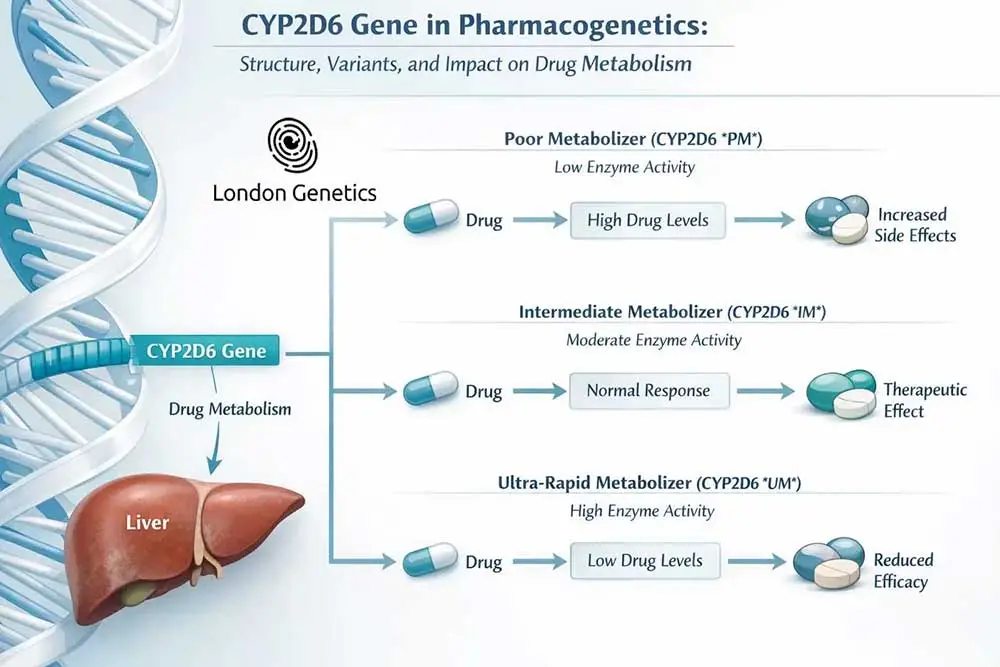
The CYP2D6 Gene is one of the most clinically significant genes in human pharmacogenetics, playing a central role in determining how individuals metabolise a wide range of commonly prescribed medicines. As a member of the cytochrome P450 enzyme family, CYP2D6 is responsible for the oxidative metabolism of approximately 20–25% of all therapeutic drugs, including antidepressants, antipsychotics, beta‑blockers, opioid analgesics, and several oncology agents. Despite representing only a small fraction of total hepatic P450 content, its functional influence on drug processing is exceptionally large.
The CYP2D6 Gene is highly polymorphic, meaning that it contains numerous genetic variants that cause substantial differences in enzyme activity between individuals. These variations define distinctive metabolic phenotypes, including poor, intermediate, normal, and ultra‑rapid metabolisers. Such diversity directly affects treatment efficacy, the risk of adverse drug reactions, and overall patient outcomes. Consequently, the study of this gene has become a cornerstone of pharmacogenomics, a field that aims to understand how genetic factors shape therapeutic responses.
Because the enzyme encoded by the CYP2D6 Gene influences the rate at which medications are activated or cleared from the body, it has profound implications for clinical practice. Tailoring therapies through personalised drug dosing based on genetics has become increasingly important, helping clinicians select the most appropriate drug and dose for each patient. This gene‑guided approach not only improves treatment precision but also minimises the likelihood of toxicity or therapeutic failure.
Overall, the CYP2D6 Gene serves as a key link between human genetics and pharmacological response, offering vital insights into inter‑individual variability in drug metabolism and reinforcing the importance of genetics‑informed prescribing within modern medicine.
Genomic Structure and Molecular Characteristics of the CYP2D6 Gene
The CYP2D6 gene, located at chromosome 22q13.2, is part of a highly polymorphic genomic region characterised by extensive structural variability. Spanning approximately 4.4 kilobases and organised into nine exons, CYP2D6 encodes a cytochrome P450 mono‑oxygenase responsible for metabolising a wide range of therapeutic drugs. Its genomic environment, which includes two closely related pseudogenes, contributes significantly to the gene’s remarkable genetic diversity and the complexity of its molecular behaviour.
The CYP2D6 gene’s polymorphic genomic structure, conserved enzymatic domains, and extensive allelic diversity shape its critical role in drug metabolism. Detailed knowledge of these molecular features is vital for precise pharmacogenetic interpretation and personalised therapeutic strategies.
Biological Role of the CYP2D6 Gene in Drug Metabolism
The CYP2D6 Gene encodes one of the most influential enzymes involved in human drug metabolism, despite representing only a small proportion of total hepatic cytochrome P450 content. The CYP2D6 enzyme functions as a phase I mono‑oxygenase, introducing oxygen‑containing groups into lipophilic compounds to facilitate their further metabolism and elimination. This oxidative transformation is essential for converting many therapeutic agents into either their active, inactive, or more water‑soluble forms.
A key aspect of the biological role of the CYP2D6 Gene lies in its ability to metabolise approximately 20–25% of clinically used medicines. These include antidepressants, antipsychotics, beta‑blockers, opioid analgesics, anti‑arrhythmics, and certain anticancer agents. For several of these drugs, CYP2D6 is responsible for bioactivation, meaning it converts an inactive prodrug into its active therapeutic form. Codeine, for example, must be metabolised by CYP2D6 to morphine to exert its analgesic effect. Variability in the activity of the CYP2D6 enzyme therefore has a direct impact on therapeutic efficacy and safety.
The CYP2D6 Gene also contributes to the clearance of numerous xenobiotics, toxins, and endogenous substrates. Its substrate specificity includes weakly basic and lipophilic compounds, many of which have essential roles in neural and cardiovascular pathways. Because CYP2D6 operates primarily in the liver but is also expressed in the brain, intestine, and other tissues, its biological influence extends beyond drug metabolism, shaping neurochemical balance and physiological responses in multiple organ systems.
Another critical dimension of the biological role of the CYP2D6 Gene is its involvement in inter‑individual variability. Genetic polymorphisms can significantly alter enzyme activity, leading to metabolic phenotypes such as poor, intermediate, normal, and ultra‑rapid metaboliser status. These metabolic differences determine how effectively an individual can process specific drugs, affecting plasma concentrations, therapeutic outcomes, and the risk of adverse reactions. As a result, CYP2D6 has become central to pharmacogenetic testing and modern approaches to personalised prescribing.
Overall, the CYP2D6 Gene serves as a pivotal regulator of drug biotransformation, influencing both the pharmacokinetics and pharmacodynamics of a wide range of medications. Its biological role underscores the importance of integrating genetic information into therapeutic decision‑making to optimise patient care and improve clinical outcomes.
Expression and Regulation of the CYP2D6 Gene in Human Tissues
The CYP2D6 gene exhibits a tightly controlled and tissue‑specific expression pattern that reflects its essential role in drug metabolism and physiological homeostasis. Although predominantly active in the liver, CYP2D6 is also expressed in the brain, gastrointestinal tract, kidneys, and several other organs, where it contributes to both xenobiotic clearance and endogenous metabolic processes.

Key expression and regulatory features of the CYP2D6 gene across human tissues and developmental contexts.


Key Takeaway:
CYP2D6 expression is tissue‑specific, genetically regulated, and highly variable across populations. Understanding these patterns is essential for predicting metabolic phenotype and optimising personalised drug therapy.
Genetic Variants and Polymorphisms of the CYP2D6 Gene
The CYP2D6 Gene is one of the most polymorphic genes within the cytochrome P450 enzyme family. Its extensive genetic diversity results in substantial variability in enzyme activity among individuals and populations. These variations arise from single‑nucleotide changes, insertions or deletions, gene rearrangements, and copy number variations. Collectively, these genetic differences influence the metabolic capacity of the CYP2D6 enzyme and play a major role in determining how patients respond to many medications.
Types of Genetic Variants in the CYP2D6 Gene
Several categories of genetic alterations have been identified in the CYP2D6 Gene, each affecting enzyme activity in different ways.
• Single‑Nucleotide Variants (SNVs)
Changes in a single nucleotide within the gene sequence may alter amino acid composition or enzyme stability. Some variants reduce catalytic activity, while others completely abolish enzyme function.
• Insertions and Deletions (Indels)
Small insertions or deletions in the coding region can disrupt the reading frame of the CYP2D6 Gene, often resulting in truncated or non‑functional enzymes.
• Gene Deletions
Complete deletion of the CYP2D6 gene, commonly referred to as the CYP2D65 allele, leads to the absence of enzyme production and is a major cause of poor metaboliser phenotypes.
• Gene Duplications and Multiplications
In some individuals, multiple copies of the CYP2D6 Gene are present. These duplications can significantly increase enzyme expression and lead to ultra‑rapid drug metabolism.
• Hybrid and Recombinant Alleles
Because of the high sequence similarity between CYP2D6 and nearby pseudogenes such as CYP2D7, recombination events may produce hybrid genes with altered or reduced enzymatic activity.
Metabolic Phenotypes Associated with CYP2D6 Gene Variability
Genetic polymorphisms in the CYP2D6 Gene are commonly categorised into metabolic phenotypes based on predicted enzyme activity.
• Poor Metabolisers (PM)
Individuals with two non‑functional alleles show little or no CYP2D6 enzyme activity, often leading to slower drug clearance and increased risk of adverse effects.
• Intermediate Metabolisers (IM)
Individuals carrying partially functional alleles display reduced metabolic capacity compared with normal metabolisers.
• Normal (Extensive) Metabolisers (NM)
These individuals possess at least one fully functional allele of the CYP2D6 Gene, resulting in typical drug metabolism rates.
• Ultra‑Rapid Metabolisers (UM)
Individuals with gene duplications or multiplications exhibit markedly increased enzyme activity, which may lead to rapid drug clearance or excessive formation of active metabolites.
Population Distribution of CYP2D6 Gene Variants
The frequency of polymorphisms in the CYP2D6 Gene varies significantly among global populations. Certain reduced‑function alleles are more prevalent in European and Asian populations, while gene duplications associated with ultra‑rapid metabolism are more common in North African, Middle Eastern, and some Mediterranean populations. These population differences have important implications for pharmacogenetic testing and personalised treatment strategies.
Overall, the extensive genetic variability of the CYP2D6 Gene forms the biological basis for inter‑individual differences in drug metabolism and highlights the importance of integrating genetic information into clinical decision‑making.
Clinical Significance of the CYP2D6 Gene in Pharmacogenetics
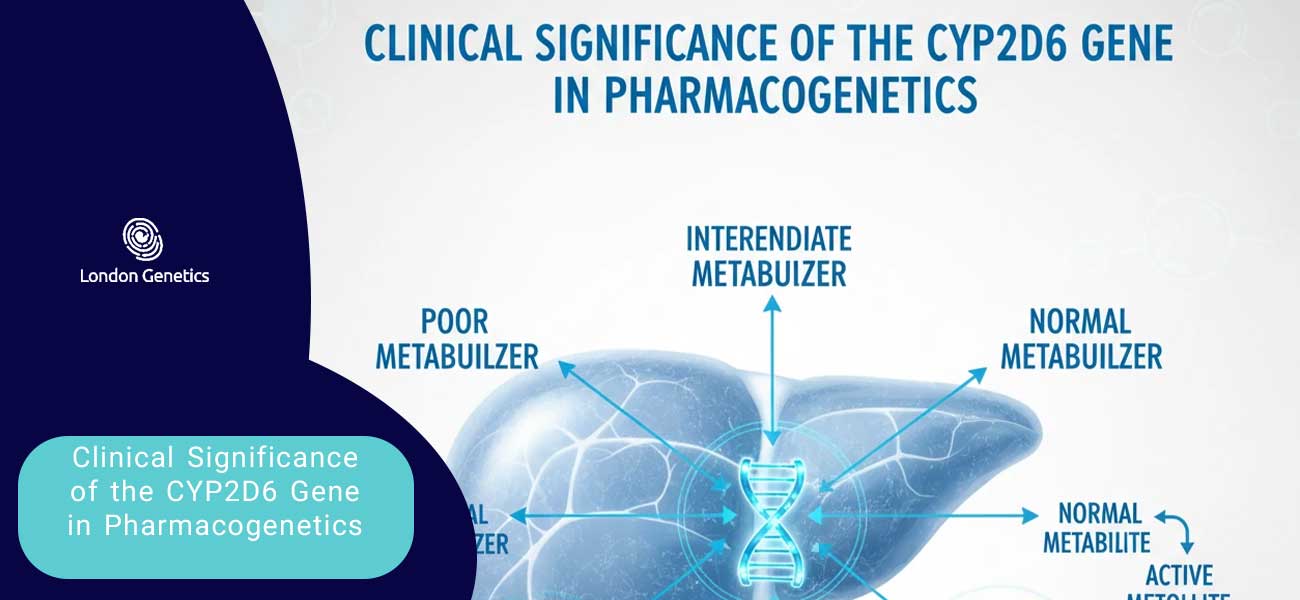
The CYP2D6 Gene plays a central and clinically meaningful role in pharmacogenetics, as its genetic variability directly affects how patients metabolise many commonly prescribed medications. Differences in CYP2D6 enzyme activity can influence drug efficacy, safety, dosing requirements, and the risk of treatment‑related complications. Understanding these clinical implications enables more precise, personalised medical care.
Key Clinical Impacts of CYP2D6 Variability
• Drug Metabolism and Therapeutic Outcomes
CYP2D6 is responsible for metabolising around 20–25% of all clinically used drugs. Variants in the CYP2D6 Gene determine enzyme function and therefore influence whether a medication reaches therapeutic levels, becomes toxic, or fails to work effectively.
• Adverse Drug Reactions (ADRs)
Patients with reduced or absent CYP2D6 activity (poor metabolisers) are at higher risk of developing ADRs due to drug accumulation. In contrast, ultra‑rapid metabolisers may convert drugs too quickly, leading to sub‑therapeutic levels or excessive active metabolites.
• Dose Optimisation and Personalised Treatment
Pharmacogenetic testing for the CYP2D6 Gene helps clinicians tailor drug selection and dosage. For certain medications, guidelines recommend genotype‑guided therapy to improve effectiveness and minimise harm.
Medications Strongly Influenced by CYP2D6 Activity
The CYP2D6 Gene affects a wide range of therapeutic drug classes:
• Antidepressants
Selective serotonin reuptake inhibitors (SSRIs), tricyclic antidepressants (TCAs), and serotonin–noradrenaline reuptake inhibitors (SNRIs) may require dose adjustments based on CYP2D6 metabolic phenotype.
• Antipsychotics
Several antipsychotics are metabolised by CYP2D6, with poor metabolisers at higher risk of side effects.
• Opioid Analgesics
Codeine, tramadol, and similar opioids depend on the CYP2D6 Gene for conversion to active metabolites. Poor metabolisers may experience insufficient pain relief, while ultra‑rapid metabolisers can develop toxicity.
• Cardiovascular Medications
Beta‑blockers like metoprolol are metabolised via CYP2D6, meaning genotype can impact blood‑pressure control and side‑effect profiles.
• Oncology and Tamoxifen Therapy
Tamoxifen requires CYP2D6‑mediated activation; reduced‑function alleles may decrease treatment effectiveness in some breast cancer patients.
Benefits of CYP2D6 Pharmacogenetic Testing
• Improved Drug Safety
Identifying patients at risk of drug accumulation or toxicity allows clinicians to avoid harmful medications or adjust doses appropriately.
• Enhanced Treatment Precision
Genetic testing enables selection of the most effective drug based on a patient’s predicted metabolic capacity.
• Reduced Healthcare Costs
By minimising trial‑and‑error prescribing and preventing adverse reactions, the integration of CYP2D6 Gene information can reduce unnecessary medical interventions.
• Support for Personalised Medicine
CYP2D6 pharmacogenetics is a cornerstone of personalised care, guiding therapeutic decisions across psychiatry, pain management, cardiology, and oncology.
Conclusion: The Pivotal Impact of the CYP2D6 Gene on Clinical Pharmacology
The CYP2D6 gene represents one of the most critical links between human genetics and clinical pharmacology, serving as a primary driver for the metabolism of approximately 25% of all therapeutic agents. Its extraordinary genetic variability—ranging from complete gene deletions to multiple duplications—creates a diverse spectrum of metabolic phenotypes. This diversity directly determines patient safety and treatment efficacy, making the study of CYP2D6 fundamental to modern medicine.
Identifying a patient’s CYP2D6 status allows clinicians to move beyond traditional “trial‑and‑error” prescribing. As pharmacogenetic testing becomes more accessible, integrating CYP2D6 data into routine clinical practice is essential for preventing adverse drug reactions and ensuring that medications are tailored to the individual’s unique genetic makeup.
A Pillar of Pharmacogenetics:
CYP2D6 is a central focus for understanding inter‑individual variability in drug response, particularly in high‑stakes fields such as psychiatry, pain management, and oncology.
Safety and Therapeutic Efficacy:
Accurately identifying poor and ultra‑rapid metabolisers is vital for the safe administration of drugs like codeine and tamoxifen, where metabolic conversion is required for therapeutic effect.
Predictive Power and Precision Prescribing:
Genetic insights enable clinicians to select the most effective medications and precise dosages from the start, significantly improving recovery timelines and patient outcomes.
Global Genetic Diversity and Ancestry:
The distribution of CYP2D6 variants varies widely across global populations, highlighting the necessity of considering ancestral genetics to provide equitable and effective healthcare.
The Future of Personalized Medicine:
The continued integration of CYP2D6 research into clinical workflows will play an essential role in reducing medical costs, enhancing drug safety, and ushering in a new era of precision healthcare.