What Are Drug Interactions?
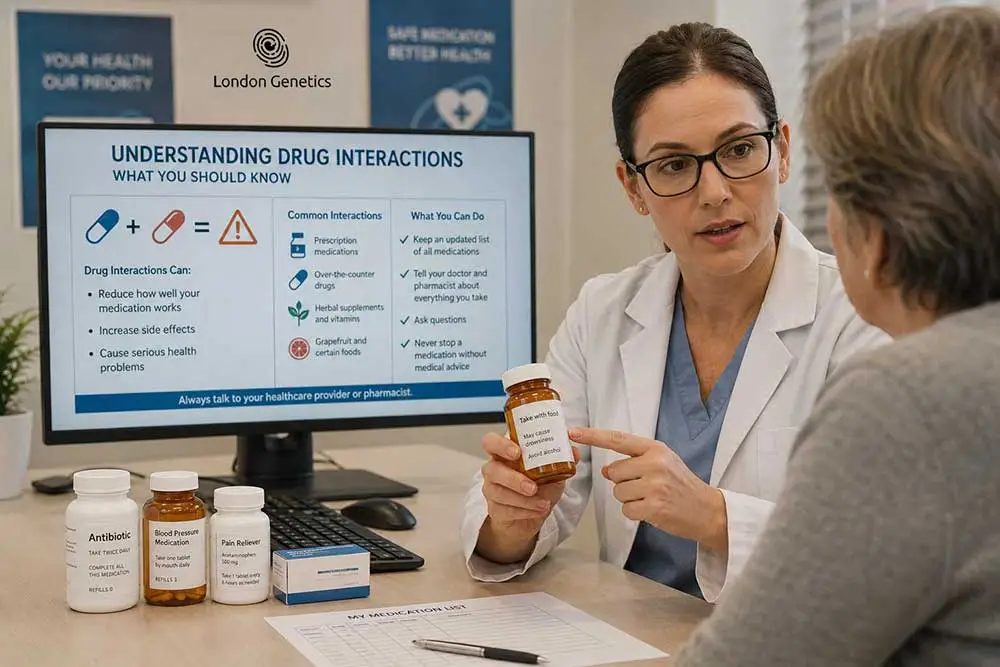
Drug interactions occur when one medicine affects how another works, either increasing its effect, reducing its effectiveness, or causing an unexpected reaction. These interactions can happen between two prescription medicines, between a prescription drug and an over-the-counter remedy, or even between a medication and something as ordinary as a food, drink, or herbal supplement.
Interactions generally fall into a few broad categories. Some affect how a drug is absorbed, metabolised, or cleared from the body, altering the amount of medication actually reaching your bloodstream. Others affect how two medicines behave once they’re both in your system, sometimes amplifying side effects or cancelling out the intended benefit of one or both drugs.
It’s worth noting that drug interactions aren’t always harmful — some are well understood and safely managed by adjusting doses or timing. Others, however, can be genuinely dangerous, which is why pharmacists and GPs pay close attention whenever a new medicine is added to your existing routine.
Interestingly, not everyone experiences the same interaction in the same way. A combination that causes a marked reaction in one person might barely register in another, largely due to individual differences in how the body processes medication. This is an area increasingly explored through Personalized Drug Dosing Based on Genetics, which looks at how a person’s genetic makeup can influence not only how they respond to a single medicine, but how that medicine behaves alongside others.
Common Types of Drug Interactions
Not all drug interactions work the same way. Understanding the main categories can help make sense of why your GP or pharmacist asks so many questions before prescribing something new.
Understanding the different types of drug interactions helps explain why thorough medication reviews matter, and why sharing full details with your GP or pharmacist — including supplements and lifestyle habits — is always worthwhile.
Warning Signs You Shouldn’t Ignore
Most drug interactions are mild or well managed, but certain symptoms should never be brushed aside. Knowing what to watch for means you can act quickly rather than waiting to see if something passes on its own.
Unusual Drowsiness or Confusion
Feeling excessively sleepy, dizzy, or confused shortly after starting a new medicine, or combining two existing ones, can be a sign that they’re interacting more than expected. This is particularly important to flag if you’re due to drive or operate machinery.
Unexplained Bruising or Bleeding
Some drug interactions affect how well your blood clots. Unusual bruising, bleeding gums, or blood in your urine or stool should always be reported to your GP or pharmacist promptly.
A Rapid or Irregular Heartbeat
Certain combinations of medicines can affect heart rhythm. Palpitations, a noticeably fast heartbeat, or chest discomfort should be treated seriously and checked without delay.
Severe Nausea, Vomiting, or Stomach Pain
While mild digestive upset is common with many medicines, symptoms that are severe, persistent, or accompanied by significant pain can indicate a more serious interaction taking place.
Skin Rash, Swelling, or Difficulty Breathing
These can be signs of a serious allergic-type reaction linked to a drug interaction, and require urgent medical attention or a call to 999 if breathing is affected.
A Sudden Change in How a Long-Term Condition Feels
If a condition you normally manage well, such as blood pressure or blood sugar, suddenly becomes harder to control after starting a new medicine, this is worth mentioning to your GP as soon as possible.
Because the symptoms of drug interactions can range from mildly inconvenient to genuinely serious, it’s always safer to contact your GP, pharmacist, or NHS 111 if something feels different or wrong after starting a new medication, rather than assuming it will simply pass.
Who Is Most at Risk of Drug Interactions?
While anyone taking medication can experience drug interactions, certain groups face a considerably higher risk, often due to the number of medicines they’re taking or how their body processes them.
Understanding who’s most at risk of drug interactions helps explain why a full medical history, including age, existing conditions, and every product you take, matters so much before starting something new.
Why Genetics Can Influence How Drugs Interact in Your Body
As we touched on earlier, not everyone processes medication in the same way, and this becomes especially important when more than one drug is involved. Genetics plays a significant, often underappreciated, role in why some people experience far more pronounced drug interactions than others, even on identical combinations of medicine.
The Role of Liver Enzymes
Much of how the body breaks down medication comes down to a group of liver enzymes, particularly those in the CYP450 family. These enzymes are responsible for metabolising a huge range of drugs. Genetic variations can make these enzymes work faster or slower than average, which directly affects how two medicines behave once combined in the body.
When One Drug Affects How Another Is Processed
Some medicines can speed up or slow down the very enzymes responsible for breaking down other drugs. If someone’s genetic profile already predisposes them to slower metabolism, adding a second medicine that further reduces enzyme activity can lead to a build-up of both drugs, significantly raising the risk of side effects or toxicity.
Why the Same Combination Affects People Differently
This genetic variability helps explain a pattern many patients notice: two people taking the exact same two medicines can have completely different experiences, one tolerating the combination comfortably, the other struggling with pronounced symptoms. It isn’t inconsistency or bad luck; it’s often a reflection of how each person’s body is genetically wired to process drugs.
Moving Towards a More Personalised Approach
This is precisely the area explored through Personalized Drug Dosing Based on Genetics, which looks at how an individual’s genetic makeup can guide safer, more effective prescribing decisions. Rather than relying purely on trial and error, this kind of genetic insight can help identify which combinations, and which doses, are more likely to work safely for a particular person, reducing the risk of harmful drug interactions before they occur.
How to Reduce Your Risk of Drug Interactions
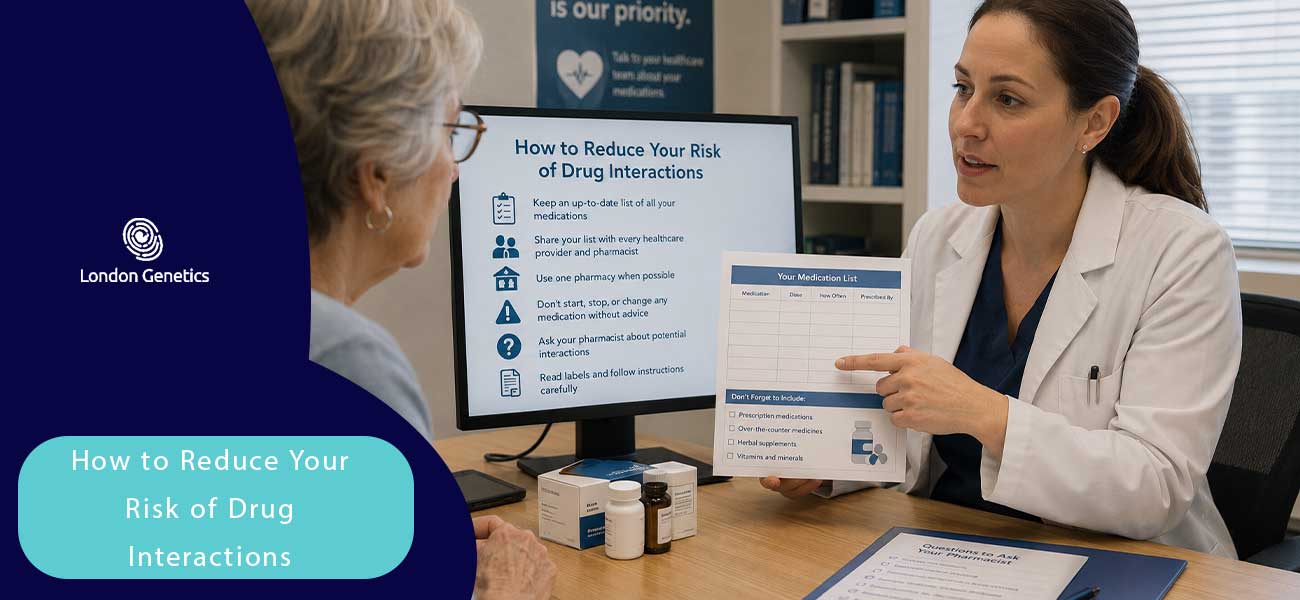
While some drug interactions can’t always be predicted, there’s a great deal you can do to reduce your risk and catch potential problems early.
Keep an Up-to-Date List of Everything You Take
This includes prescription medicines, over-the-counter remedies, vitamins, and herbal supplements. Having a complete list on hand makes it far easier for your GP or pharmacist to spot potential drug interactions before they become an issue.
Use One Pharmacy Where Possible
Sticking to a single pharmacy means your pharmacist has a complete record of everything you’re taking, allowing them to flag a potential interaction automatically, even if different doctors have prescribed different medicines.
Always Mention New Medicines, However Minor
It’s easy to assume a simple painkiller or cold remedy doesn’t count, but even common over-the-counter products can trigger drug interactions with existing prescriptions. When in doubt, ask before taking something new.
Read the Patient Information Leaflet
Every medicine comes with guidance on known interactions, foods to avoid, and warning signs to watch for. It’s worth a quick read whenever you start something new, rather than relying on memory alone.
Ask About Timing
Sometimes, the risk of interaction can be reduced simply by taking two medicines a few hours apart, rather than at exactly the same time. Your pharmacist can advise on the most sensible timing for your particular combination.
Consider a Medication Review
If you’re taking several medicines regularly, particularly if you’re an older adult or managing more than one condition, it’s worth asking your GP or pharmacist for a full medication review to check for any overlapping risks.
Don’t Stop or Adjust Medication Without Advice
If you’re concerned about a possible interaction, speak to your GP or pharmacist rather than stopping a medicine abruptly, as this can sometimes cause its own set of problems.
Taking these practical steps won’t eliminate every possible drug interaction, but they significantly reduce the risk, and just as importantly, they help ensure any issues are caught early rather than going unnoticed.
Summary: Key Takeaways on Drug Interactions
Drug interactions are a normal part of taking medication, particularly for anyone managing more than one health condition, but understanding how they happen, and how to reduce your risk, makes them far less daunting to navigate.
If you’ve experienced unexpected side effects when taking more than one medicine, or you’re simply concerned about how your body might respond to a new combination, it may be worth discussing genetic testing with your GP. Understanding your own genetic profile can offer real insight into safer, more personalised prescribing, tailored specifically to you.
Book Your Consultation with Dr Karimiani