Introduction
Background of Egg Quality in Human Reproduction
Egg Quality is a fundamental determinant of successful human reproduction. It refers to the structural, molecular, and functional competence of the oocyte, including cytoplasmic maturity, mitochondrial activity, and—most importantly—chromosomal normality. High Egg Quality is essential for proper fertilisation, early embryonic development, implantation, and the establishment of a healthy pregnancy. In contemporary reproductive medicine, declining Egg Quality is recognised as one of the primary contributors to reduced fertility, particularly in women of later reproductive age. Biological ageing of the ovary affects both the developmental capacity of the oocyte and its ability to maintain genomic stability during meiosis.
Importance of Chromosomal Integrity in Fertility
Chromosomal integrity plays a central role in fertility because accurate chromosome segregation during oocyte meiosis ensures that the embryo receives the correct genetic material. Errors in this process can lead to aneuploidy, which is associated with implantation failure, early miscarriage, and congenital abnormalities. Maintaining chromosomal stability within the oocyte is therefore crucial for reproductive success. The relationship between Egg Quality and chromosomal integrity is particularly significant, as the nuclear competence of the oocyte directly influences embryo viability and developmental potential.
Aim and Scope of the Article
The aim of this article is to examine the relationship between Egg Quality and chromosomal integrity and to explore how disruptions in these factors contribute to reduced fertility outcomes. The scope includes an overview of the biological mechanisms underlying oocyte competence, the impact of Advanced Maternal Age on chromosomal stability, and the associated Genetic Risks observed in human reproduction. Additionally, the article integrates perspectives from Reproductive Genetics to highlight current diagnostic approaches and clinical implications within assisted reproductive technologies. By synthesising current knowledge, this review seeks to provide a comprehensive understanding of how Egg Quality influences female fertility and reproductive outcomes.
Biology of Egg Quality
Egg Quality (oocyte quality) refers to the overall developmental competence of the oocyte,
including its ability to undergo successful fertilisation,
support early embryogenesis,
and contribute to a viable pregnancy.
It represents a combination of genetic, epigenetic, cytoplasmic, and metabolic factors
that determine reproductive success.
Egg Quality is not defined solely by morphological appearance.
It reflects the oocyte’s ability to complete meiosis accurately
and sustain early embryonic development.
A high-quality oocyte has balanced chromosomal content,
adequate energy reserves,
and properly regulated molecular signalling pathways.
Key structural elements include:
• Oolemma (oocyte membrane) – regulates sperm entry and communication
• Zona pellucida – glycoprotein layer essential for fertilisation and protection
• Meiotic spindle – ensures accurate chromosome alignment and segregation
These structures are essential for chromosomal stability and fertilisation success.
Biological function is driven by:
• Mitochondrial activity – provides energy for meiosis and early divisions
• Maternal RNA and stored proteins – regulate early development
• Cellular signalling pathways – control maturation and fertilisation readiness
Together, these factors define the biological competence of the oocyte.
Egg Quality depends on two interconnected domains:
Cytoplasmic competence:
Ability of the cytoplasm to support fertilisation and embryonic development,
including mitochondrial function and maternal molecular reserves.
Nuclear maturity:
Correct completion of meiosis and accurate chromosomal alignment,
ensuring the proper haploid chromosome number.
Both components must function optimally to ensure chromosomal integrity
and favourable reproductive outcomes.
Key Takeaway:
Egg Quality represents the integration of structural integrity,
cytoplasmic competence, and nuclear maturity.
Optimal coordination of these biological components
is essential for successful fertilisation,
embryo viability,
and healthy reproductive outcomes.
Chromosomal Integrity in Human Oocytes
Overview of Human Chromosomes
Human cells normally contain 46 chromosomes arranged in 23 pairs, consisting of 22 pairs of autosomes and one pair of sex chromosomes. In the context of reproduction, oocytes must undergo a specialised reduction process to ensure that only 23 chromosomes are retained, enabling the restoration of the diploid number after fertilisation. The maintenance of accurate chromosomal content is essential for preserving genomic balance in the embryo. Any deviation from the expected chromosomal number can compromise developmental potential and directly affect Egg Quality, as chromosomal normality represents a core component of oocyte competence.
Meiosis and Chromosomal Segregation
Meiosis is the specialised cell division process through which oocytes reduce their chromosomal number from diploid to haploid. This process involves two sequential divisions (meiosis I and meiosis II) and is characterised by homologous chromosome separation followed by sister chromatid segregation. Precise chromosomal alignment on the meiotic spindle is critical for accurate segregation. Errors during this process, known as nondisjunction, can lead to aneuploidy. Because proper meiotic progression is fundamental to genetic stability, it plays a central role in maintaining both chromosomal integrity and optimal Egg Quality. Disruptions in spindle formation, cohesion of chromatids, or checkpoint regulation increase the likelihood of chromosomal abnormalities.
Mechanisms Ensuring Chromosomal Stability
Several biological mechanisms safeguard chromosomal stability within human oocytes. These include spindle assembly checkpoints, cohesion proteins that maintain sister chromatid attachment, and DNA repair pathways that correct genetic damage. Additionally, mitochondrial function supports the energy demands required for accurate meiotic progression. When these regulatory systems operate effectively, they contribute to chromosomal integrity and reinforce Egg Quality. Conversely, impairment of these mechanisms increases the risk of chromosomal mis-segregation, highlighting the close relationship between genomic stability and reproductive competence.
Overall, chromosomal integrity is a fundamental determinant of oocyte functionality, and its preservation is essential for successful fertilisation, embryo development, and favourable fertility outcomes.
Age-Related Decline in Egg Quality
Age-related decline in Egg Quality is primarily driven by ovarian ageing,
mitochondrial dysfunction, spindle abnormalities, and increased chromosomal errors.
These biological changes reduce oocyte competence,
contributing to decreased fertility and higher reproductive risk with advancing maternal age.

Explore the key mechanisms underlying the decline in Egg Quality.

Ovarian ageing is a natural biological process characterised by a progressive reduction
in both ovarian reserve and oocyte competence.
With age, follicles are more likely to exhibit functional impairments,
increasing susceptibility to chromosomal instability
and reducing overall reproductive potential.

Mitochondria supply the ATP required for meiosis,
fertilisation, and early embryonic development.
Age-related decline in mitochondrial number and efficiency
leads to reduced energy production and increased reactive oxygen species,
which can damage cellular structures and genetic material.

The meiotic spindle ensures accurate chromosome alignment and separation.
With advancing age, structural deterioration of the spindle
increases the likelihood of chromosomal misalignment,
contributing to aneuploidy and reduced Egg Quality.

Age-related meiotic errors, including nondisjunction
and premature chromatid separation,
lead to embryos with abnormal chromosome numbers.
The rising probability of aneuploidy directly affects implantation rates,
miscarriage risk, and overall fertility outcomes,
making chromosomal stability a central component of Egg Quality.
Key Takeaway:
Age-related decline in Egg Quality is driven by ovarian ageing,
mitochondrial dysfunction, spindle abnormalities,
and increased chromosomal instability.
These interconnected mechanisms reduce oocyte competence
and represent the primary biological basis
for decreased reproductive potential with advancing maternal age.
Chromosomal Abnormalities and Aneuploidy
Definition of Aneuploidy
Aneuploidy is a chromosomal abnormality characterised by the presence of an abnormal number of chromosomes in a cell. In human reproduction, this typically involves either the gain or loss of one or more chromosomes due to errors during meiosis in the oocyte. Because accurate chromosomal content is essential for normal embryonic development, aneuploidy represents a major determinant of reproductive failure. The occurrence of such abnormalities directly reflects impaired Egg Quality, as chromosomal normality is a core component of oocyte competence and developmental potential.
Causes of Chromosomal Mis-segregation
Chromosomal mis-segregation occurs when chromosomes fail to separate correctly during meiosis I or meiosis II. Several biological mechanisms contribute to this process, including weakened chromosomal cohesion, spindle assembly defects, and impaired checkpoint regulation. Age-related deterioration of cellular structures further increases susceptibility to segregation errors. Additionally, mitochondrial dysfunction and reduced energy availability may compromise spindle dynamics, thereby disrupting accurate chromosome alignment. These factors collectively reduce Egg Quality and elevate the likelihood of genetic instability within the oocyte.
Clinical Consequences
The clinical implications of aneuploidy are significant in human fertility. Embryos derived from chromosomally abnormal oocytes may fail to implant, result in early pregnancy loss, or lead to congenital conditions if the pregnancy progresses. Aneuploidy is one of the leading causes of spontaneous miscarriage and reduced success rates in assisted reproductive technologies. Since chromosomal stability is intrinsically linked to Egg Quality, the presence of chromosomal abnormalities has direct consequences for implantation rates, embryo viability, and overall reproductive outcomes. Understanding these effects is essential for improving diagnostic strategies and optimising fertility treatments.
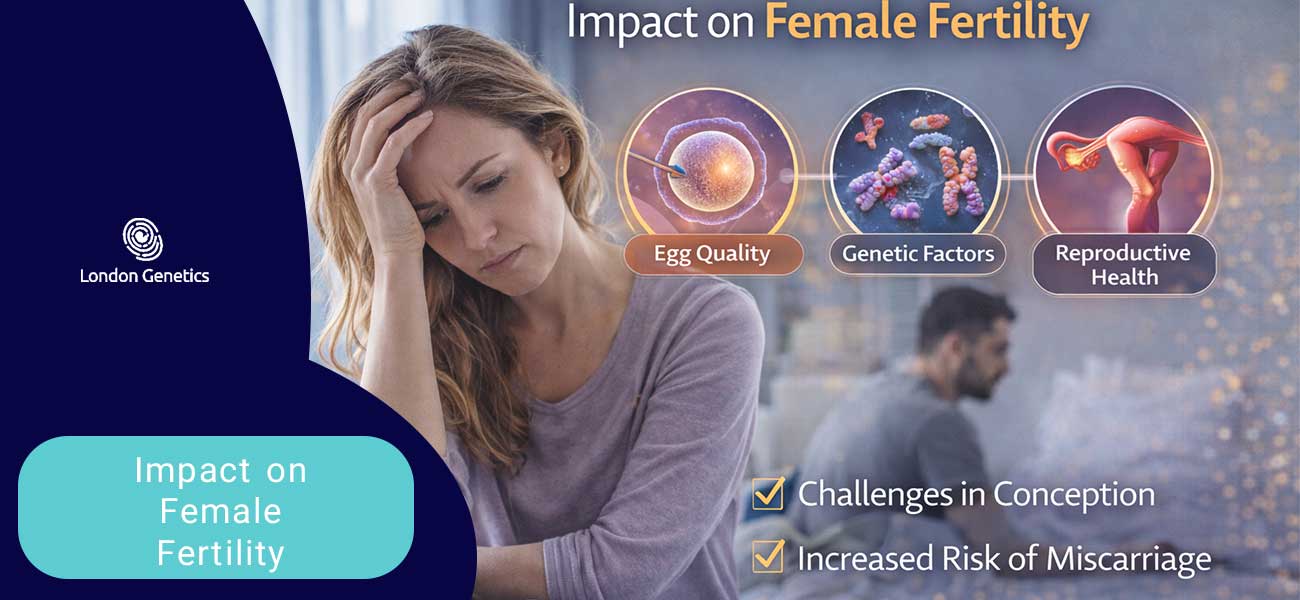
Impact on Female Fertility
Infertility
Infertility is often the first clinical manifestation of compromised oocyte function. When Egg Quality declines, the likelihood of successful fertilisation and normal embryo development decreases significantly. Poor chromosomal integrity within the oocyte can prevent proper embryonic progression, resulting in failed conception despite regular unprotected intercourse. In many cases, subtle defects in chromosomal stability contribute to unexplained infertility, highlighting the critical role of genomic competence in female reproductive potential.
Implantation Failure
Implantation requires a genetically stable and developmentally competent embryo. When chromosomal abnormalities arise due to impaired Egg Quality, embryos may fail to implant in the uterine lining. Even if fertilisation occurs, early developmental arrest is common in embryos with aneuploidy. Implantation failure is therefore closely associated with chromosomal errors originating in the oocyte, demonstrating the direct relationship between oocyte health and endometrial receptivity outcomes.
Recurrent Miscarriage
Recurrent miscarriage is frequently linked to embryonic chromosomal abnormalities. Errors in meiotic division within the oocyte can result in embryos with incorrect chromosomal numbers, leading to early pregnancy loss. As maternal age increases, the incidence of chromosomal instability rises, further affecting Egg Quality and elevating miscarriage risk. Chromosomal abnormalities are considered one of the most common causes of early spontaneous pregnancy loss, underscoring the importance of oocyte genomic integrity.
Reduced IVF Success Rates
In assisted reproductive technologies, particularly in vitro fertilisation (IVF), outcomes are strongly influenced by Egg Quality. Oocytes with compromised chromosomal integrity are less likely to produce viable embryos suitable for transfer. Reduced implantation rates, lower embryo development potential, and increased cycle cancellation are often observed when egg competence is suboptimal. Consequently, chromosomal health is a major predictive factor for IVF success, and strategies aimed at improving oocyte assessment continue to be a central focus in reproductive medicine.
Conclusion: Egg Quality and Chromosomal Integrity in Reproductive Biology
This article has highlighted the fundamental relationship between Egg Quality
and chromosomal integrity in human reproduction.
High Egg Quality depends on both cytoplasmic competence and accurate nuclear maturation,
ensuring proper meiotic progression and stable chromosomal segregation.
Age-related biological changes, including mitochondrial dysfunction and spindle abnormalities,
significantly increase the risk of chromosomal errors, particularly aneuploidy.
These abnormalities contribute to infertility, implantation failure,
recurrent miscarriage, and reduced success rates in assisted reproductive technologies.
Overall, chromosomal stability represents a central determinant of oocyte competence
and reproductive potential.
The clinical understanding of Egg Quality demonstrates the broader importance
of reproductive biology in fertility outcomes,
maternal age assessment, and assisted reproduction strategies.
Its relevance extends across natural conception,
IVF protocols, and advanced reproductive medicine.
Looking ahead, future research is expected to improve methods
for evaluating Egg Quality at molecular and functional levels.
Advances in reproductive genetics may provide more precise tools
for detecting chromosomal instability
and understanding the mechanisms underlying oocyte ageing.
Continued investigation will strengthen knowledge in the following areas:
- Improved molecular assessment of oocyte competence
- Enhanced detection of chromosomal instability and aneuploidy
- Better understanding of mitochondrial function in oocyte ageing
- Development of strategies to preserve or enhance Egg Quality
- Optimisation of assisted reproductive technologies
Why This Matters:
Egg Quality is a foundational element of reproductive success.
Understanding its biological determinants supports more accurate counselling,
improved treatment planning,
and better outcomes in fertility care.
Integrating oocyte biology into clinical practice
enhances decision-making in both natural conception
and assisted reproductive techniques.
The Value of Continued Research:
Ongoing advancements in reproductive genetics,
mitochondrial biology,
and precision medicine
will continue to expand understanding of oocyte ageing
and chromosomal stability,
contributing to improved fertility outcomes
and deeper insight into female reproductive biology.
Your Next Step:
Explore evidence-based reproductive strategies
to better understand how Egg Quality,
chromosomal integrity,
and maternal age interact within fertility planning.