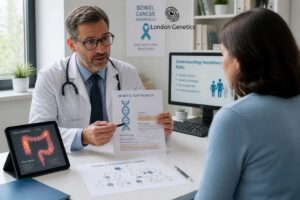
Understanding Hereditary vs. Sporadic Cancer: What Your Family History of Cancer Really Means
Hearing that cancer runs in a family often sparks immediate anxiety. However, discovering a pattern in your Family History of Cancer does not automatically mean you carry an inherited gene mutation or that your own diagnosis is inevitable. In oncology and medical genetics, cancers are generally categorized into three distinct groups based on their origins: sporadic, familial, and hereditary.
Understanding the difference between these types, as revealed by your Family History of Cancer, is the crucial first step in assessing your true risk and deciding whether specialized clinical evaluation is warranted.
- Sporadic Cancer (Most Common)
The vast majority of cancers—accounting for approximately 70% to 80% of all cases—are sporadic. These occur due to acquired genetic mutations over a person’s lifetime, caused by a combination of aging, environmental factors, lifestyle choices (such as smoking, diet, and physical inactivity), and random cellular errors. Sporadic cancers typically occur at older ages and do not follow an inherited pattern, meaning they are less likely to be strongly indicated by a significant Family History of Cancer.
- Familial Cancer (Shared Environment & Minor Genes)
About 15% to 20% of cancers fall into the familial category. In these situations, more than one family member develops cancer, but it is not linked to a single, identifiable high-risk genetic mutation. Instead, it is usually the result of a combination of shared environmental exposures, lifestyle habits, and subtle, low-impact genetic variations that run together within the family. While not driven by a single gene mutation, a concerning pattern in Family History of Cancer can still suggest a higher risk due to these shared influences.
- Hereditary Cancer (Single Major Genetic Mutation)
Only about 5% to 10% of all cancers are truly hereditary. These cancers are directly driven by a specific, inherited pathogenic mutation (such as variants in the BRCA1, BRCA2, or Lynch syndrome genes) passed down from a parent to their children. In hereditary cancers, an individual is born with a significantly elevated lifetime risk of developing one or more genetics related cancers, often at a markedly younger age than the general population. This category is most directly defined by a strong and consistent Family History of Cancer.
| Feature / Aspect | Sporadic Cancer | Familial Cancer | Hereditary (Genetic) Cancer |
|---|---|---|---|
| Proportion of Cases | ~70% – 80% of all diagnoses | ~15% – 20% of all diagnoses | ~5% – 10% of all diagnoses |
| Primary Cause | Aging, lifestyle, environmental triggers, and acquired somatic mutations. | Shared environment/lifestyle combined with multiple minor-effect genes. | Single inherited pathogenic germline gene mutation (e.g., BRCA, MLH1, TP53). |
| Age at Diagnosis | Typically older age (consistent with population averages). | Variable; generally typical or slightly earlier adult ages. | Often diagnosed at an unusually young age (e.g., under 50). |
| Family Pattern | Isolated case or no specific generational clustering. | Multiple relatives affected without a clear single inheritance model. | Strong multi-generational patterns and specific cancer syndrome clustering. |
| Clinical Genetic Value | Not indicated for germline assessment. | Low diagnostic yield; standard routine screening advised. | High clinical value for risk reduction, precision surveillance, and family cascades. |
4 Major Red Flags in Your Family History of Cancer You Shouldn’t Ignore
While cancer is relatively common in the general population, hereditary forms leave distinctive patterns across a pedigree. Clinical geneticists use specific criteria to evaluate whether patterns within a Family History of Cancer are merely coincidental or indicative of an inherited genetic predisposition.
If you are reviewing your family health history, here are the four major red flags that warrant a formal risk assessment and cancer genetic counselling.
1. Early Age of Cancer Diagnosis (Under 50)
Most sporadic cancers develop later in life as a consequence of cellular aging and accumulated lifestyle exposures. However, a significant red flag in a Family History of Cancer is when cancer is diagnosed in individuals under the age of 50—particularly breast, colorectal, endometrial, or ovarian cancer. Early onset suggests that cells bypassed decades of typical mutation accumulation because a foundational genetic vulnerability was present from birth.
2. Multiple Relatives Diagnosed with the Same or Related Cancers
A cluster of diagnoses on the same side of the family (either maternal or paternal) across multiple generations is a significant signal within your Family History of Cancer. For example:
- Two or more first-degree or second-degree relatives with colorectal cancer.
- A pattern of breast cancer spanning a grandmother, mother, and daughter.
- Multiple cases spanning consecutive generations without skipping.
When assessing your Family History of Cancer, it is crucial to analyze the maternal and paternal bloodlines independently rather than combining them into a single general count.
3. Multiple Primary Cancers in a Single Individual
There is a fundamental difference between cancer recurrence (metastasis) and developing two distinct, independent primary tumors. When these occur, they represent a critical warning sign in an individual’s Family History of Cancer:
- Bilateral Cancers: Developing cancer in paired organs, such as cancer in both breasts, both kidneys, or both ovaries at different times.
- Multifocal Tumors: Developing two entirely different types of cancer independently (e.g., a person diagnosed with both colon cancer and endometrial cancer, or breast cancer followed by ovarian cancer).
When an individual’s DNA carries a baseline pathogenic variant, every cell in susceptible tissues carries that vulnerability, drastically raising the probability of these independent tumor formations.
4. Rare, Atypical, or Syndromic Cancers
Certain types of cancer are inherently uncommon in the general population. Their presence, even in a single family member, strongly points toward a hereditary syndrome within your Family History of Cancer:
- Male Breast Cancer: Highly correlated with inherited BRCA2 and BRCA1 mutations.
- Ovarian, Fallopian Tube, or Primary Peritoneal Cancer: Frequently linked to hereditary breast and ovarian cancer (HBOC) syndromes.
- Triple-Negative Breast Cancer (diagnosed under age 60): Strong association with BRCA1 alterations.
- Medullary Thyroid Cancer or Adrenal Tumors (Pheochromocytoma): Often linked to rare inherited endocrine conditions like Multiple Endocrine Neoplasia (MEN).
If one or more of these red flags are present in your lineage, proactive evaluation through comprehensive cancer genetic testing can clarify your true predisposition and unlock personalized surveillance pathways.
The Role of First-Degree vs. Second-Degree Relatives in Cancer Risk
Understanding genetic risk involves mapping how much DNA you share with affected family members. It is the closeness of the relation, combined with the specific pattern of diagnosis, that dictates the level of concern and the necessity for professional guidance.
First-Degree Relatives (50% Shared DNA)
These are the individuals with whom you share approximately 50% of your DNA: your parents, full siblings, and children. Cancer diagnoses in this group carry the highest weight in risk assessment. A mutation present in a first-degree relative has a 50% chance of being passed on to you. If a first-degree relative was diagnosed at an early age, it is a critical red flag that warrants an immediate conversation with a specialist.
Second-Degree Relatives (25% Shared DNA)
These include your grandparents, aunts, uncles, nieces, nephews, and half-siblings. While you share approximately 25% of your DNA with them, their history is still incredibly valuable. A cluster of diagnoses among second-degree relatives—particularly on one side of the family—can indicate a hereditary syndrome that may have been passed down through generations, even if your parents remain unaffected.
Assessing Cumulative Risk
Risk is rarely determined by a single relative. It is the lineage that tells the story. A strong family history pattern often becomes clear when you look at both first and second-degree relatives together. Identifying these shared risks allows you to transition from simple worry to an actionable strategy. If your pedigree suggests a pattern, cancer genetic counselling is the essential next step to interpret these relationships and calculate your specific risk profile.
Context is everything. An isolated diagnosis in a second-degree relative may not increase your risk significantly. However, a pattern across both first and second-degree relatives is the primary signal that specialized screening and genetic assessment are recommended.
Why Certain Combinations of Cancers in Your Family History of Cancer Point to Genetic Mutations
When evaluating a Family History of Cancer, doctors do not just look for multiple cases of the same cancer. Often, the most telling indicator of a single, underlying genetic alteration is the appearance of distinct, combined types of cancer across bloodlines or within a single person.
This happens because high-penetrance gene mutations do not always target just one organ. Instead, a single inherited fault in a tumor suppressor gene or DNA repair pathway can elevate the susceptibility of multiple tissues. Recognizing these patterns within your Family History of Cancer is the first step toward identifying if an inherited syndrome is at play.
Here are the two primary cancer combinations that strongly signal an underlying hereditary syndrome:
1. The Breast and Ovarian Cancer Connection (HBOC Syndrome)
The co-occurrence of breast and ovarian cancer within a family—or in a single individual—is one of the classic indicators of Hereditary Breast and Ovarian Cancer (HBOC) syndrome.
- The Genetic Driver: Pathogenic variants in the BRCA1 and BRCA2 genes.
- How It Manifests: Families with HBOC may see multiple cases of breast cancer (especially diagnosed at a young age or in male relatives), pancreatic cancer, prostate cancer, and ovarian cancer.
- Why It Matters: Because ovarian cancer rarely presents with early symptoms, identifying a BRCA mutation through your Family History of Cancer allows individuals to undergo life-saving early surveillance or preventative options before ovarian issues ever develop.
2. The Colon and Endometrial Cancer Connection (Lynch Syndrome)
Another major hereditary pattern involves cancers of the digestive and reproductive tracts, most notably colorectal and endometrial (uterine) cancers occurring together in a family pedigree.
- The Genetic Driver: Mutations in DNA mismatch repair (MMR) genes, including MLH1, MSH2, MSH6, and PMS2, collectively known as Lynch Syndrome (formerly HNPCC).
- How It Manifests: In a Lynch syndrome family, it is common to see colorectal cancer alongside endometrial, ovarian, stomach, urinary tract, or small bowel cancers. A key red flag is a female relative diagnosed with endometrial cancer at a young age whose parent or sibling had colon cancer.
- Why It Matters: Lynch syndrome accounts for a significant portion of hereditary gastrointestinal and gynecological cancers. Identifying this combination early within your Family History of Cancer changes how routine colonoscopies and gynecological check-ups are scheduled.
Beyond Common Syndromes: Other Notable Combinations
Beyond BRCA and Lynch syndrome, other rare multi-cancer syndromes exist. For instance, Li-Fraumeni syndrome (caused by TP53 mutations) can cause a combination of soft tissue sarcomas, breast cancer, brain tumors, and adrenocortical carcinomas within the same family. Similarly, Cowden syndrome (PTEN mutations) links breast, thyroid, and endometrial malignancies.
Understanding these interconnected patterns is vital because a person with a complex Family History of Cancer might mistakenly assume they are safe from certain risks. Recognizing these distinct clusters is a core pillar of evaluating hereditary cancer syndromes, allowing medical teams to tailor dynamic, multi-organ screening plans suited to your specific profile.
How to Accurately Collect and Map Your Family Health Tree
A vague or incomplete family history can lead to missed opportunities for early detection. To get the most out of a professional consultation, you need to gather specific, actionable data about your lineage.
You don’t need to be a medical expert to collect this data. Focus on the “who, what, and when.” If information is missing, simply note it as “unknown”—this is still highly valuable information for a geneticist.
When to Take Action: From Family Risk Assessment to Expert Genetic Screening
Recognizing a pattern in your family history of cancer is not a reason for alarm, but it is a powerful reason for proactive health management. Knowledge is your most effective tool in shifting from a reactive approach—treating illness after it appears—to a proactive one—preventing or detecting illness at its most treatable stages.
The transition from simply “having a family history” to “having a clear medical plan” follows a vital, three-step progression:
1. The Assessment Phase
Once you have mapped your family tree, the first step is to move beyond general observations. This is where you determine if the patterns identified in your family history of cancer meet the specific clinical criteria for increased risk. This stage is about transforming raw data into a meaningful, actionable risk profile.
2. The Specialist Consultation
If your family history suggests a potential hereditary link, the next logical step is professional interpretation. A genetic specialist doesn’t just look at names and dates; they analyze the biological connections. They help you navigate the complex landscape of what your history actually means for your future health, providing a bridge between uncertainty and clinical clarity.
3. Tailored Surveillance and Prevention
The ultimate goal of identifying genetic risks is to create a bespoke health roadmap. Whether it involves more frequent screenings, specific diagnostic imaging, or lifestyle interventions, the outcome of a formal assessment is a personalized strategy designed to mitigate the specific vulnerabilities revealed by your family history of cancer.
Don’t Leave Your Health to Chance
A family history of cancer is a blueprint, not a destiny. However, interpreting that blueprint requires professional expertise. If you have identified any of the “red flags” discussed in this guide, the time to seek clarity is now.
Understanding your predisposition is the first step in taking control of your long-term wellbeing. To learn more about how genetic patterns influence various health conditions and to explore your professional testing options, visit our comprehensive guide on genetics related cancers.