What is Fragile X Syndrome?
Fragile X Syndrome is a complex genetic condition and holds the distinction of being the most common inherited cause of intellectual disability and the leading known genetic cause of autism spectrum disorder. It is a disorder that affects many aspects of a person’s life, particularly their cognitive abilities, behaviour, and physical development. While it affects individuals of all ethnic backgrounds, it is notably more common and typically more severe in males than in females, due to the unique way it is inherited via the X chromosome.
The condition was first identified in medical literature in 1943 by Dr Julia Bell, but its precise genetic nature was not understood until much later. The name “Fragile X” originates from a unique characteristic observed under a microscope during cytogenetic testing in the 1960s and 1970s. When cells from affected individuals were cultured in a folate-deficient medium, a small break or “fragile site” appeared near the tip of the long arm of the X chromosome. This fragile site is a visual marker indicating the mutation in the gene responsible for the syndrome.
Understanding this condition is crucial, not just for the individual affected, but for the entire family. Because it is an inherited disorder, identifying a diagnosis can lead to important conversations about family planning and the screening of other potentially affected relatives. Consequently, it is increasingly being incorporated into comprehensive Genetic Screening Programmes to allow for early detection and intervention. Without an accurate diagnosis, many families struggle for years without understanding the cause of their child’s developmental challenges.
The Genetic Cause of Fragile X Syndrome: FMR1 Mutation
Fragile X Syndrome is caused by a mutation in the FMR1 gene on the X chromosome.
This gene produces FMRP, a protein crucial for normal brain development and synaptic function.
Mutations prevent adequate FMRP production, leading to the cognitive and behavioural features of the syndrome.
The FMR1 mutation involves expansion of a DNA segment made of repeating Cytosine-Guanine-Guanine (CGG) sequences.
In the general population, this sequence repeats 5–44 times. Fragile X occurs when repeats expand beyond normal limits.
The number of CGG repeats determines severity and inheritance risk:
- Normal (5–44 repeats): Gene functions normally; no Fragile X risk.
- Premutation (55–200 repeats): Individuals are carriers; may expand to full mutation in offspring and risk related conditions like FXTAS.
- Full Mutation (>200 repeats): Methylation silences FMR1, stopping FMRP production and causing Fragile X Syndrome.
Key Takeaway:
Fragile X Syndrome results from expanded CGG repeats in the FMR1 gene, preventing production of the critical FMRP protein.
Understanding the distinction between premutation and full mutation is essential for assessing risk, inheritance, and potential related conditions.
Symptoms and Clinical Features of Fragile X
The clinical presentation of Fragile X Syndrome varies considerably, particularly between males and females, but it generally involves a combination of physical, cognitive, and behavioural characteristics. Because the syndrome affects brain development, symptoms typically become more apparent as a child develops and fails to meet developmental milestones.
Physical Features
While not all individuals with Fragile X Syndrome display distinct physical traits, especially in early childhood, certain characteristics tend to become more pronounced after puberty.
-
Childhood: Infants may present with low muscle tone (hypotonia) and joint laxity.
-
Post-Puberty: Physical features in males often include a long, narrow face, large or prominent ears, and a prominent jaw and forehead. Macroorchidism (enlarged testicles) is a very common physical sign in post-pubertal males with the condition.
-
General: Individuals may have a high-arched palate and flat feet.
Behavioural and Cognitive Features
The cognitive and behavioural features are generally more impactful on an individual’s daily life than the physical traits.
-
Intellectual Disability: Most males with Fragile X Syndrome experience moderate to severe intellectual disability, with IQ scores typically ranging from 20 to 70. Females often have milder learning difficulties or normal IQ levels.
-
Autism Spectrum Behaviours: There is a high overlap between Fragile X Syndrome and the autism spectrum. Many individuals exhibit behaviours such as poor eye contact, hand flapping, hand biting, and sensory hypersensitivity (being easily overwhelmed by noise, light, or touch).
-
Anxiety and ADHD: Anxiety is highly prevalent, and many individuals struggle with Attention Deficit Hyperactivity Disorder (ADHD), showing impulsivity, hyperactivity, and a short attention span.
-
Speech and Language: Delays in speech and language development are common, often resulting in repetitive speech patterns (echolalia) and difficulty with conversational flow.
Fragile X Syndrome in Males vs. Females
Understanding the difference between how Fragile X Syndrome manifests in males versus females
is fundamental for accurate diagnosis and effective management.
Variation in severity is largely determined by the genetic structure of the X chromosome
and the process of X-inactivation.

Hover over each box to explore the gender-specific manifestations of Fragile X Syndrome.

Males have a single X chromosome (XY) and lack a second copy. If they inherit the full mutation in FMR1,
they cannot produce FMRP protein, typically resulting in full clinical expression.
Females have two X chromosomes (XX). X-inactivation means one X is randomly silenced in each cell.
If the normal X is active in most cells, symptoms are minimal; if the mutated X is active, symptoms may be significant.

Males with the full mutation almost always show some degree of intellectual disability,
often moderate to severe, and commonly exhibit behaviours associated with autism spectrum disorder.
Females’ symptoms are more variable. Around 50% have normal intelligence or mild learning disabilities.
They may experience anxiety, shyness, or depression, and physical features are typically less pronounced than in males.
Key Takeaway:
Fragile X Syndrome presents differently in males and females due to X chromosome composition
and X-inactivation. Understanding these differences is critical for diagnosis,
personalised management, and providing appropriate support.
Advanced Diagnostic Solutions and Genetic Testing
Given the complex nature of the CGG triplet repeat expansion, accurately diagnosing Fragile X Syndrome requires specialised molecular genetic testing. Unlike standard chromosomal analysis, which can only identify large structural changes, these advanced techniques are designed to measure the exact number of repeats within the FMR1 gene.
Molecular Testing Techniques
To determine the severity of the mutation—whether it is a premutation or a full mutation—two primary laboratory methods are employed:
-
Polymerase Chain Reaction (PCR): This is the preferred method for accurately counting the number of CGG repeats, particularly in the normal and premutation range (up to roughly 200 repeats). It is highly sensitive and allows clinicians to determine the precise genetic structure.
-
Southern Blot Analysis: This technique is crucial for confirming a full mutation (>200 repeats) and detecting methylation status (whether the gene has been “turned off”). It is generally used when PCR results indicate a large expansion that cannot be accurately sized by PCR alone.
The Importance of Early Diagnosis
Identifying Fragile X Syndrome as early as possible is vital for improving long-term outcomes.
-
Early Intervention: An early diagnosis allows families to access tailored therapies, such as speech and language therapy, occupational therapy, and behavioural support, during critical periods of brain development.
-
Family Planning: Molecular testing helps identify other carriers in the family, providing critical information for reproductive choices and the screening of future pregnancies.
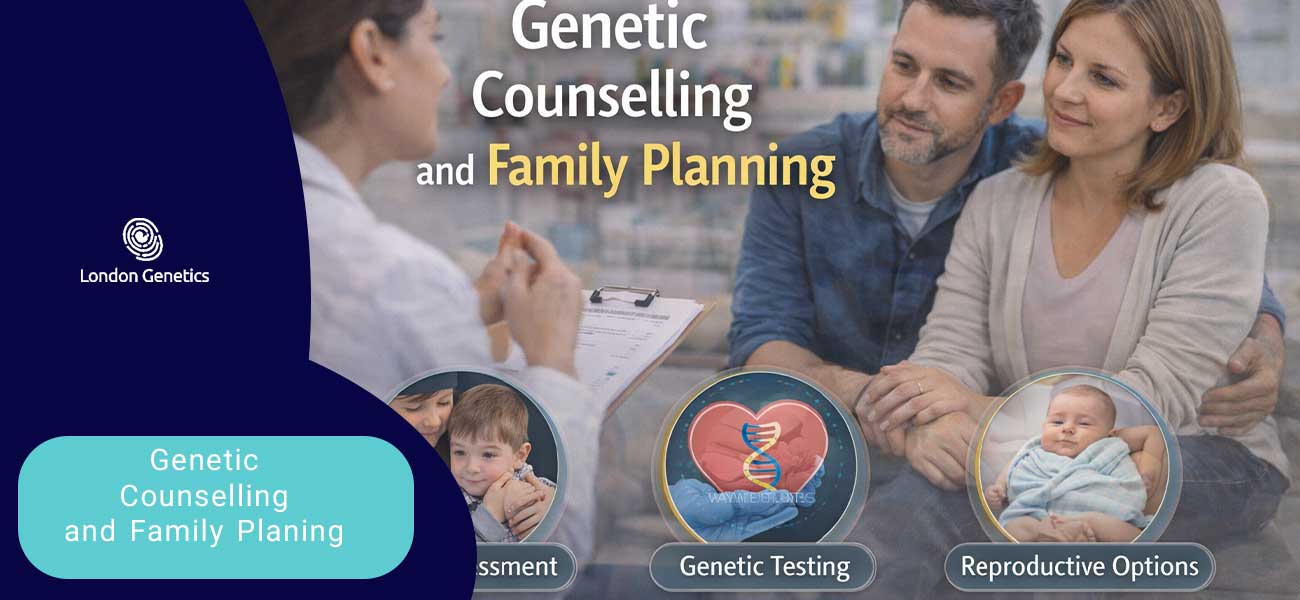
Genetic Counselling and Family Planning
Due to the inherited nature of Fragile X Syndrome, expert genetic counselling is an essential component of the diagnostic and management process. When an individual is diagnosed, it does not just affect them; it has profound implications for their entire family structure.
Identifying Carriers within the Family
Genetic counsellors play a vital role in constructing a detailed family pedigree to identify other potential carriers of the FMR1 mutation. Because the premutation can expand to a full mutation across generations, especially when passed through the maternal line, it is crucial to test extended family members. Identifying these individuals allows them to make informed decisions about their own health and future planning.
Assessing Risk in Future Pregnancies
For couples who are known carriers of the FMR1 premutation or full mutation, genetic counselling provides a clear understanding of the risks involved in having children.
-
Risk Calculation: A counsellor will explain the specific probability of passing on the mutated gene, considering whether the mother or father carries the mutation.
-
Prenatal Testing: Couples can explore options for prenatal diagnosis, such as chorionic villus sampling (CVS) or amniocentesis, to determine if a fetus has the Fragile X Syndrome mutation.
-
Reproductive Options: Counsellors can discuss alternative reproductive options, such as pre-implantation genetic testing (PGT) alongside IVF, to ensure a child is born without the condition.
Managing Fragile X: Treatment and Support
While there is no cure for Fragile X Syndrome, early and consistent intervention
can significantly improve quality of life and help individuals reach their full potential.
A multidisciplinary approach ensures that therapy addresses all aspects of development and daily functioning.
Effective management often involves a team of specialists:
- Speech and Language Therapy: Addresses communication delays, improves conversational skills, and manages repetitive speech patterns.
- Occupational Therapy: Enhances fine motor skills, manages sensory processing difficulties, and supports daily living activities.
- Behavioural and Educational Support: Helps manage anxiety, hyperactivity, and autism spectrum behaviours. Specialised educational plans (IEPs) provide tailored learning support.
Improving Quality of Life:
– With appropriate therapies and supportive environments, many individuals lead fulfilling, active lives.
– Medical management under specialist supervision may address specific symptoms like ADHD or anxiety.
– Multidisciplinary care empowers families to optimise outcomes and achieve long-term developmental goals.
Your Next Step:
Consult with our specialists in Fragile X management to develop a personalised plan
that integrates therapy, educational support, and medical care,
ensuring your loved one receives comprehensive support.