Introduction
Melanoma is one of the most serious forms of skin cancer, arising from pigment-producing cells called melanocytes. While most cases occur sporadically due to environmental factors such as ultraviolet (UV) exposure, a significant proportion can be influenced by inherited genetic mutations. Understanding these hereditary risks is crucial for early detection and effective prevention.
Genetic testing for melanoma is a specialised type of cancer genetic testing, designed to identify individuals who carry mutations in key genes such as CDKN2A and BAP1. Unlike diagnostic procedures that detect existing cancer, this form of testing evaluates predisposition, enabling personalised screening programmes and proactive risk-reduction strategies. By integrating genetic knowledge into clinical care, at-risk individuals can benefit from timely surveillance, protective measures, and informed decision-making.
What Is Melanoma?
Melanoma is a type of skin cancer that develops from melanocytes, the cells responsible for producing melanin, the pigment that gives skin its colour. Although melanoma is less common than other forms of skin cancer, it is significantly more aggressive and more likely to spread to other parts of the body if not detected early.
Melanoma often appears as a new or changing mole and can develop anywhere on the skin, including areas not regularly exposed to the sun. In some individuals, particularly those with a strong family history, genetic factors play an important role, which is why genetic testing for melanoma may be recommended to assess inherited risk.
Why Is Melanoma Considered a Serious Form of Skin Cancer?
Melanoma is considered the most serious form of skin cancer because of its high potential to metastasise, meaning it can spread rapidly to lymph nodes and vital organs such as the lungs, liver, and brain. Once melanoma has spread beyond the skin, treatment becomes more complex and survival rates decrease significantly.
Early-stage melanoma is often highly treatable, making early detection crucial. For individuals with inherited susceptibility, genetic testing for melanoma can help identify those at increased risk, allowing for closer skin surveillance, earlier diagnosis, and preventive strategies aimed at reducing disease progression.
Is Melanoma Hereditary?
Melanoma can be sporadic or hereditary. While most cases are due to environmental factors such as UV exposure and aging, a smaller proportion result from inherited genetic mutations.
Understanding hereditary risk is crucial for genetic testing and tailored screening programmes.
- Sporadic: Occurs with no significant family history, mostly linked to sun exposure and lifestyle
- Hereditary: Tends to occur at a younger age, affect multiple family members, or present as multiple primary melanomas in one person
Hereditary melanoma is often linked to mutations in genes like CDKN2A and BAP1, which affect cell-cycle regulation and tumour suppression.
- First-degree relatives with melanoma increase individual risk
- Multiple affected family members or early-onset melanoma are strong indicators of hereditary risk
- Family history may also include related cancers, such as pancreatic cancer or uveal melanoma
Assessing family history helps determine whether genetic testing for melanoma is appropriate.
- Melanoma diagnosed before age 40–50
- Multiple melanomas in the same individual
- Affects two or more close relatives
- Associated with other specific cancers in the family
Referral for genetic counselling and testing can clarify inherited risk, guide management, and inform screening for relatives.
Understanding both sporadic and hereditary melanoma is key.
Identifying genetic predisposition allows for early intervention, personalized screening, and improved outcomes for individuals and families.
What Is Genetic Testing for Melanoma?
Genetic testing for melanoma is a medical assessment that analyses an individual’s DNA to identify inherited genetic mutations that increase the risk of developing melanoma. Unlike standard diagnostic procedures that detect existing cancer, genetic testing focuses on evaluating predisposition, allowing for early intervention and tailored monitoring strategies.
Definition of Genetic Testing
Genetic testing involves examining specific genes known to influence melanoma risk, such as CDKN2A and BAP1. The results can provide valuable information about whether an individual carries mutations that may predispose them to melanoma or other associated cancers. This knowledge can guide healthcare professionals in recommending personalised screening programmes and preventive measures.
Difference Between Diagnostic and Predictive Genetic Tests
It is important to distinguish genetic testing for melanoma from standard diagnostic tests:
-
Diagnostic tests confirm the presence of cancer, typically using tissue samples from a biopsy.
-
Predictive (or hereditary) genetic tests assess whether an individual carries mutations that increase their risk of developing melanoma in the future, even before any signs of cancer appear.
By identifying genetic risk factors early, predictive testing allows individuals and clinicians to implement preventive strategies, such as more frequent skin examinations, sun protection, and lifestyle modifications.
How Genetic Testing Differs from a Skin Biopsy
A skin biopsy involves removing a suspicious mole or lesion to determine if cancer cells are present. In contrast, genetic testing for melanoma examines the individual’s DNA from a blood or saliva sample and does not detect current cancer. Instead, it provides insight into inherited susceptibility, helping at-risk individuals take proactive steps to prevent or detect melanoma at an earlier, more treatable stage.
Genes Associated with Melanoma
Certain inherited genetic mutations, particularly in CDKN2A and BAP1, can significantly increase the risk of developing melanoma.
Understanding these genes is essential for genetic testing, early surveillance, and prevention strategies for at-risk individuals.
Mutations impair its function, leading to a higher risk of melanoma, often at a younger age, and can result in multiple primary melanomas.
These mutations are also linked to pancreatic cancer, highlighting the importance of genetic testing for broader cancer surveillance.
Other related malignancies include mesothelioma, renal cell carcinoma, and rare tumours of liver or other organs.
Genetic testing for BAP1 mutations allows targeted monitoring and preventive care for patients and at-risk family members.
It enables early intervention, tailored screening programs, and informs family members about inherited risk and preventive measures.
Genetic testing for melanoma-associated genes is crucial. Recognizing inherited mutations enhances early detection, preventive strategies, and overall management of melanoma risk.
Who Should Consider Genetic Testing for Melanoma?
Not everyone needs genetic testing for melanoma, but it can be particularly useful for individuals who may carry inherited risk factors. Genetic testing for melanoma helps identify those at higher risk, allowing for earlier monitoring and preventive strategies.
Individuals with Multiple Melanomas
People who have developed more than one primary melanoma are at increased risk of carrying inherited genetic mutations. Genetic testing can provide valuable information to guide their ongoing surveillance and help inform family members about potential risks.
Early-Onset Melanoma
Melanoma diagnosed at a younger age, typically before 40–50 years, may suggest a hereditary component. Individuals with early-onset melanoma are often recommended to undergo genetic testing for melanoma to determine if mutations such as CDKN2A or BAP1 are present.
Strong Family History
A significant family history of melanoma or related cancers (such as pancreatic or uveal melanoma) increases the likelihood of an inherited mutation. Genetic testing can clarify which family members are at risk and inform strategies for early detection.
Melanoma Plus Other Associated Cancers
Individuals who have melanoma alongside other cancers linked to hereditary mutations—for example, pancreatic cancer with a CDKN2A mutation or uveal melanoma with a BAP1 mutation—may benefit from genetic testing. Detecting a mutation can guide personalised surveillance plans and preventive care.

How Is Genetic Testing for Melanoma Performed?
Genetic testing for melanoma is a straightforward process that typically involves collecting a sample of the patient’s DNA, which can be obtained from blood or saliva. Both methods provide reliable material for analysis, although blood samples are more commonly used in clinical settings.
Blood vs Saliva Samples
-
Blood samples are collected via a simple venous puncture and provide a high-quality source of DNA for testing.
-
Saliva samples are less invasive and can be collected at home using specialised kits, making them a convenient option for some patients.
The choice of sample depends on patient preference and the testing laboratory’s protocols, but both methods are effective for detecting hereditary mutations linked to melanoma.
Testing Process and Turnaround Time
Once the sample is collected, DNA is extracted and analysed for mutations in genes known to influence melanoma risk, such as CDKN2A and BAP1. The testing process typically takes a few weeks, depending on the laboratory and the complexity of the analysis. Results are then reviewed by a qualified healthcare professional or genetic counsellor.
Importance of Genetic Counselling
Before and after genetic testing, genetic counselling is essential. A genetic counsellor helps the patient understand:
-
The purpose and limitations of the test
-
Possible outcomes, including positive, negative, or variants of uncertain significance (VUS)
-
Implications for personal health and family members
-
Recommended preventive measures and screening protocols
Genetic counselling ensures that patients receive accurate information and emotional support, enabling informed decisions about their health. Through genetic testing for melanoma, at-risk individuals can take proactive steps towards early detection and prevention.
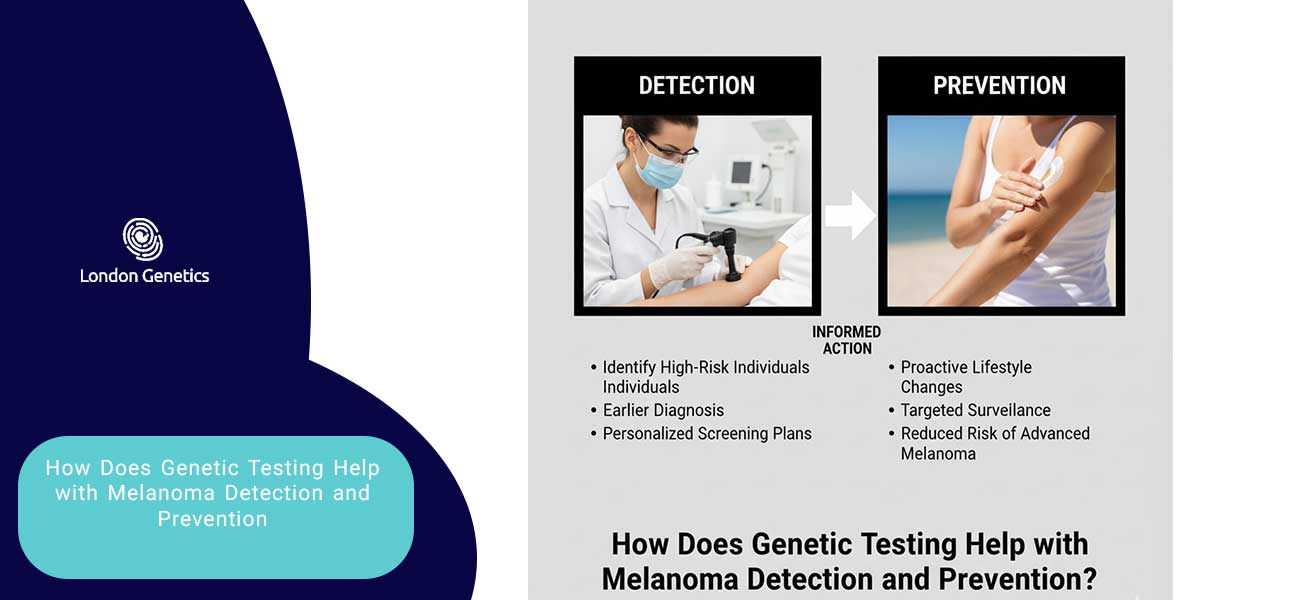
How Does Genetic Testing Help with Melanoma Detection and Prevention?
Genetic testing for melanoma plays a crucial role in identifying individuals at increased risk, allowing for early detection and preventive measures that can significantly improve outcomes.
Risk Stratification
By analysing inherited genetic mutations, such as CDKN2A and BAP1, healthcare professionals can categorise individuals into different risk levels. This process, known as risk stratification, helps determine who requires more frequent skin checks, specialised imaging, or additional monitoring for associated cancers.
Personalised Screening Plans
Once an individual’s genetic risk is established, a personalised screening plan can be developed. This may include:
-
More frequent dermatological examinations
-
Regular dermoscopy of moles
-
Monitoring for uveal melanoma or other associated malignancies in high-risk individuals
Personalised plans ensure that resources are focused on those who are most likely to benefit from early detection.
Early Detection Benefits
Early detection is key to successful treatment of melanoma. Detecting the cancer at an early stage, before it spreads, dramatically increases survival rates. Genetic testing for melanoma allows at-risk individuals to be monitored closely, enabling timely intervention if suspicious lesions are identified.
Preventive Strategies
In addition to enhanced screening, genetic testing supports preventive strategies for those at elevated risk, including:
-
Strict sun protection and avoidance of UV exposure
-
Education on recognising the ABCDE signs of melanoma
-
Lifestyle modifications to reduce additional risk factors
By combining genetic information with proactive prevention, individuals can reduce their likelihood of developing melanoma and improve long-term health outcomes.
Understanding Genetic Test Results for Melanoma
Interpreting genetic test results is essential for guiding clinical decisions and preventive strategies.
Results typically fall into three categories: positive, negative, or variant of uncertain significance (VUS), each with distinct implications for patient care.
It does not mean the individual currently has melanoma, but emphasizes enhanced monitoring, personalised screening, and preventive measures.
Family members may also be advised to undergo genetic counselling and testing to assess inherited risk.
However, it does not eliminate melanoma risk entirely, as sporadic cases from environmental factors like UV exposure can still occur.
Routine skin checks and general sun safety practices remain important for all individuals.
Genetic counsellors monitor emerging research and may recommend periodic reassessment, alongside standard surveillance and preventive strategies.
This ensures informed decision-making regarding screening, early detection, and risk reduction.
Understanding genetic test results is key to effective melanoma risk management.
Clear interpretation allows patients and clinicians to implement tailored surveillance, early detection, and preventive strategies, maximising the benefits of genetic testing.
Limitations of Genetic Testing for Melanoma
While genetic testing for melanoma can provide valuable insights into inherited risk, it is important to understand its limitations. No test can predict every case of melanoma, and results must be interpreted within the context of family history, lifestyle, and environmental factors.
Not All Melanomas Are Genetic
The majority of melanomas are sporadic, arising from environmental influences such as ultraviolet (UV) exposure, rather than inherited mutations. A negative genetic test does not guarantee immunity from melanoma, and standard preventive measures, including regular skin checks and sun protection, remain essential.
Psychological and Ethical Considerations
Receiving results from genetic testing can be emotionally challenging. A positive result may cause anxiety or stress, and individuals may need support to cope with the implications for themselves and their family members. Ethical considerations also arise regarding disclosure of genetic risk to relatives and the potential impact on insurance or employment.
False Reassurance Risks
A negative result or a variant of uncertain significance (VUS) may provide a false sense of security. Individuals might mistakenly believe they are not at risk and neglect routine monitoring or sun safety. It is crucial that all patients understand that genetic testing for melanoma complements, but does not replace, standard preventive and screening practices.