Why Genomic Research Is Essential for Personalised Treatment
Genomic research plays a fundamental role in the development of personalised treatment plans by revealing how an individual’s DNA influences their response to medical interventions. Traditional treatment approaches often rely on population averages, assuming that patients with the same diagnosis will respond similarly to a given therapy. However, genomic evidence has demonstrated that this assumption frequently falls short.
The Role of DNA in Treatment Response
Variations within a person’s DNA can significantly affect how drugs are absorbed, metabolised, and utilised by the body. These genetic differences help explain why a treatment may be highly effective for one patient yet ineffective or even harmful for another. Through genomic research, clinicians are able to identify specific genetic variants that influence drug response, dosage requirements, and the likelihood of adverse reactions. This knowledge enables healthcare professionals to tailor treatments with greater precision, improving efficacy while minimising unnecessary side effects.
Identifying Complex and Multifactorial Diseases
Many common and rare conditions do not arise from a single genetic mutation but rather from the interaction of multiple genes alongside environmental and lifestyle factors. Genomic research is essential for disentangling this complexity. By analysing large-scale genomic data, researchers can identify patterns of genetic risk that contribute to multifactorial diseases such as cancer, cardiovascular disorders, and neurodevelopmental conditions. This deeper understanding allows clinicians to move beyond symptom-based management and towards targeted, mechanism-driven treatment strategies that address the underlying biological causes of disease.
Why Genomic Research Is Essential for Personalised Treatment
Genomic research lies at the heart of personalised medicine.
It recognises that each individual has a unique genetic blueprint,
explaining why patients can respond very differently to the same treatment.
- No two individuals share an identical DNA sequence
- Small genetic variations can lead to major treatment differences
- Standardised therapies may overlook individual biological needs
Genomic science moves healthcare beyond one-size-fits-all protocols,
allowing treatments to be adapted to each patient’s unique genetic profile.
An individual’s DNA directly influences how medications are processed
and how the body responds to therapeutic interventions.
- Genetic variants affect drug metabolism speed
- DNA differences influence treatment sensitivity
- Risk of adverse reactions varies between patients
By analysing these variations, clinicians can predict effectiveness,
adjust dosages accurately, and reduce trial-and-error prescribing.
- Many conditions arise from multiple genes, not a single mutation
- Environmental and lifestyle factors interact with genetic risk
- Diseases often involve multiple biological pathways
Genomic research identifies comprehensive risk profiles,
supporting targeted treatment strategies in cancer, metabolic,
and neurodevelopmental disorders.
Genomic research transforms treatment precision.
By uncovering how genes interact with therapies and environmental factors,
personalised medicine delivers more effective, safer, and outcome-driven care
tailored to the biological complexity of each individual.
From Genetic Data to Clinical Decisions
Transforming raw genetic information into meaningful clinical decisions is a core objective of genomic research and a defining step in the creation of personalised treatment plans. This process requires a structured, evidence-based approach that integrates advanced laboratory techniques, bioinformatics analysis, and clinical expertise to ensure that genomic insights are translated into safe and effective patient care.
Collecting Genomic Data
The foundation of personalised treatment planning begins with the careful collection of genomic data. This typically involves advanced genomic testing methods such as whole genome sequencing, whole exome sequencing, or targeted gene panels, depending on the clinical context. High-quality genomic data is essential, as accuracy at this stage directly influences the reliability of downstream analysis. Clinical information, family history, and phenotypic data are often gathered alongside genetic samples to provide a comprehensive framework for interpretation within genomic research.
Variant Interpretation and Prioritisation
Once genomic data has been generated, the next critical step is the interpretation and prioritisation of genetic variants. Thousands of genetic variants may be identified in a single individual, yet only a small proportion are clinically relevant. Through bioinformatics tools, population databases, and functional evidence, clinicians and researchers assess which variants are most likely to contribute to disease or influence treatment response. This systematic prioritisation allows genomic research to focus on variants with clear clinical significance, supporting precise and personalised medical decision-making.
Translating Findings into Treatment Decisions
The final and most impactful stage is the translation of genomic findings into actionable clinical decisions. Clinically significant variants are evaluated in the context of established guidelines, current scientific evidence, and the patient’s individual health profile. These insights may inform treatment selection, dosage adjustments, targeted therapies, or ongoing monitoring strategies. By embedding genomic research into clinical workflows, healthcare professionals can move beyond generic treatment protocols and deliver personalised treatment plans that are tailored to the unique genetic characteristics of each patient.
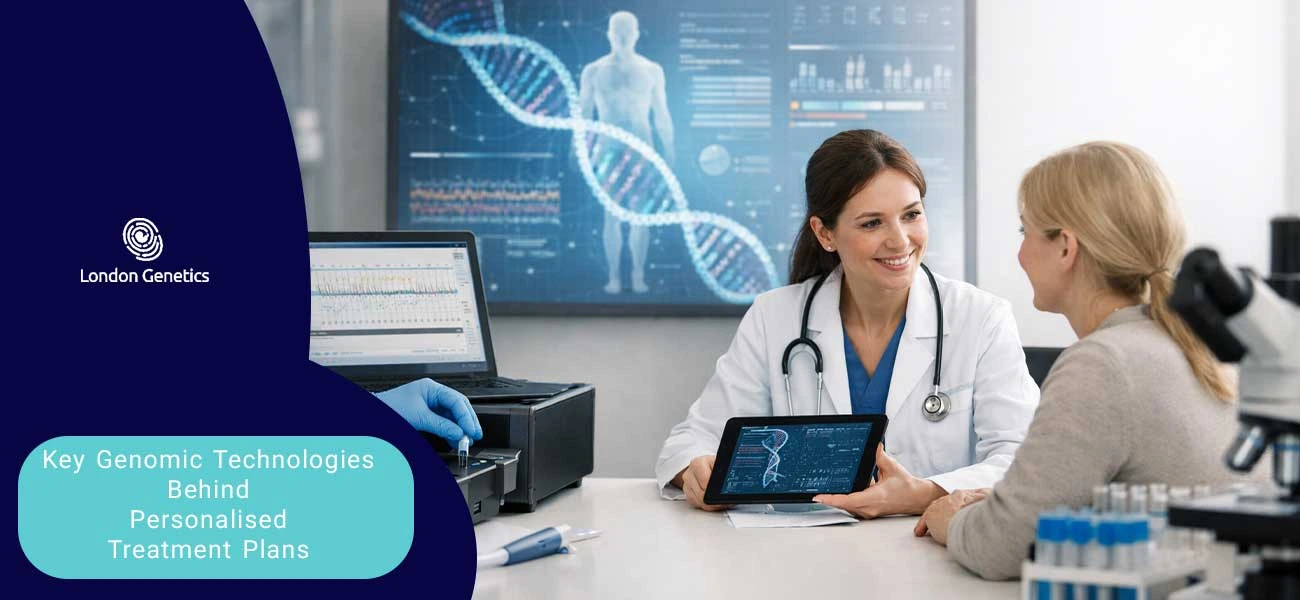
Key Genomic Technologies Behind Personalised Treatment Plans
Personalised treatment plans are underpinned by a range of advanced genomic technologies that allow clinicians and researchers to understand the genetic factors influencing disease and treatment response. Each technology serves a distinct purpose, and when used in combination, they provide a comprehensive framework for delivering precise and individualised care.
Whole Genome and Whole Exome Sequencing
Whole genome sequencing (WGS) and whole exome sequencing (WES) are cornerstone technologies in genomic research. WGS analyses the complete DNA sequence of an individual, capturing both coding and non-coding regions, while WES focuses specifically on protein-coding genes where many disease-causing variants are known to occur. These approaches enable the identification of rare and clinically significant genetic variants, supporting accurate diagnosis and informing personalised treatment strategies, particularly in complex and previously unexplained conditions.
Targeted Gene Panels
Targeted gene panels examine a selected group of genes known to be associated with specific diseases or clinical presentations. This focused approach allows for efficient, cost-effective analysis while maintaining high clinical relevance. Targeted panels are commonly used in areas such as cancer genomics, inherited cardiac conditions, and neurological disorders, where established gene–disease associations guide clinical decision-making. By concentrating on clinically actionable genes, targeted gene panels facilitate timely and informed treatment planning.
Pharmacogenomics
Pharmacogenomics explores how genetic variation influences an individual’s response to medications. Differences in genes involved in drug metabolism, transport, and receptor function can significantly affect treatment efficacy and the risk of adverse reactions. Through pharmacogenomic analysis, clinicians can select the most appropriate medications and adjust dosages based on a patient’s genetic profile, reducing trial-and-error prescribing and enhancing the safety and effectiveness of personalised treatment plans.
Functional Genomics
Functional genomics seeks to understand how genetic variants affect biological processes at the cellular and molecular levels. Rather than identifying variants alone, this approach examines their functional impact on gene expression, protein activity, and regulatory pathways. Functional genomics provides crucial context for variant interpretation, particularly when the clinical significance of a genetic change is uncertain. By clarifying how specific variants contribute to disease mechanisms, functional genomics strengthens the link between genomic findings and meaningful clinical action.
Personalised Treatment Plans in Clinical Practice
Personalised treatment plans are transforming routine clinical care.
By integrating genomic insights into diagnosis, therapy selection, and long-term management,
clinicians can provide more precise, patient-specific interventions.
Genomic profiling of tumours identifies specific mutations driving cancer progression.
Targeted therapies: Drugs designed to act on precise molecular pathways, improving effectiveness and minimising unnecessary toxicity.
Therapies are selected based on tumour biology rather than location alone, enabling patient-specific interventions.
Genomic research identifies specific variants causing rare disorders.
Benefits: Accurate diagnosis, access to targeted treatments, clinical trials, and personalised support plans.
Improves long-term outcomes and quality of life for patients and families.
Genomic insights help distinguish between conditions with similar clinical presentations.
Supports accurate prognoses, informed therapeutic choices, and personalised management strategies for epilepsy, neurodevelopmental disorders, and inherited neurological diseases.
Applying genomic research across medical specialties allows clinicians to create highly personalised treatment plans,
enhancing effectiveness, reducing side effects, and optimising patient outcomes in cancer, rare diseases, and neurological conditions.
Benefits of Personalised Treatment Plans for Patients
Personalised treatment plans offer a wide range of benefits for patients by tailoring medical care to an individual’s unique genetic profile. Unlike conventional approaches, which apply standardised protocols, personalised medicine uses genomic insights to improve outcomes, reduce risks, and enhance overall quality of life.
Enhanced Treatment Effectiveness
By considering a patient’s specific genetic variants, personalised treatment plans enable clinicians to select therapies that are most likely to be effective. This precision reduces the likelihood of ineffective treatments and accelerates the patient’s journey towards recovery. In conditions such as cancer or rare genetic disorders, targeting therapy based on genomic information can significantly increase the chances of a successful outcome.
Reduced Side Effects
Understanding how an individual’s DNA affects drug metabolism and response allows clinicians to avoid treatments that may cause harmful side effects. Personalised treatment plans minimise unnecessary risks by selecting medications and dosages that align with the patient’s genetic makeup. This approach not only improves safety but also enhances patient comfort and adherence to treatment.
Faster and More Accurate Diagnosis
Genomic analysis can identify the underlying genetic causes of complex or rare conditions that might otherwise remain undiagnosed for years. Early and precise diagnosis ensures that the patient receives the most appropriate treatment without delay, preventing complications and optimising the effectiveness of interventions.
Improved Quality of Life
Ultimately, personalised treatment plans aim to improve patients’ day-to-day wellbeing. By combining effective therapy, reduced side effects, and timely diagnosis, patients experience better health outcomes and greater confidence in their care. Personalised medicine empowers patients, providing them with treatments designed specifically for their unique biological needs.

Ethical Considerations in Genomic-Based Treatment Planning
The integration of genomic data into personalised treatment plans brings profound clinical benefits, but it also raises important ethical considerations. Protecting patients’ rights, maintaining trust, and ensuring responsible use of genetic information are essential components of ethical genomic practice.
Protecting Genetic Privacy
Genetic data is inherently sensitive, containing information not only about the individual but also about their family members. Safeguarding this information is critical to prevent misuse, discrimination, or unintended disclosure. Clinicians and researchers adhere to strict data security protocols, anonymisation techniques, and secure storage practices to ensure that patients’ genetic information remains confidential.
Informed Consent
Obtaining informed consent is a cornerstone of ethical genomic medicine. Patients must fully understand the nature, purpose, and potential implications of genomic testing, including how their data will be used, stored, and shared. Transparent communication empowers patients to make decisions that align with their personal values and ensures that they are active participants in their own healthcare.
Responsible Use of Genomic Information
Genomic findings must be applied responsibly within clinical and research contexts. This includes using genetic information solely to guide appropriate treatment, avoiding any form of discrimination based on genetic traits, and ensuring that interpretations are grounded in robust scientific evidence. Ethical practice also involves ongoing education for healthcare professionals, enabling them to navigate complex genomic information with integrity and care.
Conclusion – The Power of Genomic Research in Personalised Medicine
Genomic research has revolutionised personalised medicine.
By uncovering unique genetic factors that influence disease and treatment response, clinicians can design therapies tailored to the individual,
rather than relying on a one-size-fits-all approach.
The benefits are clear: more effective treatments, fewer side effects, faster and more accurate diagnoses,
and an overall improved quality of life for patients.
From Insight to Action:
– Genomic profiling reveals the specific genetic factors that affect disease progression and treatment response.
– Personalised treatment plans ensure therapies are chosen based on an individual’s unique genetic makeup.
– Applying genomic insights reduces trial-and-error prescribing and improves clinical outcomes.
Why Genomic Knowledge Matters:
Understanding your genetic blueprint empowers both clinicians and patients.
It allows healthcare teams to make evidence-based decisions while enabling patients to take an active role in their care journey.
Personalised approaches improve effectiveness, safety, and long-term wellbeing.
Our Commitment:
Our expert team combines cutting-edge genomic research with practical clinical application.
We translate complex genetic insights into actionable treatment strategies, ensuring patients benefit from the latest innovations in personalised medicine.
Your Next Step:
Discover how personalised treatment plans can optimise your care or that of your patients.
Engage with our team to explore comprehensive genomic programmes and tailored treatment strategies.