When we are prescribed a new treatment, we often focus on the hope of recovery. However, for many patients in the UK, that hope is quickly overshadowed by the onset of medication side effects. Whether it is a persistent headache, unexpected fatigue, or more severe complications, these reactions can significantly diminish our quality of life and even lead to the discontinuation of essential treatments.
In this comprehensive guide, we explore the science behind adverse drug reactions and, more importantly, how modern genomic science—led by specialists like Dr Ehsan Karimiani—is helping patients in London and beyond move towards a future of safer, side-effect-free medicine.
Understanding Medication Side Effects: More Than Just ‘Unwanted Reactions’
In clinical terms, a side effect (often referred to as an Adverse Drug Reaction or ADR) is any unintended and usually harmful response to a medicinal product. While some people use the terms “side effect” and “allergy” interchangeably, they are biologically distinct.
The Spectrum of Reactions
Medication side effects are not a singular phenomenon; they exist on a broad spectrum. Understanding where your reaction falls is the first step in managing your long-term health:
-
Predictable Reactions: These are often related to the primary action of the drug. For instance, a medication designed to lower blood pressure might cause lightheadedness if the pressure drops slightly too far.
-
Idiosyncratic Reactions: These are the most frustrating for both patients and doctors. They are unpredictable, often severe, and occur in only a small percentage of the population. Science now tells us that these are almost always linked to an individual’s unique genetic makeup.
-
Allergic Reactions: These involve the immune system. If your body views a drug as a foreign invader, it triggers an immune response, leading to hives, swelling, or in extreme cases, anaphylaxis.
The Burden on the Healthcare System
In the UK, medication side effects are more than just a personal nuisance; they are a public health challenge. Statistics suggest that a significant percentage of hospital admissions in London are due to preventable ADRs. When a patient suffers a side effect, it often leads to a “prescribing cascade”—where a second drug is prescribed just to treat the side effects of the first.
By shifting the focus from reacting to symptoms to understanding the underlying Medication Compatibility, we can break this cycle. As Dr Ehsan Karimiani often emphasises in his clinical practice, the goal is not just to treat the disease, but to treat the specific person who has the disease.
Why Do Side Effects Occur?
If these enzymes are working too slowly, the drug builds up to toxic levels, causing the very side effects patients dread. This is where the field of Pharmacogenomics becomes essential, as it allows us to map these enzymatic pathways before a patient ever takes their first dose.

The Science of Susceptibility: Why Do Some Patients Suffer More Than Others?
It is a common scenario in clinical practice: two patients of the same age, gender, and weight are prescribed the same dose of a medication for the same condition. One patient recovers swiftly with no issues, while the other experiences debilitating medication side effects. For decades, this was chalked up to “bad luck”, but modern genetics has revealed a far more precise explanation.
The Myth of the ‘Average’ Patient
Historically, drug dosages were determined using clinical trials on a specific group of people to find an “average” effective dose. However, as Dr Ehsan Karimiani highlights to his patients in London, there is no such thing as an average patient. Our internal biochemistry is as unique as our fingerprints.
Genetic Variation and Drug Response
The primary reason for this variation lies in our DNA. Small variations in our genes can change the shape or quantity of the proteins and enzymes that handle drugs in our system. These variations generally categorise patients into four distinct metabolic groups:
-
Ultra-rapid Metabolisers: Your body breaks down the medication so quickly that it never reaches a level where it can actually work. You might feel like the medicine is “useless”.
-
Normal (Extensive) Metabolisers: You process the drug at the expected rate, usually experiencing the intended benefits with manageable side effects.
-
Intermediate Metabolisers: Your processing speed is slightly reduced, which can sometimes lead to a buildup of the drug over time.
-
Poor Metabolisers: Your body struggles to clear the drug. Even a “standard” dose stays in your bloodstream for too long, reaching toxic levels and causing severe medication side effects.
The Danger of the ‘One-Size-Fits-All’ Approach
When a doctor prescribes a standard dose to a “Poor Metaboliser”, they are inadvertently put at risk. This mismatch between a person’s genetic capacity and the amount of drug they are taking is a leading cause of hospitalisation.
To prevent these risks, we must move away from trial-and-error prescribing. This is why Personalized Drug Dosing Based on Genetics is becoming the gold standard in modern healthcare, ensuring that the dose you receive is precisely calibrated to your body’s metabolic speed.
Common vs. Serious Adverse Drug Reactions: When Should You Be Concerned?
Navigating medication side effects can be a daunting experience. While some reactions are merely a temporary nuisance, others require immediate clinical intervention. Under the expert guidance of Dr Ehsan Karimiani, we categorise these reactions to help you distinguish between mild physiological adjustments and serious Adverse Drug Reactions (ADRs).
- Minor Digestive Issues: Mild nausea or a change in bowel habits often occurs as the body adjusts to a new compound.
- Temporary Fatigue: Feeling slightly drowsy or lethargic, particularly with medications like antihistamines or certain beta-blockers.
- Dry Mouth or Headaches: These are frequently reported but usually subside once the drug reaches a steady state in your system.
While frustrating, these often do not require the cessation of life-saving treatment, but should still be monitored.
Certain medication side effects serve as red flags for underlying genetic incompatibility:
- Severe Skin Rashes: Conditions like Stevens-Johnson Syndrome (SJS) are rare but life-threatening and often linked to specific genetic markers.
- Organ Toxicity: Unexplained jaundice (yellowing of eyes/skin) or severe palpitations can indicate liver or heart distress.
- Cognitive Changes: Sudden confusion, hallucinations, or severe mood shifts, especially with psychiatric medications.
If you experience these, seek medical advice immediately as they indicate a serious mismatch in drug metabolism.
- Identifying Risks Early: Rather than waiting for a serious ADR to occur, we use DNA data to predict your reaction.
- Strategic Switching: If a high risk is identified, Dr Karimiani can recommend safer alternatives before the first dose.
- Peace of Mind: London Genetics provides the clarity needed to proceed with your treatment plan confidently.
Knowing your genetic status transforms Medication Side Effects from a gamble into a manageable risk.
Prevention is always better than cure.
Don’t wait for a serious reaction to occur. By utilising Medication Compatibility Testing, you can distinguish between expected adjustments and dangerous complications, ensuring your healthcare journey is both safe and effective.
The Genetic Link: How Your DNA Influences Drug Metabolism
To understand why medication side effects occur, we must look at the “chemical processing plant” of the human body: the liver. Most medications are not active the moment you swallow them; they require specific enzymes to either activate them or break them down into harmless waste products. This process is known as drug metabolism.
The Role of Cytochrome P450 Enzymes
The most critical players in this process are a family of enzymes called Cytochrome P450 (CYP450). Your DNA provides the blueprint for how these enzymes are constructed. If there is a slight variation in your genetic code, the “instruction manual” for these enzymes changes, leading to several possible outcomes:
-
Enzyme Deficiency: If your genetic profile indicates you are a “poor metaboliser”, you lack the functional enzymes to clear the drug. The medication stays in your system, accumulating to toxic levels.
-
Enzyme Overactivity: Conversely, if your enzymes are hyperactive, they may convert a “pro-drug” into its active form too quickly, causing a sudden and dangerous spike in medication levels.
Why Standard Testing Isn’t Always Enough
Traditional blood tests often look at how your liver is functioning currently, but they cannot predict how your liver will react to a specific new chemical. This is a crucial distinction. A person can have perfectly healthy liver function but still suffer life-threatening medication side effects because they lack the specific genetic “key” to unlock a particular drug.
The Power of Precision Medicine
By identifying these genetic markers, Dr Ehsan Karimiani can predict your body’s reaction before the prescription is even written. This is not just about avoiding a headache or a rash; it is about preventing internal toxicity that can lead to long-term organ damage.
Understanding the Genomics of Drug Metabolism is the only way to move beyond the dangerous trial-and-error method and ensure that every treatment plan is grounded in biological certainty.

Pharmacogenomics in London: A Proactive Approach to Patient Safety
London has long been a global epicentre for medical innovation, and the field of personalised medicine is no exception. However, with the rise of direct-to-consumer genetic kits, it is vital to distinguish between raw data and clinical expertise. Addressing medication side effects requires more than just a lab result; it requires a specialist who can translate complex genomic data into a safer prescribing plan.
Leading the Way in Clinical Genetics
Under the clinical leadership of Dr Ehsan Karimiani, our practice in London is dedicated to moving healthcare from a reactive model to a proactive one. Traditionally, a patient would wait for a side effect to occur before the doctor adjusted the dose. Today, we utilise advanced genomic screening to identify those risks upfront.
Why Specialist Interpretation Matters
A genetic report might show a variation in the CYP2D6 gene, but what does that mean for your specific heart medication or antidepressant? This is where the expertise of a Clinical Geneticist becomes invaluable.
-
Clinical Correlation: We don’t just look at one gene; we look at how your entire genetic profile interacts with your current medical history.
-
Tailored Guidance: Dr Karimiani provides clear, actionable advice that your GP or Consultant can use to immediately optimise your treatment.
-
London’s Elite Infrastructure: By choosing a specialist in London, patients benefit from world-class laboratory standards and the latest research in emerging genomic trends.
A Sanctuary for Patient Safety
For many patients who have spent years cycling through different medications—only to be met with debilitating medication side effects—our clinic offers a turning point. We provide a sanctuary where science replaces guesswork.
By embracing the innovations of Pharmacogenomics in London, you are not just getting a test; you are gaining a comprehensive safety net for your future health.
Preventing Side Effects in Mental Health: The Role of Psychiatric Pharmacogenetics
For many, the journey to mental wellbeing is hindered by the distressing onset of medication side effects. By integrating Psychiatric Pharmacogenetics, we remove the guesswork from mental health treatment. Under the expert clinical guidance of Dr Ehsan Karimiani, we utilise genomic data to ensure your path to recovery is not compromised by adverse reactions.
By choosing a genomic-driven approach to mental health, you are protecting your brain and body from unnecessary harm. The combination of specialist expertise in London and advanced medication compatibility testing ensures that your mental health journey is supported by the highest clinical safety standards.
Protecting Heart Health: Avoiding Adverse Reactions in Cardiovascular Treatments
When it comes to cardiovascular health, the precision of your medication can be the difference between recovery and a medical emergency. Many heart medications have a “narrow therapeutic index,” meaning the gap between an effective dose and a dangerous one is very small. This makes understanding medication side effects in cardiology a top priority for patients in London.
The Danger of Blood Thinners and Statins
For patients prescribed anticoagulants (like Warfarin or Clopidogrel) or statins for cholesterol, genetic variations play a decisive role in safety:
Anticoagulants: If your body processes these too slowly, you risk internal bleeding. If too quickly, the drug may fail to prevent a stroke or heart attack.
Statins: Some patients carry a genetic variant that makes them highly susceptible to severe muscle pain and weakness (myopathy) as a side effect of statins.
Why a ‘Standard Dose’ is Risky in Cardiology
In traditional cardiology, a patient might be monitored for weeks to see if their blood is clotting correctly—a period known as “stabilisation.” During this time, the risk of medication side effects is at its peak. Dr Ehsan Karimiani advocates for testing before this period begins, using genomic data to pinpoint the exact dose required from day one.
Enhancing Heart Safety in London
By identifying your genetic response to heart medications, we can:
Prevent Haemorrhage: Avoid over-sedation of the blood.
Ensure Efficacy: Confirm that your body can actually activate the drug to protect your heart.
Eliminate Muscle Pain: Switch to an alternative if you are genetically predisposed to statin-related side effects.
Ensuring your heart treatment is safe starts with Cardiovascular Drug Response Testing. By aligning your prescription with your DNA, we eliminate the dangerous guesswork often associated with heart health.
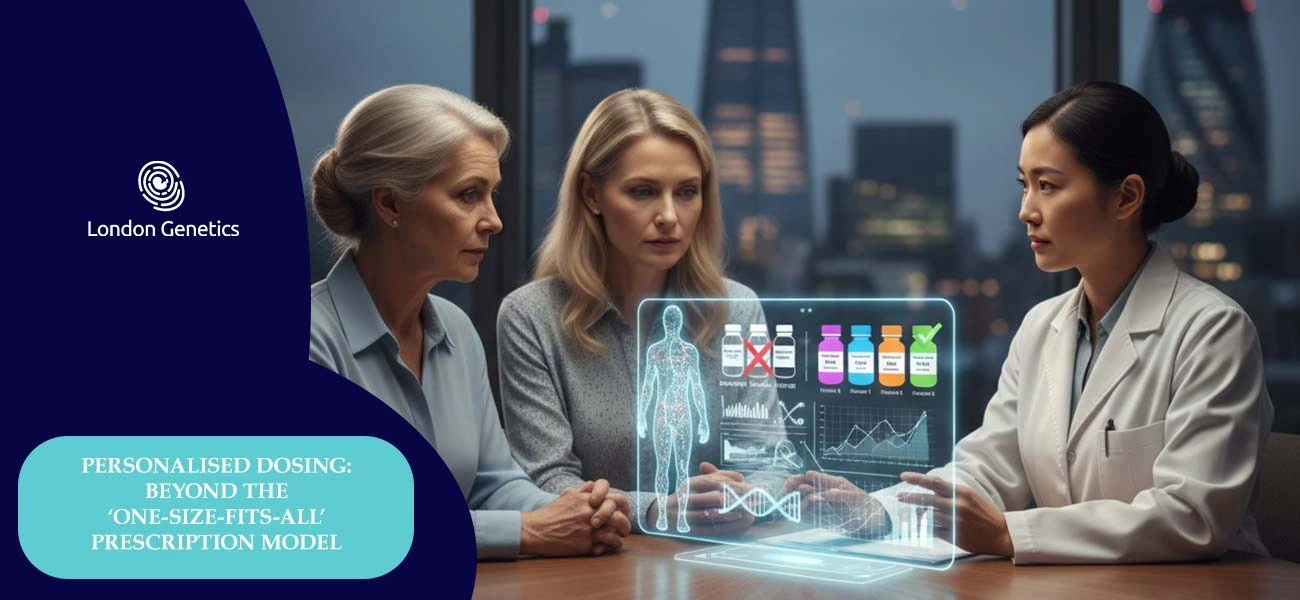
Personalised Dosing: Beyond the ‘One-Size-Fits-All’ Prescription Model
For decades, the medical community relied on a “standard dose” for adults, often based on average body weight or age. However, we now know that two people can be identical in every physical aspect yet require vastly different amounts of the same medication. This is the core of Personalised Dosing, a field where Dr Ehsan Karimiani is helping patients avoid unnecessary medication side effects by finding their “biological sweet spot.”
The Linear vs. Genomic Dosing Model
In a traditional model, if a medication doesn’t work or causes side effects, the dose is simply lowered or raised by increments. This trial-and-error approach is not only slow but can be dangerous.
-
The Linear Model: Assumes everyone processes the drug at a predictable, average rate.
-
The Genomic Model: Recognises that your “internal speed” for breaking down chemicals is fixed by your DNA.
Preventing the “Prescribing Cascade”
One of the most significant risks of incorrect dosing is the “prescribing cascade.” This happens when a patient is given a standard dose that is too high for their metabolism, leading to medication side effects. Instead of lowering the dose, another doctor might prescribe a second medication to treat those side effects, leading to a spiral of polypharmacy and increased health risks.
Accuracy Through DNA
By using pharmacogenomic data, we can calculate a dose that is safe for your specific liver enzyme activity. This is particularly vital for:
-
Paediatrics: Ensuring children receive doses that are safe for their developing systems.
-
Elderly Patients: Who may have reduced kidney or liver function combined with genetic sensitivities.
-
Chronic Conditions: Where long-term medication use makes even small dosing errors cumulative and toxic.
Achieving this level of precision is the primary goal of Personalised Drug Dosing Based on Genetics. It ensures that your treatment is powerful enough to heal, but precise enough to stay within the safe limits of your unique biology.
The Future of Prescribing: What to Expect from Your Consultation with Dr Ehsan Karimiani
Taking the first step towards personalised medicine can feel like entering a new era of healthcare. At our London-based practice, we ensure that this transition is seamless, professional, and deeply informative. A consultation regarding medication side effects with Dr Ehsan Karimiani is not merely an appointment; it is a comprehensive genomic audit of your health safety.
A Personalised Clinical Journey
When you book a session to address your concerns about drug safety and compatibility, you are embarking on a structured three-step process designed to eliminate guesswork:
-
Comprehensive Clinical Review: Dr Karimiani begins by reviewing your medical history, current prescriptions, and any past experiences with medication side effects. This clinical context is essential to interpret your genetic data accurately.
-
Advanced Genomic Sampling: Unlike invasive procedures, the pharmacogenomic test usually requires a simple, non-invasive cheek swab. This sample is then analysed in a state-of-the-art laboratory to map your specific drug-metabolising enzymes.
-
Expert Interpretation & Action Plan: Once the results are ready, Dr Karimiani provides a detailed consultation. You won’t just receive a list of genes; you will receive a “Prescribing Roadmap” that outlines exactly which medications are safe, which should be avoided, and what the optimal dosages are for your body.
Bridging the Gap Between Science and Care
One of the unique advantages of consulting with a specialist like Dr Ehsan Karimiani is his ability to bridge the gap between complex laboratory data and your everyday health. He provides you with a report that you can share with your GP or other consultants in London, ensuring that your entire medical team is aligned with your genetic requirements.
Why Wait for a Reaction?
The “Future of Prescribing” is proactive. Instead of waiting for a medication to cause harm, we use science to ensure it works as intended from the very first dose. This approach provides immense peace of mind, especially for patients managing chronic conditions or mental health challenges.
If you are ready to take control of your treatment journey and put an end to the fear of unpredictable reactions, the first step is a professional evaluation. You can Consult with Dr Ehsan Karimiani today to begin your journey toward safer, more effective medicine.
Expert Pharmacogenomics: A Personalised Approach by Dr Ehsan Karimiani
To effectively prevent medication side effects, clinical data must be paired with expert interpretation. At London Genetics, we provide more than just raw DNA results; we offer a clinical safety roadmap. By combining advanced genomic technology with Dr Ehsan Ghayoor Karimiani’s world-class expertise, we ensure that your personalised medicine in London journey is both scientifically rigorous and focused on your long-term safety.
The Clinical Pathway to Preventing Side Effects:
– Initial Consultation: A comprehensive review of your medical history and current prescriptions, utilising Pharmacogenomics insights to identify potential risks of toxicity.
– Tailored Genomic Testing: Using non-invasive tools to map your CYP450 enzymes and other vital genetic markers to optimise your specific medication regime.
– Strategic Interpretation: Dr Karimiani personally translates complex drug-metabolising data into an actionable strategy designed to eliminate medication side effects.
– Holistic Support: Navigating complex treatments in psychiatry, cardiology, or oncology with expert guidance and evidence-based certainty.
Optimising Your Health Outcomes:
Choosing personalised medicine in London through London Genetics means accessing a seamless transition from cutting-edge research to bedside clinical care. Our patient-centred approach ensures that your genetic findings are managed with the highest degree of medical accuracy and strict confidentiality, adhering to the most rigorous British healthcare standards.
The Next Step Toward Safer Treatment:
Knowledge is the foundation of a successful recovery. Whether you are starting a new medication or seeking answers for chronic medication side effects, taking a proactive approach will provide the clarity and safety you deserve. Book a consultation today to start your journey with biological certainty.