What Is Oncogenetics and Why Does It Matter?
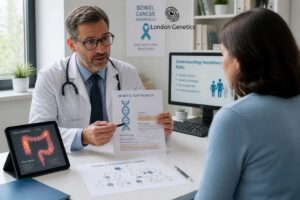
Oncogenetics sits at the intersection of two critical medical fields: genetics and oncology. At its fundamental level, oncogenetics is the study of the genetic basis of cancer. It examines how specific genetic variations influence the development, progression, and behavior of malignant cells within the body.
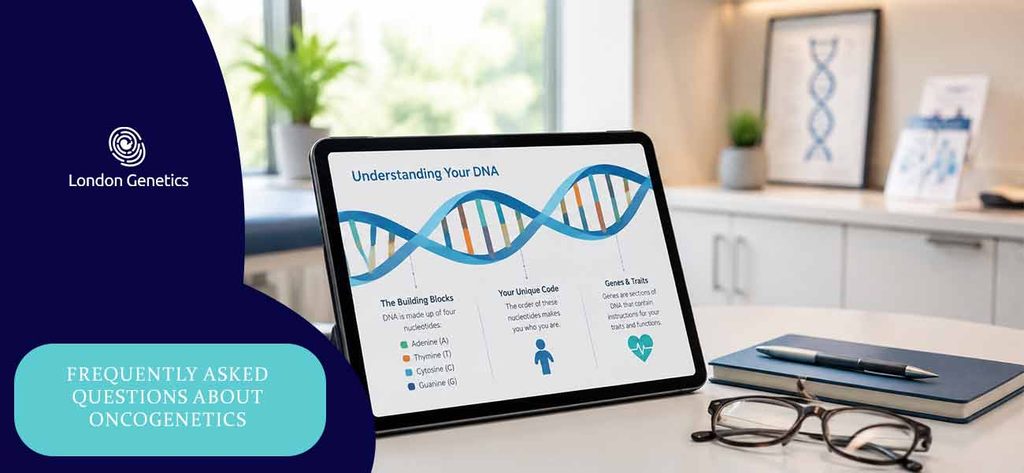
Every cell in your body contains DNA—the “instruction manual” for your growth, development, and function. Cancer, by its very nature, is a genetic disease. It arises when these instructions are altered by mutations, causing cells to grow and divide uncontrollably. While many cancers are caused by mutations that occur randomly over a lifetime due to external factors, oncogenetics specifically investigates the underlying genetic drivers of these processes.
Understanding the role of oncogenetics is vital for several reasons:
- Demystifying Cancer Biology: It moves the conversation beyond just the location of the disease and into the biological “why.” By viewing cancer through a genetic lens, we can better understand why certain patterns of illness emerge within families.
- Defining Risk Profiles: It helps distinguish between sporadic cases—which happen by chance—and cases influenced by an inherited genetic predisposition.
- Scientific Foundation: A clear grasp of the genetic foundation of cancer is the first step in moving from general awareness to informed health literacy.
For a broader overview of how various genetic factors contribute to the development of malignancy, you can explore our comprehensive collection of Genetics Related Cancers resources. By understanding these mechanisms, we can better comprehend the complexity of cancer without needing to dive into clinical or diagnostic specifics just yet.
Germline vs. Somatic Mutations: The Core Difference
To understand how cancer develops, it is essential to distinguish between the two primary types of genetic alterations: germline mutations and somatic mutations. The distinction lies in how these mutations are acquired and, crucially, whether they can be passed on to future generations.
Germline mutations are present in the sperm or egg cells of a parent. Because these mutations exist in the very first cells of an embryo, they are copied into every single cell of the resulting individual’s body. This is the biological basis of inherited cancer risks, meaning the mutation is passed down from parent to child.
Somatic mutations occur in non-reproductive cells at some point during a person’s life. These mutations are “acquired” due to environmental factors (like UV radiation) or random errors during DNA replication. Unlike germline mutations, somatic mutations are not inherited and cannot be passed on to offspring; they are confined only to the specific tissue where they originated.
The fundamental difference determines the pattern of cancer in a family. While somatic mutations are the cause of most sporadic cancers, germline mutations create a predisposition that can lead to cancer occurring earlier in life or appearing in multiple family members.
Understanding the distinction between germline and somatic mutations is fundamental to the field of oncogenetics.
Distinguishing between these two allows scientists and medical professionals to separate random cellular changes from the hereditary patterns that define cancer syndromes.
Oncogenetics and Inheritance: How Mutations Are Passed Down
When a germline mutation is present, oncogenetics provides the framework for understanding how it is transmitted through a family. Recognizing these hereditary cancer patterns is crucial for grasping how risk moves from parents to children, rather than being a result of external environmental factors alone.
The most common mode of inheritance within the study of oncogenetics is the Autosomal Dominant pattern. In this scenario, an individual only needs to inherit the altered gene from one parent to be at an increased risk. Because of the way genes are paired, each child of an affected parent has a 50% chance of inheriting that specific mutation. This biological mechanism is precisely why we often observe cancer clusters in families across multiple generations, where the predisposition to develop certain diseases is passed down vertically.
While less common for the most prominent cancer syndromes, some conditions follow an Autosomal Recessive pattern. In these cases, an individual would typically need to inherit the mutation from both parents to be at a significantly increased risk.
It is vital to distinguish between “inheriting a risk” and “inheriting the disease itself.” Carrying a genetic mutation does not guarantee a cancer diagnosis; it means the biological “safety” mechanisms that repair DNA are inherently less robust. By applying the principles of oncogenetics to these inheritance patterns, we move beyond the fear of the unknown and into the realm of scientific literacy. Recognizing how these traits travel through generations is the first step in contextualizing your health history.
Recognizing Patterns Linked to Inherited Cancer Risk
Certain clinical patterns can provide important clues that a cancer may have a hereditary component rather than occurring solely by chance. Recognising these patterns helps explain how genetic factors can influence cancer risk within families.
These patterns do not by themselves confirm an inherited cancer syndrome. Their significance depends on the type of cancer, age at diagnosis, family history, and other genetic and clinical factors. Understanding these relationships provides useful context for the role of genetics in cancer risk.
Moving from Genetic Science to Professional Interpretation
While building a foundational understanding of oncogenetics empowers you with scientific literacy, applying this knowledge to your own health history is a highly nuanced task. Genetic data is intricate, and what may appear to be a distinct pattern of risk often requires expert validation to accurately distinguish between significant hereditary markers and normal biological variation.
Academic knowledge provides the context, but clinical application requires the specialized training of a genetic professional. Moving from general awareness to personalized understanding ensures that your health information is interpreted correctly within the context of your unique medical profile.
For those ready to bridge the gap between scientific curiosity and actionable health insights, professional guidance is the logical next step. We invite you to explore our Cancer Genetic Counselling services, where you can discuss your observations with a qualified specialist who can provide the expertise needed to navigate your specific family history and genetic risks.
Frequently Asked Questions About Oncogenetics
1. What is the difference between oncology and oncogenetics?
Oncology is the branch of medicine focused on diagnosing, treating, and preventing cancer. Oncogenetics is a specialized subfield within oncology and genetics that specifically investigates the genetic mechanisms, inherited mutations, and biological pathways that predispose individuals to malignancy.
2. Does having an inherited mutation mean I will definitely develop cancer?
No. In oncogenetics, an inherited genetic variant (such as a BRCA1 or Lynch syndrome mutation) confers an elevated lifetime risk or predisposition, not a certainty of disease. Environmental interactions, cellular repair mechanisms, and lifestyle factors all play significant roles in whether malignant transformation occurs.
3. Why are germline mutations considered hereditary while somatic mutations are not?
Germline mutations are present in the reproductive cells (sperm or egg) and are copied into every cell of an offspring’s body from conception, allowing them to be passed down through generations. In contrast, somatic mutations arise in non-reproductive tissues throughout a person’s lifetime and are confined solely to those specific cells, meaning they cannot be inherited by children.
4. Can oncogenetics explain why cancer appears in multiple family members?
Yes. Oncogenetics provides the scientific framework to evaluate whether multi-generational patterns represent true autosomal dominant/recessive hereditary syndromes or if they are sporadic occurrences influenced by shared lifestyle or environmental factors.