Understanding PGT-SR: An Introduction to Genetic Screening
Pre-implantation Genetic Testing for Structural Rearrangements, commonly known as PGT-SR, is a highly specialised form of pre-implantation genetic testing designed to support couples on their journey to parenthood. Unlike standard screening, this sophisticated analysis focuses specifically on identifying embryos with balanced or unbalanced chromosomal structures.
For individuals or couples aware of a structural rearrangement in their own genetic makeup—such as translocations or inversions—this screening is often a vital step. While these genetic variations may not affect the parent’s health, they can lead to an increased risk of producing embryos with missing or extra genetic material.
By utilising advanced techniques in reproductive genetics, our specialists can carefully examine embryos during an IVF cycle before they are transferred to the womb. This proactive approach ensures that only embryos with a correct chromosomal arrangement are selected, significantly reducing the emotional and physical toll of recurrent miscarriages and enhancing the likelihood of a successful, healthy pregnancy.
Who Should Consider PGT-SR Testing?
Deciding whether to undergo pre-implantation genetic testing is a significant step in any fertility journey. While IVF offers hope to many, PGT-SR is specifically tailored for those who face unique challenges due to the structural makeup of their chromosomes.
PGT-SR is a specialised screening primarily recommended for couples with known structural rearrangements or those experiencing recurrent miscarriages, providing a targeted path toward a healthy pregnancy.
The Science Behind Structural Rearrangements and Embryo Health
To appreciate the clinical significance of pre-implantation genetic testing, it is essential to understand the complex biological framework of chromosomal architecture. Our genetic blueprint relies on a precise balance; any deviation in the arrangement of our 23 pairs of chromosomes can profoundly influence embryo health and the eventual success of a pregnancy.
Structural rearrangements are essentially “architectural” changes where the DNA material is present but incorrectly positioned. In the field of reproductive genetics, we categorise these rearrangements into several distinct types, each posing different challenges for successful conception:
-
Translocations (Reciprocal and Robertsonian): These occur when segments of chromosomes break off and reattach to different chromosomes. While a “balanced” translocation may not affect the parent’s health, the resulting gametes (eggs or sperm) often carry an unbalanced amount of genetic material.
-
Inversions: This involves a segment of a chromosome breaking in two places, flipping 180 degrees, and reattaching. This “reversed” order can disrupt essential gene functions during embryo development.
-
Deletions and Duplications: These are instances where microscopic sections of a chromosome are either entirely missing or incorrectly doubled, leading to a loss of vital genetic instructions.
Why Structural Balance is Vital for Pregnancy Success
The primary goal of pre-implantation genetic testing for structural rearrangements (PGT-SR) is to identify which embryos have inherited a balanced set of genetic information. When an embryo is “unbalanced”—meaning it has too much or too little DNA—the biological consequences are often immediate and severe.
From a clinical standpoint, these imbalances are the leading cause of implantation failure within IVF programmes. If the genetic “manual” for building a human life is missing pages or has duplicated chapters, the embryo often ceases to grow. This scientific reality explains why many couples face the heartbreak of recurrent miscarriages; the body naturally recognises the chromosomal instability and terminates the pregnancy.
Furthermore, reproductive genetics research shows that even if an unbalanced embryo manages to implant, it may lead to the birth of a child with complex congenital disabilities or life-limiting conditions. By utilising pre-implantation genetic testing, specialists in the UK can now screen for these structural flaws at the blastocyst stage. This allows for the selection of embryos with the highest developmental potential, ensuring that the path to parenthood is guided by scientific precision and a significantly reduced risk of genetic complications.
How the PGT-SR Process Works within an IVF Cycle
The integration of pre-implantation genetic testing into a fertility treatment plan is a meticulous process that combines advanced embryology with cutting-edge reproductive genetics. For patients undergoing treatment in the UK, the PGT-SR journey is designed to be seamless, ensuring the highest standards of safety and accuracy for each embryo.

The process follows a structured sequence of clinical and laboratory steps to ensure the best possible outcome for each fertility cycle.


Key Takeaway:
The PGT-SR process is a sophisticated scientific journey that provides vital reassurance for couples facing chromosomal challenges, integrating seamlessly into a standard IVF cycle to ensure the highest chance of a healthy pregnancy.
The Benefits of Specialised Genetic Screening for IVF Success
For many individuals navigating fertility challenges, the primary goal is not just achieving a positive pregnancy test, but bringing home a healthy baby. Integrating pre-implantation genetic testing into your treatment plan offers a transformative advantage by providing clarity where there was once uncertainty. In the field of reproductive genetics, the benefits of PGT-SR extend far beyond simple screening; they fundamentally redefine the success rates of modern IVF.
The key advantages of this specialised approach include:
Increased Implantation Success Rates
One of the most significant barriers to a successful IVF cycle is chromosomal instability. By utilising pre-implantation genetic testing, embryologists can identify and select only those embryos with a balanced chromosomal structure. These “euploid” or balanced embryos have a much higher biological affinity for successful attachment to the uterine lining, ensuring that the transfer phase of your programme is optimised for the best possible outcome.
A Significant Reduction in Miscarriage Risk
For carriers of structural rearrangements, the rate of pregnancy loss can be devastatingly high. Because PGT-SR filters out embryos with unbalanced translocations or inversions—which are the leading causes of early pregnancy termination—the clinical risk of miscarriage is drastically reduced. This scientific safeguard allows patients to move forward with their pregnancy with a higher degree of confidence and security.
Minimising the Time to Pregnancy
Unsuccessful IVF transfers and subsequent miscarriages do not just take an emotional toll; they also consume valuable time. By ensuring that only viable, balanced embryos are transferred from the outset, pre-implantation genetic testing helps couples achieve a healthy pregnancy faster, avoiding the “trial and error” often associated with unscreened embryo transfers.
Informed Decision-Making and Peace of Mind
Perhaps the most profound benefit of engaging with reproductive genetics is the psychological reassurance it provides. Knowing that your embryos have undergone rigorous genomic screening in a leading London laboratory allows you to make informed decisions about your future. This “peace of mind” is invaluable, reducing the anxiety often associated with the “two-week wait” and the early stages of gestation.
Reducing the Risk of Genetic Conditions
Beyond pregnancy success, PGT-SR is vital for preventing the birth of a child with severe physical or developmental complications related to unbalanced chromosomal rearrangements. This ensures that the next generation begins life with the best possible genetic foundation.
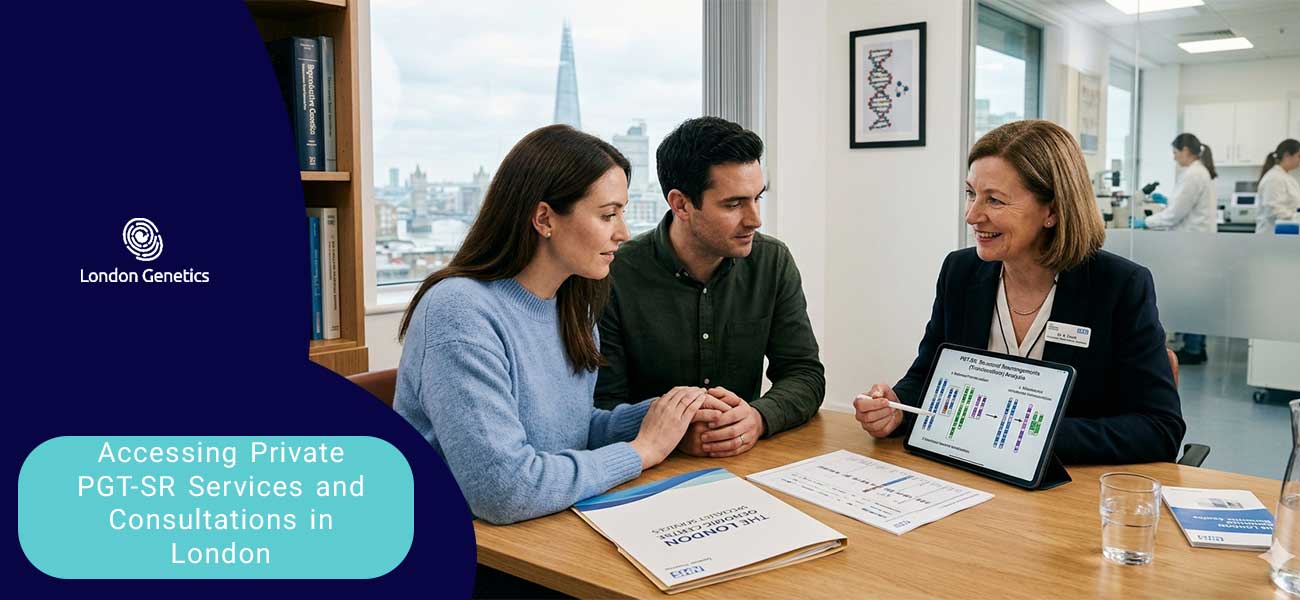
Accessing Private PGT-SR Services and Consultations in London
For patients seeking world-class fertility care, London stands as a global hub for excellence in reproductive genetics. Accessing private pre-implantation genetic testing services in the capital ensures that you benefit from the latest laboratory technologies and the expertise of renowned consultants. Whether you are at the beginning of your fertility journey or seeking a second opinion after a previous IVF failure, the path to advanced genomic screening is designed to be supportive and efficient.
What to Expect During Your Initial Consultation
Your journey begins with an Initial Consultation. This is a pivotal session where your clinical history is reviewed in detail. During this meeting, a specialist in reproductive genetics will:
-
Analyse your previous test results and genetic reports regarding structural rearrangements.
-
Discuss the specific implications of your translocation or inversion on future pregnancies.
-
Outline a bespoke IVF programme that integrates pre-implantation genetic testing (PGT-SR) tailored to your unique needs.
Navigating Your Care: A Guide to PGT-SR Services
To help you understand the transition from consultation to testing, the following table outlines the typical pathway for accessing these specialised services in our London clinics:
| Step | Service Component | Key Objective |
| 1 | Initial Consultation | Clinical review and genetic risk assessment with a UK consultant. |
| 2 | Genetic Counselling | Detailed discussion on the expected outcomes and limitations of PGT-SR. |
| 3 | Laboratory Setup | Preparation of the specific genetic probes required for your unique rearrangement. |
| 4 | IVF & Biopsy | Egg collection, fertilisation, and expert embryo biopsy at the blastocyst stage. |
| 5 | Genomic Analysis | Advanced NGS testing within a specialised London genetic facility. |
| 6 | Results & Transfer | Selection and transfer of a balanced embryo to optimise pregnancy success. |
Why Choose Private Services in the UK?
Choosing a private clinic for pre-implantation genetic testing in the UK offers several distinct advantages. Beyond the reduction in waiting times, patients gain direct access to multidisciplinary teams where embryologists and geneticists work side-by-side. This collaborative environment ensures that the sophisticated data generated by reproductive genetics is translated into a personalised care plan, significantly increasing the likelihood of a healthy delivery.
Booking Your Appointment
Taking the next step is straightforward. Most leading clinics in London allow you to book your initial consultation online or via a dedicated patient coordinator. By engaging with specialists early, you can gain a clear roadmap of how pre-implantation genetic testing can overcome the challenges of structural rearrangements and bring you closer to your goal of starting a family.
Conclusion: Taking the Next Step Towards a Healthy Future
Navigating the complexities of fertility when dealing with chromosomal structural rearrangements can be an emotionally taxing experience. However, the rapid evolution of reproductive genetics has transformed the landscape of modern medicine, offering a beacon of hope for couples who once faced repeated setbacks. As we have explored, pre-implantation genetic testing (PGT-SR) is not merely a laboratory procedure; it is a vital diagnostic bridge that connects the dream of parenthood with the scientific reality of a healthy birth.
By choosing to integrate this specialised screening into your IVF programme, you are taking a proactive stance against the risks of miscarriage and implantation failure. The precision of pre-implantation genetic testing allows us to look beyond the surface, ensuring that the embryos selected for transfer possess the correct chromosomal balance required for a sustainable pregnancy and a healthy future for your child. In the heart of the UK’s medical community, our London-based specialists are dedicated to providing the clarity and expertise needed to navigate these genetic challenges.
Proactive Risk Management:
Integrating specialised screening reduces the risk of miscarriage and implantation failure by ensuring chromosomal balance.
Advanced Genomic Insights:
Science has paved the way for clearer paths to successful pregnancy through precise embryo selection and analysis.
British Clinical Excellence:
Our London-based specialists provide the highest standards of expertise to help you navigate complex genetic challenges.
A Tailored Fertility Journey:
Every treatment plan is bespoke, designed to meet your specific genetic needs and support your path to building a family.
Confidence Through Science:
By understanding your options through reproductive genetics, you can move forward with a deeper sense of reassurance and clarity.