What Is PGD? Understanding Preimplantation Genetic Diagnosis
Preimplantation Genetic Diagnosis (PGD) is an advanced medical technique used during fertility treatment to identify specific genetic conditions in embryos before pregnancy begins. It is most commonly performed as part of an IVF cycle, allowing specialists to examine the genetic health of embryos before they are transferred to the uterus. The aim of Preimplantation Genetic Diagnosis is to help reduce the risk of passing inherited genetic disorders to a child while improving the chances of a healthy pregnancy.
The process begins during an IVF treatment cycle, where eggs are retrieved from the ovaries and fertilised with sperm in a laboratory. As the embryos develop over several days, a small number of cells are carefully removed from each embryo. These cells are then analysed in a specialised genetics laboratory. Through Preimplantation Genetic Diagnosis, scientists can determine whether an embryo carries certain inherited genetic mutations or chromosomal abnormalities.
This approach has become an important advancement within the field of IVF & Genetics, as it enables clinicians to make more informed decisions about which embryos are most suitable for transfer. By selecting embryos that do not carry particular genetic conditions, doctors can help reduce the likelihood of genetic disease and improve the overall success rate of fertility treatment.
Within the broader discipline of Reproductive Genetics, PGD represents a significant step forward in preventive medicine. It provides couples who may carry inherited genetic conditions with the opportunity to pursue pregnancy while lowering the risk of passing those conditions on to future generations.
Overall, Preimplantation Genetic Diagnosis plays a valuable role in modern reproductive medicine, offering both scientific precision and reassurance to families seeking safer and more informed fertility treatment.
How PGD Works in the IVF Process: A Step-by-Step Guide
The integration of Preimplantation Genetic Diagnosis (PGD) into an In Vitro Fertilisation (IVF)
cycle follows a precise, multi-stage protocol. Each stage is carefully managed by fertility specialists and
embryologists to ensure that embryos can be genetically screened before transfer, helping improve the
chances of a healthy pregnancy while reducing the risk of inherited genetic disorders.
medications—often hormonal injections—to encourage the ovaries to produce multiple mature eggs rather
than the single egg typically released during a natural cycle. Once the eggs have matured, they are
retrieved from the ovaries through a minor surgical procedure performed under medical supervision.
laboratory environment. This stage represents the standard fertilisation step of IVF treatment. Skilled
embryologists monitor the process closely to confirm successful fertilisation and the early formation of
zygotes.
cultured in a nutrient-rich environment for approximately three to five days. During this time the embryos
progress from single-celled zygotes to more complex structures, often reaching the blastocyst stage—an
advanced developmental stage containing over 100 cells—by day five or six.
microscopic tools. A small group of cells—typically five to ten—is carefully removed from the
trophectoderm, the outer layer of the embryo that later develops into the placenta. Importantly, the Inner
Cell Mass (ICM), which will develop into the foetus, remains untouched to minimise any potential impact on
embryo development.
and amplify the DNA—creating millions of copies—to allow detailed genetic testing. Advanced molecular
techniques are then used to identify specific genetic mutations or chromosomal abnormalities, such as
single-gene disorders like cystic fibrosis or broader chromosomal imbalances.
team evaluates the embryos based on their genetic profile. Embryos that are unaffected by the targeted
genetic condition and show normal chromosomal structure are considered suitable for transfer. One or more
of these healthy embryos are then placed into the uterus with the aim of establishing a successful
pregnancy.
PGD functions as a highly precise genetic screening step within the IVF process. By analysing embryos
before implantation, specialists can select those that are free from specific genetic disorders, improving
the likelihood of a healthy pregnancy and supporting safer reproductive outcomes.
Which Genetic Conditions Can PGD Detect?
Preimplantation Genetic Diagnosis (PGD) is designed to identify specific inherited genetic conditions before an embryo is transferred during an IVF cycle. By analysing the DNA of a small number of cells taken from an embryo, specialists can determine whether that embryo carries certain disease‑causing mutations. This allows clinicians to select embryos that are unaffected by serious genetic disorders, helping reduce the risk of passing these conditions on to future generations.
One of the most common uses of PGD is the detection of single‑gene disorders, also known as monogenic diseases. These conditions occur when a mutation in a single gene disrupts normal biological function. Because the exact genetic mutation is already known in the family, laboratories can design highly targeted tests to identify whether embryos carry the same mutation.
For example, PGD can detect Huntington’s disease, a progressive neurological disorder caused by a mutation in the HTT gene. Individuals who inherit this mutation will eventually develop the condition, which affects movement, cognition, and behaviour. Through PGD testing, embryos that do not carry the mutation can be selected for transfer.
Another well‑known condition detectable through PGD is Cystic Fibrosis, a hereditary disease caused by mutations in the CFTR gene. This disorder primarily affects the lungs and digestive system, leading to chronic respiratory infections and reduced life expectancy. PGD allows embryos without the disease‑causing mutation to be identified before pregnancy begins.
Thalassaemia is also frequently screened using PGD, particularly in regions where the condition is more prevalent. This inherited blood disorder affects the body’s ability to produce healthy haemoglobin, often resulting in severe anaemia that may require lifelong medical treatment. PGD can determine whether embryos are affected, carriers, or completely unaffected by the genetic mutation.
Beyond these examples, PGD can detect a wide range of other single‑gene disorders, including conditions such as Tay‑Sachs disease, sickle cell disease, spinal muscular atrophy (SMA), and certain inherited cancer‑related mutations. The key requirement is that the specific genetic mutation responsible for the condition has already been identified within the family.
Overall, the ability of Preimplantation Genetic Diagnosis to screen embryos for known inherited conditions has become a significant advancement in modern reproductive medicine, allowing couples with genetic risks to pursue pregnancy with greater confidence and medical reassurance.
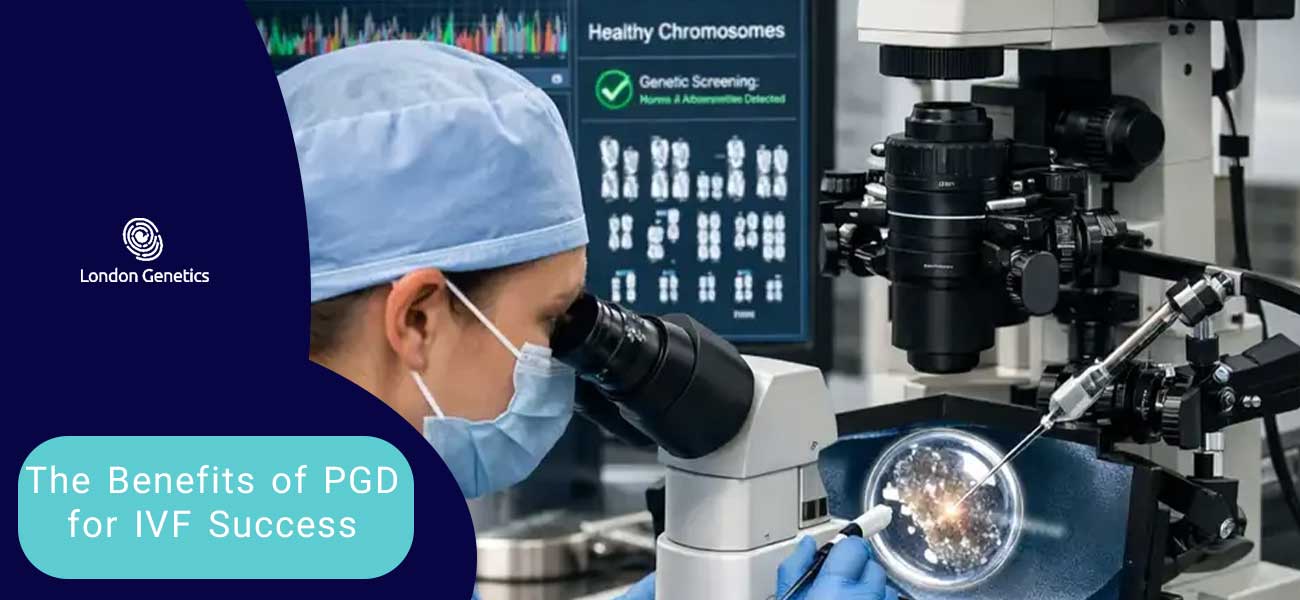
The Benefits of PGD for IVF Success
The incorporation of Preimplantation Genetic Diagnosis (PGD) into an In Vitro Fertilisation (IVF) cycle yields several profound benefits, primarily revolving around increasing the chance of a successful, healthy pregnancy and effectively mitigating the risk of passing on known genetic disorders.
1. Increased Chance of a Healthy Pregnancy
The most direct benefit of PGD is the ability to select genetically normal embryos for uterine transfer.
- Reduced Implantation Failure: A significant proportion of IVF cycles fail because the embryo has severe chromosomal abnormalities (aneuploidy). While Preimplantation Genetic Screening (PGS) is specifically designed to check for these general issues, PGD focuses on specific known conditions. By transferring only genetically confirmed unaffected embryos, the likelihood of implantation failure due to the specific targeted condition is drastically reduced.
- Fewer Miscarriages: Embryos with major, targeted genetic defects are often not viable or result in early miscarriage. By screening these out prior to transfer, PGD helps ensure that the embryos proceeding to the uterus have a higher inherent chance of developing into a healthy pregnancy, thereby potentially reducing the overall rate of first-trimester miscarriage associated with the screened condition.
2. Minimising the Risk of Inherited Genetic Disease
For couples who are both known carriers of a recessive genetic disorder (like Cystic Fibrosis or Thalassemia), or where one parent has a dominant condition (like Huntington’s disease), PGD offers a crucial preventive measure.
- Targeted Disease Prevention: PGD allows the parents to have the confidence that the embryo being transferred does not carry the specific harmful mutation they are concerned about. This removes the need for invasive and stressful prenatal testing (like amniocentesis) later in the pregnancy, and entirely avoids the difficult decision of continuing or terminating a pregnancy known to carry a severe inherited disorder.
- Genetic Certainty: In cases where both parents are carriers, there is a 25% chance with each conception that the child will inherit the condition. PGD eliminates this statistical risk for the transferred embryo, offering peace of mind throughout the pregnancy journey.
3. Optimising the IVF Process
While PGD is an additional step in the overall IVF timeline, it can ultimately streamline the overall treatment process for genetically at-risk couples:
- Fewer Cycles Needed: By improving the quality of the embryos transferred, PGD can lead to a successful pregnancy in fewer IVF attempts, as the risk of transferring non-viable embryos is minimised. This saves the couple significant time, emotional strain, and financial resources associated with multiple treatment cycles.
In summary, Preimplantation Genetic Diagnosis acts as a highly effective quality assurance tool within the IVF framework. It shifts the focus from treating a condition after birth or during pregnancy to prevention at the earliest possible stage, thereby substantially increasing the probability of achieving a successful outcome resulting in a healthy baby.
Who Should Consider PGD Testing?
Preimplantation Genetic Diagnosis (PGD) can be particularly valuable for couples who face a higher
risk of genetic disorders or certain fertility challenges. By analysing embryos during the IVF
process before implantation, PGD helps identify embryos that are free from specific genetic
conditions, improving the likelihood of a healthy pregnancy and reducing the risk of inherited disease.

Explore which individuals and couples may benefit most from PGD testing during IVF treatment.

PGD is highly recommended
for couples who carry
known genetic mutations
or have a family history
of inherited diseases.

Repeated pregnancy loss
may sometimes be linked
to hidden genetic problems
within the embryo.

As maternal age increases,
the probability of
genetic abnormalities
in embryos also rises.

Some IVF cycles fail
because embryos
carry genetic abnormalities
that prevent implantation
or early development.
Key Takeaway:
PGD testing is particularly beneficial for couples with genetic disease history,
recurrent miscarriages, advanced maternal age, or previous IVF failures.
By identifying embryos with healthy genetic profiles before implantation,
PGD helps reduce inherited disease risk and improves the chances of a
successful and healthy pregnancy.
Accuracy, Safety and Limitations of PGD
Preimplantation Genetic Diagnosis (PGD) is a powerful and precise tool used within IVF to identify specific genetic abnormalities before an embryo is transferred. While PGD offers significant advantages for families with known genetic risks, it is important for patients to understand its accuracy, safety profile, and potential limitations so they can make fully informed decisions.
Accuracy of PGD
PGD is known for its high level of accuracy, especially when testing for a single, known genetic mutation within a family.
- High precision for targeted mutations: When the exact disease-causing variant is known, PGD can achieve accuracy rates of around 98–99%.
- Multiple testing methods: Modern laboratories often combine DNA amplification, linkage analysis and next‑generation sequencing to minimise the chance of diagnostic error.
- Small risk of misdiagnosis: Although rare, technical factors such as allele drop‑out (when one copy of a gene fails to amplify) can lead to incorrect results. For this reason, follow‑up prenatal testing is often recommended for confirmation.
Overall, PGD offers very reliable results, but no genetic test can guarantee 100% accuracy.
Safety Considerations
PGD is widely regarded as safe for embryos and future pregnancies, especially with current laboratory techniques.
- Minimal impact of embryo biopsy: Embryo biopsy is performed on day 5–6 at the blastocyst stage, removing only a few cells from the trophectoderm (the part that becomes the placenta).
- Advances in technology: Modern biopsy methods do not typically affect embryo development or long‑term health, and no increased risk of birth defects has been observed.
- Laboratory handling: Because embryos are handled outside the body, there is always a very small procedural risk, but this is carefully controlled with strict laboratory standards.
In general, PGD is considered a low‑risk addition to the IVF process.
Limitations of PGD
Despite its benefits, PGD does have certain limitations that patients should be aware of:
- PGD tests only for specific known mutations. It cannot provide a full evaluation of all possible diseases unless combined with broader genetic screening techniques.
- Embryo number matters: Some IVF cycles may produce only a small number of embryos, and not all will be suitable for testing or transfer.
- Possibility of inconclusive results: In some cases, PGD results may be unclear, and embryos cannot be safely categorised as affected or unaffected.
- Not all genetic conditions can be tested: PGD must be designed specifically for each family’s mutation. Rare or complex genetic conditions may require customised testing that is not always possible.
What Patients Should Know Before PGD
Before deciding on PGD, patients should understand:
- PGD increases the chance of a healthy pregnancy, but it does not guarantee pregnancy success.
- A small error margin exists, so confirmatory prenatal tests such as CVS or amniocentesis may be recommended.
- PGD adds cost, time and laboratory steps to the IVF process, which should be considered during treatment planning.
- A genetic counselling session is essential to ensure patients fully understand the benefits and limitations of the procedure.
Conclusion: The Role of PGD in Safer and More Successful IVF
Preimplantation Genetic Diagnosis (PGD) has transformed modern fertility treatment by reducing the risk of genetic disease and improving IVF outcomes with exceptional accuracy. By analysing embryos before transfer, PGD ensures that only embryos with healthy genetic profiles are selected—offering couples greater reassurance, improved pregnancy prospects and enhanced confidence throughout their fertility journey.
PGD offers a safer path to pregnancy by significantly lowering the risk of passing on serious inherited conditions such as cystic fibrosis, thalassaemia or Huntington’s disease. For families with known genetic risks, PGD provides one of the most reliable and least invasive ways to ensure a healthy pregnancy without the emotional and physical challenges associated with prenatal diagnostic procedures later in pregnancy.
Improving IVF success rates is another key advantage. By identifying chromosomal or genetic abnormalities at an early stage, PGD enhances the likelihood of:
- successful embryo implantation
- sustained and healthy pregnancy
- reduced miscarriage rates
- better outcomes for both mother and baby
These benefits are particularly valuable for women of advanced maternal age, couples with recurrent pregnancy loss or those who have experienced multiple IVF failures.
PGD also empowers couples by providing clear, scientifically grounded insights into their embryos’ genetic health. This enables more informed decision‑making throughout the IVF process. With the guidance of fertility specialists and genetic counsellors, families can pursue a more personalised and strategic approach to building a healthy family.
As a vital tool in modern reproductive medicine, PGD plays an essential role in:
- preventing inherited genetic diseases
- supporting safer and more successful IVF cycles
- reducing uncertainties and risks during pregnancy
- offering reassurance to couples with genetic concerns
As scientific technologies continue to evolve, PGD will become even more precise, accessible and supportive—further strengthening its role in reproductive genetics and assisted fertility care.
Why This Matters:
PGD provides couples with a safer, more informed pathway to pregnancy by reducing genetic risks and improving IVF outcomes.
The Value of Modern Medicine:
Thanks to advanced embryo analysis techniques, PGD offers highly accurate insights that help clinicians guide couples toward healthier pregnancies and stronger reproductive outcomes.
Your Next Step:
Consult a qualified fertility or genetic specialist to explore whether PGD is the right option for your IVF journey.