Introduction to RNA Sequencing
RNA Sequencing (RNA-Seq) has rapidly become an indispensable tool in modern genomics, providing unparalleled insight into the activity of genes within cells. While DNA sequencing reveals the static blueprint of an organism, RNA Sequencing shows which genes are actively expressed at any given time and under specific conditions.
This capability is particularly crucial in genomic research, where understanding gene expression patterns helps scientists uncover how genetic variations influence cellular pathways, development, and disease. In medical applications, RNA-Seq supports precision diagnostics and targeted therapies, enabling clinicians to make informed decisions based on an individual’s gene expression profile.
In essence, RNA Sequencing bridges the gap between genetic information and functional insight, transforming both basic research and clinical practice. Its integration into genomic research has opened new avenues for understanding disease mechanisms and developing more personalised treatments.
What is RNA Sequencing?
RNA Sequencing (RNA-Seq) is a cutting-edge genomic technique used to analyse the complete set of RNA transcripts in a cell or tissue at a specific moment.
In simple terms, it shows which genes are actively turned on or off, and to what degree, under given conditions. By focusing on RNA rather than DNA, RNA-Seq provides a dynamic snapshot of gene activity rather than a static genetic blueprint.
Unlike DNA sequencing, which decodes the entire genome and provides a permanent record of genetic material, RNA-Seq focuses on gene expression.
DNA indicates potential, whereas RNA-Seq reveals actual activity — which genes are producing RNA and, by extension, proteins at a given time.
RNA-Seq uncovers the functional consequences of genetic mutations or inherited variants by showing their impact on gene expression.
This insight is crucial for understanding disease mechanisms, identifying biomarkers, and developing precision therapies.
RNA Sequencing complements DNA analysis by adding a functional layer of information.
While DNA reveals the genetic blueprint, RNA-Seq shows how that blueprint is being executed, providing a deeper understanding for modern genetics and personalised medicine.
Key Takeaway:
RNA Sequencing is an essential tool for exploring gene activity in real time, bridging the gap between genetic information and functional biology, and supporting precision medicine strategies.
How RNA Sequencing Works
RNA Sequencing (RNA-Seq) involves a series of carefully orchestrated steps that transform raw biological samples into meaningful data about gene expression. The process captures the dynamic nature of RNA in cells, providing insight into which genes are active, how they are regulated, and how mutations may impact their expression. The workflow can be broadly divided into four main stages: RNA extraction, library preparation, sequencing, and data analysis.
RNA Extraction and Library Preparation
The first step in RNA-Seq is the extraction of high-quality RNA from the tissue or cell sample. Purity and integrity are crucial, as degraded RNA can compromise downstream results. Once extracted, RNA molecules are converted into complementary DNA (cDNA), which is more stable and suitable for sequencing.
Library preparation involves adding adapters to the cDNA fragments, which allows them to be amplified and read by sequencing platforms. This stage is essential for ensuring uniform coverage and accurate representation of the RNA population.
Sequencing Technologies for RNA-Seq
Next, the prepared cDNA libraries are subjected to sequencing. Modern sequencing platforms, such as Illumina, PacBio, or Oxford Nanopore, read the nucleotide sequences of millions of fragments in parallel. The choice of platform depends on factors like read length, depth, cost, and specific research goals.
Data Analysis and Interpretation
After sequencing, the raw data must be processed and analysed. Bioinformatics pipelines map the reads to a reference genome, quantify gene expression levels, and identify patterns such as differential expression, alternative splicing, or novel transcripts. The results provide a comprehensive view of cellular activity and can reveal how genetic variations affect gene expression.
Summary Table of RNA-Seq Workflow
| Stage | Description | Key Output |
|---|---|---|
| RNA Extraction | Isolation of total RNA from cells or tissue | High-quality RNA |
| Library Preparation | Conversion of RNA to cDNA, addition of sequencing adapters | Sequencing-ready cDNA library |
| Sequencing | Reading cDNA fragments using next-generation sequencing platforms | Raw sequence reads |
| Data Analysis | Mapping reads to reference genome, quantifying gene expression | Gene expression profiles, differential expression, novel transcripts |
Note: Each step is critical. Poor RNA quality or errors in library preparation can compromise results, while careful bioinformatic analysis ensures reliable interpretation of gene expression patterns.
Applications of RNA Sequencing
RNA Sequencing (RNA-Seq) provides comprehensive insights into gene expression, cellular function, and disease mechanisms.
Its applications span basic science, translational research, and precision medicine, making it an essential tool for researchers and clinicians.
 Hover over each box to explore the key applications of RNA-Seq!
RNA-Seq reveals which genes are actively transcribed in a cell or tissue.
This helps understand normal cellular function, tissue-specific activity, and gene expression changes under treatments or different conditions.

Comparing gene expression between healthy and diseased samples uncovers dysregulated pathways.
In conditions like genetic disorders or treatment-resistant neonatal seizures, RNA-Seq identifies affected genes and potential therapeutic targets.

RNA-Seq allows clinicians to design personalised interventions:
- Target specific molecular pathways
- Predict therapy response
- Minimise exposure to ineffective or harmful drugs
This ensures treatments are patient-specific, improving outcomes and reducing side effects.

RNA-Seq is used to:
- Cancer: Identify oncogenes, tumour suppressors, tumour heterogeneity, and monitor treatment response.
- Genetic disorders: Detect functional consequences of mutations, alternative splicing, and abnormal regulation.
- Metabolic diseases: Analyse enzyme and transporter expression to understand metabolic disruptions.
It provides a functional layer of insight that complements DNA sequencing and guides research and clinical decisions.
Key Takeaway:
RNA Sequencing illuminates active genes, regulatory mechanisms, and responses to disease or therapy, bridging the gap between basic research and personalised healthcare.
Advantages of RNA Sequencing over Traditional Methods
RNA Sequencing (RNA-Seq) offers several substantial advantages over traditional gene expression profiling techniques, such as microarrays. While microarrays were once the standard for measuring gene activity, RNA-Seq has now largely superseded them due to its superior sensitivity, accuracy, and versatility.
1. Discovery of Novel Genes and Transcripts
Unlike microarrays, which can only detect pre-defined sequences, RNA-Seq is capable of identifying previously unknown genes, isoforms, and alternative splicing events. This feature allows researchers to uncover novel transcripts and regulatory elements that were invisible to older technologies, providing a much more comprehensive view of the transcriptome.
2. Higher Sensitivity and Dynamic Range
RNA-Seq can detect low-abundance transcripts that microarrays often miss, and it provides a broader dynamic range of expression levels. This makes it possible to accurately quantify both highly expressed and rare genes within the same sample, improving the reliability of gene expression measurements.
3. No Dependence on Pre-Designed Probes
Microarrays require pre-designed probes that target known sequences, limiting their scope. In contrast, RNA-Seq does not rely on prior knowledge of the genome or transcriptome, allowing it to capture the full complexity of RNA populations, including novel splicing variants and non-coding RNAs.
4. Quantitative and Qualitative Insights
Beyond measuring gene expression levels, RNA-Seq provides detailed information on alternative splicing, post-transcriptional modifications, and allele-specific expression. This dual quantitative and qualitative insight is essential for understanding complex regulatory mechanisms and disease processes.
Summary Table: RNA-Seq vs Microarrays
| Feature | RNA Sequencing (RNA-Seq) | Microarrays |
|---|---|---|
| Detection | Known and novel transcripts | Only pre-defined transcripts |
| Sensitivity | High, detects low-abundance RNA | Moderate, may miss rare transcripts |
| Dynamic Range | Broad | Limited |
| Splicing Analysis | Yes, detects alternative splicing | Limited or absent |
| Requirement for Prior Knowledge | None | Probes must be designed in advance |
Key Takeaway:
RNA Sequencing provides a comprehensive, unbiased, and highly sensitive view of gene expression, making it far superior to traditional methods and a cornerstone of modern genomic research.
Challenges and Limitations of RNA Sequencing
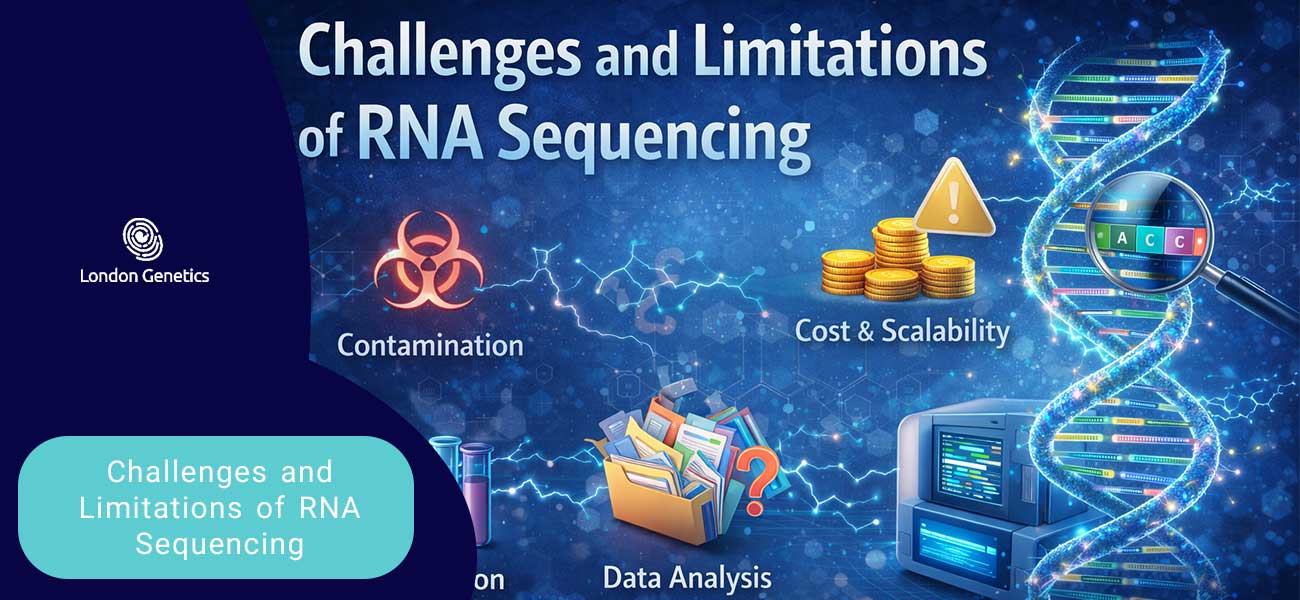
While RNA Sequencing (RNA-Seq) offers unparalleled insights into gene expression, it is not without challenges. Understanding these limitations is essential for both researchers and clinicians to ensure accurate and reliable results.
1. Cost and Advanced Equipment
RNA-Seq requires sophisticated laboratory infrastructure and sequencing platforms, such as Illumina, PacBio, or Oxford Nanopore. The costs associated with library preparation, sequencing reagents, and instrument maintenance can be substantial, limiting accessibility for smaller laboratories or studies with restricted budgets.
2. Expertise in Data Analysis
Perhaps the most significant barrier is the bioinformatic expertise required to analyse RNA-Seq data. Raw sequencing outputs contain millions of reads that must be mapped, quantified, and interpreted. Without specialised computational skills, there is a risk of misinterpretation, inaccurate quantification, or overlooked patterns in gene expression.
3. Sample Quality and Preparation Challenges
The quality of RNA samples is critical. Degraded or contaminated RNA can lead to incomplete or biased sequencing results. Small amounts of starting material, common in clinical samples such as neonatal tissue, may further complicate library preparation and reduce data reliability. Rigorous quality control and careful handling are therefore essential.
Summary Table: Key Challenges of RNA Sequencing
| Challenge | Description | Impact |
|---|---|---|
| Cost & Equipment | Requires advanced sequencing platforms and reagents | Limits accessibility for small labs or studies |
| Data Analysis | Complex bioinformatics pipelines needed | Risk of misinterpretation without expertise |
| Sample Quality | RNA degradation or contamination | Biased or incomplete data; reduced reliability |
Key Takeaway:
Despite its transformative potential, RNA Sequencing demands careful planning, sufficient resources, and specialised skills. Awareness of these challenges ensures that studies are robust and clinically meaningful, particularly in sensitive applications such as genomic research and personalised medicine.
Future Directions in RNA Sequencing
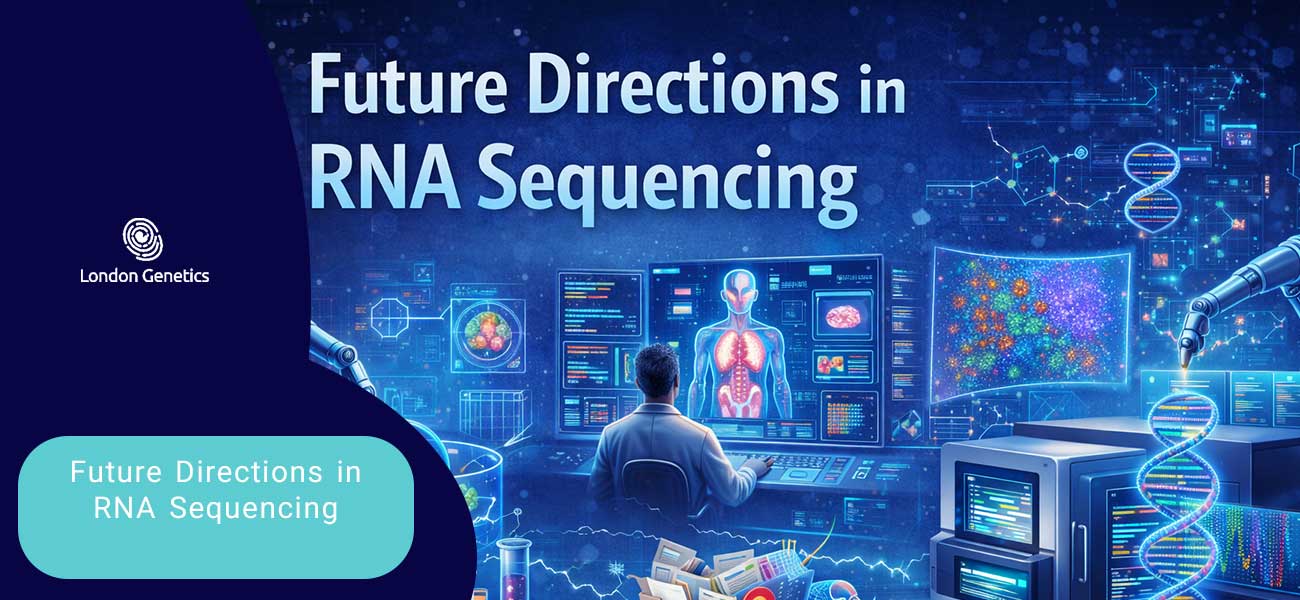
The field of RNA Sequencing (RNA-Seq) is evolving rapidly, with technological advancements continually expanding its capabilities and applications. These innovations are set to transform both research and clinical practice, particularly in the realms of precision medicine and genomic research.
1. Technological Advancements
Next-generation sequencing platforms are becoming faster, more accurate, and more cost-effective. Improvements in read length, sequencing depth, and throughput allow researchers to generate more comprehensive datasets with greater resolution. This enables the detection of subtle changes in gene expression, rare transcripts, and complex splicing events that were previously undetectable.
2. Application in Precision Medicine and Genomic Research
RNA-Seq is increasingly integrated into precision medicine, where patient-specific gene expression profiles guide tailored therapies. In genomic research, RNA-Seq helps elucidate the functional consequences of genetic variants, linking genotype to phenotype and identifying potential therapeutic targets. This approach facilitates personalised interventions, improving treatment outcomes and minimising side effects.
3. Integration with Single-Cell RNA-Seq and Multi-Omics
Emerging techniques such as single-cell RNA sequencing (scRNA-Seq) allow researchers to examine gene expression at the level of individual cells, revealing cellular heterogeneity that bulk RNA-Seq cannot detect. Coupled with multi-omics approaches, which integrate RNA-Seq data with genomics, proteomics, and metabolomics, scientists can gain a holistic view of cellular function and disease mechanisms.
These integrative approaches are particularly valuable for complex diseases such as cancer, neurological disorders, and metabolic conditions, enabling mechanistic insights and precision-guided therapeutic strategies.
Conclusion: The Impact of RNA Sequencing
RNA Sequencing (RNA-Seq) has transformed our understanding of gene expression, offering detailed insight into which genes are active, how they are regulated, and their roles in health and disease.
From uncovering novel transcripts and splicing events to elucidating molecular mechanisms, RNA-Seq is now indispensable in genomic research and clinical practice.
Its applications go beyond basic science, supporting precision medicine by enabling tailored treatments and guiding therapeutic decisions based on an individual’s unique gene expression profile.
The integration of RNA-Seq with emerging technologies, such as single-cell sequencing and multi-omics, further enhances its capabilities, providing a comprehensive functional view of cellular activity.
From Insight to Action:
– RNA-Seq enables precise mapping of active genes and regulatory pathways.
– Supports personalised treatment planning and therapy optimisation.
– Integrates with advanced genomic technologies for a comprehensive understanding of cellular function.
Why RNA-Seq Matters:
By revealing dynamic gene expression patterns, RNA-Seq bridges basic research and personalised healthcare, informing both scientific discovery and clinical decision-making.
Your Next Step:
Learn more about how RNA Sequencing can enhance genomic research or guide personalised medical approaches.