Introduction: Understanding the ROI of Genetic Screening in Modern Healthcare
Healthcare systems across the world are under increasing pressure to deliver better patient outcomes while controlling rising costs. Chronic diseases, including cardiovascular conditions, hereditary cancers, and metabolic disorders, account for a substantial proportion of healthcare expenditure, yet many of these conditions are only diagnosed after symptoms develop. This reactive approach often results in costly treatments, prolonged hospitalisations, reduced quality of life, and significant strain on healthcare resources. As providers, insurers, and policymakers search for more sustainable healthcare models, the focus has shifted towards interventions that can improve outcomes while generating measurable economic value.
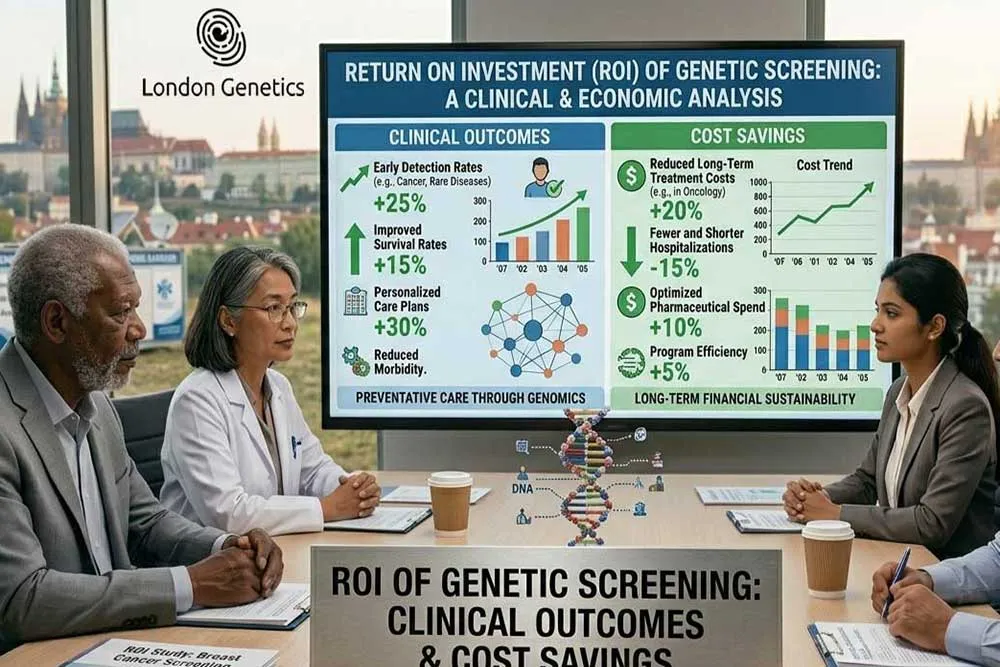
This growing demand for efficiency has intensified interest in the ROI of genetic screening. By identifying inherited disease risks before clinical symptoms emerge, genetic screening enables earlier intervention, targeted prevention strategies, and more personalised healthcare planning. Rather than allocating resources to the treatment of advanced-stage disease, healthcare organisations can focus on reducing risk, preventing complications, and improving long-term patient outcomes. This proactive approach has the potential to lower healthcare expenditure while delivering meaningful clinical benefits across diverse patient populations.
The economic impact of genetic screening becomes even more significant when applied at scale through Population Health Genetics Programs. By integrating genetic risk assessment into broader population health initiatives, healthcare systems can identify high-risk groups earlier, optimise preventative care pathways, and allocate resources more effectively. These programmes support data-driven decision-making, helping healthcare organisations reduce avoidable costs, improve operational efficiency, and maximise the value of preventive healthcare investments.
As healthcare increasingly moves towards value-based care, understanding the clinical and financial ROI of genetic screening has become essential. From reducing hospital admissions and long-term treatment costs to supporting population-level health strategies, genetic screening is emerging as a powerful tool for improving healthcare sustainability while delivering better outcomes for patients and communities.
Defining Clinical ROI: How Gene Mapping Improves Patient Outcomes
In modern healthcare, defining the Clinical Return on Investment (ROI) requires moving beyond purely financial metrics and focusing on tangible patient-centric outcomes: reduced morbidity, prolonged life expectancy, and enhanced quality of life. At the heart of this clinical transformation is advanced gene mapping. By decoding an individual’s unique genetic architecture, clinical specialists can transition from speculative diagnostics to definitive, predictive medicine.
The underlying philosophy of defining clinical ROI lies in replacing crisis management with strategic clinical foresight. Analysing how genetic markers interact with environmental variables allows medical teams to eliminate historical trial-and-error treatments. Organising preventive care around these inherited molecular traits transforms abstract DNA sequencing into an unshakeable, personalised blueprint for long-term health maintenance.
The Financial Equation: Measuring the ROI of Genetic Screening
As healthcare costs continue to rise worldwide, healthcare providers, insurers, and policymakers are increasingly focused on identifying interventions that deliver both clinical value and measurable financial returns. One of the most compelling examples is the ROI of genetic screening. While traditional healthcare models often concentrate resources on diagnosing and treating diseases after symptoms appear, genetic screening offers an opportunity to identify inherited health risks earlier, enabling preventative action before costly medical complications develop.
From a health economics perspective, the financial burden of advanced-stage disease is substantial. Conditions such as hereditary cancers, cardiovascular disease, and chronic metabolic disorders frequently require expensive treatments, prolonged hospital stays, specialist consultations, and ongoing medication management. These downstream costs can place significant strain on healthcare systems and insurers alike. In contrast, the cost of genetic screening is typically incurred once, while the insights generated can inform healthcare decisions for decades.
The ROI of genetic screening becomes particularly evident when comparing the costs of prevention with the expenses associated with reactive care. Early identification of elevated genetic risk enables healthcare providers to implement targeted monitoring programmes, lifestyle interventions, and preventative clinical pathways that can reduce the likelihood of disease progression. By preventing or delaying serious medical events, healthcare organisations can avoid many of the high-cost interventions commonly associated with advanced disease management.
At a population level, the economic value of genetic screening extends beyond individual patient care. Healthcare systems can use genetic risk data to allocate resources more efficiently, prioritise preventative services for high-risk populations, and reduce unnecessary spending on avoidable complications. As a result, the ROI of genetic screening should not be viewed solely as a diagnostic benefit, but as a long-term healthcare investment that supports both financial sustainability and improved patient outcomes.
Reducing Hospitalisation Rates and Long-Term Treatment Costs
One of the most measurable drivers of the ROI of genetic screening is its ability to reduce avoidable hospitalisations and lower long-term treatment costs. Emergency admissions, intensive care stays, surgical interventions, and chronic disease management represent some of the largest expenses within modern healthcare systems. By identifying elevated genetic risks earlier, healthcare providers can intervene before many of these costly events occur.
Preventing High-Cost Medical Events
Genetic screening helps identify individuals who may have an increased risk of developing serious health conditions long before symptoms appear. This allows clinicians to introduce proactive monitoring, preventative care plans, and early interventions that can reduce the incidence of acute medical emergencies, emergency department visits, and unplanned hospital admissions. The result is improved patient outcomes and a stronger ROI of genetic screening across healthcare populations.
Lowering Lifetime Treatment Expenditure
Many chronic diseases require decades of medication, specialist appointments, diagnostic testing, and ongoing clinical management. Early risk identification through genetic screening enables more targeted prevention strategies, helping reduce disease progression and limiting the long-term financial burden associated with lifelong treatment pathways. This contributes significantly to the overall economic value and ROI of genetic screening.
Improving Resource Allocation Through Population Health Genetics Programs
The ROI of genetic screening becomes even more substantial when implemented through Population Health Genetics Programs. By analysing population-level genetic risk data, healthcare organisations can identify communities that would benefit most from preventative interventions and targeted health initiatives. This data-driven approach enables more efficient resource allocation, reduces wasteful healthcare spending, and supports sustainable population health management. As healthcare systems increasingly adopt value-based care models, Population Health Genetics Programs are emerging as a powerful strategy for maximising both clinical outcomes and financial returns.
Corporate and Institutional Benefits: Genomics in Workplace Wellness
For corporate executives, human resource directors, and healthcare insurance providers, the health of a workforce is directly tied to operational productivity and financial performance. Managing an enterprise reactively often means absorbing the unpredictable costs of employee absenteeism and skyrocketing insurance premiums. Integrating preventative genomics into institutional wellness strategies offers a sophisticated framework that targets these systemic vulnerabilities at their source.
 Strategic corporate genomics shifts healthcare from a standard benefit expense into a high-yield predictive asset for modern enterprises.


Analysing the operational data behind corporate wellness reveals that workforce health is highly manageable through molecular foresight. By replacing outdated actuarial assumptions with advanced predictive screening frameworks, enterprises and insurers can accurately categorise health risks, ensuring premium cost-effectiveness and sustained productivity without a single day of unnecessary operational delay.
Pharmacogenomics: Maximizing the ROI of Genetic Screening for Better Clinical Outcomes and Cost Savings
One of the most immediate and tangible demonstrations of clinical and economic value in modern medicine is found in the field of pharmacogenomics. Traditionally, prescribing medication has been a process of educated trial-and-error, where patients receive standard dosages based on population averages. However, individuals metabolize medications differently based on their unique DNA. This conventional approach often leads to prolonged treatment timelines, wasted pharmaceutical expenditures, and dangerous adverse drug reactions (ADRs). By mapping a patient’s drug-metabolizing enzymes before a prescription is written, healthcare systems can unlock a remarkable ROI of Genetic Screening by completely eliminating the guesswork.
The financial and clinical consequences of ADRs represent a massive, preventable leak in healthcare budgets worldwide. Patients experiencing severe drug reactions frequently require emergency hospital readmissions, additional corrective therapies, and intensive clinical monitoring. Implementing preemptive pharmacogenomic testing as a standard protocol allows medical teams to identify “poor metabolizers” or “ultra-rapid metabolizers” early. This proactive strategy drastically improves patient safety and minimizes systemic waste, proving that the long-term ROI of Genetic Screening far outweighs the initial testing costs.
Integrating these targeted genetic insights into standard care pathways delivers clear, multidimensional benefits across the healthcare spectrum:
-
Eliminating Wasted Pharmaceutical Costs: By replacing the traditional trial-and-error method with data-driven prescription models, healthcare providers and insurers avoid spending money on high-cost medications that the patient’s body is genetically incapable of processing effectively. This optimization directly enhances the overall ROI of Genetic Screening.
-
Drastically Reducing Adverse Events: Screening patients blocks the administration of contraindicated drugs. This directly prevents toxic build-ups or severe side effects that lead to costly emergency room visits and intensive care admissions, shifting the focus toward preventative care.
-
Accelerating Patient Recovery Times: Arriving at the correct, genetically synchronized treatment plan on the first attempt ensures that chronic or acute conditions are managed rapidly. This shortens the overall duration of clinical care and returns patients to health much sooner.
Ultimately, the widespread adoption of pharmacogenomics proves that precision medicine is an indispensable tool for maximizing therapeutic efficiency. By heavily reducing systemic waste and establishing an exceptionally high standard of patient safety, healthcare systems can consistently realize a powerful ROI of Genetic Screening that transforms both clinical outcomes and economic sustainability.

Overcoming the Initial Investment: Infrastructure and Accessibility Barriers
While the long-term clinical and economic arguments for preventative genomics are undeniable, many healthcare providers, corporate boards, and public institutions hesitate at the point of implementation. The primary barrier is the perceived upfront cost. Establishing a robust framework for genetic testing requires an initial capital investment to secure advanced laboratory partnerships, integrate secure digital systems for sensitive molecular data, and train clinical staff to interpret complex genomic reports. For organization executives focused on short-term quarterly budgets, these initial infrastructure costs can appear daunting, leading to the misconception that advanced genomic medicine is an expensive luxury rather than an accessible utility.
However, viewing preventative genomics purely as an upfront expense fails to account for the rapid amortization of these costs over time. In modern healthcare economics, the initial investment in screening infrastructure is rapidly offset by the systematic reduction in late-stage medical crises, unnecessary diagnostic odysseys, and ineffective treatments. As next-generation sequencing technology continues to advance, the raw cost of genetic processing is plummeting, making large-scale deployment far more accessible and financially viable than it was a decade ago.
When institutions look past the initial setup barriers, they find that the transition to a genomics-driven framework pays for itself through multiple structural efficiencies:
-
Rapid Amortisation of Capital: The upfront costs of setting up screening protocols are a one-off institutional investment, whereas the savings generated from preventing expensive surgeries, prolonged hospitalisations, and chronic disease management accumulate annually.
-
Scalable Laboratory and Digital Infrastructure: By partnering with established, fully accredited external molecular laboratories, organizations can completely bypass the need to build expensive in-house testing facilities, shifting the financial model from a heavy capital expenditure to a predictable, scalable operational model.
-
Data Longevity and Lifetime Value: Unlike standard medical tests that only offer a temporary snapshot of a patient’s current health, a genomic profile remains unchanged throughout an individual’s life. This means a single initial investment produces a permanent digital asset that can be queried repeatedly over decades to guide lifetime preventative care.
Ultimately, the barrier of initial investment is merely a short-term hurdle. By reframing infrastructure development as a strategic, front-loaded investment, forward-thinking organizations can successfully transition to a highly sustainable, risk-mitigated healthcare model that delivers compounding financial and clinical returns for years to come.
Conclusion: Transforming Healthcare Through Strategic Genomic Investment
The transition from a reactive medical model to one driven by preventative genomics is no longer a theoretical preference; it is a clinical and economic necessity for modern healthcare systems. As long-term treatment costs for chronic pathologies continue to escalate, traditional, symptoms-based intervention models are becoming financially and operationally unsustainable. Embracing proactive molecular screening provides a definitive framework to intercept life-altering inherited conditions at stage zero, drastically altering the trajectory of patient care and systemic medical spending.
Relying on traditional reactive containment means leaving complex population health parameters completely to chance. Advanced genetic mapping represents the next great leap in institutional health management, allowing medical sectors and corporate leaders to transition from a crisis-driven medical model to an absolute proactive shield tailored to human biological limits.
Book Your Consultation with Dr Karimiani