Introduction to the SHANK3 Gene
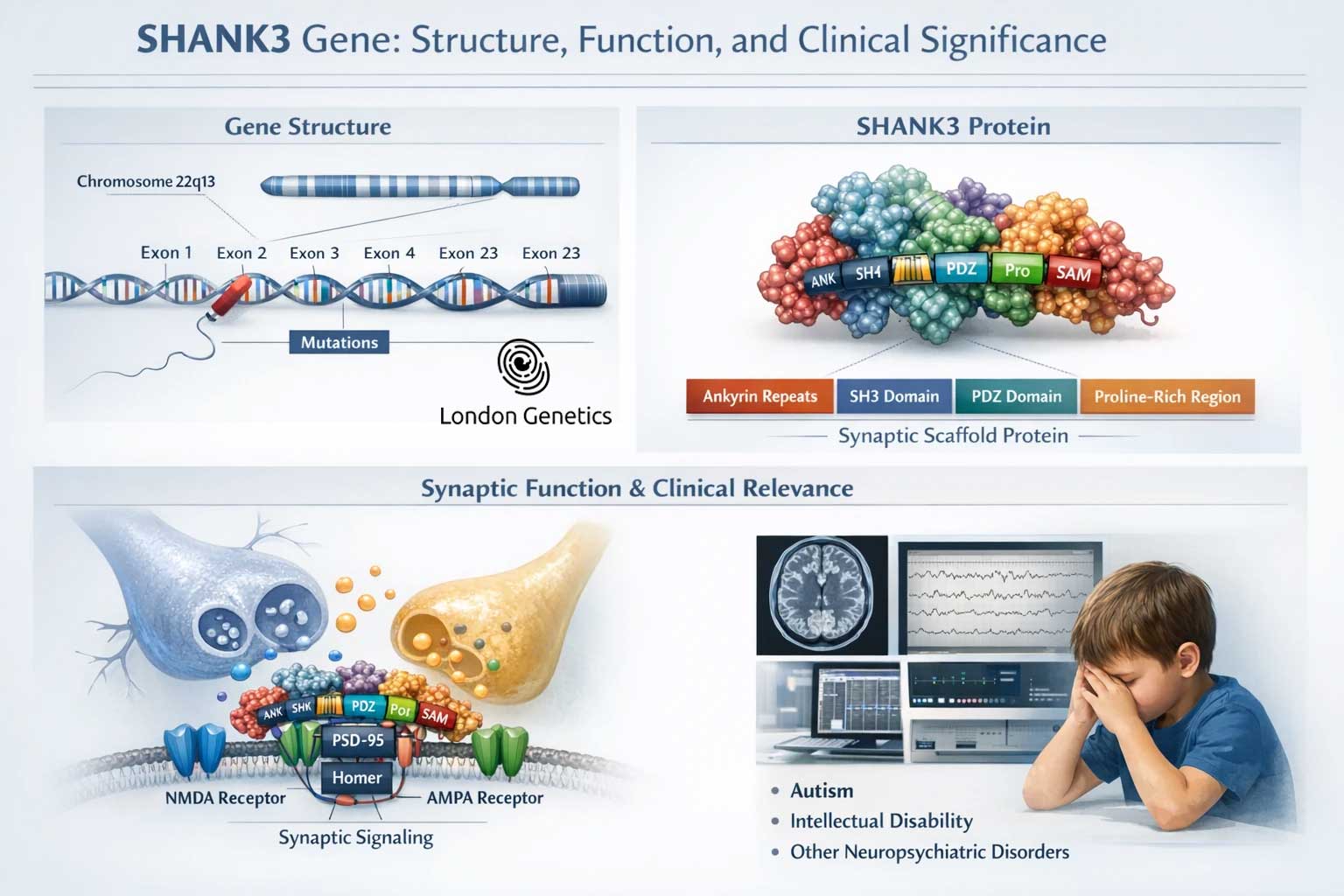
The SHANK3 Gene (SH3 and multiple ankyrin repeat domains 3) represents one of the most critical elements in the molecular architecture of the human brain. Located on the long arm of chromosome 22 (22q13.3), this gene encodes a master scaffolding protein primarily situated within the postsynaptic density (PSD) of excitatory glutamatergic synapses. The SHANK3 protein acts as a “molecular bridge,” physically and functionally linking ionotropic and metabotropic glutamate receptors to the actin cytoskeleton and intracellular signaling pathways. This complex organizational role is fundamental to the structural integrity of dendritic spines and the regulation of synaptic plasticity, which is the cellular basis for learning and memory.
In the broader context of neurodevelopmental research, the SHANK3 Gene has emerged as a focal point in understanding the Genetics of Autism. Recent large-scale genomic studies have identified SHANK3 as one of the most frequently mutated genes in individuals with autism spectrum disorder (ASD) and intellectual disabilities. It is estimated that mutations, deletions, or rearrangements involving this gene account for approximately 0.5% to 2% of all ASD cases. These genetic variations can range from point mutations to microdeletions, such as those observed in Phelan-McDermid Syndrome (22q13.3 deletion syndrome), leading to a wide spectrum of clinical phenotypes characterized by significant language delays, motor deficits, and social communication challenges.
Furthermore, the study of SHANK3 variants has become a cornerstone of Genomic Medicine in Paediatrics. As diagnostic technologies like Chromosomal Microarray (CMA) and Whole Exome Sequencing (WES) become more integrated into clinical practice, the identification of SHANK3 disruptions allows for earlier intervention and more personalized management strategies for affected children. By understanding the specific molecular defects caused by SHANK3 Gene mutations, pediatricians and geneticists can better predict disease trajectories and potentially target the underlying synaptic dysfunction.
Given its pivotal role in synapse maturation and its profound impact on neurodevelopment, a thorough exploration of the SHANK3 gene—from its genomic structure to its clinical implications—is essential for advancing both our biological understanding of the brain and the development of future precision-based therapies.
Genomic Structure and Molecular Features of the SHANK3 Gene
The SHANK3 gene, located at chromosome 22q13.3, encodes a major postsynaptic scaffold protein essential for the structural and functional organisation of excitatory synapses. Its large genomic span, multiple promoters, and extensive alternative splicing produce diverse protein isoforms, each contributing uniquely to synaptic architecture, signalling, and neuronal connectivity.
The SHANK3 gene’s complex genomic structure, domain‑rich protein architecture, and extensive interaction network make it a central organiser of excitatory synapses. Understanding these molecular features is essential for interpreting how SHANK3 mutations affect neuronal connectivity and contribute to neurodevelopmental disorders.
Biological Functions of SHANK3 in Synaptic Signalling
The SHANK3 Gene plays an essential role in maintaining the structural and functional integrity of excitatory synapses within the central nervous system. Its protein product acts as a multifunctional scaffold that coordinates receptor organisation, intracellular signalling, and cytoskeletal dynamics. The following sections outline the major biological functions of SHANK3 in synaptic signalling, supported by research across molecular neuroscience, synaptic physiology, and neurodevelopmental genetics.
Structural Roles of SHANK3 in the Postsynaptic Density (PSD)
Organisation of Synaptic Protein Networks
- Serves as a central scaffold linking membrane receptors to intracellular proteins.
- Forms multi‑layered protein complexes through its ankyrin repeats, PDZ domain, SH3 domain, proline‑rich region, and SAM domain.
- Establishes structural bridges between glutamate receptors and signalling molecules.
Stabilisation of Dendritic Spines
- Contributes to the formation and maintenance of dendritic spine morphology.
- Supports the spine cytoskeleton by interacting with actin‑binding proteins.
- Ensures long‑term stability of excitatory synapses.
Regulation of Glutamatergic Neurotransmission
AMPA and NMDA Receptor Modulation
- Promotes receptor clustering and aligns them with intracellular signalling complexes.
- Enhances synaptic responsiveness to glutamate.
- Supports activity‑dependent receptor trafficking.
Coordination of Ionotropic and Metabotropic Pathways
- Links AMPA/NMDA receptors with metabotropic glutamate receptors (mGluRs).
- Facilitates synchronisation between fast and slow glutamatergic signals.
- Ensures balanced synaptic activation essential for cortical connectivity.
Participation in Synaptic Plasticity Mechanisms
Long‑Term Potentiation (LTP)
- Supports the strengthening of synaptic connections following repeated stimulation.
- Anchors signalling complexes necessary for LTP induction.
- Enhances receptor recruitment during activity-dependent changes.
Long‑Term Depression (LTD)
- Regulates pathways involved in synaptic weakening.
- Coordinates receptor internalisation and synapse remodelling.
- Helps maintain synaptic flexibility and adaptability.
Regulation of the Actin Cytoskeleton
Interaction with Actin‑Binding Proteins
- Connects synaptic membranes to the actin network via cortactin and other regulators.
- Ensures structural stability of dendritic spines.
- Facilitates shape changes required for synaptic plasticity.
Influence on Spine Morphology and Dynamics
- Controls spine growth, branching, and maturation.
- Supports proper neuronal connectivity during development.
- Maintains microstructural organisation essential for signal propagation.
Integration of Intracellular Signalling Pathways
Coordination of Downstream Signalling Cascades
- Links surface receptors to downstream pathways such as Ras, PI3K, and mTOR.
- Modulates synaptic protein synthesis required for plasticity.
- Supports activity-dependent changes in gene expression.
Role in Neurodevelopmental Signalling
- Influences pathways critical for synapse formation in early brain development.
- Regulates synaptic maturation from childhood through adolescence.
- Disruption of these pathways is frequently associated with ASD and related conditions.
Functional Interactions with Major Synaptic Proteins
Interaction with PSD‑95, GKAP, and Other PSD Components
- Forms the core of the PSD structural matrix.
- Aligns receptor complexes for efficient neurotransmission.
- Maintains hierarchical organisation of synaptic architecture.
Interaction with Homer and mGluR Receptors
- Links mGluRs to intracellular effectors, modulating slow glutamatergic signalling.
- Supports signal transduction essential for plasticity and learning.
- Ensures coordination between receptor activation and protein synthesis.
Expression Patterns of the SHANK3 Gene in the Nervous System
The SHANK3 gene exhibits highly regulated, developmentally timed, and region‑specific expression across the nervous system. Its expression aligns with synapse formation, neuronal maturation, and the establishment of functional neural circuits. These patterns provide essential insights into SHANK3’s synaptic roles and the mechanisms underlying disorders resulting from its disruption.

Key expression features of the SHANK3 gene across development, brain regions, and neuronal compartments.


Key Takeaway:
SHANK3 expression is developmentally timed, region‑specific, and activity‑regulated, shaping synaptic formation, neural circuit function, and vulnerability to neurodevelopmental disorders.
SHANK3 Gene Mutations and Genetic Variants
The SHANK3 Gene is one of the most clinically significant genes in neurodevelopmental genetics, and alterations within its sequence are strongly associated with a broad spectrum of neurological and behavioural conditions. Mutations and structural variants affecting SHANK3 disrupt its role as a core scaffold protein in the postsynaptic density, leading to impaired synaptic signalling and abnormal neuronal connectivity. Understanding these genetic variations is crucial for interpreting their functional impact and clinical relevance.
Types of SHANK3 Gene Mutations
Point Mutations (Single‑Nucleotide Variants)
- Include missense, nonsense, and splice‑site mutations.
- Missense mutations may alter protein conformation or disrupt domain interactions.
- Nonsense mutations can lead to truncated, non‑functional proteins or nonsense‑mediated decay.
- Splice‑site mutations may generate abnormal isoforms or disrupt normal transcript processing.
Frameshift and Indel Mutations
- Insertions or deletions that alter the reading frame of the SHANK3 Gene.
- Often result in premature stop codons and loss of functional protein domains.
- Strongly associated with severe neurodevelopmental phenotypes.
Copy Number Variants (CNVs)
- Large deletions, duplications, or rearrangements involving one or more exons.
- Deletions of 22q13.3 typically cause Phelan–McDermid syndrome (PMS).
- Duplications may produce distinct behavioural and neuropsychiatric outcomes.
Major Genetic Variants and Their Functional Impact
Variants Affecting the Ankyrin Repeats
- Disrupt protein–protein interactions essential for anchoring cytoskeletal components.
- Can impair dendritic spine stability and synaptic organisation.
Variants in the PDZ Domain
- Interfere with binding to PSD‑95, GKAP, and glutamate receptor complexes.
- Lead to defective receptor clustering and impaired excitatory signalling.
Variants in the Proline‑Rich Region
- Alter interactions with Homer proteins and cortactin.
- Affect cytoskeletal regulation and synaptic plasticity.
Variants in the SAM Domain
- Disrupt oligomerisation and higher‑order assembly of SHANK proteins.
- Reduce structural integrity of the postsynaptic density.
Structural Variants Associated with Neurodevelopmental Disorders
Phelan–McDermid Syndrome (22q13.3 Deletion Syndrome)
- Caused by partial or complete deletion of the SHANK3 Gene.
- Characterised by global developmental delay, absent or delayed speech, hypotonia, and autistic features.
- Represents the most well‑defined SHANK3‑related disorder.
SHANK3‑Related Autism Spectrum Disorder
- Both loss‑of‑function and missense variants contribute to ASD.
- Affects approximately 0.5%–2% of all ASD cases.
- Mechanisms include impaired synaptic plasticity, reduced excitatory signalling, and abnormal dendritic spine morphology.
Neuropsychiatric Conditions
- Certain variants have been linked to schizophrenia, bipolar disorder, and ADHD.
- Suggests broader involvement of SHANK3 in cognitive and emotional regulation.
Inheritance Patterns and De Novo Mutations
De Novo Variants
- Most pathogenic SHANK3 mutations arise de novo.
- Typically occur in families without prior history of neurodevelopmental conditions.
- Highlight the gene’s sensitivity to spontaneous mutational events.
Inherited Variants
- Rare, but possible, especially in milder missense variants.
- Variable penetrance and expressivity are common.
- Carriers may present with subclinical traits or mild cognitive challenges.
Clinical and Diagnostic Significance
Genetic Testing Approaches
- Chromosomal microarray (CMA) for large deletions/duplications.
- Whole exome sequencing (WES) and whole genome sequencing (WGS) for point mutations.
- Targeted gene panels for neurodevelopmental disorders.
Implications for Personalised Medicine
- Identifying SHANK3 Gene variants assists in early diagnosis and intervention.
- Enables clinicians to evaluate prognosis and tailor developmental and behavioural support.
- Supports ongoing research in precision therapeutics aimed at restoring synaptic function.
Clinical Significance of SHANK3 in Neurodevelopmental Disorders
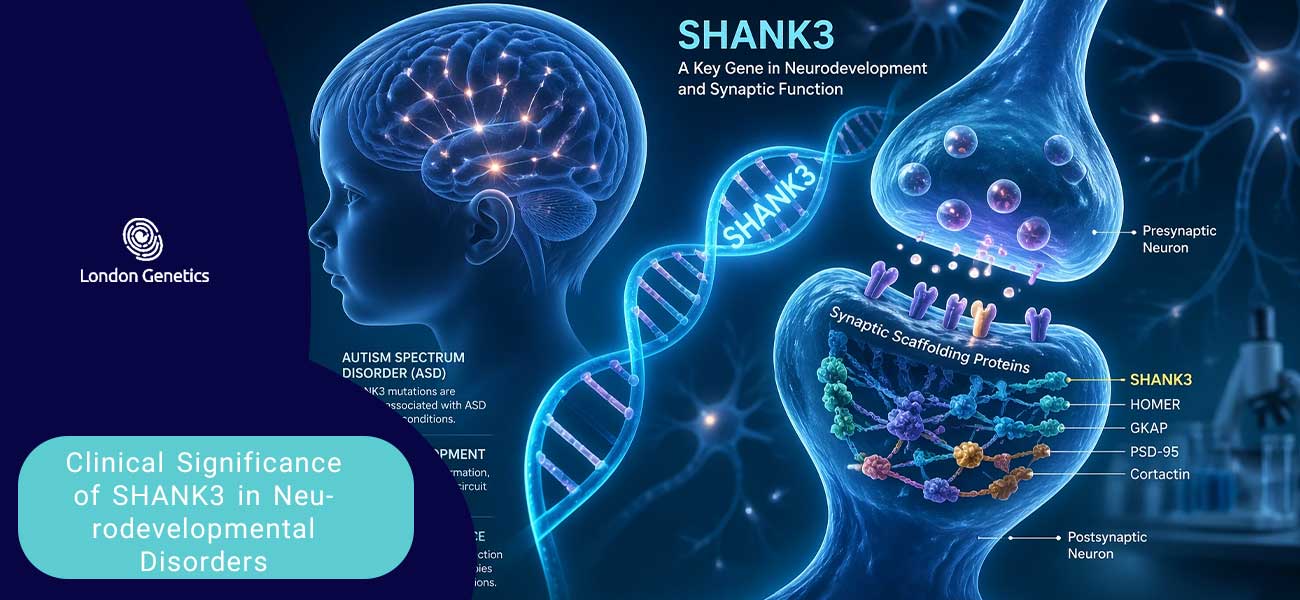
The SHANK3 Gene has emerged as one of the most important genes associated with neurodevelopmental disorders, particularly those affecting cognitive development, behaviour, and social functioning. Because the SHANK3 protein plays a fundamental role in organising the postsynaptic density of excitatory synapses, disruptions in the SHANK3 Gene can significantly alter synaptic communication and neural circuit development. These disruptions often lead to abnormalities in neuronal connectivity that manifest as developmental, behavioural, and neurological conditions. Research over the past two decades has consistently demonstrated that alterations in the SHANK3 gene contribute to a range of clinical phenotypes, with varying degrees of severity depending on the type and location of the genetic variant.
SHANK3 Gene and Autism Spectrum Disorder
One of the most well‑established associations involving the SHANK3 Gene is its connection with autism spectrum disorder (ASD). Mutations or deletions affecting this gene are considered among the strongest single‑gene contributors to autism. Individuals with SHANK3‑related ASD frequently present with core characteristics of the disorder, including deficits in social communication, restricted interests, and repetitive behaviours. At the neurobiological level, dysfunction of the SHANK3 Gene disrupts excitatory synaptic signalling, particularly within cortical and striatal circuits that are critical for social cognition and behavioural regulation. These findings have made SHANK3 a major focus in the genetics of autism research.
SHANK3 Gene and Phelan–McDermid Syndrome
Another key clinical condition linked to the SHANK3 Gene is Phelan–McDermid syndrome (PMS), also known as 22q13.3 deletion syndrome. This disorder typically results from a chromosomal deletion that removes part or all of the SHANK3 gene. Individuals with PMS commonly exhibit global developmental delay, severe speech impairment or absent speech, hypotonia, and autistic features. Because the SHANK3 Gene is considered the primary gene responsible for the neurological features of this syndrome, understanding its function has been critical for improving diagnostic accuracy and guiding clinical management.
SHANK3 Gene in Intellectual Disability and Cognitive Impairment
Alterations in the SHANK3 Gene are also strongly associated with intellectual disability and cognitive impairment. Many individuals carrying pathogenic variants experience delays in learning, language development, and adaptive functioning. The synaptic dysfunction caused by impaired SHANK3 protein activity can disrupt neural plasticity mechanisms that are essential for learning and memory formation. Consequently, deficits in the SHANK3 Gene often result in widespread effects on cognitive development across childhood and adolescence.
SHANK3 Gene and Motor or Behavioural Abnormalities
Beyond cognitive and social impairments, variants in the SHANK3 Gene have been linked to motor abnormalities and behavioural dysregulation. Because the gene is highly expressed in the striatum and other motor‑related brain regions, disruptions can lead to hypotonia, delayed motor milestones, and coordination difficulties. Some individuals also exhibit behavioural challenges such as impulsivity, hyperactivity, sleep disturbances, and emotional dysregulation. These features highlight the broad neurological influence of the SHANK3 Gene across multiple brain systems.
Diagnostic and Clinical Importance of the SHANK3 Gene
From a clinical perspective, identifying alterations in the SHANK3 Gene has become increasingly important in the diagnosis of neurodevelopmental disorders. Modern genomic technologies such as chromosomal microarray analysis and whole‑exome sequencing allow clinicians to detect both large deletions and small sequence variants affecting this gene. Early detection of SHANK3‑related conditions can support earlier intervention, targeted therapies, and more personalised clinical care. As genomic medicine continues to advance, the SHANK3 Gene remains a key target for understanding the molecular basis of neurodevelopmental disorders and for developing future therapeutic strategies.
Conclusion: The Central Role of the SHANK3 Gene in Neurodevelopment
The SHANK3 gene is indispensable for the development, organisation, and function of excitatory synapses in the human nervous system. Its precise regulation ensures synaptic stability, efficient neurotransmission, and the proper formation of neural circuits. When disrupted through mutations, deletions, or other genetic variants, SHANK3 dysfunction leads to widespread disturbances in synaptic signalling and contributes to a broad spectrum of neurodevelopmental conditions.
SHANK3‑related changes affect cognitive, behavioural, emotional, and motor development. Because of its extensive influence across the brain, SHANK3 has emerged as one of the most clinically significant genes in modern neurodevelopmental genetics. Advances in genomic testing now allow earlier and more accurate detection of SHANK3‑associated conditions, supporting personalised management and timely intervention.
Why SHANK3 Matters in Neurodevelopment:
As a master scaffolding protein of excitatory synapses, SHANK3 is critical for synaptic structure, plasticity, and neural circuit formation.
Consequences of Genetic Variants:
Mutations, deletions, or disruptions of SHANK3 impair synaptic signalling and are linked to autism spectrum disorder, Phelan–McDermid syndrome, intellectual disability, and behavioural or motor abnormalities.
Impact on Brain Function and Behaviour:
SHANK3 influences cognitive development, emotional regulation, communication skills, and motor coordination, making its integrity essential for healthy neurodevelopment.
Clinical Significance and Genetic Testing:
Improved sequencing technologies enable precise identification of SHANK3‑related disorders, guiding early diagnosis, targeted support, and personalised care strategies.
Future Perspectives in SHANK3 Research:
Continued progress in molecular biology, neuroscience, and therapeutic innovation is expected to advance targeted treatments aimed at restoring synaptic function and improving long‑term outcomes.