Introduction
Overview of Hereditary Diseases
Hereditary diseases are disorders caused by pathogenic genetic variants that are transmitted from one generation to another. These conditions may follow autosomal dominant, autosomal recessive, or X-linked inheritance patterns, and they can affect individuals across the lifespan. Examples include metabolic disorders, haemoglobinopathies, neuromuscular diseases, and various cancer predisposition syndromes.
The growing awareness of inherited conditions has increased the demand for accurate and timely Hereditary Disease Testing, enabling early identification of at-risk individuals and families. As genetic knowledge expands, the role of structured diagnostic approaches becomes increasingly significant in clinical practice.
Importance of Molecular Diagnosis
Molecular diagnosis has transformed modern medicine by allowing precise identification of disease-causing genetic variants at the DNA level. Unlike traditional clinical assessment alone, molecular methods provide definitive evidence of underlying genetic causes, supporting accurate diagnosis, prognosis, and treatment planning.
Genetic Testing plays a central role in this process, offering tools to detect pathogenic variants, confirm clinical suspicions, and guide medical management. In hereditary conditions, molecular confirmation is particularly valuable for risk assessment, family counselling, and reproductive planning. The integration of molecular techniques into routine healthcare has therefore strengthened the reliability and efficiency of hereditary disease evaluation.
Rationale for Focusing on Single-Gene Testing
Although advanced genomic technologies such as multi-gene panels and whole-exome sequencing are increasingly available, Single-Gene Testing remains a cornerstone of targeted genetic evaluation. When a specific hereditary disorder is strongly suspected based on clinical findings or family history, analysing a single relevant gene can provide a rapid, cost-effective, and highly accurate diagnostic result.
Single-Gene Testing is especially appropriate when a known familial pathogenic variant has been identified or when the clinical phenotype clearly suggests a particular monogenic condition. In such cases, this focused approach enhances diagnostic efficiency while minimising unnecessary broader analysis.
Therefore, within the broader framework of Hereditary Disease Testing and modern Genetic Testing, single-gene analysis continues to represent a fundamental and clinically valuable strategy for targeted genetic diagnosis.
Fundamentals of Single-Gene Testing
Single-Gene Testing is a targeted form of Genetic Testing
designed to analyse a specific gene in order to identify
pathogenic or likely pathogenic variants associated with
a defined hereditary condition.
It is primarily used when clinical suspicion is strong
or when a known familial variant has been identified.
This approach focuses on analysing one specific gene
linked to a suspected monogenic disorder.
It is particularly valuable in well-defined clinical scenarios
and in cases where a previously identified familial mutation exists.
Testing begins with DNA extraction from a blood or saliva sample,
followed by molecular analysis.
Common techniques include:
polymerase chain reaction (PCR),
Sanger sequencing,
or targeted next-generation sequencing (NGS),
depending on the suspected mutation type.
Single-Gene Testing can identify:
• Point mutations (single nucleotide variants)
• Insertions (addition of nucleotides)
• Deletions (loss of nucleotide sequences)
These alterations may affect protein structure or function,
contributing to hereditary disease development.
Unlike multi-gene panels or whole-exome/whole-genome sequencing,
Single-Gene Testing follows a focused, hypothesis-driven strategy.
It is most efficient when the clinical phenotype clearly indicates
a specific disorder, reducing incidental findings
and simplifying result interpretation.
In many cases of Hereditary Disease Testing,
it remains the most cost-effective and precise option.
Key Takeaway:
Single-Gene Testing provides a highly targeted,
accurate, and clinically efficient approach
for detecting known or strongly suspected genetic variants.
By focusing on a specific gene,
it supports precise diagnosis, informed counselling,
and streamlined interpretation within hereditary disease evaluation.
Indications for Single-Gene Testing in Hereditary Disease
Single-Gene Testing is a targeted strategy within the broader framework of Genetic Testing and plays a crucial role in Hereditary Disease Testing when specific clinical or familial indicators are present. Its use is generally guided by well-defined indications that increase the likelihood of identifying a pathogenic variant.
Positive Family History
A significant indication for Single-Gene Testing is the presence of a positive family history of a known or suspected hereditary condition. When multiple relatives are affected by the same disorder, particularly across generations, the probability of a monogenic inheritance pattern increases.
In such cases, targeted testing of the most relevant gene allows efficient confirmation or exclusion of the suspected diagnosis, supporting accurate risk assessment and clinical management.
Known Familial Pathogenic Variant
When a pathogenic or likely pathogenic variant has already been identified in a family member, Single-Gene Testing becomes the preferred method for cascade testing. This approach focuses specifically on the previously detected variant, enabling rapid and precise determination of whether an individual has inherited the same mutation.
Within Hereditary Disease Testing, this strategy is highly cost-effective and reduces unnecessary broader analysis, while providing clear results for clinical decision-making and reproductive counselling.
Clinical Suspicion of a Specific Monogenic Disorder
Strong clinical features suggestive of a particular monogenic disease represent another key indication for Single-Gene Testing. When the phenotype is distinctive and aligns with a well-characterised genetic condition, targeted analysis of the relevant gene can confirm the diagnosis.
This hypothesis-driven approach enhances diagnostic efficiency and is especially valuable when early confirmation may influence treatment, surveillance, or prognosis.
Carrier Screening Contexts
In reproductive medicine, Single-Gene Testing is frequently applied in carrier screening programmes, particularly for autosomal recessive conditions. Identifying asymptomatic carriers is essential for assessing reproductive risk and informing family planning decisions.
In this context, Genetic Testing enables couples to understand their risk of having an affected child and to consider available reproductive options. Targeted testing may be used when there is known family history or when screening is directed towards specific high-prevalence conditions.
Diagnostic Workflow in Single-Gene Testing
The diagnostic workflow in Single-Gene Testing follows a structured,
systematic process to ensure analytical accuracy, reliability,
and clinical validity within the framework of Hereditary Disease Testing.
Each stage contributes to high-quality Genetic Testing outcomes.

Explore each laboratory step in the genetic diagnostic process.

Testing begins with collection of peripheral blood or saliva samples.
Blood is commonly preferred due to high DNA yield and stability.
Samples undergo proper labelling, transport, and storage
to prevent contamination and preserve genetic material.
Genomic DNA is then extracted using validated laboratory protocols.

Polymerase Chain Reaction (PCR) amplifies specific regions
of the target gene to enable detailed sequence analysis.
It is particularly useful for detecting known mutation hotspots
or specific exons in Hereditary Disease Testing.
PCR is sensitive, efficient, and cost-effective.

Sanger sequencing provides precise nucleotide-level resolution
and remains a gold-standard method for confirming detected variants.
It is especially valuable for identifying known familial mutations
with high specificity and reliability within Genetic Testing.

Targeted NGS enables sequencing of all coding regions
of a specific gene with high depth and precision.
This approach combines comprehensive coverage with efficiency,
particularly for large genes or those with multiple mutation sites,
while maintaining the focused nature of Single-Gene Testing.

Detected variants are classified according to established guidelines:
pathogenic, likely pathogenic, variant of uncertain significance (VUS),
likely benign, or benign.
Interpretation integrates laboratory findings,
clinical presentation, population databases,
and functional evidence to ensure clinically meaningful results.
Accurate classification is essential for ethical reporting,
informed decision-making, and effective patient management.
Key Takeaway:
A structured diagnostic workflow—from sample collection to variant interpretation—
ensures accuracy, reliability, and clinical validity in Single-Gene Testing.
This systematic approach strengthens the integrity of Genetic Testing
and supports precise, evidence-based management in hereditary disease evaluation.
Clinical Applications
Single-Gene Testing has a wide range of clinical applications within modern Genetic Testing strategies, particularly in the context of Hereditary Disease Testing. Its targeted nature makes it highly valuable in situations where a specific monogenic condition is suspected or confirmed.
Diagnosis of Inherited Disorders
One of the primary applications of Single-Gene Testing is the definitive diagnosis of inherited disorders. When clinical findings strongly suggest a particular genetic condition, targeted analysis of the relevant gene can confirm the presence of a pathogenic variant.
This approach enables accurate classification of disease, supports appropriate medical management, and provides clarity for both patients and healthcare professionals. In many cases, molecular confirmation through Genetic Testing is essential for establishing a precise diagnosis and guiding long-term care.
Pre-Symptomatic Testing
Pre-symptomatic testing is performed in individuals who are at risk of developing a hereditary condition but have not yet shown clinical symptoms. This application is particularly relevant for late-onset disorders or conditions with predictable inheritance patterns.
Through Single-Gene Testing, individuals can determine whether they have inherited a known familial pathogenic variant. Early identification allows for timely surveillance, preventive interventions, and informed lifestyle or medical planning within structured Hereditary Disease Testing programmes.
Carrier Detection
Carrier detection is a critical component of reproductive genetics, especially for autosomal recessive and X-linked disorders. Carriers are typically asymptomatic but may transmit a pathogenic variant to their offspring.
Single-Gene Testing enables precise identification of carriers when a specific mutation is known or strongly suspected. This information is invaluable for family planning, risk assessment, and counselling, forming an important part of comprehensive Genetic Testing strategies.
Reproductive and Prenatal Applications
In reproductive medicine, Single-Gene Testing plays a significant role in preconception, prenatal, and early pregnancy contexts. When both partners are carriers of the same autosomal recessive condition, targeted testing assists in assessing the risk of having an affected child.
Additionally, prenatal diagnostic procedures may utilise Single-Gene Testing to confirm or exclude the presence of a known familial variant in the fetus. These applications support informed reproductive decision-making and contribute to personalised care within modern Hereditary Disease Testing frameworks.
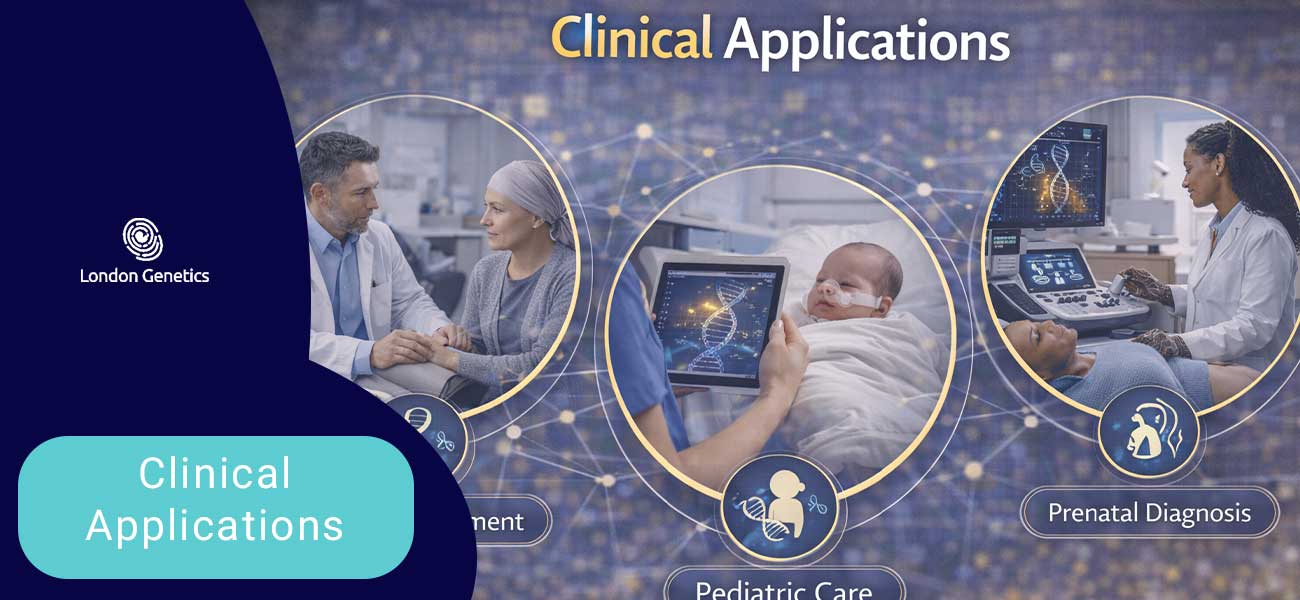
Clinical Applications
Single-Gene Testing has a wide range of clinical applications within modern Genetic Testing strategies, particularly in the context of Hereditary Disease Testing. Its targeted nature makes it highly valuable in situations where a specific monogenic condition is suspected or confirmed.
Diagnosis of Inherited Disorders
One of the primary applications of Single-Gene Testing is the definitive diagnosis of inherited disorders. When clinical findings strongly suggest a particular genetic condition, targeted analysis of the relevant gene can confirm the presence of a pathogenic variant.
This approach enables accurate classification of disease, supports appropriate medical management, and provides clarity for both patients and healthcare professionals. In many cases, molecular confirmation through Genetic Testing is essential for establishing a precise diagnosis and guiding long-term care.
Pre-Symptomatic Testing
Pre-symptomatic testing is performed in individuals who are at risk of developing a hereditary condition but have not yet shown clinical symptoms. This application is particularly relevant for late-onset disorders or conditions with predictable inheritance patterns.
Through Single-Gene Testing, individuals can determine whether they have inherited a known familial pathogenic variant. Early identification allows for timely surveillance, preventive interventions, and informed lifestyle or medical planning within structured Hereditary Disease Testing programmes.
Carrier Detection
Carrier detection is a critical component of reproductive genetics, especially for autosomal recessive and X-linked disorders. Carriers are typically asymptomatic but may transmit a pathogenic variant to their offspring.
Single-Gene Testing enables precise identification of carriers when a specific mutation is known or strongly suspected. This information is invaluable for family planning, risk assessment, and counselling, forming an important part of comprehensive Genetic Testing strategies.
Reproductive and Prenatal Applications
In reproductive medicine, Single-Gene Testing plays a significant role in preconception, prenatal, and early pregnancy contexts. When both partners are carriers of the same autosomal recessive condition, targeted testing assists in assessing the risk of having an affected child.
Additionally, prenatal diagnostic procedures may utilise Single-Gene Testing to confirm or exclude the presence of a known familial variant in the fetus. These applications support informed reproductive decision-making and contribute to personalised care within modern Hereditary Disease Testing frameworks.
Conclusion: The Enduring Role of Single-Gene Testing in Genetic Medicine
Single-Gene Testing remains a highly valuable and clinically focused component of modern Genetic Testing.
When applied in appropriately selected contexts, it enables accurate identification of pathogenic variants,
supports definitive diagnosis, and informs evidence-based patient care within Hereditary Disease Testing frameworks.
Despite rapid advances in multi-gene panels and large-scale genomic sequencing,
targeted single-gene analysis continues to play a central role in contemporary molecular diagnostics.
Its precision-driven methodology ensures clarity in well-defined clinical scenarios.
Key areas of clinical importance include:
- Accurate identification of known or suspected pathogenic variants
- Support for definitive diagnosis in monogenic disorders
- Efficient and cost-effective testing in clearly defined phenotypes
- Reduced incidental findings compared with broader genomic approaches
Continued Relevance in Hereditary Disease:
When clinical presentation strongly suggests a specific disorder,
or when a known familial variant has been identified,
Single-Gene Testing remains the most practical and targeted strategy.
Its focused design enhances interpretative simplicity
and streamlines clinical follow-up.
By minimising unnecessary broad analysis,
this approach reduces ambiguity and supports clear,
actionable results in Genetic Testing pathways.
Role in Targeted Genetic Diagnosis:
The primary strength of Single-Gene Testing lies in its contribution to precise, gene-specific diagnosis.
Concentrating on a single relevant gene ensures high analytical accuracy and clinical specificity,
which is essential for effective patient management.
Within personalised medicine, targeted analysis supports:
- Confirmation of clinical diagnoses
- Guidance of treatment and long-term management
- Informed reproductive and family planning decisions
- Family-based risk assessment and counselling
Why This Matters:
In modern Hereditary Disease Testing frameworks,
Single-Gene Testing remains a cornerstone tool.
Its balance of precision, efficiency, and clinical relevance
ensures continued importance in evidence-based genetic practice.
Your Next Step:
Consult with a qualified genetics specialist
to determine whether targeted Single-Gene Testing
is appropriate for your clinical situation,
and to receive accurate interpretation within a structured diagnostic pathway.