
What Are Statins and Why Are They Prescribed?
Statins are among the most commonly prescribed medicines in the UK, taken by millions of people to help lower cholesterol and reduce the risk of heart attack and stroke. Medicines such as atorvastatin, simvastatin, and rosuvastatin work by blocking an enzyme in the liver responsible for producing cholesterol, helping to keep levels within a healthier range over time.
Doctors typically prescribe statins for people with high cholesterol, existing cardiovascular disease, or other risk factors such as diabetes or a family history of heart problems. For many patients, they’re a long-term, ongoing treatment rather than a short course, which is why understanding statin side effects matters so much — you’re likely to be taking this medication for years, not weeks.
Like most medications, however, statins don’t affect everyone in quite the same way. Some people tolerate them with barely a second thought, while others notice troublesome symptoms fairly early on. This variation is increasingly understood to have a genetic basis, an area explored through Cardiovascular Drug Response Testing, which looks at how a person’s genetic profile influences their response to heart medications, including statins.
Common Statin Side Effects in the First Few Weeks
When you first start taking a statin, your body needs a little time to adjust, and this is usually when statin side effects are most likely to appear. The reassuring news is that most of these effects are mild and often ease within the first few weeks of treatment.
Most statin side effects are a temporary part of your body adjusting to treatment, not a sign that the medication isn’t right for you. Staying in touch with your GP during these early weeks means any persistent symptoms can be reviewed, while the milder, expected effects are simply given time to settle.
Statin-Related Muscle Pain: What’s Normal and What Isn’t
Muscle pain is by far the most talked-about of all statin side effects, and understandably so — it’s the symptom most likely to make people question whether they should keep taking their medication. Knowing where the line sits between “normal adjustment” and “something to flag” can save a lot of unnecessary worry.
What’s Considered Normal
Mild to moderate aching, tenderness, or stiffness — particularly in the thighs, calves, or lower back — is a fairly common experience in the early weeks of statin treatment. This type of discomfort is usually symmetrical (affecting both sides of the body similarly), doesn’t significantly limit your daily activities, and tends to ease over time or with simple adjustments such as taking the medication at a different time of day.
What Isn’t Normal
Muscle pain that’s severe, one-sided, rapidly worsening, or accompanied by noticeable weakness is a different matter entirely. Dark or “cola-coloured” urine, alongside significant muscle pain, is a particularly important warning sign, as it can indicate a rare but serious condition called rhabdomyolysis, where muscle tissue begins to break down. This requires urgent medical attention rather than simply waiting it out.
Why This Distinction Matters
Because muscle-related statin side effects exist on such a wide spectrum — from mild stiffness to a genuine medical emergency — it’s never a good idea to self-diagnose based on symptoms alone. A quick conversation with your GP, and sometimes a simple blood test to check muscle enzyme levels, can usually clarify what’s going on and whether any change to your treatment is needed.
If in doubt, it’s always worth getting muscle pain checked rather than assuming it will pass, particularly if it’s new, severe, or doesn’t fit the “mild and improving” pattern described above.
Serious Side Effects: When to Seek Medical Help
While the vast majority of statin side effects are mild and manageable, a small number of reactions are more serious and warrant prompt medical attention. Being aware of these means you can act quickly rather than waiting to see if things improve on their own.
While these serious statin side effects are uncommon, knowing what to look out for means you’re well placed to seek help quickly. If you’re ever unsure about a symptom, it’s always safer to contact your GP or NHS 111 rather than wait it out.
Why Do Some People Get Muscle Pain and Others Don’t?
One of the most common questions patients ask is why two people can take the exact same statin, at the exact same dose, and have completely different experiences — one feels nothing at all, while the other struggles with noticeable statin side effects within days. Genetics plays a significant part in answering this.
The Role of the SLCO1B1 Gene
Much of how your body handles a statin comes down to a gene called SLCO1B1, which controls a transporter protein responsible for moving the drug into the liver, where it’s broken down. Certain genetic variations in this gene can slow this process considerably, allowing higher levels of the statin to build up in the bloodstream and muscle tissue — which helps explain why some people are far more prone to muscle-related statin side effects than others, even on an identical dose.
Differences in Drug Metabolism
Beyond SLCO1B1, variations in liver enzymes can also influence how quickly a statin is processed and cleared from the body. Slower metabolism generally means the medication stays active in the system for longer, increasing the likelihood of side effects, while faster metabolism can sometimes mean the drug doesn’t work as effectively as intended.
Other Contributing Factors
Age, kidney function, other medications, and interactions with certain foods (grapefruit being a well-known example) all play a role too. But for patients who’ve experienced persistent muscle pain despite trying more than one statin, an underlying genetic factor is often part of the picture.
Understanding Your Own Genetic Profile
This is precisely the area explored through Cardiovascular Drug Response Testing, which looks at how your genetic makeup influences your response to heart medications, including statins. Rather than relying on trial and error, genetic testing can offer real insight into which statin — and which dose — is more likely to suit you, helping to reduce the risk of statin side effects before treatment even begins.
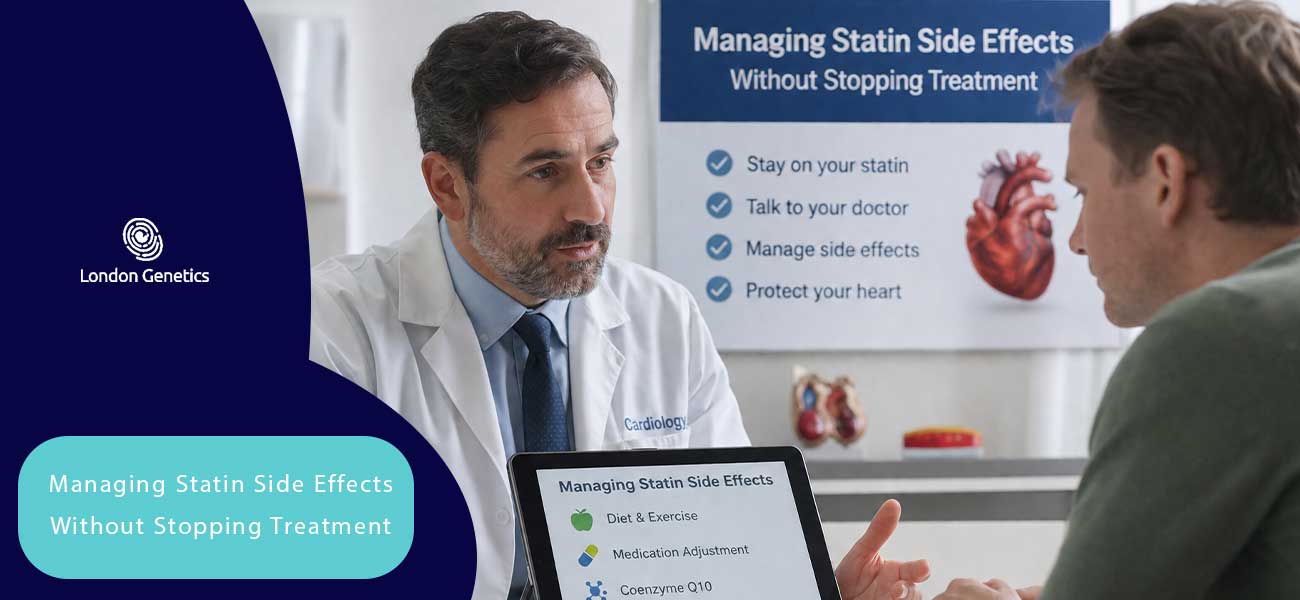
Managing Statin Side Effects Without Stopping Treatment
Experiencing statin side effects doesn’t automatically mean you need to abandon treatment altogether. Statins offer real, proven protection against heart attack and stroke, so it’s always worth exploring practical solutions before considering stopping. There are several sensible steps that can make a genuine difference.
Time Your Dose Differently
If muscle discomfort or fatigue is bothering you, your GP may suggest taking your statin at a different time of day, or trying an alternative dosing schedule, such as every other day for certain types of statin.
Give It Time — But Not Too Much Time
Many early statin side effects settle within two to four weeks as your body adjusts. However, if symptoms are severe, worsening, or showing no sign of improvement after this point, it’s a clear signal to speak to your GP rather than simply persevering.
Stay Well Hydrated
Adequate hydration can help ease mild muscle aches and reduce the likelihood of more troublesome symptoms, particularly around exercise or physical exertion.
Review Other Medications and Supplements
Certain medications and supplements can interact with statins and increase the likelihood of side effects. It’s worth asking your GP or pharmacist to review everything you’re currently taking, including over-the-counter products.
Consider a Different Statin or Dose
Not all statins behave identically in the body. If one particular statin is causing troublesome statin side effects, your GP may suggest switching to a different type or lowering the dose, as tolerance can vary considerably even within this single class of medication.
Never Stop Without Speaking to Your GP First
It can be tempting to simply stop taking a statin when side effects feel unpleasant, but doing so removes an important layer of protection against heart attack and stroke. Any changes to your statin treatment should always be made in consultation with your GP, who can weigh up the risks and benefits together with you.
Summary: Key Takeaways on Statin Side Effects
Statins remain one of the most effective tools available for protecting long-term heart health, and for the majority of patients, statin side effects are mild, temporary, and easily managed. Understanding what’s normal, what needs attention, and what to do about it puts you in a far stronger position than simply hoping for the best.
If you’ve experienced persistent or unexplained statin side effects, particularly after trying more than one statin, it may be worth exploring whether a genetic factor is contributing to your response. A conversation with your GP — and, where appropriate, a referral for further genetic assessment — is always a sensible next step towards treatment that genuinely works for you.
Book Your Consultation with Dr Karimiani