Introduction
Targeted cancer therapy represents one of the most significant advances in modern oncology, offering a more precise and effective way to treat cancer than traditional methods. Rather than attacking both healthy and cancerous cells—as occurs with chemotherapy—targeted approaches focus specifically on the molecular changes that drive cancer growth. This shift marks the beginning of a new era in which treatment is guided not only by the type of cancer, but by the unique genetic features of each tumour.
Understanding the role of DNA and genetic information is crucial in this context. Cancer develops when alterations occur within the DNA of a cell, disrupting normal processes and allowing uncontrolled growth. By analysing these genetic changes, scientists and clinicians can identify specific pathways or proteins that the cancer relies on. Targeted cancer therapy is then designed to interfere with these precise mechanisms, making treatment more accurate and often far less harmful to healthy tissue.
This progression—from traditional, one-size-fits-all treatments to precision medicine—reflects a broader transformation in healthcare. Medicine is becoming more personalised, data-driven, and tailored to the individual. In the case of cancer, this means that therapies can now be selected based on the genetic profile of a patient’s tumour, improving treatment outcomes and offering new hope to many who previously had limited options.
Understanding the Role of DNA in Cancer
Cancer is fundamentally a genetic disease. Its development is closely tied to alterations in DNA that disturb normal cellular regulation. Understanding these genetic mechanisms is essential for recognising how targeted cancer therapies work and why analysing tumour DNA plays a critical role in modern oncology.
Mutations in DNA can disrupt the delicate balance of cell growth and repair. Some changes overactivate genes that stimulate uncontrolled cell division, while others silence tumour-suppressor genes responsible for preventing abnormal growth. As these mutations accumulate, cancer cells gain the ability to thrive, resist death signals, and eventually form tumours. Targeted therapies are designed to block these malfunctioning pathways directly.
Mutations can be inherited or acquired. Inherited mutations are passed down from parents and exist in every cell from birth. Although they account for a smaller percentage of cancers, they significantly elevate lifetime cancer risk.
Acquired mutations develop over time due to environmental exposures such as smoking, radiation, UV light, or natural cell-division errors. These mutations typically occur only in tumour cells and are often the main targets for precision therapies.
Not all mutations contribute equally to cancer. Through DNA analysis, clinicians can distinguish harmless changes from critical “driver” mutations that actively propel tumour growth. Identifying these key mutations enables physicians to select therapies that precisely target the tumour’s vulnerabilities, improving treatment effectiveness while minimising harm to healthy tissue.
Analysing the tumour’s genetic profile provides a map of the biological mechanisms fueling cancer. This allows clinicians to personalise treatment, select drugs that inhibit the specific pathways a tumour depends on, and avoid ineffective therapies. This precision-based approach represents the foundation of modern Targeted Cancer Therapy.
Genetic insights are transforming cancer care.
By understanding how mutations arise, how they drive tumour behaviour, and how they can be therapeutically targeted, clinicians can provide more personalised, effective, and safer treatment strategies for patients.
What Makes Targeted Therapy Different?
Targeted Cancer Therapy stands apart from traditional cancer treatments because it focuses on the specific molecular mechanisms that drive tumour growth. While chemotherapy affects any rapidly dividing cells—healthy or malignant—targeted therapy is designed to act solely on the cancer’s unique genetic or protein-based abnormalities. This difference fundamentally changes both the effectiveness and the experience of treatment for patients.
How targeted drugs work compared to chemotherapy
Chemotherapy functions by disrupting cell division across the body, which is why it often leads to side effects such as hair loss, fatigue, and immune suppression. It cannot distinguish between cancerous and healthy cells.
By contrast, targeted drugs operate with far greater precision. They are developed to inhibit particular molecules—often proteins or signalling pathways—that cancer cells rely on for survival and replication. In other words, targeted therapy interferes with the tumour’s internal “instructions”, many of which are written into its altered DNA. This tailored approach helps to stop cancer growth while sparing most normal cells from harm.
Advantages: precision, fewer side effects, higher effectiveness
Because Targeted Cancer Therapy acts on specific abnormalities within the tumour, it offers several notable advantages:
-
Precision: Treatments are based on the genetic profile of the tumour, ensuring that therapy directly addresses the cancer’s underlying cause.
-
Fewer side effects: Healthy cells are largely preserved, reducing the severe systemic effects often associated with chemotherapy.
-
Higher effectiveness: When a drug targets the exact mutation driving the cancer, the response can be significantly more powerful and sustained.
This combination makes targeted therapy one of the most promising approaches in modern oncology.
Types of targeted therapies
Targeted treatments generally fall into two major categories, each with its own mechanism and clinical use:
1. Small molecule inhibitors
These are typically oral medications that enter cells and block specific enzymes or proteins involved in cancer growth. They are especially effective against tumours driven by abnormal internal signalling pathways.
2. Monoclonal antibodies
These are laboratory-designed antibodies administered intravenously. They attach to specific proteins on the surface of cancer cells, marking them for destruction or blocking their ability to receive growth signals.
Together, these two forms of therapy form the backbone of Targeted Cancer Therapy, offering personalised and scientifically advanced options for patients.
Genomic Testing: Finding the Right Target
A cornerstone of Targeted Cancer Therapy is matching the right drug to the genetic alterations driving a patient’s tumour. Genomic testing allows clinicians to examine tumour DNA in detail and identify the specific mutations “fueling” cancer growth.
 Hover over each box for more detailed information!


HER2 in breast cancer: targetable with trastuzumab.
EGFR in lung cancer: targeted inhibitors block abnormal growth signals.
BRAF in melanoma: enables precise molecular therapies.
Identifying these mutations allows clinicians to personalise treatment plans for higher efficacy than conventional approaches.
Genomic testing is key to precision oncology.
By uncovering tumour-specific mutations and biomarkers, clinicians can select the most effective targeted therapies, improving patient outcomes while minimising harm to healthy cells.
Breakthrough Examples of Targeted Therapies
Targeted Cancer Therapy has transformed the landscape of oncology, offering treatments that directly address the genetic drivers of various cancers. Several success stories highlight how these therapies have improved outcomes and quality of life for patients.
Success stories in breast cancer (HER2-targeted drugs)
One of the earliest and most notable triumphs of Targeted Cancer Therapy is in HER2-positive breast cancer. Tumours with overexpression of the HER2 protein respond exceptionally well to HER2-targeted drugs, such as trastuzumab and pertuzumab. These therapies have significantly increased survival rates and reduced the risk of recurrence, marking a turning point in breast cancer management.
Targeted treatments for lung cancer (EGFR inhibitors)
In non-small cell lung cancer (NSCLC), mutations in the EGFR gene drive tumour growth in a substantial number of patients. EGFR inhibitors, including erlotinib and gefitinib, are designed to block these abnormal signalling pathways. By directly targeting the mutation responsible for tumour proliferation, these drugs often produce remarkable responses, even in advanced stages of the disease.
Targeted therapy in melanoma (BRAF inhibitors)
Melanoma, a serious form of skin cancer, can be driven by mutations in the BRAF gene. BRAF inhibitors, such as vemurafenib and dabrafenib, specifically target these mutations, slowing or halting tumour growth. When combined with other therapies, including MEK inhibitors, they have substantially improved survival for patients with BRAF-mutated melanoma.
These examples illustrate the profound potential of Targeted Cancer Therapy: by understanding the genetic basis of cancer, clinicians can deliver treatments that are both precise and highly effective, offering hope to patients who previously had limited options.
Benefits and Limitations
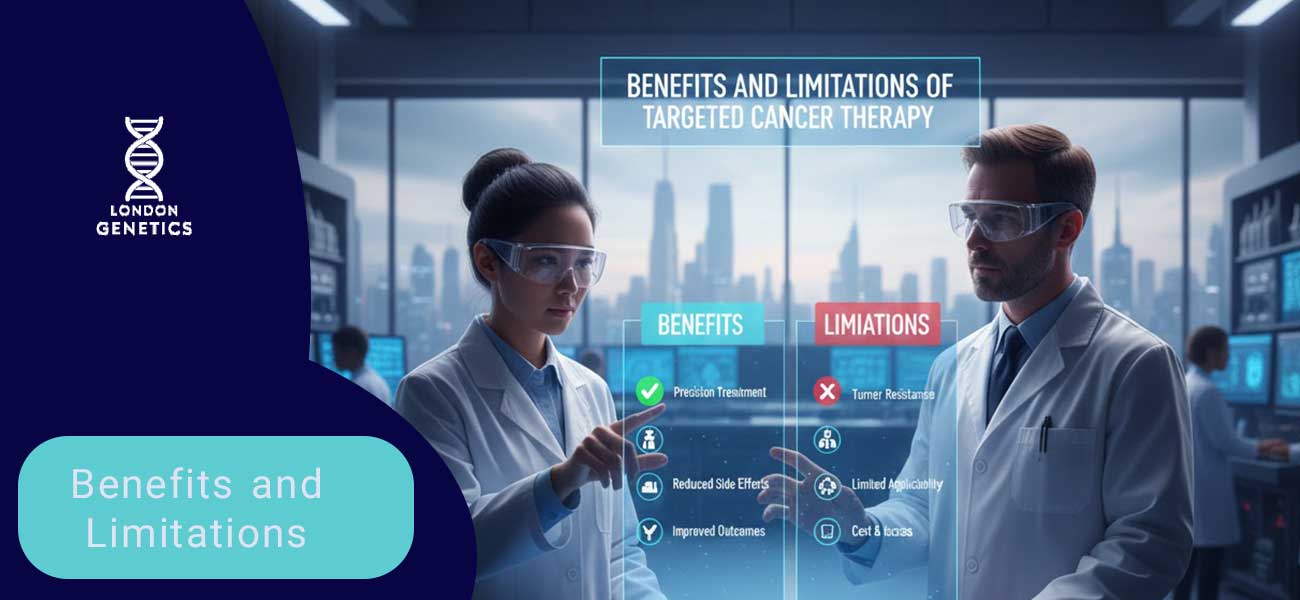
Targeted Cancer Therapy offers a revolutionary approach to treating cancer, but like any medical intervention, it comes with both advantages and challenges. Understanding these is essential for patients, clinicians, and researchers alike.
Benefits
-
Personalised treatments: By focusing on the unique genetic profile of a tumour, treatments are tailored to the individual patient. This ensures that the therapy directly attacks the cancer while minimising damage to healthy cells.
-
Improved survival: For many cancers, targeted therapies have demonstrated significantly higher response rates compared to traditional chemotherapy, often leading to longer progression-free survival and overall survival.
-
Reduced toxicity: Because targeted drugs act specifically on cancer-related pathways, patients typically experience fewer side effects than with conventional chemotherapy, improving quality of life during treatment.
Limitations
-
Drug resistance: Over time, cancer cells may develop resistance to targeted therapies, rendering them less effective or ineffective. Continuous research is needed to overcome these challenges.
-
High cost: Targeted treatments are often expensive due to the complexity of their development and the personalised nature of the therapy, which can limit accessibility.
-
Not effective for all patients: Targeted therapies are only suitable for cancers that exhibit specific genetic alterations. Patients without these actionable mutations may not benefit, making genomic testing essential to determine eligibility.
Despite these limitations, the benefits of Targeted Cancer Therapy have made it a cornerstone of modern oncology, providing a path towards more precise, effective, and patient-centred cancer care.
Conclusion: The Future of Targeted Cancer Therapy
Targeted Cancer Therapy represents a turning point in oncology. By focusing on the genetic drivers of cancer, this approach has shifted treatment from a one-size-fits-all model to therapies tailored to each patient’s tumour biology, improving effectiveness and reducing unnecessary side effects.
The promise of DNA-driven treatment lies in translating complex genomic information into actionable therapies. By identifying the specific mutations that fuel a tumour, clinicians can select drugs that directly interfere with these pathways, maximising success while minimising harm to healthy cells.
As research and technology advance, we are entering a new era of personalised cancer care, where treatments are guided by individual genetic profiles. Targeted Cancer Therapy stands at the forefront of this transformation, offering hope, improved outcomes, and a glimpse into the future of precision medicine.
Take action – learn more about personalised cancer therapies, consult with oncology specialists, and stay informed about the latest advances in Targeted Cancer Therapy.