Introduction to Targeted Gene Panels
Targeted Gene Panels have become an important tool in modern genetic testing, allowing clinicians and researchers to analyse a selected group of genes associated with specific diseases or clinical conditions. Unlike broader genomic approaches that examine large portions of the genome, Targeted Gene Panels focus on carefully chosen genes that are known to play a role in particular disorders. This focused strategy improves diagnostic efficiency and helps clinicians identify relevant genetic variants more quickly and accurately.
In clinical genetics, Targeted Gene are widely used to investigate inherited conditions where multiple genes may contribute to the same disease. By analysing several related genes simultaneously, these panels provide a practical and cost‑effective approach to genetic diagnosis. They are commonly applied in areas such as hereditary cancers, cardiovascular disorders, neurological conditions, and rare genetic diseases.
Targeted Gene Panels also play a role in preventive healthcare and population‑based genetic initiatives. For example, they are often incorporated into Carrier Screening, where individuals are tested to determine whether they carry genetic variants that could be passed on to their children. In addition, many healthcare systems use Targeted Gene as part of broader Genetic Screening Programmes designed to identify individuals at risk of inherited conditions before symptoms appear.
As genomic technologies continue to advance, Targeted Gene Panels remain a valuable component of modern genetic diagnostics, bridging the gap between single‑gene testing and more comprehensive sequencing approaches. Their focused design, clinical relevance, and efficiency make them an essential tool in both diagnostic and preventive genetic medicine.
What Are Targeted Gene Panels and How Do They Work?
Targeted Gene Panels are specialised genetic tests designed to analyse a selected group of genes that are known to be associated with a particular disease or group of related conditions. Instead of examining the entire genome, these tests focus only on genes that are clinically relevant to the patient’s symptoms or suspected disorder.
By concentrating on clinically relevant genes, these tests improve diagnostic efficiency and reduce the amount of unnecessary genetic data produced during testing.
For example, a hereditary cancer panel may include genes such as BRCA1 and BRCA2, while a cardiomyopathy panel may include genes involved in heart muscle function.
In most cases, this involves a blood sample or saliva sample, both of which contain the DNA required for genetic analysis.
This advanced sequencing method allows laboratories to examine many genes simultaneously with high sensitivity and accuracy.
These systems compare detected variants with established genetic databases and scientific references.
Each variant is evaluated to determine whether it is likely benign, pathogenic, or classified as a variant of uncertain significance.
These results help support diagnosis, guide medical management, and inform decisions about further testing or genetic counselling.
Targeted Panels provide a focused and clinically relevant approach to genetic testing.
By analysing carefully selected disease‑associated genes using advanced sequencing technology,
healthcare professionals can investigate complex genetic conditions more efficiently than with traditional single‑gene testing.
Types of Targeted Gene Panels Used in Genetic Testing
Targeted Gene Panels can be designed in several ways depending on the clinical objective, the patient’s symptoms, and the specific genetic conditions being investigated. These panels group together genes that are known to be associated with particular diseases, biological pathways, or clinical features. By focusing on relevant genes, Targeted Gene Panels help clinicians obtain more precise diagnostic information while maintaining efficiency in genetic analysis. The most commonly used types include the following:
-
Disease‑Specific Gene Panels
Disease‑specific Targeted Gene Panels are designed to analyse genes associated with a single, well‑defined medical condition. These panels are often used when a patient presents with symptoms that strongly suggest a particular disorder. For example, hereditary breast and ovarian cancer panels may include genes such as BRCA1, BRCA2, PALB2, and TP53. Because these Targeted Gene Panels focus on a clearly defined disease category, they allow clinicians to investigate the most relevant genetic variants efficiently.
-
Syndrome‑Based Gene Panels
Syndrome‑based Targeted Panels are used when several genetic conditions share overlapping clinical features. In these cases, it may be difficult to determine the exact disorder based solely on symptoms. These panels include genes associated with multiple syndromes that present with similar characteristics, such as developmental delay, congenital anomalies, or metabolic abnormalities. Using Targeted Gene Panels in this context helps broaden the diagnostic scope while still maintaining a focused genetic analysis.
-
Organ‑System Gene Panels
Organ‑system Targeted Gene Panels focus on genes that affect a specific body system. These panels are commonly used in areas such as cardiology, neurology, and ophthalmology. For instance, a cardiovascular Targeted Gene Panel may include genes related to cardiomyopathies, arrhythmias, or inherited vascular disorders. By concentrating on genes relevant to a particular organ system, these panels provide a structured and clinically relevant approach to diagnosing complex genetic diseases.
-
Pathway‑Based Gene Panels
Some Targeted Panels are designed around biological pathways rather than specific diseases. These panels include genes involved in the same molecular or cellular processes, such as DNA repair mechanisms, metabolic pathways, or signalling pathways. This approach can be particularly useful when different disorders arise from disruptions within the same biological system.
-
Custom or Expanded Gene Panels
Custom Targeted Gene Panels are tailored to meet specific research or clinical needs. Laboratories may design these panels by combining genes relevant to a particular patient population, clinical programme, or research project. Expanded panels may also be updated regularly as new disease‑associated genes are discovered, ensuring that Targeted Gene Panels remain aligned with the latest developments in genomic medicine.
Overall, the flexibility of Targeted Gene Panels allows them to be adapted for a wide range of diagnostic and research applications, making them an essential component of modern genetic testing strategies.
Clinical Applications of Targeted Gene Panels
Targeted Gene Panels are widely used in clinical genetics because they allow healthcare professionals to analyse multiple disease‑associated genes simultaneously while maintaining a focused and clinically relevant approach. By concentrating on genes known to be linked to specific conditions, these panels support accurate diagnosis, risk assessment, and personalised patient management across several areas of modern medical genetics.

An overview of how Targeted Gene Panels are applied in clinical genetics and modern medical practice.

One of the most important clinical uses of Targeted Gene Panels is the diagnosis of inherited genetic disorders.
Many genetic diseases are associated with mutations in several different genes, making single‑gene testing inefficient. Targeted Gene Panels allow clinicians to analyse all relevant genes simultaneously, increasing the likelihood of identifying the underlying genetic cause of a patient’s condition.
Targeted Gene Panels are commonly used to assess the risk of hereditary cancers.
These panels often include genes associated with inherited cancer syndromes, such as BRCA1, BRCA2, and other DNA repair genes. Identifying pathogenic variants helps clinicians guide surveillance strategies, preventive interventions, and personalised treatment decisions.

In cardiology, Targeted Gene Panels are frequently used to investigate inherited heart conditions such as cardiomyopathies, arrhythmias, and certain vascular disorders.
Because these conditions may involve multiple genes, targeted panels allow clinicians to evaluate a broad range of genetic factors that may contribute to cardiovascular disease.

Many neurological and neurodevelopmental disorders have a genetic basis involving numerous possible genes.
Targeted Panels are used to investigate conditions such as epilepsy, intellectual disability, and certain neurodegenerative disorders. Analysing a curated group of relevant genes improves diagnostic accuracy and helps clinicians develop appropriate management strategies.

Targeted Gene Panels also play an important role in carrier screening for individuals or couples planning a family.
These panels often include genes associated with autosomal recessive or X‑linked disorders. Identifying carrier status allows prospective parents to better understand potential genetic risks and make informed reproductive decisions.
Key Takeaway:
The clinical applications of Targeted Gene Panels continue to expand as new disease‑associated genes are discovered. Their ability to combine efficiency, diagnostic accuracy, and clinical relevance makes them an essential tool in modern genetic medicine.
Advantages and Limitations of Targeted Gene Panels
Targeted Gene Panels have become an important method in modern genetic diagnostics because they provide a focused and efficient approach to analysing disease‑related genes. By concentrating on a selected set of clinically relevant genes, these tests offer several practical advantages in clinical settings. However, like any genetic testing method, Targeted Panels also have certain limitations that should be considered when interpreting results.
-
Advantages of Targeted Gene Panels
- Focused and Clinically Relevant Analysis
One of the main strengths of Targeted Gene Panels is their ability to analyse genes that are directly associated with a particular disease or group of conditions. This targeted approach increases the likelihood of identifying clinically meaningful variants and reduces the amount of unrelated genetic information that must be interpreted.
- Efficient and Faster Diagnosis
Because Targeted Gene Panels examine a limited and carefully selected group of genes, the analysis and interpretation process is generally faster than broader sequencing approaches. This efficiency can be particularly valuable when timely diagnosis is important for patient management and treatment planning.
- Cost‑Effective Testing Strategy
Compared with more comprehensive methods such as whole exome or whole genome sequencing, Targeted Panels are often more cost‑effective. By focusing only on relevant genes, laboratories can reduce sequencing costs and simplify data analysis while still providing clinically useful results.
- High Depth of Sequencing Coverage
Targeted Gene Panels typically provide deeper sequencing coverage of the selected genes, which can improve the detection of certain genetic variants. This increased sensitivity can be beneficial when identifying rare or low‑frequency variants that may contribute to disease.
-
Limitations of Targeted Gene Panels
- Limited Gene Coverage
The most significant limitation of Targeted Gene Panels is that they only analyse a predefined set of genes. If a patient’s condition is caused by a variant in a gene that is not included in the panel, the test may fail to identify the genetic cause.
- Need for Panel Updates
Genetic knowledge continues to evolve, and new disease‑associated genes are regularly discovered. As a result, Targeted Gene Panels may require periodic updates to ensure that newly identified genes are included in diagnostic testing.
- Variants of Uncertain Significance (VUS)
As with many forms of genetic testing, Targeted Panels may identify variants whose clinical significance is not yet fully understood. Interpreting these variants can be challenging and may require further research, family studies, or additional testing.
- Potential Need for Additional Testing
In some cases, Targeted Gene Panels may not provide a definitive diagnosis. When this occurs, broader approaches such as whole exome sequencing may be required to investigate additional genetic regions.
Overall, Targeted Gene Panels offer a balanced approach between focused genetic analysis and diagnostic efficiency. When used appropriately, they provide valuable information that can support clinical decision‑making and improve the understanding of inherited diseases.
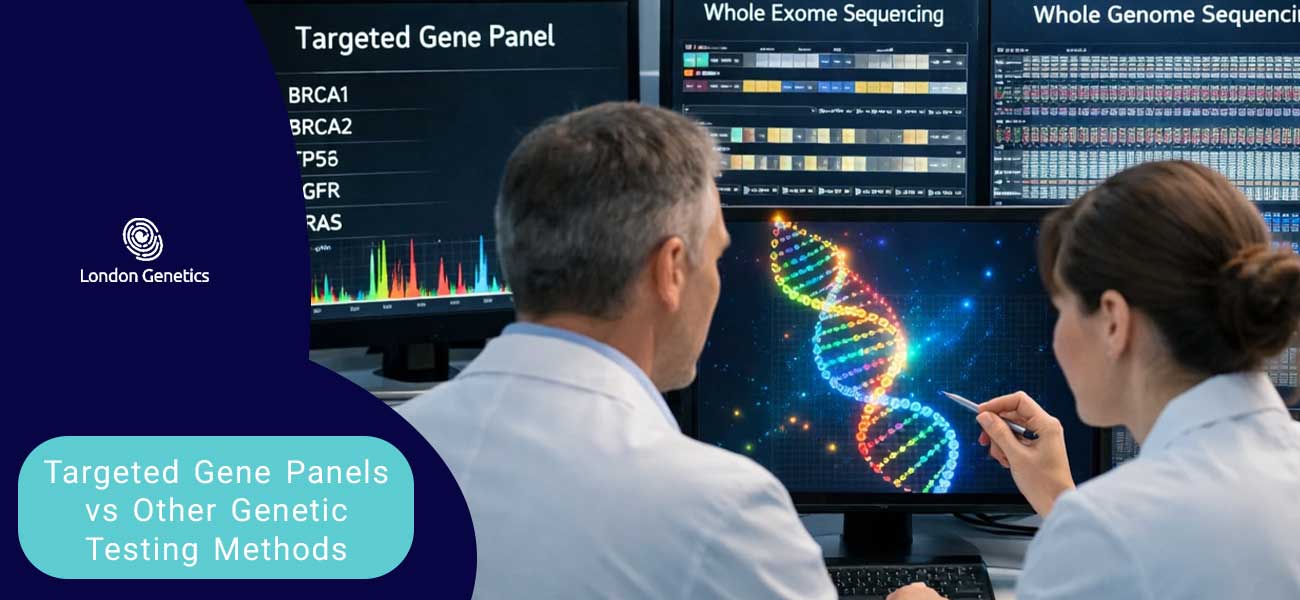
Targeted Gene Panels vs Other Genetic Testing Methods
Targeted Gene Panels represent a focused approach to genetic analysis, but they are only one of several methods used in modern genomic testing. Different genetic testing strategies vary in scope, complexity, cost, and clinical application. Understanding how Targeted Panels compare with other testing methods helps clinicians select the most appropriate approach for a particular clinical situation.
-
Targeted Gene Panels vs Single‑Gene Testing
Single‑gene testing analyses only one specific gene that is suspected to be responsible for a patient’s condition. While this approach can be useful when a disease is clearly linked to a particular gene, it may be inefficient for disorders that can result from variants in multiple genes. In contrast, Targeted Gene Panels allow simultaneous analysis of many related genes, increasing diagnostic efficiency and reducing the need for sequential testing.
-
Targeted Gene Panels vs Whole Exome Sequencing (WES)
Whole Exome Sequencing examines nearly all protein‑coding regions of the genome, known as the exome. This provides a much broader analysis compared with Targeted Gene Panels. However, WES also generates a large amount of genetic data, which can make interpretation more complex and time‑consuming. Targeted Gene Panels focus only on genes with well‑established clinical relevance, making them easier to interpret and often more practical for routine clinical diagnostics.
-
Targeted Gene Panels vs Whole Genome Sequencing (WGS)
Whole Genome Sequencing analyses almost the entire DNA sequence of an individual, including both coding and non‑coding regions. While WGS provides the most comprehensive genetic information, it is typically more expensive and requires more complex data analysis. Targeted Panels, by comparison, concentrate on a smaller group of disease‑associated genes, offering a faster and more cost‑effective option when the clinical question is well defined.
-
Choosing the Appropriate Testing Method
The selection between Targeted Gene Panels and other genetic testing methods depends on several factors, including the patient’s clinical presentation, the suspected genetic condition, cost considerations, and the need for comprehensive genomic information. In many clinical scenarios, Targeted Panels provide an effective balance between diagnostic accuracy, efficiency, and clinical relevance.
Overall, while broader sequencing technologies continue to advance, Targeted Panels remain a valuable and widely used tool in clinical genetics, particularly when the suspected disorder is associated with a defined group of genes.
Future Developments of Targeted Gene Panels in Precision Medicine
As genomic technologies continue to evolve, Targeted Gene Panels are expected to play an increasingly important role in the advancement of precision medicine. Precision medicine aims to tailor medical care to the genetic profile of each individual, and Targeted Gene Panels provide a practical way to identify clinically relevant genetic variants that can guide diagnosis, prevention, and treatment strategies.
One of the most significant future developments for Targeted Panels is the continuous expansion of the genes included in these panels. As scientific research identifies new disease‑associated genes, diagnostic laboratories can update existing panels to incorporate the latest genetic discoveries. This ongoing refinement helps ensure that Targeted Panels remain accurate and clinically relevant.
Another important advancement is the integration of improved bioinformatics tools and computational methods. These technologies enhance the interpretation of genetic variants identified through Targeted Panels. Advanced analytical platforms can assist clinicians in distinguishing between benign genetic variations and those that may contribute to disease, improving the overall reliability and clinical value of genetic diagnoses.
Targeted Gene Panels are also expected to play a growing role in personalised treatment decisions. In fields such as oncology, genetic panels can identify variants that influence how a patient may respond to specific therapies. This information allows clinicians to select targeted treatments that are more effective and better suited to an individual’s genetic profile.
In addition, as sequencing technologies become faster and more affordable, Targeted Gene Panels are likely to become more widely integrated into routine clinical care. Hospitals and diagnostic laboratories may increasingly adopt these panels as part of standard workflows for diagnosing inherited conditions and assessing genetic risk.
Targeted Panels may also contribute significantly to preventive medicine. By identifying individuals who carry genetic variants associated with an increased risk of disease, healthcare providers can implement earlier monitoring, lifestyle interventions, or preventive treatments that may reduce the likelihood of disease development.
Why This Matters:
Targeted Gene Panels provide clinically meaningful insights into disease‑related genetic variants and support more accurate diagnosis and personalised healthcare strategies.
The Importance of Innovation:
Ongoing advances in genomic technologies and bioinformatics continue to improve the accuracy, interpretation, and clinical usefulness of Targeted Gene Panels in precision medicine.
Your Next Step:
If you are considering genetic testing or would like to explore personalised medical care based on genetic information, consulting a specialist in genetic medicine can help you understand the most appropriate testing options.