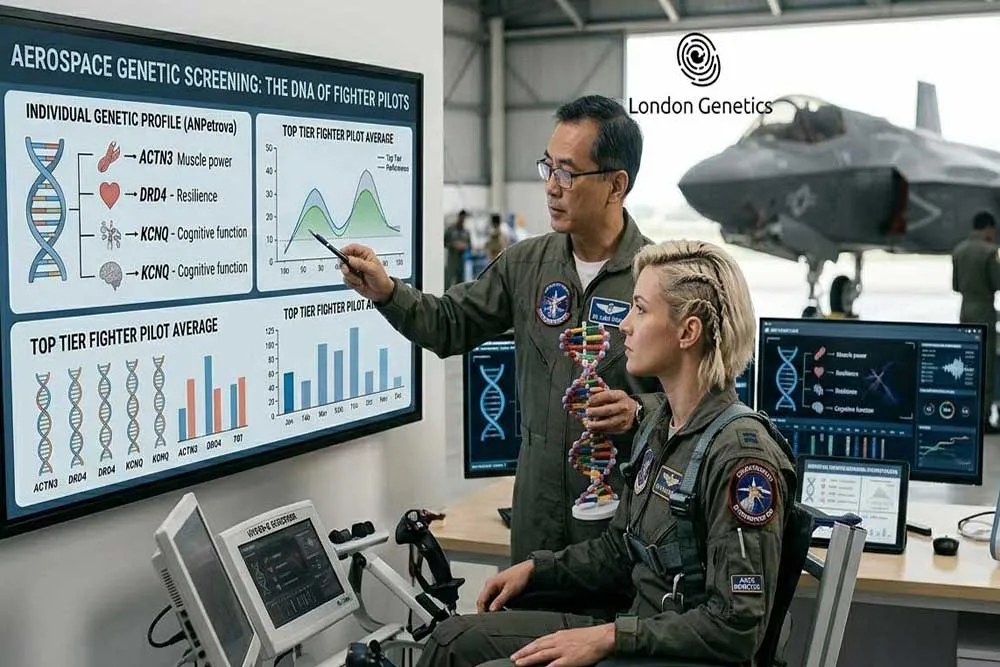
Introduction: The Biological Demands of Top-Tier Military Aviation
Operating a modern supersonic fighter jet is one of the most physically exhausting and mentally punishing occupations in existence. The human body was simply not naturally evolved to hurtle through the sky at twice the speed of sound, pulling complex maneuvers that alter the laws of gravity. In the high-stakes arena of elite military aviation, pilots are regularly exposed to extreme environmental challenges that test their anatomical limits. From managing rapid atmospheric pressure changes to maintaining fine motor control while enveloped in a heavy flight suit, every single system within an aviator’s body must perform at absolute peak efficiency.
Historically, military recruitment relied strictly on basic physical endurance tests, vision exams, and psychological evaluations to assess suitability for the cockpit. However, as aviation technology has advanced, aerospace medicine has shifted its focus from outward physical traits to internal biological realities. Today, global defense sectors recognize that exceptional resilience in the skies is heavily influenced by a person’s underlying genetic blueprint. Unlocking the DNA of fighter pilots is no longer a futuristic concept; it has become a concrete tool for risk mitigation.
Incorporating advanced protocols like Pre-Employment or Corporate Genetic Screening into the aerospace sector allows organizations to identify specific inherited biomarkers that correlate with extreme environmental tolerance. By decoding the DNA of fighter pilots before they ever encounter the brutal realities of active combat, medical specialists can accurately forecast how a candidate will handle acute physical stress. This scientific approach ensures that the individuals selected for high-risk corporate and defense roles possess the natural biological foundations necessary to survive and thrive in the upper atmosphere.
Hypoxia and Oxygen Efficiency: Surviving in the Upper Atmosphere
As a fighter jet ascends into the upper tiers of the atmosphere, the ambient air pressure drops drastically. At these extreme altitudes, any sudden compromise in the aircraft’s environmental control systems or a breach in cockpit pressurization poses an immediate, life-threatening hazard known as hypoxia—the deprivation of adequate oxygen supply to the body’s vital organs and brain tissues.
What makes hypoxia particularly insidious in military aviation is its silent, euphoric onset. Within seconds of oxygen depletion, an aviator can experience delayed reaction times, cognitive confusion, and severely impaired judgment long before they consciously realize they are in danger. In high-stakes environments, even a minor lag in cognitive processing can lead to a fatal operational failure. While emergency oxygen masks are standard issue, aerospace research reveals that an individual’s baseline metabolic resilience during a drop in oxygen saturation is deeply tied to their biological makeup. Investigating the DNA of fighter pilots allows clinical specialists to understand how certain individuals maintain peak physical and neurological performance when exposed to thin-air environments.
High G-Forces and Visual Blackouts: The Genetic Factors Behind G-Tolerance
When a fighter jet enters a sharp, high-speed turn or executes a steep climb, the aircraft and the pilot are subjected to massive gravitational forces, commonly known as G-forces. At peak operational performance, an aviator can experience physical forces up to 9Gs, meaning their apparent body weight is instantaneously multiplied by nine. This colossal physical pressure acts directly on the human circulatory system, forcefully pulling blood away from the brain and upper torso down into the lower extremities and abdomen.
The underlying philosophy of modern aerospace medicine is moving from reactive physical conditioning to proactive genomic selection. Analysing how cardiovascular traits behave under extreme stress allows medical teams to eliminate historical trial-and-error. Mapping these inherited vascular profiles transforms abstract digital DNA sequencing into an unshakeable, personalised blueprint for elite pilot safety and ultimate operational readiness.
How the Body’s Genetic Blueprint Controls Oxygen Transport
At the cellular level, the efficiency with which your body captures, transports, and utilizes oxygen under extreme atmospheric stress is entirely governed by your genetic blueprint. When we decode the DNA of fighter pilots, we focus on highly specific genetic markers that regulate cellular adaptation to low-oxygen states:
-
The HIF1A Gene Pathway: The Hypoxia-Inducible Factor 1-Alpha (HIF1A) gene acts as the body’s master genetic switch for oxygen regulation. Certain variations within this pathway allow an individual’s cells to instantly alter their metabolism during a sudden hypoxic event, maximizing energy production even when the absolute oxygen supply is critically low.
-
Haemoglobin Affinity and Red Blood Cell Production: Genetic variants control how tightly haemoglobin binds to oxygen molecules in the lungs and how efficiently it releases that oxygen into high-demand tissues like the brain and muscles. Individuals with optimized genetic profiles exhibit superior blood-oxygen carrying capacities, allowing them to preserve fine motor skills and spatial awareness under conditions that would incapacitate others.
-
Strategic Workplace Safety: Integrating these advanced cellular insights into comprehensive Pre-Employment or Corporate Genetic Screening programs offers a massive advantage for aerospace and defense organizations. Rather than discovering a physiological vulnerability during an active in-flight emergency, mapping these inherited traits allows medical professionals to scientifically verify an aviator’s natural high-altitude endurance, ensuring that critical crews possess the deep biological safeguards necessary to survive the hostile environment of the upper atmosphere.
Neurological Speed and Cognitive Endurance Under Combat Stress
The modern combat environment is an overwhelming sensory landscape. Inside the cockpit, a pilot must process a continuous stream of data from radar systems, tactical displays, and radio communications, all while steering a supersonic aircraft. In this high-velocity arena, neurological speed is not just an operational advantage—it is the definitive margin for split-second survival.
 Deep neuro-genetic analysis reveals that elite mental endurance under physical threat is anchored within specific neurotransmitter clearance pathways.


Analysing the neurochemical data behind combat resilience reveals that cognitive endurance is highly predictable. By replacing historic trial-and-error models with advanced molecular screening frameworks, aerospace organisations can accurately categorise individual neuro-genetic thresholds, ensuring maximum flight-deck safety long before a pilot faces an actual crisis.
Pre-Employment Screening in Defense: Sorting Talent or Protecting Lives?
Integrating genomics into military and corporate recruitment naturally sparks significant ethical debates worldwide. Critics often express concern that analyzing genetic blueprints could lead to systemic exclusion or unfair profiling, potentially keeping highly capable individuals out of careers they passionately wish to pursue. However, when applied to elite, high-stakes fields like military aviation, the primary objective of this technology shifts entirely. In these extreme environments, analyzing the DNA of fighter pilots is not about arbitrary exclusion or sorting talent based on unfair bias; it is fundamentally about mitigating catastrophic risks and protecting human lives.
Utilizing specialized genetic evaluations in the defense and aerospace sectors acts as an essential preventative shield for both the organization and the individual. Certain rare or latent genetic variations—such as those predisposed to hidden cardiac anomalies, sudden vascular weaknesses, or severe high-altitude vulnerabilities—may never manifest during standard physical training or ordinary civilian life. However, under the brutal physical stress of active combat maneuvers, these undetected traits could trigger a sudden, catastrophic medical emergency in mid-air.
By mapping and understanding the DNA of fighter pilots before they ever step into a multi-million-pound supersonic jet, medical specialists can identify these high-risk predispositions early. This allows organizations to take proactive, life-saving measures:
-
Tailored Occupational Safeguards: Ensuring candidates with specific vulnerabilities are not placed into environments that could prove fatal to them.
-
Customised Training Regimens: Designing specialized conditioning programs that strengthen a pilot’s natural physiological gaps by deeply understanding the DNA of fighter pilots.
-
Asset and Crew Protection: Minimizing the risk of in-flight incapacitation, thereby safeguarding both invaluable human lives and costly national aerospace assets.
Ultimately, decoding the DNA of fighter pilots serves as the ultimate duty of care, ensuring that those who protect our skies are biologically shielded from the invisible risks carried within their own genetic makeup.

The Role of London Genetics in Analyzing the DNA of Fighter Pilots
Translating complex genomic data into practical workplace safety and elite performance strategies requires exceptional clinical expertise, state-of-the-art technology, and absolute discretion. At London Genetics, led by specialist clinical geneticist Dr Ehsan Karimiani, we provide premier, highly specialized screening solutions tailored specifically for high-risk occupations, defense organizations, and advanced corporate health initiatives.
Our clinic stands at the absolute forefront of occupational genomics, offering comprehensive diagnostic frameworks designed to unlock and interpret the DNA of fighter pilots, aerospace personnel, and industrial professionals worldwide.
-
Advanced Laboratory Network: We partner exclusively with fully accredited, world-class laboratories across the United Kingdom and Europe. Utilizing next-generation sequencing (NGS) and advanced molecular techniques, we ensure that every genetic report delivers unparalleled technical accuracy and deep biochemical insights.
-
Expert Clinical Guidance: Raw genetic data is meaningless without expert translation. Dr Ehsan Karimiani and his specialist team meticulously cross-reference genetic markers with the precise physiological demands of elite aviation, providing organizational leaders and medical boards with clear, actionable risk assessments.
-
Absolute Confidentiality: We understand that dealing with high-level personnel and sensitive defense sectors demands the highest ethical and security standards. London Genetics operates under strict privacy protocols, guaranteeing that all testing, data storage, and clinical consultations remain completely private and secure.
By choosing London Genetics to analyze the DNA of fighter pilots, aerospace and defense sectors move away from unpredictable physiological risks and embrace the future of data-driven safety. Our sophisticated screening programs provide organizations with the scientific clarity needed to maximize operational readiness, optimize training investments, and heavily protect the lives of those operating in the most demanding environments on Earth.
Conclusion: The Future of Aviation Safeguarded by Genomic Science
The sky is no longer just a tactical battlefield or a commercial highway; it is the ultimate testing ground for human biology. As aerospace engineering continues to evolve at an unprecedented pace, pushing speeds and altitudes to limits previously thought impossible, the definitive bottleneck in aviation safety is no longer mechanical—it is entirely physiological. To protect advanced investments, the aviation sector must look beyond traditional physical assessments and embrace the predictive power of molecular medicine.
Relying on traditional physical screening means leaving a pilot’s extreme stress thresholds completely to chance. Unlocking the DNA of fighter pilots represents the next great leap in occupational health and aerospace safety, allowing elite organisations to transition from a reactive medical model to an absolute proactive shield tailored to human biological limits.
Book Your Consultation with Dr Karimiani