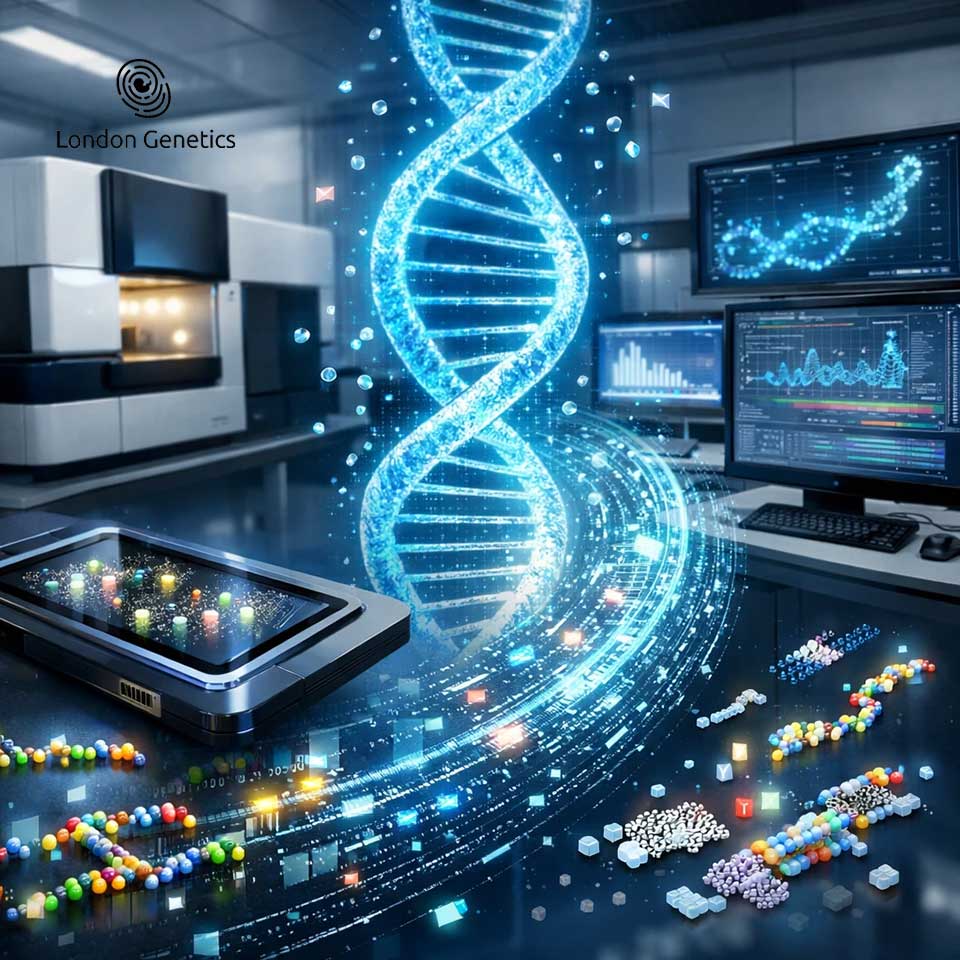
What Is Next‑Generation Sequencing (NGS)?
Next‑Generation Sequencing (NGS) is an advanced DNA sequencing technology that allows scientists and clinicians to analyse large amounts of genetic material quickly and accurately. Unlike traditional sequencing methods that read one DNA fragment at a time, NGS can sequence millions of DNA fragments simultaneously. This high‑throughput capability makes it possible to study entire genomes, specific gene panels, or all protein‑coding regions of DNA in a single analysis.
The development of NGS has transformed modern genetic research and clinical diagnostics. By providing detailed insights into genetic variations, mutations, and inherited conditions, this technology helps researchers better understand the genetic basis of many diseases. As a result, NGS has become a powerful tool in areas such as cancer genomics, rare disease investigation, and precision medicine.
In clinical practice, NGS is widely used in Congenital Abnormalities Genetic Testing, where it helps identify genetic mutations responsible for developmental disorders and inherited conditions. Early detection through advanced sequencing technologies can support accurate diagnosis and guide appropriate medical management.
Furthermore, NGS plays a significant role in Genomic Medicine in Paediatrics, enabling clinicians to investigate complex genetic conditions affecting infants and children. By analysing a patient’s genetic information in detail, healthcare professionals can better understand disease mechanisms and develop more personalised approaches to treatment and care.
Overall, NGS represents a major advancement in genomic science, providing faster, more comprehensive, and more precise analysis of genetic information than ever before.
How Next‑Generation Sequencing Technology Works
Next‑Generation Sequencing (NGS) technology works through a series of highly efficient,
automated processes that allow millions of DNA fragments to be sequenced at the same time. This high‑throughput
method provides detailed genetic information faster and at a lower cost than traditional sequencing techniques.
DNA is carefully extracted and purified to ensure it is suitable for sequencing.
smaller segments can be read more reliably by sequencing machines.
allowing the sequencing machine to identify and read millions of fragments simultaneously. This collection of tagged
DNA pieces is called a sequencing library.
of each DNA fragment, making them easier for the sequencing platform to detect.
or electrical signals—depending on the platform. Millions of fragments are sequenced in parallel, producing vast
amounts of genetic data in a short time.
the DNA fragments, align them to a reference genome, and identify genetic variants such as mutations or deletions.
Clinicians receive a clear report that assists in diagnosing conditions, guiding treatment decisions, or recommending
further testing.
NGS operates through a streamlined, multi‑step workflow—from sample collection to data interpretation—
delivering fast, comprehensive, and accurate genetic information for both clinical and research applications.
Types of NGS Approaches: Whole Genome, Exome, and Targeted Sequencing
Understanding the Main Strategies Used in Modern Genomic Analysis
Next‑Generation Sequencing (NGS) can be applied in several different ways depending on the clinical question, research aim, or level of detail required. Although all NGS approaches rely on the same core sequencing principles, they vary in terms of scope, cost, and the amount of information they provide. The three most widely used strategies in genomic medicine are Whole Genome Sequencing (WGS), Whole Exome Sequencing (WES), and Targeted Sequencing.
1. Whole Genome Sequencing (WGS)
Whole Genome Sequencing reads the entire DNA sequence of an individual, including both coding and non‑coding regions.
Because WGS covers every part of the genome, it provides the most comprehensive insight into genetic variation. This includes single‑letter changes, structural rearrangements, copy‑number differences, and variants in regulatory regions that might influence gene expression.
Although WGS is more expensive and generates very large datasets, it is invaluable when a condition remains undiagnosed after other tests or when a broad genomic overview is required.
2. Whole Exome Sequencing (WES)
Whole Exome Sequencing focuses only on the exome—the protein‑coding regions of the genome, which make up just 1–2% of the entire DNA sequence.
Most known disease‑causing mutations occur within these coding regions, which makes WES a highly efficient and cost‑effective diagnostic tool, particularly in paediatric genetics and rare disease investigation.
WES provides a strong balance between detail, cost, and turnaround time, making it one of the most commonly used NGS approaches in clinical settings.
3. Targeted Sequencing
Targeted Sequencing analyses a specific set of genes or genomic regions associated with a particular condition or clinical question.
Examples include cancer panels, cardiomyopathy panels, and tests focused on metabolic or neurological disorders. By concentrating only on relevant genes, targeted sequencing is faster, more affordable, and often more sensitive, as it provides deeper coverage of the selected regions.
This approach is especially useful when clinicians suspect a particular disorder or when guidelines recommend testing a defined group of genes.
Clinical Applications of NGS in Genetic Testing and Medicine
Next‑Generation Sequencing (NGS) has become a key technology in modern genetic testing because it can
identify many types of DNA variations quickly and at scale. In clinical practice, NGS allows healthcare
professionals to move beyond trial‑and‑error approaches toward more targeted and personalised medical decisions.
Today, it is widely used across fields such as medical genetics, oncology, and precision medicine.

Explore the major clinical uses of Next‑Generation Sequencing in modern medicine.

Role: NGS allows clinicians to analyse many genes simultaneously when patients show symptoms
suggesting a genetic disorder.
Impact: It can reveal disease‑causing variants that traditional single‑gene tests may miss,
leading to faster diagnosis, improved clinical management, and better understanding of the condition.

Role: NGS can identify whether individuals carry genetic variants linked to inherited diseases.
Impact: This information helps couples make informed reproductive decisions and may guide
further genetic counselling or reproductive options.

Role: NGS can identify genetic variants that influence how the body metabolises medications.
Impact: These insights help clinicians select safer drugs, optimise dosing, and reduce the risk
of adverse drug reactions, supporting more personalised treatment strategies.

Role: NGS analyses tumour DNA to identify mutations, gene fusions, or other genomic changes.
Impact: This information helps doctors determine whether a patient may benefit from targeted
therapies, immunotherapy, or specific treatment strategies.

Role: Many metabolic diseases result from inherited mutations affecting enzyme function.
Impact: NGS can identify these mutations quickly, allowing clinicians to confirm diagnoses
and begin dietary or medical treatments earlier.

Role: NGS can be used to analyse fetal genetic material during pregnancy,
depending on clinical protocols.
Impact: Results help healthcare providers and families understand potential risks
and plan appropriate care, usually alongside genetic counselling.

Role: In some healthcare systems, NGS is used to detect genetic disorders shortly after birth.
Impact: Early identification allows timely medical intervention, which can prevent
serious complications and significantly improve long‑term health outcomes.
Key Takeaway:
Next‑Generation Sequencing (NGS) has transformed clinical genetics by enabling rapid and
comprehensive analysis of the human genome. It supports the diagnosis of rare diseases,
guides personalised drug therapy, improves cancer treatment strategies, and assists
with reproductive and newborn genetic testing.
By providing detailed genetic insights, NGS plays a central role in the advancement of
precision medicine and more personalised healthcare.
Advantages of NGS Compared to Traditional DNA Sequencing
Next‑Generation Sequencing (NGS) offers several important advantages over traditional DNA sequencing methods, particularly the classic Sanger sequencing approach. While Sanger sequencing was a groundbreaking technology and remains useful for confirming specific variants, NGS has transformed genetic research and clinical testing by making large‑scale sequencing faster, more comprehensive, and more efficient.
1. High‑Throughput Sequencing
One of the most significant advantages of NGS is its massively parallel sequencing capability. Traditional sequencing methods analyse DNA fragments one at a time, whereas NGS can sequence millions of DNA fragments simultaneously.
This high‑throughput capacity allows laboratories to analyse entire genomes or large gene panels within a single experiment.
2. Faster Processing Time
Because NGS processes large numbers of DNA fragments at once, it significantly reduces the time required for genetic analysis. What once took weeks or months with traditional methods can now often be completed in days, depending on the scale of the test.
3. Greater Genetic Coverage
Traditional sequencing typically focuses on a single gene or small DNA region, whereas NGS can examine large portions of the genome—including hundreds or thousands of genes in one test.
This broader coverage increases the likelihood of identifying disease‑causing variants.
4. Cost Efficiency for Large‑Scale Testing
Although NGS platforms require advanced equipment, the cost per base sequenced is much lower compared to traditional sequencing when analysing large genomic regions. This makes NGS more economical for comprehensive genetic testing.
5. Detection of Multiple Variant Types
NGS can identify a wide range of genetic changes, including:
- single nucleotide variants (SNVs)
- insertions and deletions (indels)
- copy number variations (CNVs)
- structural variants in some platforms
Traditional sequencing methods are more limited in detecting these complex variations.
6. Better Suitability for Precision Medicine
Because NGS can analyse many genes simultaneously and detect multiple variant types, it is particularly well suited for precision medicine. Clinicians can use this information to guide diagnosis, predict disease risk, and select treatments that are more tailored to individual patients.
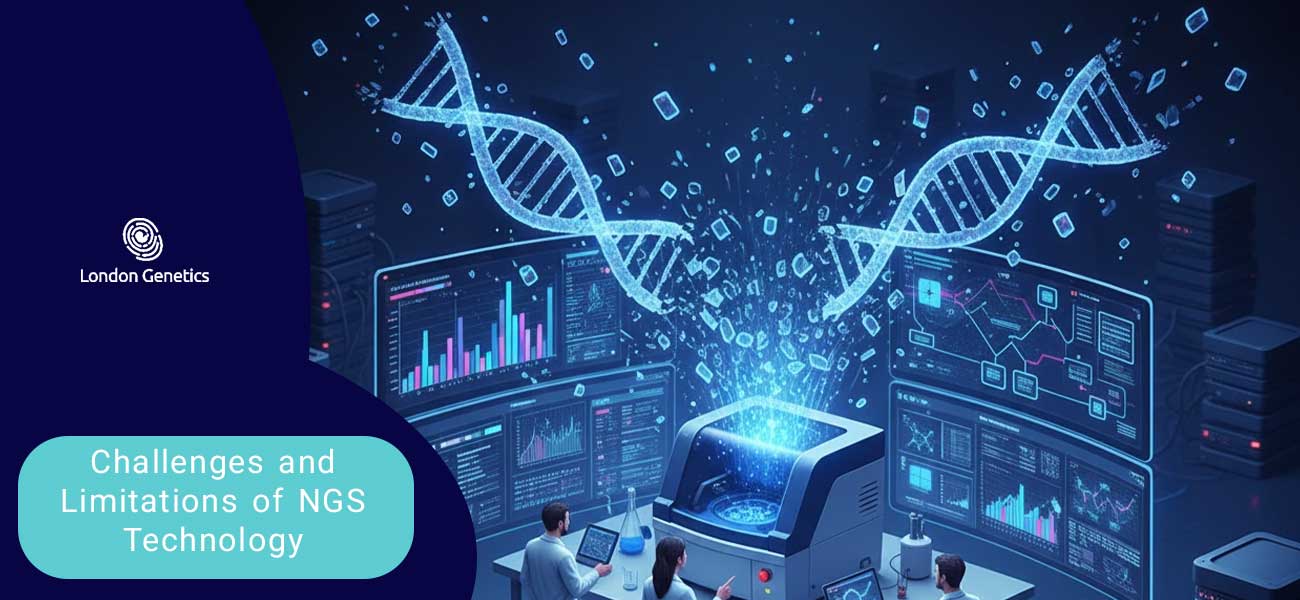
Challenges and Limitations of NGS Technology
Although Next‑Generation Sequencing (NGS) has transformed genetic analysis, it still comes with technical, clinical, and practical limitations that laboratories and clinicians must consider. These challenges do not reduce the value of NGS, but they highlight the need for careful interpretation, high‑quality laboratory workflows, and proper clinical context.
1. Complexity of Data Analysis
NGS generates extremely large datasets, often millions of DNA reads.
Interpreting this data requires:
- advanced bioinformatics tools
- high‑performance computing systems
- experienced analysts
Even after processing the data, determining which genetic variants are truly disease‑causing can be difficult, especially in large genomes.
2. Possibility of False Positives and False Negatives
NGS is powerful, but not perfect. Errors can occur due to:
- short read lengths
- sequencing chemistry limitations
- alignment issues
- low coverage in certain genomic regions
For this reason, important findings—especially clinically actionable variants—often need to be confirmed with Sanger sequencing.
3. Uneven Coverage of the Genome
NGS does not sequence all regions equally well. Some areas of DNA, such as GC‑rich regions or repetitive sequences, are harder to sequence accurately.
This can lead to missed variants if coverage is too low.
4. Limited Detection of Certain Variant Types
Although NGS detects many variation types, some changes are still challenging:
- large structural variants
- complex chromosomal rearrangements
- repeat expansions (e.g., Huntington disease)
Specialised techniques may be needed alongside NGS to detect these variants properly.
5. Technical and Laboratory Requirements
NGS requires:
- expensive sequencing platforms
- controlled laboratory conditions
- highly trained technical staff
Not all clinics or hospitals have access to this infrastructure, which may limit availability in some regions.
6. Cost Considerations
While NGS is cost‑effective for large genomic regions, the initial investment in equipment, software, and personnel can be high.
Additionally, data storage and long‑term archiving increase ongoing costs.
7. Ethical and Clinical Interpretation Challenges
Clinical use of NGS often identifies:
- variants of uncertain significance (VUS)
- incidental or unexpected findings
- results with unclear or evolving clinical meaning
These findings require careful explanation, usually through genetic counselling, to help patients understand the results and their implications.
The Future of NGS in Precision and Personalised Medicine
As we look to the future, Next‑Generation Sequencing (NGS) is poised to become the cornerstone of a new era in healthcare: Precision and Personalised Medicine. While the technology has already revolutionised diagnostics for rare diseases and oncology, its potential to further transform clinical practice is vast.
Integration into Routine Care: In the coming years, NGS will likely move from being a specialised “last-resort” diagnostic tool to a standard component of routine clinical care, enabling proactive health management rather than just reactive treatment.
Beyond Genomics: The integration of NGS data with other “omics” technologies—such as transcriptomics (RNA), proteomics (proteins), and epigenomics—will provide a multi-dimensional view of a patient’s health. This “systems medicine” approach will allow for even more accurate disease prediction and treatment tailoring.
Rapid, Bedside Sequencing: Advancements in portable, real-time sequencing platforms will eventually allow for rapid genetic testing at the point of care, significantly reducing the time between patient presentation and targeted therapeutic intervention.
Democratisation of Data: As costs continue to decrease and bioinformatics pipelines become more automated and user-friendly, NGS will become accessible to a wider range of healthcare providers, reducing disparities in genetic testing availability.
As NGS becomes increasingly integrated into clinical workflows and supported by improved technology, it is expected to play an even more significant role in shaping the future of personalised medicine.
Conclusion:
Next‑Generation Sequencing (NGS) has fundamentally shifted the landscape of modern medicine, moving us away from a “one-size-fits-all” approach toward strategies tailored to an individual’s unique genetic makeup.
The Impact of NGS:
Despite challenges related to data complexity, interpretation and accessibility, NGS continues to drive medical innovation, improve diagnostic accuracy and support safer, more effective personalised treatments.
Your Next Step:
If you are interested in understanding your genetic health or exploring advanced diagnostic options, discuss NGS-based testing with a qualified healthcare professional to determine how it may support your personalised care plan.