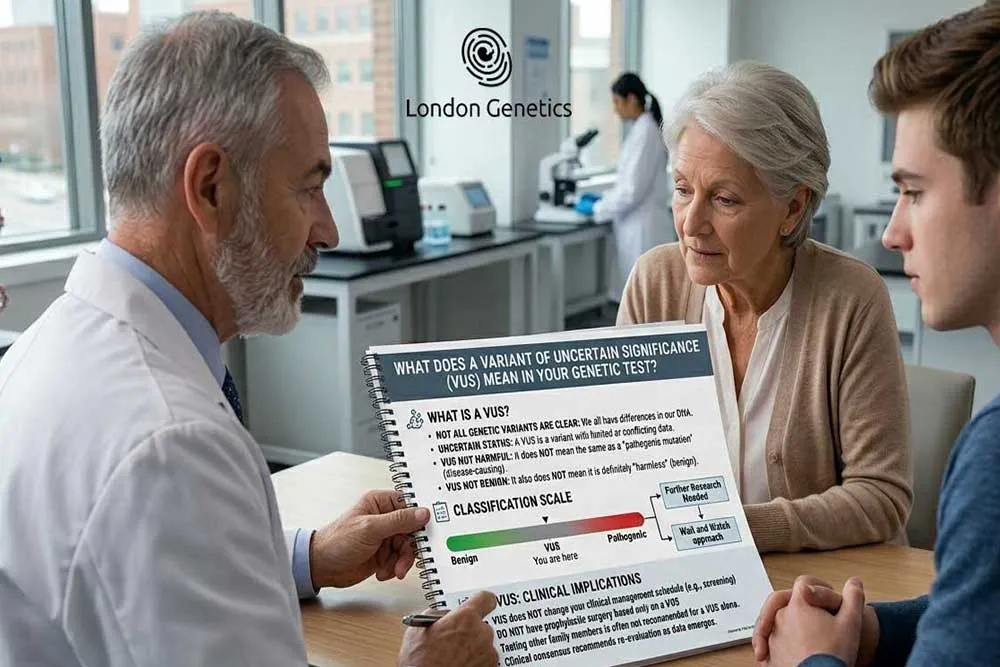
Introduction: The Shock of an Ambiguous Genetic Result
Opening the envelope or logging into a patient portal to view your DNA blueprint can be a moment of intense emotional vulnerability. For many individuals, opting for Hereditary Disease Testing is a proactive step toward replacing fear with knowledge—a calculated move to safeguard their health or protect their family’s future. You anticipate a definitive answer: either a clear green light that brings immense relief, or a distinct warning sign that allows you to construct a precise medical defense system. However, encountering a result that sits squarely in the middle can trigger a unique type of clinical anxiety. Finding a Variant of Uncertain Significance (VUS) reported on your document often leaves patients feeling utterly stranded in a state of medical limbo.
               ┌──────────────────────────────────────────────┐
               │    The Emotional Spectrum of DNA Results     │
               └──────────────────────┬───────────────────────┘
                                      │
         ┌────────────────────────────┼────────────────────────────┐
         ▼                            ▼                            ▼
┌──────────────────┐        ┌──────────────────┐         ┌──────────────────┐
│  Clear Positive  │        │   Ambiguous VUS  │         │  Clear Negative  │
│ A known mutation │        │ The genetic gray │         │ No high-risk gene│
│ requiring action.│       │area of uncertainty.│       │ changes found.   │
└──────────────────┘        └──────────────────┘         └──────────────────┘
If you are currently staring at the phrase Variant of Uncertain Significance (VUS) on your laboratory report, it is vital to pause, take a deep breath, and understand that you have not been diagnosed with a disease. The immediate psychological shock is completely valid; human nature naturally interprets ambiguity in medical settings as a hidden threat. Yet, entering this genetic gray area does not mean your clinical team has discovered a ticking time bomb. Instead, it simply means that science has noted a minor typographical quirk in your biological code that requires careful, expert contextualization rather than immediate panic. This guide is designed to dismantle the clinical jargon, alleviate the burden of uncertainty, and explain exactly why a ambiguous finding is a call for ongoing patience, not an indication of imminent illness.
Decoding the Grey Area: What is a Variant of Uncertain Significance?
To understand why a laboratory result can return without a definitive “yes” or “no,” we must look at how modern genomic systems process data. By sequencing your DNA and comparing it against a massive, internationally recognised database of the healthy human genome, scientists actively map out deviations to categorise findings into clear clinical spectrums.
Recognising a Variant of Uncertain Significance as a temporary scientific waiting room transforms genetic interpretation from a source of panic into a controlled data pathway. By adhering to the highest standards of clinical evidence, modern molecular science guarantees that medical actions are only taken based on absolute biological certainty, safeguarding you from unnecessary interventions.
The Cookbook Analogy: Visualizing a VUS in Your DNA
Human genetics can feel incredibly abstract, filled with intimidating acronyms and complex biochemical jargon. To strip away the clinical coldness of a Variant of Uncertain Significance, it helps to step out of the molecular laboratory and into the kitchen.
Imagine that your entire genetic code is a massive, multi-volume heirloom cookbook passed down through your family. Each individual gene is a single, highly specific recipe designed to create a vital protein that keeps your body healthy and functioning. When a laboratory performs genetic testing, their supercomputers are essentially proofreading this cookbook, letter by letter, looking for typographical errors.
       ┌────────────────────────────────────────────────────────┐
       │             THE GENOMIC COOKBOOK METAPHOR              │
       ├────────────────────────────────────────────────────────┤
       │ • The Normal Recipe: "Add one teaspoon of salt..."      │
       │                                                        │
       │ • A Harmful Mutation: "Add one BUCKET of salt..."      │
       │   (The dish is ruined; high risk of disease)           │
       │                                                        │
       │ • A Benign Variant:   "Add one tsp of salt..."         │
       │   (A harmless abbreviation; the dish turns out fine)   │
       │                                                        │
       │ • A Crucial VUS:      "Add one sea-salt crystal..."    │
       │   (An unusual phrasing; we don't know the impact yet)  │
       └────────────────────────────────────────────────────────┘
Let’s look at how the proofreaders categorize the different types of typos they encounter:
-
The Pathogenic Mutation (The Ruined Dish): If the original recipe says “Add one teaspoon of salt,” but a mutation changes it to “Add one bucket of salt,” the final dish is completely ruined. In biological terms, the protein cannot do its job, directly increasing your vulnerability to conditions like hereditary cancer.
-
The Benign Variant (The Harmless Abbreviation): If the recipe is altered to read “Add one tsp of salt,” the spelling is technically different from the original text, but the meaning remains identical. The dish still tastes perfect. This is a benign variation—harmless, normal human diversity.
-
The Variant of Uncertain Significance (The Culinary Mystery): A VUS is like coming across a line that has been altered to say “Add one unique, rare sea-salt crystal.” The proofreaders stop. It is clearly not a bucket of salt (it doesn’t look dangerous), but it is also not the standard phrasing. Because the editors have never tested this exact ingredient in their test kitchens, they simply cannot tell you if it will ruin the meal, improve it, or have absolutely no effect at all.
Until further culinary experiments are conducted globally, the proofreaders refuse to guess. They mark the sentence as an unresolved edit. That is precisely what is happening in your cells when an assay flags a Variant of Uncertain Significance; it is an unusual spelling that science has flagged for monitoring, but one that has absolutely not broken the underlying biological recipe.
Clearing the Confusion: Why a VUS is Not a Cancer Diagnosis
The single most critical takeaway for any patient reading their genetic laboratory report is this: receiving a Variant of Uncertain Significance (VUS) is absolutely not a cancer diagnosis, nor does it mean you possess a high-risk hereditary gene. It is simply a reflection of the current boundaries of medical data, not a reflection of your physical health.

Worrying over a Variant of Uncertain Significance is medically redundant; it is a placeholder label used by science while the global research community expands its databases.


Key Takeaway:
Analysing the hard clinical facts behind genomic data reveals that a VUS is a reflection of science doing its homework, not a medical confirmation of illness. Because the biological odds overwhelmingly point toward a benign reclassification over time, understanding this distinction replaces clinical anxiety with deep psychological reassurance.
Clinical Management: How Doctors Handle an Ambiguous Result
When an oncology or genetics team reviews a patient’s laboratory report and encounters a Variant of Uncertain Significance, their clinical strategy follows a strict, highly regulated set of international guidelines. A common misconception among patients is that a vague result will lead to radical, aggressive medical interventions or disrupt an ongoing treatment roadmap. In reality, modern medicine treats an ambiguous finding with a strategy of structured observation rather than knee-jerk clinical action. Medical professionals are trained to understand that changing a patient’s life based on incomplete data is a breach of the fundamental medical oath: first, do no harm.
Because a Variant of Uncertain Significance carries no definitive proof of biological danger, clinical consensus dictates that it must never be used as the foundation for major medical decisions. This means that a reputable specialist will never recommend irreversible surgical procedures—such as a prophylactic mastectomy or oophorectomy—solely based on a VUS report. Similarly, if a patient is undergoing active oncological care, an ambiguous genetic test result will not be used to justify altering a proven, life-saving systemic regimen or changing the planned course of chemotherapy in breast cancer.
    ┌──────────────────────────────────────────────────────────────┐
    │              THE TWO-TIERED CLINICAL EVALUATION              │
    └──────────────────────────────┬───────────────────────────────┘
                                   │
         ┌─────────────────────────┴─────────────────────────┐
         ▼                                                   ▼
┌─────────────────────────────────┐         ┌─────────────────────────────────┐
│     The Genetic Lab Report      │         │     The Family Medical History  │
│  Identifies a rare variation,   │         │  Tracks actual disease patterns │
│   classified temporarily as a   │         │   across generations; acts as   │
│ Variant of Uncertain Significance│        │   the primary clinical compass. │
└─────────────────────────────────┘         └─────────────────────────────────┘
Instead of relying on an unconfirmed molecular typo, physicians shift their focus toward a much more powerful and proven diagnostic compass: your detailed family medical history. When a genetic variant is classified as a Variant of Uncertain Significance, the primary question a clinician asks is not “what does the computer say?” but rather “what does the patient’s family tree show?”
-
If your family history is clear: If there is no systemic pattern of early-onset malignancies across your maternal or paternal lineages, the VUS is almost universally treated as a benign, personal genetic trait that requires zero lifestyle adjustments.
-
If your family history shows a pattern: If multiple close relatives have experienced similar medical conditions, your clinical team will manage your care based on that physical family pattern, completely independent of the ambiguous VUS result. They may recommend increased screening or routine surveillance, but this is triggered by your family history, not the unclassified genetic variant.
Ultimately, the clinical management of a Variant of Uncertain Significance is a masterclass in medical logic and patience. Your clinical team will simply place the result into your medical file for long-term monitoring. Specialized genetics clinics routinely review these archived cases every few years. As global research advances and database clarity is achieved, the laboratory will issue an updated report, allowing your physician to officially close the case with absolute diagnostic peace of mind.
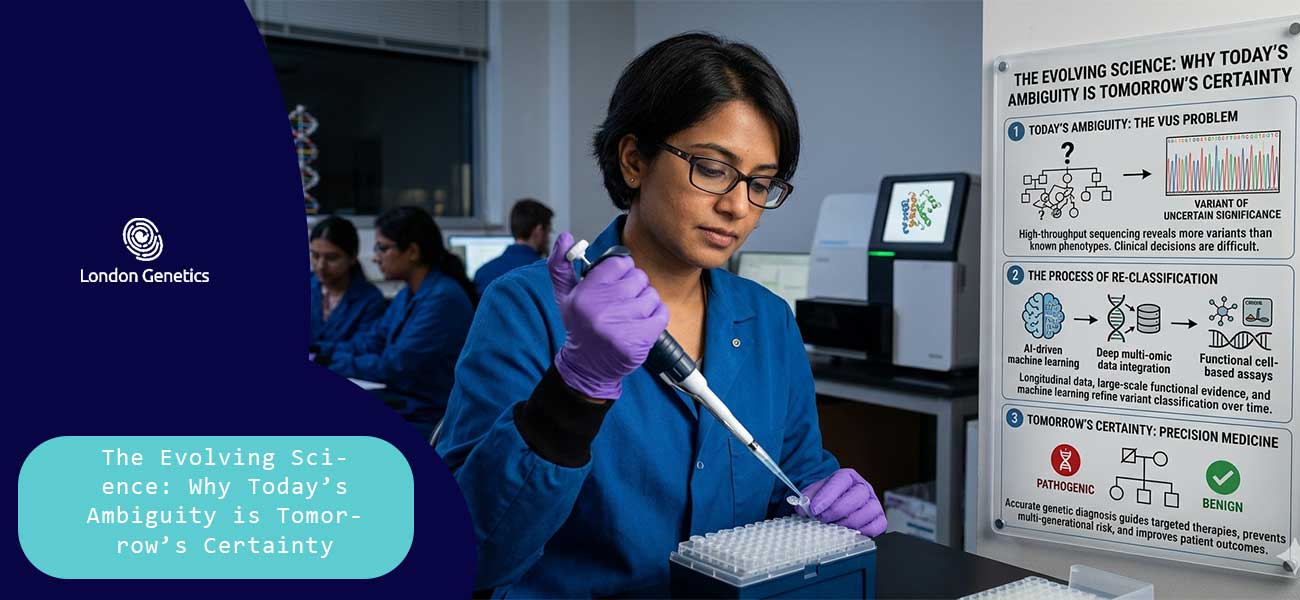
The Evolving Science: Why Today’s Ambiguity is Tomorrow’s Certainty
Clinical genetics is not a static textbook; it is one of the most rapidly expanding frontiers in modern molecular medicine. When a laboratory marks a gene change as a Variant of Uncertain Significance, they are not making a permanent declaration of ignorance. Instead, they are providing a snapshot of a highly dynamic global database at one exact micro-moment in time. What is considered a scientific mystery today is systematically chipped away by thousands of geneticists across the globe every single day, turning yesterday’s medical blind spots into tomorrow’s absolute diagnostic certainties.
The resolution of a Variant of Uncertain Significance relies heavily on a powerful combination of international collaboration and advanced computing. Genomic data sharing has reached unprecedented scales. Through secure, interconnected global networks—such as ClinVar and other international collaborative databases—genetic laboratories worldwide instantly pool their anonymised findings.
               ┌──────────────────────────────────────────────┐
               │     THE GLOBAL DATA RESOLUTION PIPELINE      │
               └──────────────────────┬───────────────────────┘
                                      │
         ┌────────────────────────────┼────────────────────────────┐
         ▼                            ▼                            ▼
┌──────────────────┐        ┌──────────────────┐         ┌──────────────────┐
│ Clinical Pooling │        │ AI Pattern Study │         │  Definitive Cure │
│ Worldwide labs   │ ───>   │ Advanced systems │ ───>    │ Variant is coded │
│ upload anonymous │        │ cross-reference  │         │ as either Benign │
│ VUS case data.   │        │ patient symptoms.│         │ or Pathogenic.   │
└──────────────────┘        └──────────────────┘         └──────────────────┘
When a rare mutation is identified in a patient in London, and a similar rare variation is flagged in Edinburgh, New York, or Tokyo, these global data engines immediately cross-reference the clinical profiles of those individuals.
-
Pattern Recognition at Scale: If the data shows that hundreds of people carry this exact same genetic variant over several years without ever developing related illness patterns, the scientific community gathers the statistical proof required to permanently downgrade the variant to a Benign Variation.
-
The Power of Modern Automation: The integration of sophisticated machine-learning algorithms in 2026 has accelerated this process dramatically. Advanced predictive models can now simulate how structural changes in a protein affect human biology, allowing research teams to resolve an ambiguous Variant of Uncertain Significance much faster than was ever possible a decade ago.
Therefore, viewing a VUS on your report should be understood as a temporary waiting room. Medical knowledge is constantly correcting its own blueprints. As more diverse populations undergo screening and global biobanks expand, the threshold of evidence required to classify rare variants drops. The genetic gray areas are shrinking every year, ensuring that your raw genetic data remains a valuable, living asset that grows clearer, more accurate, and more protective as time goes on.
Conclusion: Navigating the Next Steps with London Genetics
Navigating the complex landscape of molecular diagnostics can be an emotionally exhausting experience, especially when your results do not offer a simple, binary answer. Discovering a Variant of Uncertain Significance (VUS) on your report is not a cause for panic—it is simply a rare biological phrase in your unique DNA recipe that global databases are actively working to categorise.
The journey through advanced genomic science should never be walked alone. At London Genetics, we are dedicated to transforming clinical complexity into absolute personal clarity, replacing automated laboratory printouts with a logical, empowered, and structured roadmap for your lifelong wellness.
Bespoke Variant Interpretation:
Cross-referencing your specific genetic variations with the most up-to-date global databases and predictive clinical models available in 2026.
Comprehensive Pedigree Auditing:
Meticulously analysing your multi-generational family medical history to determine if your reported variant carries any practical, real-world clinical weight.
Long-Term Variant Monitoring:
Securely managing your genomic files to ensure that the moment global research reclassifies your variant, your medical strategy is updated immediately.
Proactive Genetic Pathway:
Contextualising ambiguous results against your unique lifestyle and pedigree to completely bypass generalised internet forums and self-interpretation.
Definitive Health Control:
Stepping out of medical uncertainty and gray areas to take absolute control of your biological future equipped with elite clinical precision.