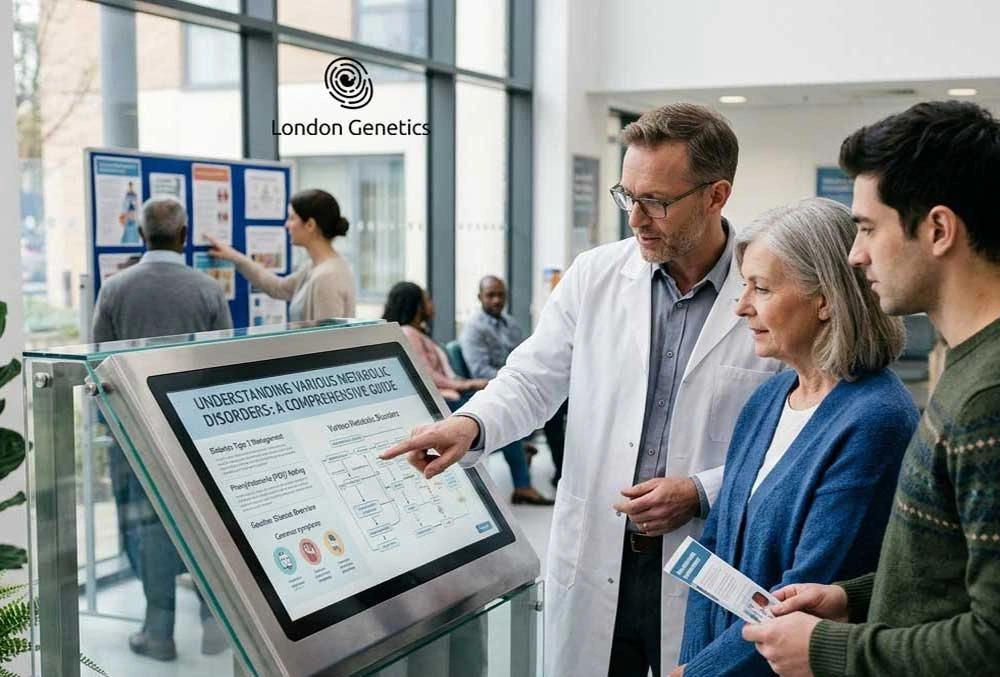
What Are Various Metabolic Disorders? A Basic Definition
Imagine your body as a high-performance engine. For this engine to run smoothly, it needs to convert fuel (the food you eat) into energy and building blocks for repair. This complex chemical process is known as metabolism. However, when certain “tools” or enzymes in this engine are missing or faulty, the entire system struggles. This is the essence of various metabolic disorders.
The Mechanics of the Breakway
In a healthy system, enzymes break down proteins, fats, and carbohydrates into smaller molecules. When you have one of the various metabolic disorders, this process is interrupted. This usually leads to two main problems:
-
A Toxic Buildup: Substances that should have been processed start to accumulate in the body, becoming harmful to organs like the brain or liver.
-
An Energy Deficit: The body fails to produce the essential energy or compounds it needs to function, leading to fatigue and developmental issues.
Why Does This Happen?
Most of these conditions are deeply rooted in our biology. Because metabolism is governed by our DNA, many people seek Genetic Counselling to understand their risks. Here are the primary reasons these disruptions occur:
-
Enzyme Deficiency: A specific protein needed for a chemical reaction is either missing or not working.
-
Organ Dysfunction: Organs like the liver or pancreas, which are central to metabolism, are unable to perform their roles.
-
Inherited Mutations: Faulty genes passed down from parents often dictate how our bodies process nutrients.
Prevention and Planning
Because many of these disorders are hereditary, proactive measures are becoming a global standard in healthcare. For couples planning a future together, Premarital Genetic Counselling has become an invaluable tool. It allows individuals to identify if they are carriers of recessive genes that could lead to various metabolic disorders in their children, providing a roadmap for informed family planning.
Key Takeaways for Beginners
To wrap up this definition, remember that metabolic health is not just about “weight”—it’s about chemistry.
-
It’s Invisible: You cannot always see a metabolic disorder; it often requires blood tests or genomic screening to identify.
-
It’s Manageable: With early detection, many of these conditions can be controlled through specialised diets or medical therapies.
-
It’s Individual: No two people process energy in exactly the same way, which is why understanding your unique genetic makeup is so vital.
The Biological Roots: How Metabolism Becomes Disrupted
To understand the origin of various metabolic disorders, we must look at the microscopic world of cellular chemistry. Metabolism is a massive relay race where thousands of molecules pass “batons” to one another; when a baton is dropped, biological disruption begins.
Metabolic disorders stem from failures in enzymes, hormones, or energy production, all of which are governed by your genetic code. When the DNA blueprint is flawed, the entire biological structure fails to function as intended.
Inherited vs. Acquired: Categorising Various Metabolic Disorders
When discussing various metabolic disorders, it is a common misconception to assume they all share the same origin. In reality, these conditions fall into two distinct categories: those you are born with (Inherited) and those that develop over time due to external factors (Acquired).
1. Inherited Metabolic Disorders (Inborn Errors of Metabolism)
These disorders are written into your genetic code before you are even born. They occur when you inherit a faulty gene from one or both of your parents.
-
The Cause: A permanent mutation in the DNA that prevents the body from producing a specific enzyme.
-
The Timeline: Symptoms often appear shortly after birth or during early childhood (though some remain dormant until later).
-
Examples:
-
Phenylketonuria (PKU): The inability to break down a specific amino acid found in proteins.
-
Galactosemia: A struggle to process the sugar found in milk.
-
-
Management: Since the “blueprint” cannot be easily rewritten, management usually involves lifelong specialised diets or enzyme replacement therapies.
2. Acquired Metabolic Disorders (Lifestyle-Related)
Unlike inherited versions, acquired various metabolic disorders are typically “earned” over time. They are the result of the body’s chemistry being overwhelmed by environmental factors and habits.
-
The Cause: Factors such as poor nutrition, lack of physical activity, chronic stress, or exposure to toxins that gradually impair organ function (especially the liver and pancreas).
-
The Timeline: These usually develop in adulthood, although sadly, they are increasingly seen in younger generations due to modern lifestyle shifts.
-
Examples:
-
Type 2 Diabetes: Where the body becomes resistant to insulin.
-
Metabolic Syndrome: A combination of high blood pressure, high blood sugar, and abnormal cholesterol levels.
-
-
Management: The good news? These are often reversible or highly manageable through weight loss, exercise, and dietary changes.
The Overlap: Nature vs. Nurture
It is important to note that the line between these two is not always rigid. Many people have a genetic predisposition (Nature) that makes them more vulnerable to developing an acquired disorder if their lifestyle (Nurture) is poor.
| Feature | Inherited Disorders | Acquired Disorders |
| Origin | Genetic Mutation (DNA) | Lifestyle & Environment |
| Detection | Often at birth/childhood | Usually later in life |
| Prevention | Genetic screening/Counselling | Diet, Exercise, and Habits |
| Curability | Managed, rarely cured | Often reversible |
Why This Categorisation Matters
Recognising whether you are dealing with inherited or acquired various metabolic disorders changes the medical approach entirely. For inherited cases, the focus is on supplementation and strict avoidance; for acquired cases, the focus is on “resetting” the body’s metabolism through proactive health choices.
Common Symptoms and Early Warning Signs to Watch For
The challenge with various metabolic disorders is that they are often “silent” in their early stages. Recognising how the body sends out distress signals as chemical imbalances grow is essential to prevent long-term damage to vital organs.

Metabolic fatigue and physical changes are often the first indicators that your cellular “power plants” are struggling to function.


Key Takeaway:
Recognising early warning signs—from systemic fatigue and brain fog to skin changes—is essential for uncovering hidden metabolic disorders and preventing long-term damage through proactive healthcare.
The Role of Genetics and Environment in Metabolic Health
Why do two people eating the same diet have completely different metabolic profiles? The answer lies in the intricate dance between our DNA and our daily surroundings. To understand various metabolic disorders, we must look at metabolic health as a partnership between the genes we inherited and the environment we choose to live in.
1. The Genetic Blueprint: Your Biological Foundation
Our genes act as the “instruction manual” for every chemical reaction in the body. They determine how efficiently we process fats, how sensitive we are to insulin, and how quickly we clear toxins.
-
Monogenic Factors: Some of the various metabolic disorders are caused by a single faulty gene (like PKU).
-
Polygenic Predisposition: More commonly, a combination of many small genetic variations makes an individual more susceptible to conditions like Type 2 diabetes or high cholesterol.
2. The Environmental Trigger: The World Around Us
If genetics is the “loaded gun,” the environment is often the “trigger.” Even with a perfect genetic makeup, a harsh environment can lead to metabolic dysfunction. Key environmental factors include:
-
The Modern Diet: High consumption of ultra-processed foods and refined sugars puts a constant strain on our metabolic pathways.
-
Sedentary Behaviour: Lack of movement signals the body to store energy rather than utilise it, often leading to acquired various metabolic disorders.
-
Environmental Toxins: Exposure to endocrine disruptors (chemicals that mimic hormones) can interfere with metabolic signalling.
3. Epigenetics: Where Genes Meet Environment
This is the most exciting area of modern research. Epigenetics is the study of how your behaviours and environment can cause changes that affect the way your genes work.
-
Gene Expression: Your environment doesn’t change your DNA sequence, but it can “turn genes on or off.”
-
Reversible Changes: For example, regular exercise can “silence” genes associated with inflammation and “activate” those that improve insulin sensitivity.
4. The “Thrifty Gene” Hypothesis
Interestingly, some various metabolic disorders may be a result of ancient genetics failing to adapt to modern luxury.
-
In the past, humans with “thrifty genes” survived famines by storing fat efficiently.
-
In today’s world of constant food availability, these same survival genes now lead to obesity and metabolic syndrome.
Finding the Balance
Understanding this relationship is empowering. While you cannot change your inherited DNA, you have significant control over the environment you provide for your genes. By optimising your lifestyle, you can effectively “manage” your genetic predispositions and prevent the onset of various metabolic disorders.
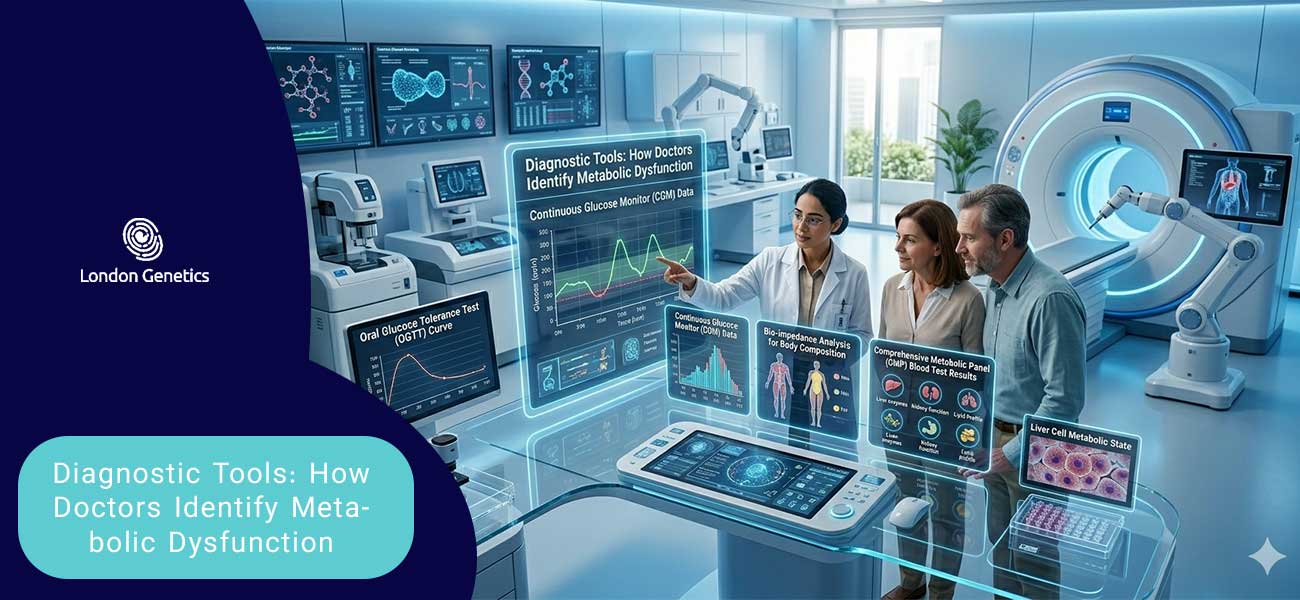
Diagnostic Tools: How Doctors Identify Metabolic Dysfunction
Identifying various metabolic disorders requires a detective-like approach. Because metabolism happens at a molecular level, doctors cannot simply rely on a physical exam. Instead, they use a combination of advanced laboratory tests and genomic screening to pinpoint exactly where the chemical process has failed.
1. Comprehensive Blood Chemistry Panels
The most common starting point is blood work. By analysing the “biomarkers” in your blood, clinicians can see a snapshot of your metabolic health.
-
Plasma Glucose and HbA1c: Essential for identifying issues with sugar metabolism and insulin resistance.
-
Lipid Profile: Measuring various types of cholesterol and triglycerides to assess fat metabolism.
-
Ammonia and Amino Acid Profiles: Crucial for detecting inherited various metabolic disorders where the body fails to break down proteins.
2. Urinalysis and Organic Acid Testing
Sometimes, the evidence of a metabolic “traffic jam” isn’t found in what stays in the blood, but in what the body tries to flush out.
-
Organic Acid Tests: These urine tests can identify unusual byproducts that accumulate when specific enzymes are missing.
-
Ketone Testing: Helps determine if the body is efficiently burning fat for fuel or if it’s in a state of metabolic distress.
3. Advanced Genomic and Genetic Screening
For suspected hereditary conditions, doctors look directly at the “instruction manual” of the body.
-
Newborn Screening: In the UK and many other regions, babies are tested shortly after birth (the “heel prick” test) for several various metabolic disorders like PKU.
-
Whole Exome Sequencing (WES): A sophisticated test that scans the protein-coding regions of your DNA to find rare mutations.
-
Targeted Gene Panels: If a specific family history exists, doctors may focus only on the genes known to cause certain metabolic failures.
4. Metabolic Stress Tests and Biopsies
In complex cases, doctors may need to see how the body performs under pressure.
-
Exercise Tolerance Tests: Monitoring how lactate and glucose levels change during physical exertion.
-
Enzyme Assays: Sometimes, a small tissue sample (biopsy) from the liver or muscle is taken to directly measure the activity of a specific enzyme.
5. Why Early Diagnosis is Crucial
The primary goal of these diagnostic tools is to move from “symptom management” to “root-cause treatment.” Identifying various metabolic disorders in their early stages—often before permanent organ damage occurs—allows for interventions that can significantly improve quality of life and longevity.
Modern Management: Treatments and Lifestyle Adjustments
Managing various metabolic disorders has evolved significantly, moving toward a “precision medicine” approach. Whether a condition is inherited or acquired, the goal of modern management is to restore chemical balance, optimise internal chemistry, and prevent long-term complications through bespoke clinical and lifestyle strategies.
Living with a metabolic disorder requires discipline, but modern science has made it more manageable than ever. By combining the right medical treatment with a personalised lifestyle plan, you can shift from merely treating symptoms to taking full control of your biological destiny and long-term wellbeing.
Advanced Pharmacotherapy:
Utilising enzyme replacement, insulin sensitisers, or substrate reduction therapies to keep metabolic pathways functional and prevent toxic buildup.
Precision Nutrition:
Treating “diet as medicine” by using metabolic-specific meal plans, cofactors, and supplements to jump-start sluggish enzymes and stabilise blood sugar.
Strategic Metabolic Conditioning:
Implementing specific exercise protocols like HIIT and strength training to improve mitochondrial function and enhance glucose uptake at a cellular level.
Continuous Real-Time Monitoring:
Leveraging wearable tech and CGMs to track metabolic reactions instantly, allowing for data-driven adjustments to your daily health routine.
Holistic Homeostasis:
Prioritising sleep hygiene and stress management to maintain hormonal balance and prevent the body from entering a damaging catabolic state.