
Introduction: The Myth of the Average Patient
For generations, the global pharmaceutical industry and conventional clinical practices have relied on a comforting but deeply flawed benchmark: the concept of the ‘average patient’. Historically modelled on a seventy-kilogram adult male, this imaginary standard has served as the baseline for clinical trials, drug manufacturing, and standard medical prescriptions. Consequently, patients of all backgrounds, ethnicities, and biological profiles are routinely expected to conform to this rigid blueprint. The dangerous reality, however, is that this artificial benchmark completely fails a genuinely diverse population, as a standard one-size-fits-all dosage simply cannot accommodate the intricate nuances of individual human biology.
When a fixed prescription is distributed across a broad spectrum of society, the clinical outcomes vary drastically. For a significant portion of patients, this traditional, unyielding approach results in complete therapeutic failure. Because their specific biological makeup requires a different concentration, the standard one-size-fits-all dosage proves entirely ineffective, leaving chronic conditions untreated and allowing illnesses to progress unchecked. Conversely, for more sensitive individuals, the exact same quantity of medication acts as an accidental overdose, overwhelming their system and inducing severe, debilitating side effects.
As contemporary healthcare increasingly champions patient safety and clinical efficiency, the inherent dangers of uniform prescribing have become impossible to ignore. The traditional trial-and-error method of medicine is rapidly proving itself obsolete. To truly protect and heal a diverse populace, modern healthcare must abandon the myth of the average patient. By acknowledging that every individual possesses a distinct physiological and genetic identity, the medical community can finally move away from the flawed one-size-fits-all dosage model, ushering in a safer, highly precise era of truly personalised care.
Physical Diversity: Why One-Size-Fits-All Dosage Fails
The human body is an incredibly complex biological system shaped by diverse physical variables. Yet, conventional prescribing frequently compresses this dynamic diversity into a single, static uniform dosage, representing a profound clinical oversight.
A rigid, one-size-fits-all dosage model ignores the monumental impact of biological sex, body composition, and age. Until modern pharmacy accounts for these stark physical disparities, uniform dosing will continue to compromise patient safety and clinical efficacy.
The Genetic Lottery: How Liver Enzymes Dictate Drug Metabolism
While physical traits like age and weight are clearly visible, the most profound variations in drug response remain completely hidden within our DNA. Every individual inherits a unique genetic lottery that directly dictates how their body processes foreign chemicals. At the absolute centre of this internal mechanism is the liver, specifically a vital superfamily of enzymes known as the cytochrome P450 (CYP450) system. These enzymes are responsible for breaking down more than seventy per cent of all prescription medications. Because of inherited genetic mutations, the efficiency of these enzymes varies spectacularly from person to person, making the application of a one-size-fits-all dosage highly volatile and clinically unpredictable.
This is where the groundbreaking field of pharmacogenomics—the study of how genes affect a person’s response to drugs—becomes indispensable. Through genomic profiling, scientists have revealed that the human population is divided into distinct metabolic categories based on their CYP450 genetic variants. On one extreme of this spectrum are individuals classified as ‘poor metabolisers’. These patients possess inherited genetic traits that render their liver enzymes sluggish or entirely non-functional. When a poor metaboliser is given a standard, conventional one-size-fits-all dosage, their body is unable to break the medicine down at a normal rate. As a result, the active compounds dangerously accumulate in their bloodstream, converting a standard therapeutic prescription into an unintended, life-threatening toxicity.
       [ THE CYP450 METABOLISM SPECTRUM ]

  POOR METABOLISERS         ULTRA-RAPID METABOLISERS
  (Sluggish Enzymes)        (Hyperactive Enzymes)
          |                           |
   Drug Accumulates            Drug Clears Instantly
          |                           |
  Danger of Toxicity!       Zero Therapeutic Effect!
          \                           /
           \                         /
            [ Fails a One-Size-Fits-All Dosage ]
On the completely opposite end of this genetic lottery sit the ‘ultra-rapid metabolisers’. These individuals possess duplicated or hyperactive genes that cause their liver to produce an abundance of highly aggressive enzymes. For these patients, a standard one-size-fits-all dosage does absolutely nothing. Their hyperactive system metabolises and clears the medication almost instantly, expelling it from the body before it ever has a chance to reach the target site or alleviate symptoms. Whether it is a psychiatric medication, a cardiovascular drug, or a vital painkiller, treating patients based on a uniform baseline ignores these profound genetic realities. Until pharmacogenomics is fully integrated into everyday prescribing habits, uniform dosing will remain a dangerous game of chance.
Lifestyle and Polypharmacy: The Hidden Disruptors of Uniform Prescribing
Beyond physical traits and inherited genetics, an individual’s daily environment and lifestyle choices act as powerful, dynamic variables that constantly interfere with medication efficacy. Modern routines, nutritional habits, and concurrent therapies fundamentally disrupt the predictability of standard prescribing guidelines.

Everyday dietary choices and multi-drug regimens destroy the assumption of a static internal chemistry, rendering rigid, one-size-fits-all dosing models obsolete.


Key Takeaway:
Maintaining a rigid, uniform dosing model in the presence of erratic dietary habits and polypharmacy is clinically unviable. Overcoming these hidden disruptors requires a critical transition toward dynamically tailored, patient-specific prescriptions.
The Critical Risks: From Ineffective Treatment to Severe Adverse Drug Reactions (ADRs)
The systemic failure to move away from rigid manufacturing standards is not merely a theoretical issue; it carries profound, real-world consequences that jeopardise patient safety and place an immense strain on healthcare infrastructure. When clinical practices refuse to adapt, the resulting reliance on a one-size-fits-all dosage framework forces medicine into a primitive cycle of trial and error. For the patient, this guessing game is highly dangerous, creating a volatile environment where the outcome of a standard prescription fluctuates between completely ineffective treatment and life-threatening toxicity.
The most severe consequence of this clinical lottery is the alarming prevalence of Adverse Drug Reactions (ADRs). When a fixed, uniform volume of a potent drug overwhelms a patient with a sensitive biological profile, the body reacts defensively, often with catastrophic results. Across contemporary healthcare systems, ADRs have risen to become one of the leading causes of prolonged hospitalisation, permanent injury, and avoidable mortality. Whether it is severe internal haemorrhaging caused by an unadjusted anticoagulant or acute respiratory depression triggered by a standard opioid prescription, the root cause is fundamentally the same: the stubborn application of a one-size-fits-all dosage to a distinctly non-standard human being.
                  [ THE TRIAL-AND-ERROR PIPELINE ]

                   Standard Uniform Prescription
                                 |
                     +-----------+-----------+
                     |                       |
           [ UNDER-DOSING ]            [ OVER-DOSING ]
                     |                       |
             Treatment Fails          Severe Toxicity
                     |                       |
             Disease Progresses       Adverse Drug Reaction
                     |                       |
                     +-----------+-----------+
                                 |
                Massive Financial & Clinical Burden
Beyond the undeniable human toll, the financial implications of uniform prescribing are unsustainable for modern medical infrastructure. Every year, billions of pounds are wasted on ineffective medications that fail to alter the course of chronic illnesses, alongside the astronomical costs associated with emergency care for patients suffering from drug-induced toxicities. Treating the complications of a failed prescription often costs significantly more than the initial therapy itself. By continuing to support a one-size-fits-all dosage methodology, the pharmaceutical ecosystem actively perpetuates a highly inefficient, costly, and hazardous model of care that directly threatens both the economic stability of healthcare institutions and the lives of the individuals they are sworn to protect.
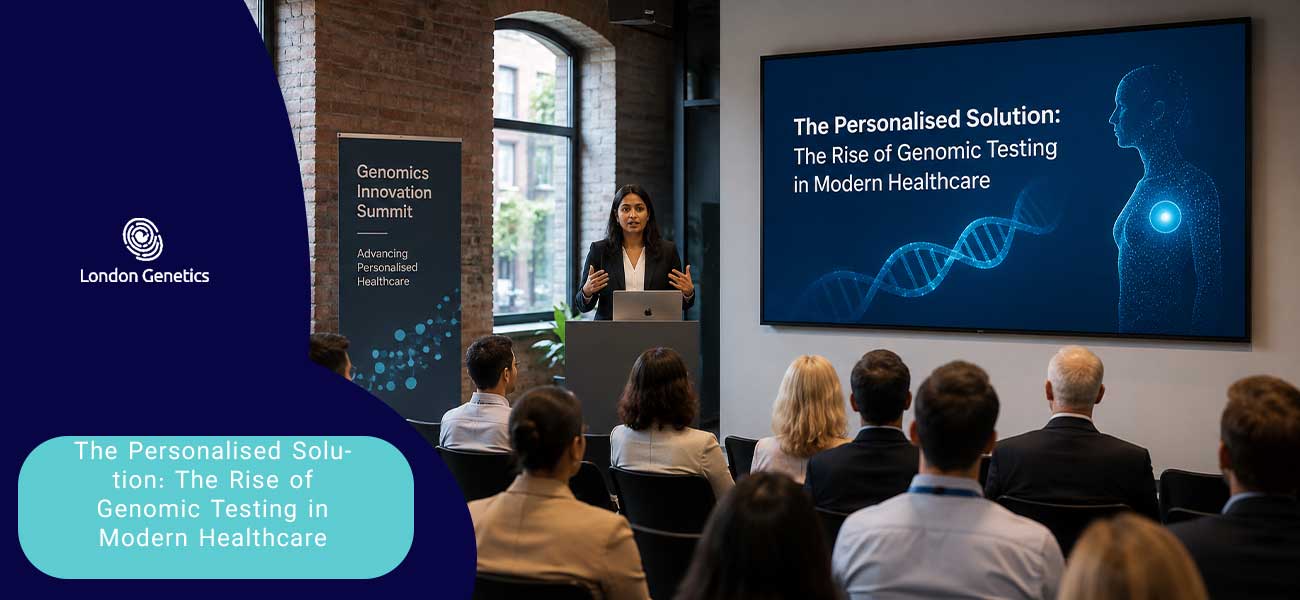
The Personalised Solution: The Rise of Genomic Testing in Modern Healthcare
While the risks of traditional medicine are substantial, the dawn of modern clinical genetics is providing a revolutionary escape route from archaic prescribing habits. Healthcare systems are no longer forced to guess how a patient might react to a compound based on mere trial and error. Instead, the rapid advancement of point-of-care diagnostics has enabled clinicians to peer directly into a patient’s genetic code, entirely dismantling the hazardous one-size-fits-all dosage model. By replacing guesswork with absolute genetic certainty, modern medicine is finally engineering a healthcare system where prescriptions are uniquely calibrated to the individual.
At the absolute forefront of this clinical revolution is the widespread implementation of simple, non-invasive genomic testing. Gone are the days when comprehensive DNA mapping required thousands of pounds and months of laboratory analysis; today, a simple DNA cheek swab or a basic saliva sample, collected in a matter of seconds at a local clinic, is all that is required. These swabs are analysed by advanced diagnostic platforms to identify specific genetic polymorphisms within the liver’s metabolic pathways. Rather than forcing a patient to gamble with a standard, manufactured one-size-fits-all dosage, the resulting genetic report provides a definitive, lifelong roadmap of exactly how that specific individual will process anti-depressants, cardiovascular drugs, oncology therapies, and pain management medications.
       [ THE CLINICAL TRANSITION IN MODERN HEALTHCARE ]

   TRADITIONAL MODEL                        GENOMIC MODEL
+-----------------------+              +-----------------------+
|  One-Size-Fits-All    |              |   Simple Cheek Swab   |
|        Dosage         |              |           |           |
|           |           |  =========>  |   DNA Map Generated   |
|  Trial-and-Error Meds |              |           |           |
|           |           |              |  Bespoke, Calibrated  |
|  High Risk of Toxicity|              |      Prescription     |
+-----------------------+              +-----------------------+
The integration of these genetic insights allows for the creation of truly tailored, patient-specific healthcare plans. Armed with an operator’s molecular profile, general practitioners and consultants can confidently calculate the precise milligram required to achieve maximum therapeutic efficacy while completely bypassing the threshold of adverse side effects. This shift significantly accelerates recovery times, ensures chronic conditions are managed correctly from day one, and prevents the trauma of drug-induced hospitalisation. As genomic testing seamlessly weaves into the fabric of contemporary public and private healthcare, the insistence on a one-size-fits-all dosage is rapidly transitioning from an accepted clinical standard into an indefensible medical anachronism.
Conclusion: Embracing a Precision-Led Future in Pharmacy
The landscape of global healthcare is undergoing a profound, irreversible metamorphism. For over a century, the pharmaceutical industry and clinical practitioners accepted the limitations of uniform manufacturing as an unavoidable compromise. Today, however, the mounting evidence against a one-size-fits-all dosage strategy has rendered the traditional ‘average patient’ baseline completely obsolete.
By acknowledging that physical diversity, dynamic lifestyles, and the intricate genetic lottery of liver metabolism dictate how a chemical interacts with a living organism, contemporary medicine is finally closing the chapter on hazardous trial-and-error prescribing.
Bespoke Medical Ecosystem:
Transitioning from standard mass-production to a personalized workflow where medications are dynamically tailored to the individual.
Integration of Genomics:
Embedding pharmacogenomics into routine clinical decisions to completely eliminate the era of rigid, one-size-fits-all chemical molds.
Calibrated Target Therapies:
Empowering healthcare professionals to deliver highly precise dosages that are biologically matched to unique physiological profiles.
End of Trial Prescribing:
Moving away from dangerous trial-and-error medicine by factoring in tissue composition, lifestyle habits, and metabolic baselines.
Patient-Centric Outcomes:
Achieving superior clinical safety and treatment success by protecting, testing, and treating diverse populations from the inside out.