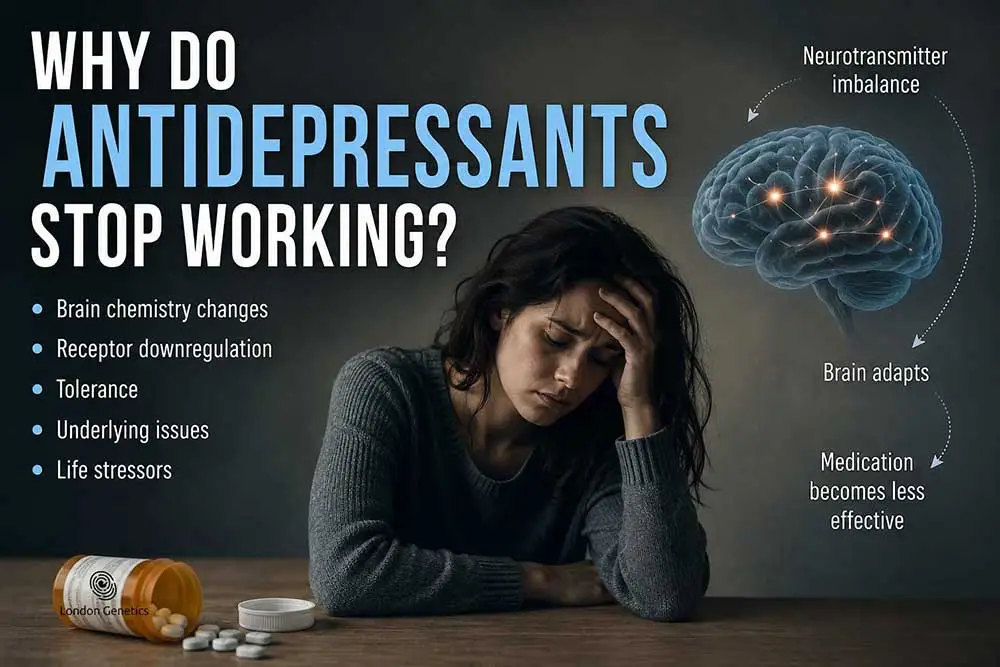
The Frustration of Treatment-Resistant Depression
Embarking on a treatment plan for depression requires an immense amount of personal courage and patience. For many individuals, the initial weeks of starting a new prescription are filled with a quiet sense of hope—a belief that emotional stability is finally within reach. However, this hope can quickly dissolve into profound frustration when that therapeutic progress suddenly stalls, or when the expected relief never materialises at all.
When antidepressants stop working, the psychological toll on a patient can be devastating. It is highly common for individuals to internalise this therapeutic failure, mistakenly believing that their struggle is a personal shortcoming or that their mental health condition is simply untreatable. In clinical settings, this challenging phenomenon is often classified as treatment-resistant depression.
It is crucial to understand that a lack of response to medication is not a failure of your will; rather, it is a complex biological puzzle. Historically, finding a solution meant enduring a gruelling cycle of trial-and-error prescribing—switching from one drug family to another in the hope of finding a match.
Today, modern clinical genetics offers a far more precise path forward. By utilising advanced diagnostic tools like Medication Compatibility Testing, we can bypass this stressful experimentation entirely. Instead of guessing how your body might respond, clinicians can now look directly at your unique biological profile to understand exactly why a medication is failing, allowing for safer, targeted, and much more effective treatment strategies.
Antidepressants Stop Working: Is It Tolerance or Something Else?
When patients notice that their psychiatric medications are no longer providing the emotional stability they once did, a common question arises: why do antidepressants stop working after months or years of successful treatment? In clinical medicine, this puzzling loss of therapeutic effect is a well-documented phenomenon known as pharmacological tolerance or tachyphylaxis.
The underlying philosophy of modern psychiatric genomics and predictive pharmacology lies in replacing reactive selection methods with strategic biomolecular foresight. Analysing how individual bioenergetic profiles and unique metabolic variants interact with active compounds allows clinical teams to eliminate outdated trial-and-error prescription protocols. Mapping these specific neuro-receptor and architectural traits transforms abstract sequencing into an unshakeable, personalised blueprint for long-term health maintenance and successful therapeutic recovery.
Biological Factors: How Your Liver Processes Antidepressants
When we swallow a tablet, we often think of its journey ending directly in the brain. However, before any psychiatric medication can enter your systemic circulation and cross the blood-brain barrier, it must first pass through a highly sophisticated filtration system: your liver. This biological gateway is where many answers lie when antidepressants stop working or fail to perform from the very beginning.
The liver processes medications using a specialised family of proteins known as the Cytochrome P450 (CYP450) enzymes. These enzymes act like biochemical molecular scissors, breaking down the active ingredients in your medication so your body can safely eliminate them. However, because of inherited genetic variations, no two people possess the exact same enzymatic processing speed.
How your liver enzymes function determines your clinical response to a drug:
-
The Ultra-Rapid Processor: If your CYP450 enzymes are genetically hyperactive, they will break down your antidepressant almost instantly. The drug is destroyed and cleared from your bloodstream before it ever has a chance to reach your brain. To you, it feels as though the medication is completely useless, even at maximum clinical dosages.
-
The Poor Processor: Conversely, if your liver processes a drug too slowly, the medication lingers in your system far too long. This leads to a dangerous, toxic build-up of the active compound, triggering severe, unbearable side effects that often force patients to stop their treatment prematurely.
If your psychiatric treatment has suddenly stalled or failed, it is highly likely that your liver’s metabolic pathway is simply mismatched with the specific chemical structure of your current prescription. Understanding this biological processing speed is essential to shifting your treatment from a guessing game to a precise science.
Genetic Variations: Why Your DNA Might Reject Certain Medications
While your liver determines how quickly a drug is cleared from your body, your genetics also dictate how your brain and nervous system receive that drug. Beyond liver metabolism, genetic variations directly influence two critical areas of drug response: brain receptors and blood-brain barrier transporters.
Analysing the real-time clinical traits behind recurrent genetic anomalies reveals that relying on natural selection is highly volatile. By replacing outdated trial-and-error routines with advanced, structured professional genomic and metabolic screening frameworks, individuals can accurately synchronise individual health paths, ensuring maximum biological control and personalised safety long before chronic failure occurs.
Environmental and Lifestyle Influences on Drug Efficacy
While our genetic blueprint and liver enzymes lay the biological foundation for how we process medication, our bodies do not exist in a vacuum. Daily life, environmental stressors, and physical changes can heavily influence how a drug performs over time. When antidepressants stop working, the underlying trigger is sometimes a shift in our external environment or lifestyle rather than a sudden change in our DNA.
Several non-genetic factors can alter how your body interacts with your prescription:
-
Chronic Stress and Cortisol Overload: Prolonged periods of psychological stress flood your system with cortisol, the body’s primary stress hormone. High cortisol levels can actively suppress the brain’s ability to generate new neural connections—a process called neuroplasticity, which is essential for antidepressants to do their job.
-
Hormonal Fluctuations: Major endocrine shifts—such as thyroid imbalances, pregnancy, postpartum recovery, or menopause—fundamentally alter your brain chemistry. Because estrogen and progesterone closely interact with serotonin and dopamine pathways, a significant hormonal drop can suddenly render a previously stable medication regimen ineffective.
-
The Interference of Drug Interactions: Taking other medications, over-the-counter painkillers, or even daily supplements can create a traffic jam in your liver. If a new substance competes for the exact same metabolic pathway as your antidepressant, your body may fail to process the psychiatric medication properly, leading to a rapid loss of therapeutic benefits.
A Quick Lifestyle Note: Daily habits like sleep quality, alcohol consumption, and even high caffeine intake can subtly shift your systemic metabolism and brain chemistry, making it much harder for your mental health treatments to maintain their baseline efficacy.
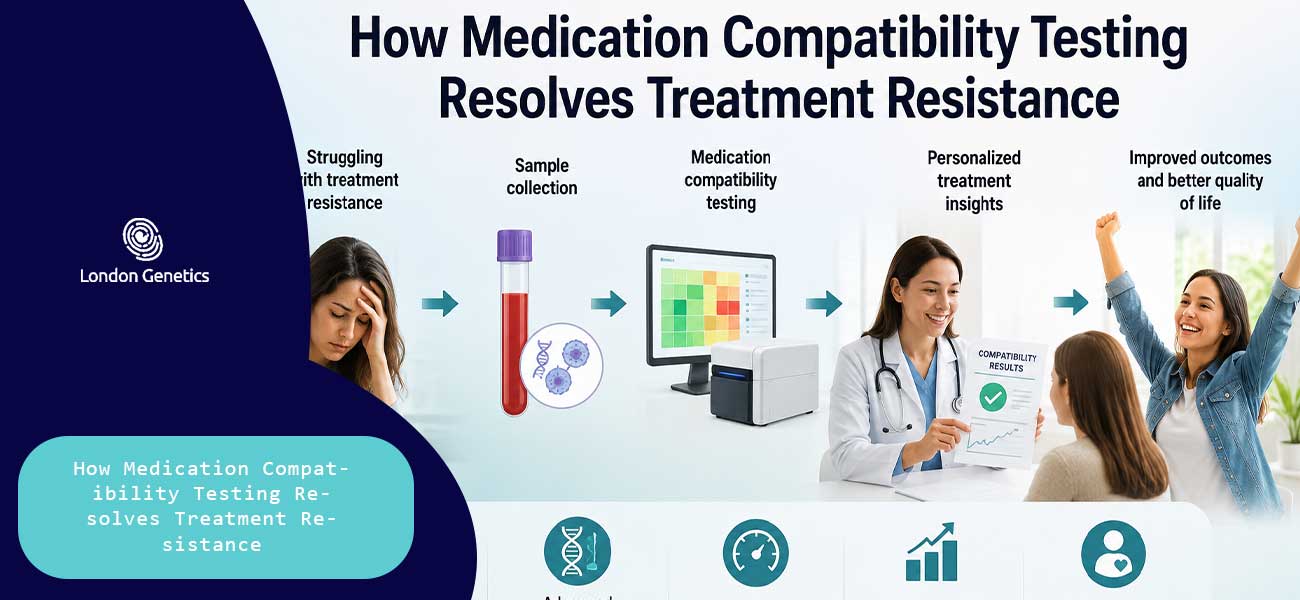
How Medication Compatibility Testing Resolves Treatment Resistance
When standard psychiatric treatments fail to deliver relief, patients are often left feeling helpless. However, the solution does not lie in guessing which pill to try next, but in understanding your body’s unique chemical blueprint. This is where modern clinical science steps in to replace guesswork with absolute precision.
Instead of undergoing a exhausting cycle of trial and error when your antidepressants stop working, a targeted genetic analysis provides your clinical team with a clear, data-driven roadmap. By analyzing your specific DNA, [Medication Compatibility Testing] uncovers the exact genetic barriers preventing your medications from working.
[Patient DNA Sample] ➔ [Lab Sequencing] ➔ [Metabolic Mapping] ➔ [Precise Prescription]
This non-invasive test resolves treatment resistance through three key mechanisms:
-
Mapping Liver Metabolism: It identifies whether your CYP450 enzymes are processing medications too quickly (rendering them useless) or too slowly (causing severe side effects).
-
Predicting Receptor Response: It analyzes your brain’s cellular receptors to ensure the prescribed drug can actually bind to your cells and execute its therapeutic function.
-
Preventing Adverse Drug Reactions: It screens for inherited genetic sensitivities, allowing your physician to permanently avoid medications that are biochemically incompatible with your system.
Rather than struggling with ineffective treatments, this highly advanced profile empowers you and your doctor to confidently choose the exact compound and dosage your body is biologically programmed to accept. It represents a permanent, lifetime investment in your health—ensuring your path to recovery is both exceptionally safe and incredibly fast.
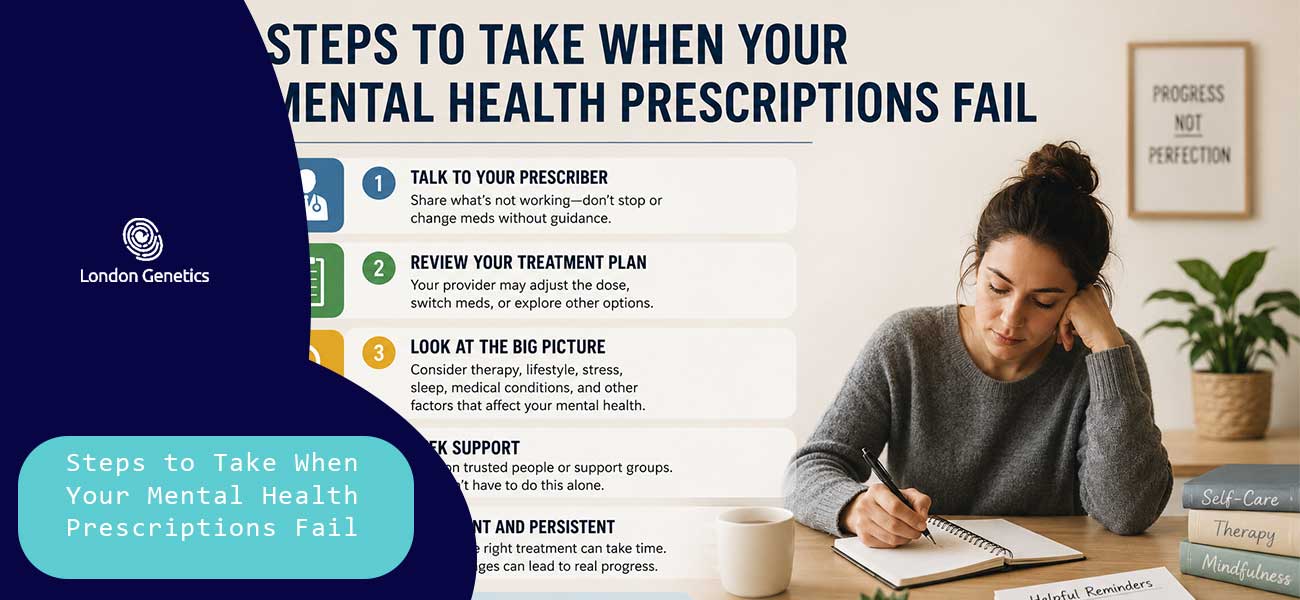
Steps to Take When Your Mental Health Prescriptions Fail
If you find yourself in a position where your antidepressants stop working, it is vital to remember that you are not out of options. Modern medicine offers clear, structured pathways to help you navigate this setback and regain control over your mental well-being.
Rather than letting frustration take over, follow these practical, clinical steps to safely address treatment resistance:
Take Control of Your Treatment Today
You do not have to endure the exhausting cycle of trial-and-error prescribing. If your current mental health treatment is failing to give you the peace of mind you deserve, let science guide your next step.
Take the First Step: Contact our specialist clinical team today to discuss how a non-invasive genomic screen can pinpoint the ideal treatment pathway for your unique biochemistry.
Conclusion: Reclaiming Your Path to Mental Wellness
Experiencing a setback in your mental health treatment can feel incredibly isolating, but understanding the science behind why antidepressants stop working changes the entire narrative. It shifts the burden of “treatment failure” off your shoulders and places it where it scientifically belongs: on a simple biochemical mismatch.
Recognising that these biological anomalies are the primary driver of therapeutic resistance allows you to move past the emotional exhaustion of unassisted cycles and look toward proven, proactive solutions.
Book Your Consultation with Dr Karimiani